
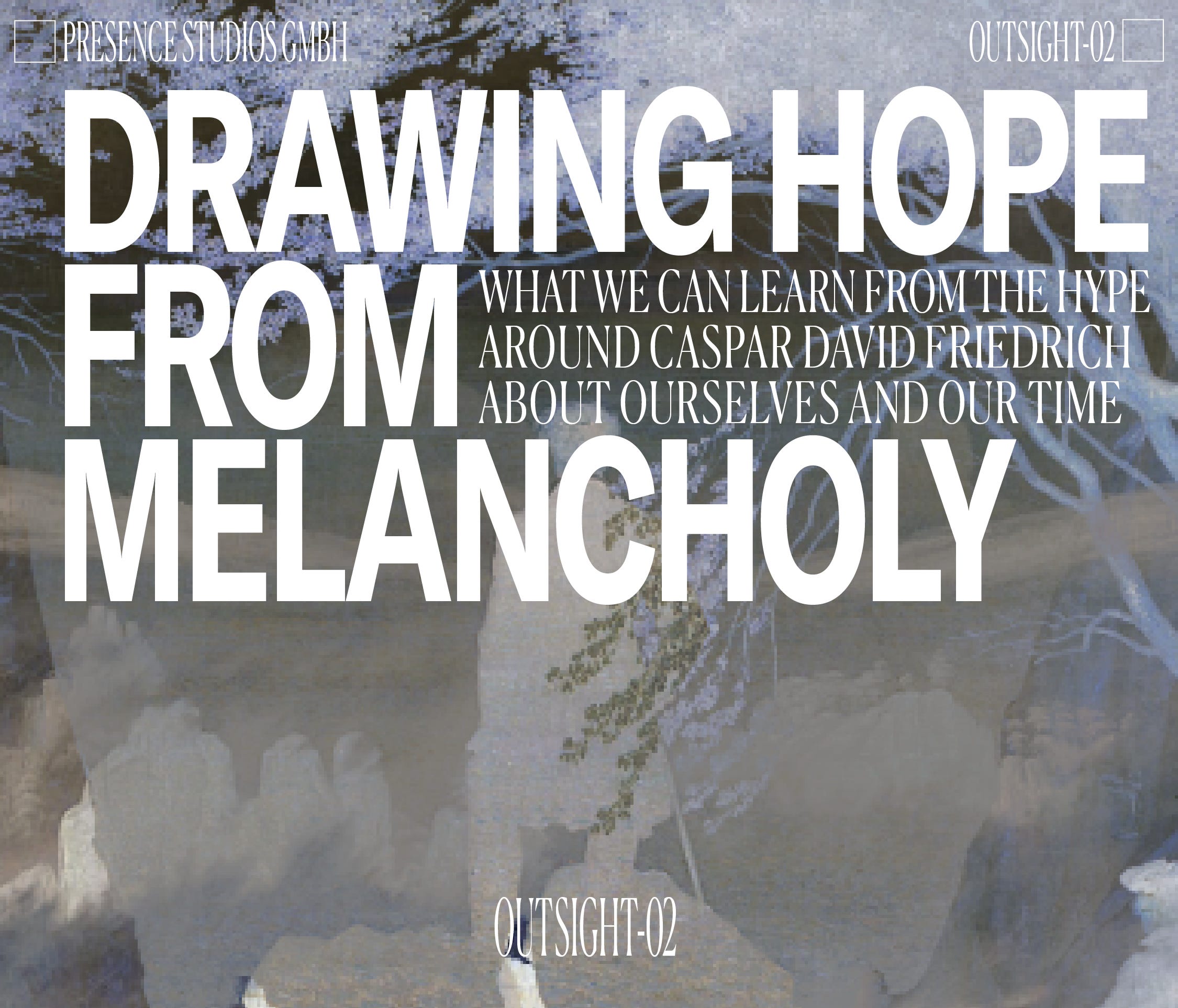
The queues in front of the Alte Nationalgalerie in Berlin are as long as those at Berghain, with expectations of a unique experience likely just as high. People of all ages are willing to wait for hours to see the world through Friedrich’s eyes and visit the current exhibition for his 250th birthday, “Caspar David Friedrich — Infinite Landscapes.” They all want to witness his mystical paintings that have become world-famous.
Where does this fascination and renewed reception come from? Why has the most significant representative of German Romanticism, who seemed long forgotten and little regarded, made such an astonishing comeback—not just in the art world but among a broad mainstream audience? Why is he relevant to our current times?
Is it the relationship between nature and humanity that we are reevaluating in the face of numerous climate catastrophes? Do we feel a new sense of finiteness due to current wars and political shifts? Is it the melancholic view of a world where people feel misunderstood and lonely? Does the hyperconnected and digitised young generation, which seems particularly lonely, find itself reflected in Friedrich’s view of the world?
Friedrich, often described as an idiosyncratic and quirky loner, evidently strikes a chord with his sombre landscapes and marvellous studies of seas and skies. The perspective on an artist’s oeuvre and its interpretation always speaks volumes about the time and world in which the viewers live. This is what makes art history so exciting: in every era, a work of art can be newly categorised and interpreted differently from 50, 100, or 200 years ago.
In any case, the significance of Friedrich’s works goes far beyond what is depicted; it is palpable in the work, even if sometimes difficult to put into words.
In the face of nature, questions about the transience of human life are raised.
His figures seen from behind gaze into the incomprehensibility of the world on our behalf; they contemplate the beauty of nature and question our role as humans in relation to the world.
AS WE GAZE THROUGH HIS WORK, WE QUESTION OURSELVES:
WHAT ARE WE AFRAID OF?
WHAT DO WE LONG FOR?
WHAT GIVES OUR LIVES MEANING?

PAINTED TO LAST
Caspar David Friedrich (1774–1840), born in Greifswald, was rediscovered once before at the beginning of the 20th century. And today, another 120 years later, it feels like a renewed rediscovery. Friedrich, controversial during his lifetime, revolutionised the painting of his time and became an important precursor of modernity. He is now considered the most important painter of German Romanticism, yet after his death, he was almost completely forgotten for half a century.
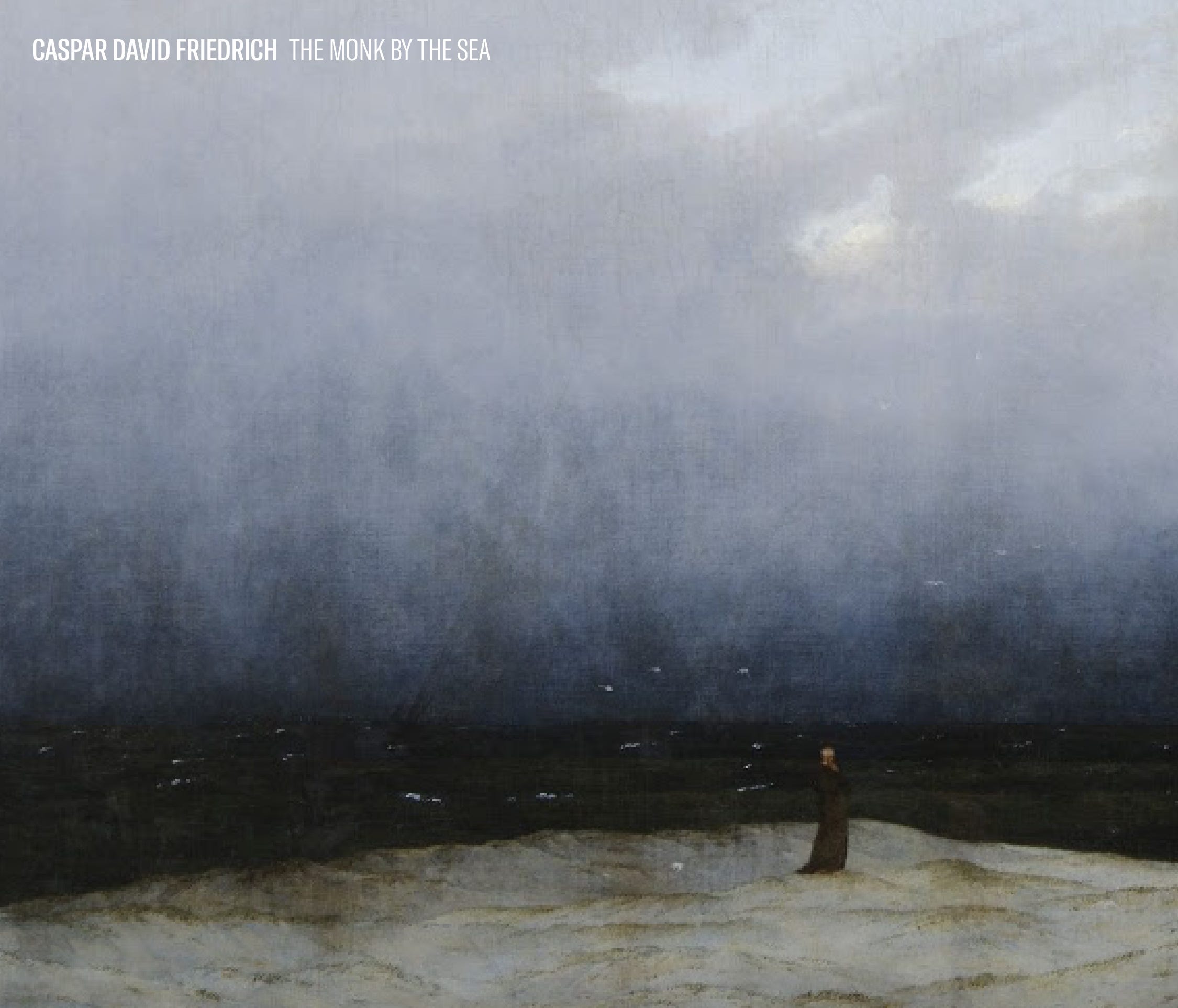
Given his current popularity, it is hard to imagine, but he indeed fell into near-total oblivion in the latter half of the 19th century. Then, in 1906, the legendary German Centennial Exhibition at the National Gallery prompted a reassessment of Friedrich. The current exhibition in Berlin showcases world-renowned icons such as “The Monk by the Sea”, “The Sea of Ice” and “Chalk Cliffs onRügen”. It is part of the Caspar David Friedrich Festival, which also includes exhibitions at the Hamburger Kunsthalle, the Staatliche Kunstsammlungen Dresden, and, from 2025, the Metropolitan Museum of Art in New York, where the exhibition will aptly be titled “The Soul of Nature” and will be the first comprehensive exhibition in the USA dedicated to the foremost representative of German Romanticism. Each of these four exhibitions is uniquely conceived and curated, each with a different focus. Thus, not all works currently on display in Berlin will be seen in Dresden and New York.
However, one thought will be common to all exhibitions: Friedrich’s paintings will endure. They reach us emotionally, visually, and intellectually. We will always feel the wonderfully elaborated light moods, the reverence for sublime nature, and the longing for happiness. And even if we are not fans of Romanticism, we might agree with Friedrich: “The only true source of art is our heart.”
IMAGES OF LONGING
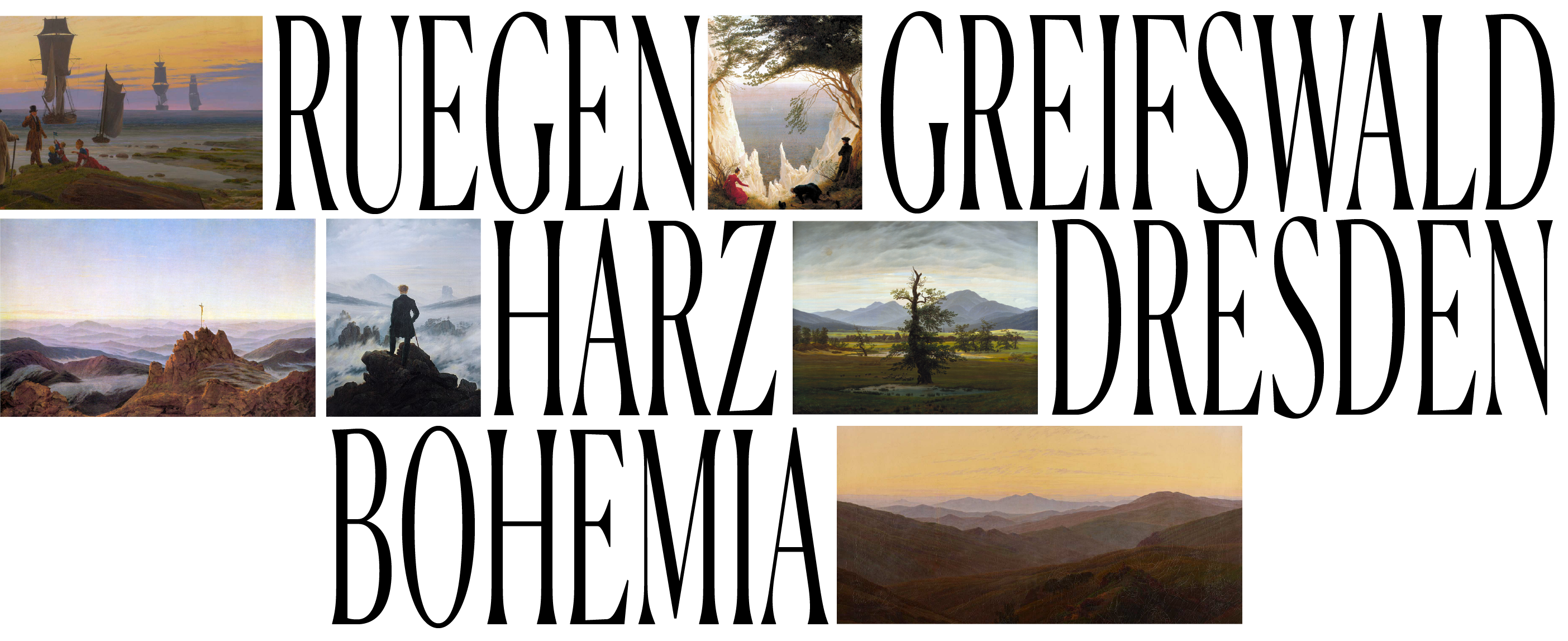
While many other great artists oriented themselves towards the south, going to Italy or southern France, Friedrich found fascination in the darker landscapes of the north. He loved the Baltic Sea, the island of Rügen, and nature in general. He wandered across Rügen, making numerous drawings of the coast, the sea and riverbanks, and the famous chalk cliffs. The sea and the sky, mountains and coasts became his central motifs. Again and again, he went out into nature, studied colours, forms, and light moods to capture them later in the studio, transforming them into his infinite landscapes.
While creating these images of longing, the master did not want to be disturbed and had visitors turned away, for “painting the sky is a divine service,” as he is said to have remarked.
Friedrich was the sixth of ten children born to soap maker Adolf Gottlieb Friedrich and his wife Sophie Dorothea. At the end of the 18th century, he studied at the Royal Danish Academy of Fine Arts in Copenhagen. He then moved to Dresden, the city that became his home for many years and where many of his most important works were created.
HE PAINTED THE COLOURS OF SUNSET, THE MELANCHOLIC LIGHT OF THE MOON, AND LONELY, GNARLED TREES. YET, DESPITE ALL THE GLOOMY MOOD, THERE IS ALWAYS A SPARK OF HOPE.
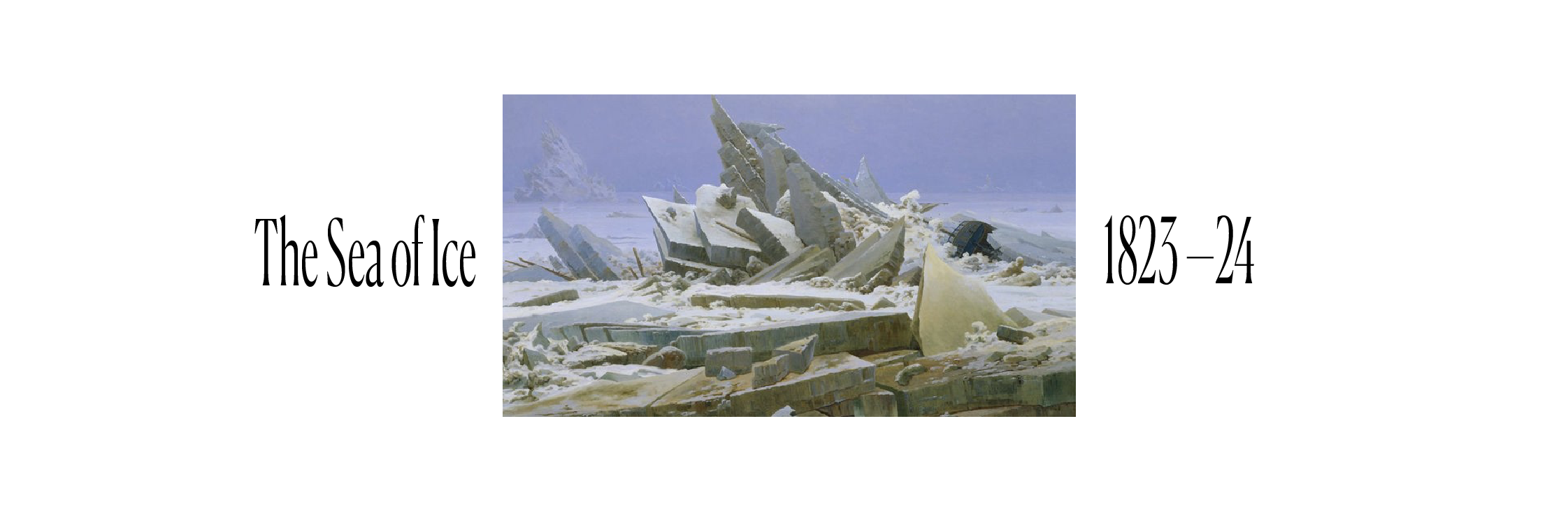
When looking at “The Sea of Ice,” it initially appears threatening, evoking thoughts of doom and destruction, but upon closer inspection, one discovers a small spot at the top of the painting where the sky breaks open, and a glimmer of hope appears. There is a sense of humility before the sublime nature, a search for happiness and perhaps a better life, never a definitive hopelessness. Rather, they are pictures of melancholy that nonetheless give hope. There is a palpable spiritual moment, a reference to the miracle that awaits us. And all this was created in his sparse studio, occasionally visited by scholars like Goethe and Schopenhauer. His contemporary Goethe allegedly could not appreciate Friedrich’s work—too dark and depressing, he supposedly remarked that they should be shattered on the table’s edge. Others claim Goethe greatly admired Friedrich’s works but
disagreed politically. Regardless of whether
Goethe would turn in his grave, it is clear that
Friedrich’s work exerts a special influence even
today, especially now when our world is
threatened in many ways.
No posts
Comments
Nothing yet. Say the first thing.
Sign in to join the conversation.