
A4MR has now released a new theological vision statement, and, at least for me, the first impression is not clarity but vagueness. Geoff Ziegler’s own introduction says the statement is “not to offer a detailed theological standard or to provide a comprehensive articulation of good polity,” but rather “a lens to help provide focus.” That may explain why it is hard to get your hands around. It is written at a high enough level of abstraction that almost everyone can nod along to much of it while still wondering what, in practice, it is meant to bless, resist, or reframe in the PCA right now.
What stood out to me especially were the things they say they are against. They reject “progressive drift and fundamentalist perfectionism.” They oppose terms of communion that are too lax through “substance subscription” and too narrow through “strict subscription.” They oppose “empty proceduralism or mob-like adjudication.” They reject “egalitarianism” on the one hand and “clericalism” on the other. They reject contextualization that compromises the gospel, but also “extrabiblical restriction” that hinders the gospel from taking root in all cultures. Those are loaded contrasts, but the statement does not tell us who exactly they think regularly represents these dangers in the PCA at present.
And that is part of the problem for an ordinary elder reading this. He is probably wondering: are they talking about me or somebody else? I do not think I am a fundamentalist. Every strict subscriptionist I know is in another denomination. I have not seen any mobs. So is this how they see me? Is this how they see others? What exactly am I supposed to see in other men in the PCA that I have apparently been missing? If you define yourself partly by the things you are not, but do so in categories this elastic, then many men are left trying to figure out whether they are being subtly accused of occupying one of the bad categories without anyone having the candor to say so.
And that raises a series of obvious questions. Who are the “fundamentalists”? Who exactly is practicing “mob-like adjudication”? Are the large GA majorities of the last few years the “mob”? Are the men who are pressing constitutional precision on ordination standards the “strict subscriptionists”? Are GRN men the people A4MR has in mind when it warns against extrabiblical restrictions, proceduralism, or narrow terms of communion? Or is this all directed at some other constituency that remains conveniently unnamed? Those are not side questions. They are the questions. If you define yourself as the sane center by listing the extremes you reject, then eventually you need to tell us who inhabits those extremes and how.
Part of the difficulty A4MR is going to have, if it ever tries to cash out these contrasts with actual examples, is that it would have to argue in very specific terms why a particular GA decision, floor speech, presbytery action, or elder’s argument represented “mob mentality,” “egalitarianism,” “clericalism,” or the other dangers it names. That is much harder than speaking in broad categories. As it stands, the rhetoric risks becoming a subtle form of evil surmising: gesturing toward unnamed offenders, implying endemic pathologies, and never quite having to prove that these are not isolated episodes or bad judgments by particular men, but rather broad and settled patterns in the PCA. It lets one suggest that “mobs” and other deforming forces are out there without having to identify them, define them, or make a case that they are truly operating at a denominational level.
What would help now is not more abstraction, but concrete comparison. How, exactly, would this vision handle the Greg Johnson case differently? In what ways is it continuous with, or different from, what the National Partnership advocated? And how is it substantively different from what A4MR itself has been about all along? Those are the kinds of questions that would help elders figure out whether this statement reflects any real recalibration or whether it is mostly a more polished and less concrete way of restating familiar instincts.
The same is true in relation to the Gospel Reformation Network. Whatever one thinks of GRN, it is not vague about what it is for. It speaks plainly about confessional integrity, Reformed worship, biblical clarity, and the need to resist cultural accommodation, especially around sexuality. You may agree with it or disagree with it, but you are not left wondering what the GRN is trying to say. That is why a real compare-and-contrast with GRN would be useful. In A4MR’s framework, is GRN an example of “fundamentalist perfectionism”? Is it guilty of “strict subscription”? Is it part of the “mob”? Who represents the other pole, if GRN is or is not one of the extremes? Apparently not A4MR itself, but some other broad constituency that none of us can quite identify.
As it stands now, the vision reads like this: we are for biblical ideas, and we are against the extremes that are bad for the PCA. But nobody really knows who those extremes are. Until A4MR is willing to identify the actual tendencies, arguments, groups, or patterns it has in view, the things it says it opposes remain too undefined to evaluate. And that is why, at least for now, the statement feels less like a clear theological vision and more like a carefully worded mood.
Here’s a post that considers a few earlier renewal groups in the PCA:
The PCA Eras Tour...Where Are We Now?
·
June 25, 2024
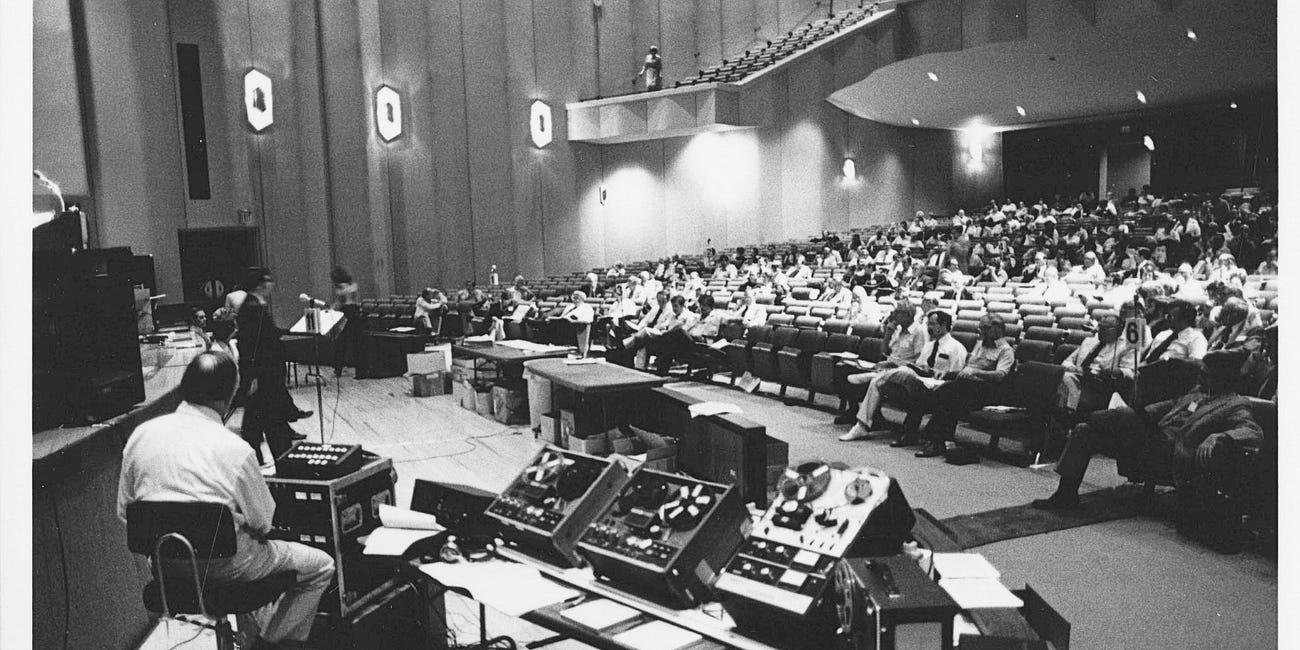
The opening session drama at last week’s 51st General Assembly of the Presbyterian Church in America may have signaled (or confirmed) a new era for the 51-year-old denomination. At issue was the final ratification of a Book of Church Order amendment to tighten up the denomination’s doctrine of office and ordination. The amendment passed the final hurdle…
No posts
Comments
Nothing yet. Say the first thing.
Sign in to join the conversation.