
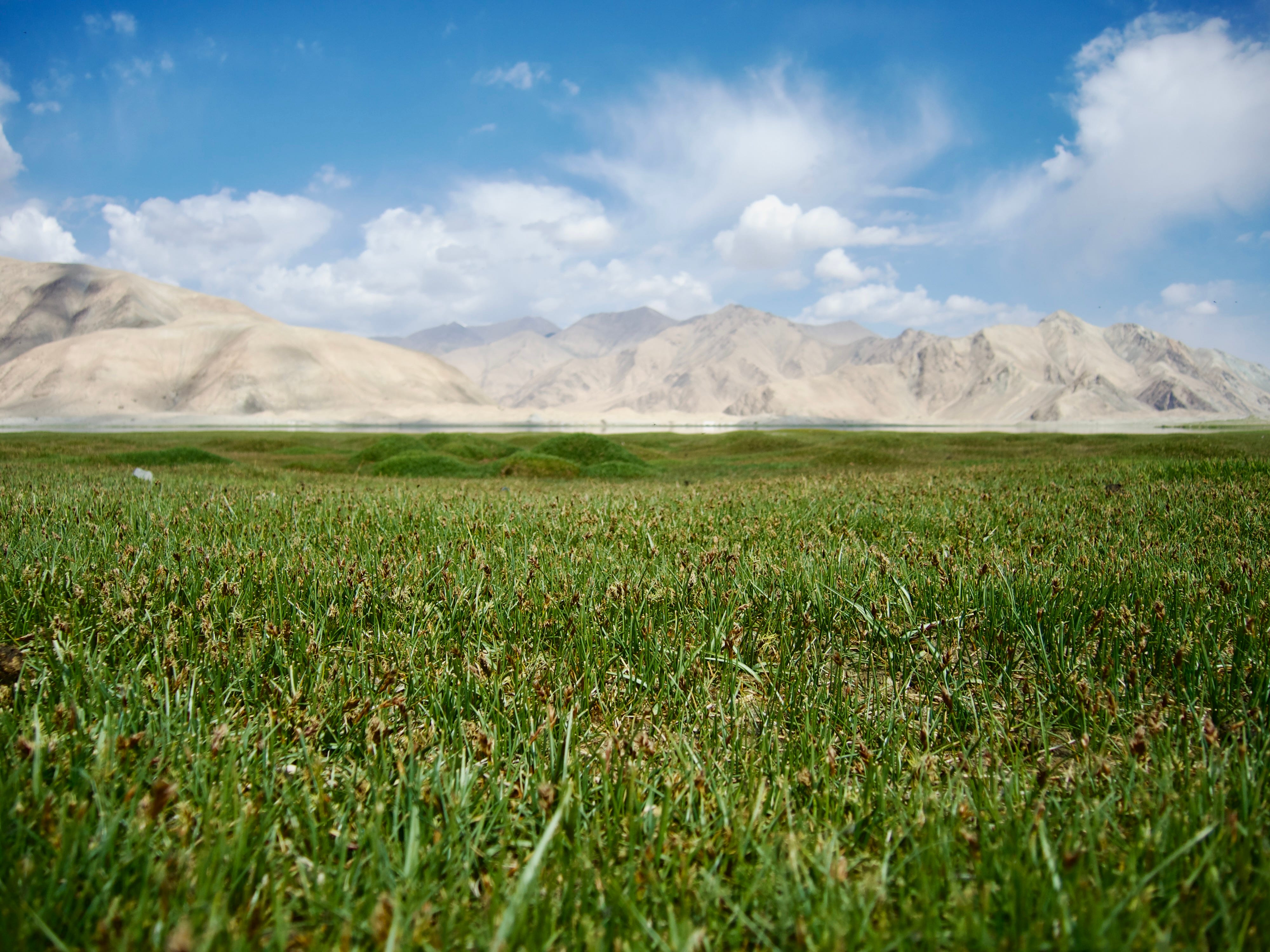
Earlier this year, a major global study found that grasslands and wetlands are being converted to agriculture at nearly four times the rate of forests. That’s a problem because many of these ecosystems store enormous amounts of carbon, support unique biodiversity, and tend to receive less attention than forests.
This is one of the most shared pieces from my first year of writing Predirections. Given most of you joined after it first ran, I’ve lightly updated and republished it below.
I've talked a lot about the need to find win-win biodiversity-climate solutions in this newsletter. However, the only area I've focused on in any real depth so far relates to tree-planting initiatives, whether reforestation or afforestation.
But forests aren't the only type of ecosystem that can suck up and store carbon. There are many other types of carbon-rich ecosystems out there, both on the land (including freshwater) and in the sea.
Before we go any further, though, let's address the elephant in the room: Yes, ecosystems can play an important role in climate mitigation over time. But the bulk of the effort still needs to come from rapid, large-scale emissions reductions.
With that out of the way, let's get to the role that non-forest ecosystems can play.
Initiatives to use nature in climate mitigation efforts can be either positive or negative for biodiversity. Planting lots of trees in places where they shouldn't be is not a good idea, nor is planting large monocultures. Such efforts are more often than not counterproductive even for carbon for reasons I've already discussed. One thing is clear, nature-based climate mitigation actions need to prioritise co-benefits for biodiversity.
So, while trees and forests are key tools in the fight, they’re very much not always the answer.
Instead, conservation or restoration of existing grasslands, savannahs, wetlands, or peatlands on land, or coastal salt marshes, seagrass meadows, mangroves, and kelp forests should be prioritised. These systems can store immense amounts of carbon. And careful restoration can bring widespread co-benefits for both the climate and biodiversity.
Let's look into these a little further.
Wetlands and peatlands have been estimated to store around 30-40% of the global terrestrial carbon stock. Yet, we've lost somewhere in the order of 87% of the world's wetlands over the past 300 years and 35% since 1970.
While this is shocking, it’s no real surprise. Once drained, wetlands tend to make productive places to grow food. But they also support a disproportionately high number of threatened plants and animals, and provide critical habitat for migratory birds.
For those Kiwi readers, this number is around 90% in New Zealand. Wetland loss is a particularly significant hit for Māori, the indigenous people of New Zealand. They were key sites for food and medicine gathering, and many culturally important fish, bird, and plant species (including flaxes used for weaving).
Despite having cleared most of them, we've realised the importance of wetlands for flood control and for the cleaning up of polluted water. Wetlands are a natural tool in the fight against extreme weather events. So, they’re slowly being turned to as nature-based solutions for flood risk management as opposed to continued command-and-control approaches like building bigger and bigger levees/stop-banks. But, of course, this needs to happen much more rapidly.
Losses of wetlands can be disproportionate too. The Andean Páramo (high-altitude wetlands) in Ecuador, Venezuela, and Colombia supports a huge variety of locally-endemic species (those found there and nowhere else). It is considered one of the world’s most prominent biodiversity hotspots and fastest evolving ecosystems in the world.

The great naturalist Alexander von Humboldt once said of this place:
“Nowhere, perhaps, can be found collected together, in so small a space, productions so beautiful and so remarkable in regard to the geography of plants”
But land encroachment, hunting, wildfires, and now climate change threaten its unique biodiversity and the key contributions it makes to local peoples. Indeed, in 2024, wildfires ripped through large chunks of the Paramo.
Similarly, grasslands and savannahs are thought to store around a third of the total terrestrial carbon stock. They're often underestimated in global carbon storage discussions in favour of forests.
This is understandable, given we think of trees storing carbon above ground, but also a bit silly to be honest. Soil carbon storage is the main component of global carbon sequestration, with 2X or 3X carbon stored in soils than in terrestrial vegetation (may be much more based on newer research). And grasses play a major role in this storage. The accumulation of carbon in grasslands and prairies tends to be in their deep root systems and soils, making their carbon less likely to be lost from fire, for instance. They also tend to be more resilient than forests to disturbances like fire.
Yet, grasslands are also often underprotected compared to forests. For instance, about half of the Brazilian Cerrado has been converted into agricultural uses twice as fast as that of the Amazon forest1. This trend is not limited to tropical grasslands and savannahs: temperate grasslands are now one of the most endangered biomes anywhere and receive next to no protection.
Overall, estimates suggest that 49% of the grassland area worldwide has been degraded.
So the protection of both wet areas and dry areas that aren’t forests is fundamentally important for both stemming biodiversity decline and as tools for climate change mitigation.
Coastal ecosystems, including kelp forests, mangroves, seagrass meadows, and salt marshes play a key role in carbon capture and storage. For mangroves and seagrasses, most of the carbon they capture remains stored in their local soils and sediments. By contrast, the carbon captured by kelp tends to be exported as organic matter into deeper ocean zones or nearby ecosystems. Salt marshes do a combination of both.
Some of these ecosystems hold disproportionate amounts of carbon (e.g. seagrasses) relative to their coverage. In the case of mangroves, four times more per unit area than tropical upland forests.

Mangroves also provide a huge suite of extra benefits. They are biodiversity hotspots: up to 2000 species can be found amongst mangroves in a single region. Mangroves are breeding and nursery grounds for fish, crustaceans, and other marine species; are filtration systems for pollutants, sediments, and nutrients from runoff; and, importantly, provide coastal storm and erosion protection. The latter of which is a key reason they are widely used as nature-based solutions for coastal protection. But failed attempts at using them for these purposes are typically due to a poor understanding of their ecology and ignoring local knowledge. For effective nature-based solutions to be rolled out, we need continued research into their interactions with other species and various context dependencies, and greater incorporation of local knowledge.
These different coastal systems can be coupled together too, providing mutual benefits. For instance, the juvenile rearing provided by mangroves can benefit nearby seagrass or coral ecosystems. And the erosion protection mangroves provide can have similar spillover effects.
These coastal ecosystems are particularly vulnerable to development and pollution. Conserving them is imperative to prevent further carbon losses. Restoration should be prioritised for this reason and for their widespread biodiversity co-benefits and the associated services they bring to local peoples.
Yes, we're not going to be able to use nature to suck up all the carbon we've emitted. There's simply too much carbon out there that has been unleashed from beneath the Earth's surface. Natural solutions will only go so far, but one thing is for sure: they can certainly play a key role.
We currently place too little emphasis on non-forest ecosystems for their role in biodiversity-positive natural climate solutions. These systems very often store more carbon per unit area than forests. So they deserve more attention.
If you found this useful, please click the ❤️ button to help more people see it, and forward it to anyone who cares about climate, biodiversity, or water.
Predirections is free to read and always will be. But it only continues if enough people decide, year after year, that it's worth keeping going. Here's how to be one of those people:
Community Patron ($20/year; $2/month).
Supporting Patron ($60/year; $6/month) (recommended).
Founding Patron ($100/year; $10/month).
Join at the $20/yr Community Rate
Join at the $60/yr or $100/yr Rate
And see the note at the top of the post with more recent research, globally.
Comments
Nothing yet. Say the first thing.
Sign in to join the conversation.