
There’s a particular style of embroidered lettering that appears on vintage bowling shirts with names like “Big Al” or “Doreen” stitched above pockets. You might see it on mechanic uniforms, gas station work shirts and fraternal organization caps. The letters flow in connected script, with a distinctive handwritten quality. They are loose and slightly irregular, with the kind of natural variation that comes from a human hand.
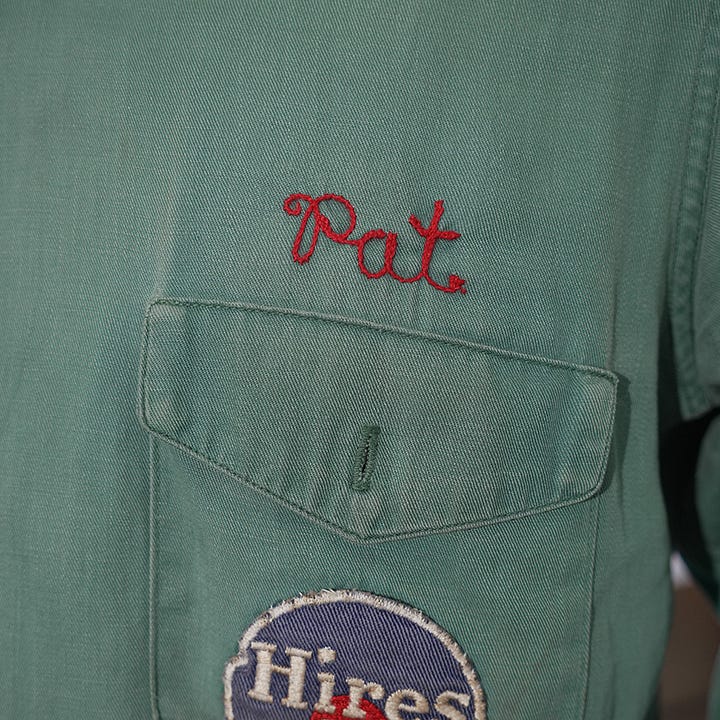
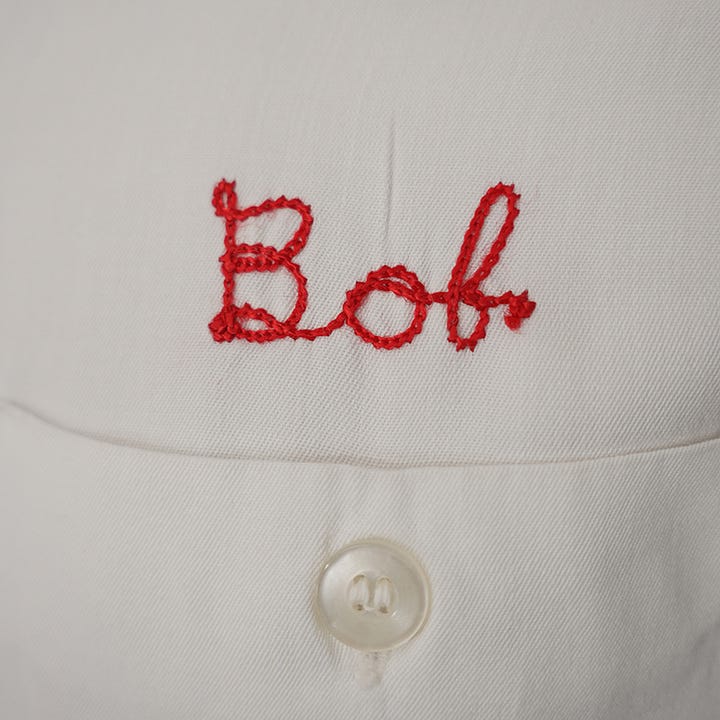
That’s because it is handwriting. Each of those names was written by hand, in real-time, by a skilled craftsperson operating a chainstitch embroidery machine.
The people who operated these machines were called Bonnaz embroidery operators, named after the inventor of the style of machine. They worked in factories and small lettering shops that dotted American cities from the late 1800s through the 1980s, and what they did required a combination of artistry, physical skill, and production efficiency that’s rarely understood today.
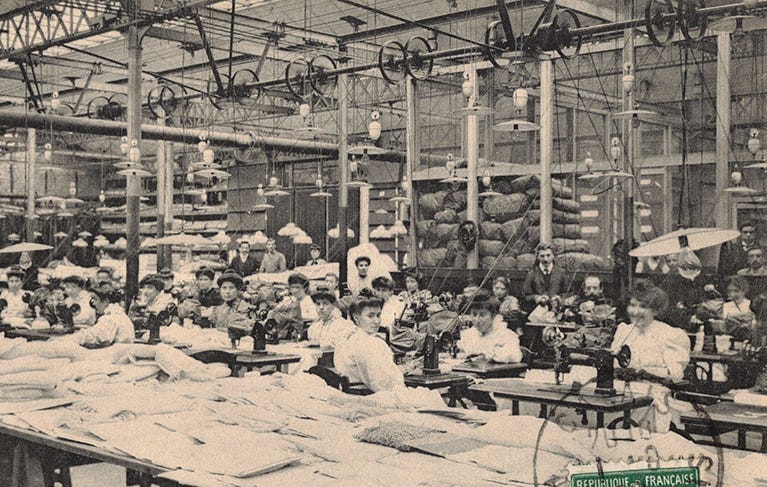
Unlike modern computerized embroidery where a machine follows a pre-programmed pattern, chainstitch embroidery operators manually control the direction of the needle while the machine creates each stitch. Operators write names in cursive by directing where that needle goes with a handle underneath the machine. One jerky movement or moment of hesitation and a capital “F” becomes a “J.”
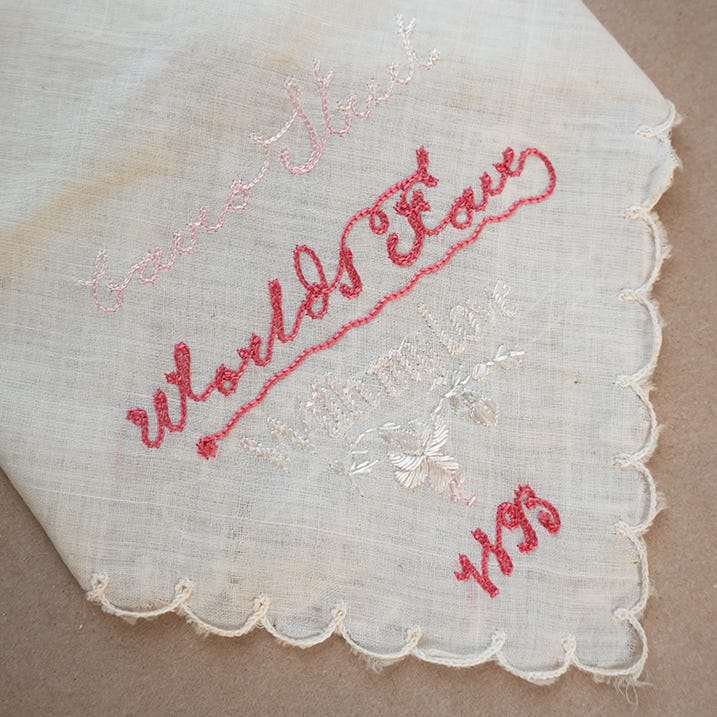
It takes years to develop the hand-eye coordination and muscle memory required to do this well. The best operators can work at impressive speeds while maintaining beautiful, consistent letterforms.
What makes chainstitch script distinctive is that it truly reflects the operator’s hand. Each chain-stitcher develops their own style, their own “penmanship”. The way they form capitals, the slant of their letters, the weight, spacing and flourishes, these are all unique to the operator.
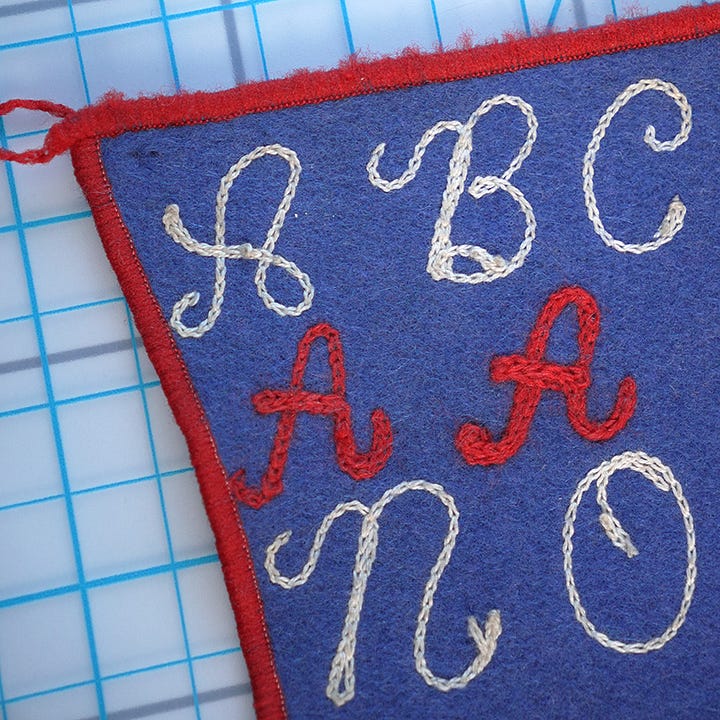
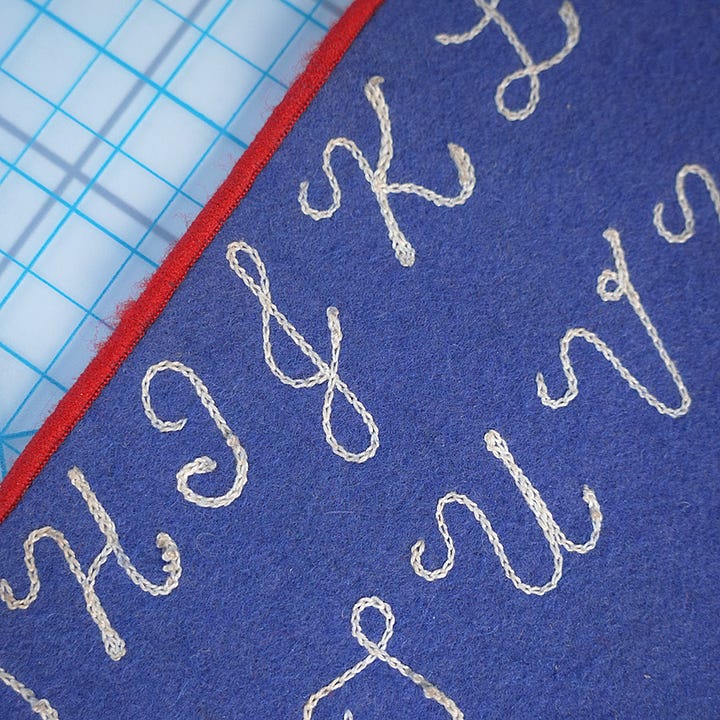
The beauty of chainstitch script lives in the details of individual letterforms. Every curve, every loop, every connecting stroke is a decision made in real-time. Operators develop signature ways of forming letters like the way an “R” connects to the next letter, or the flourish at the end of a “y” or “g.”
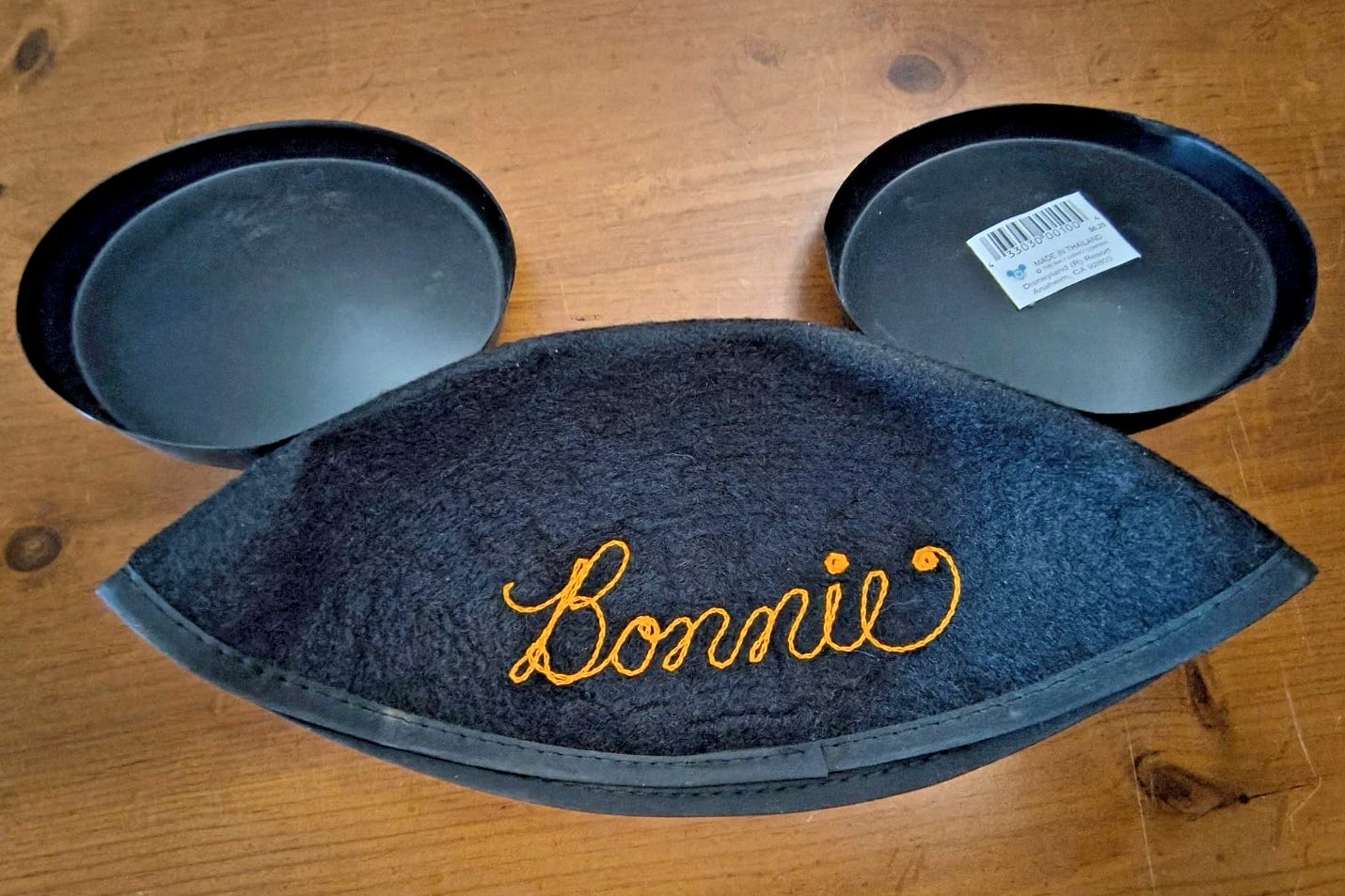
But some of the most beautiful lettering happens with letters like “i” and “j”, letters that traditionally require dots. In chainstitch, stopping to dot an “i” means an extra tie-off, a moment of inefficiency. Skilled operators loop back to connect the dot from the end of the word, creating one continuous path that’s both efficient and elegant.
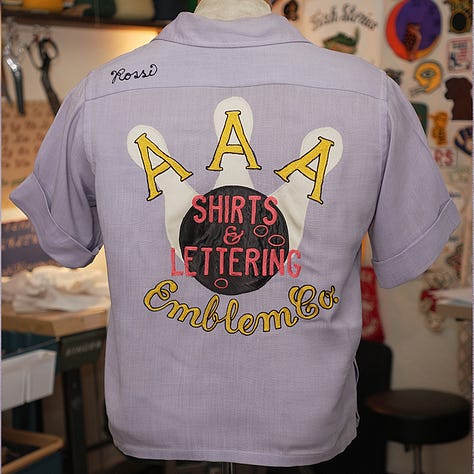
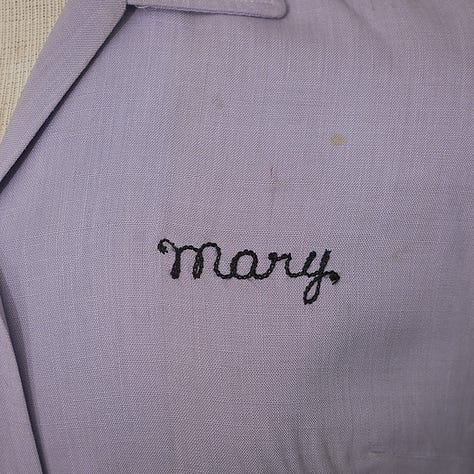
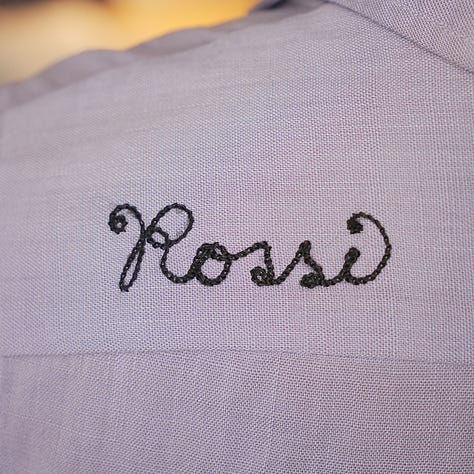
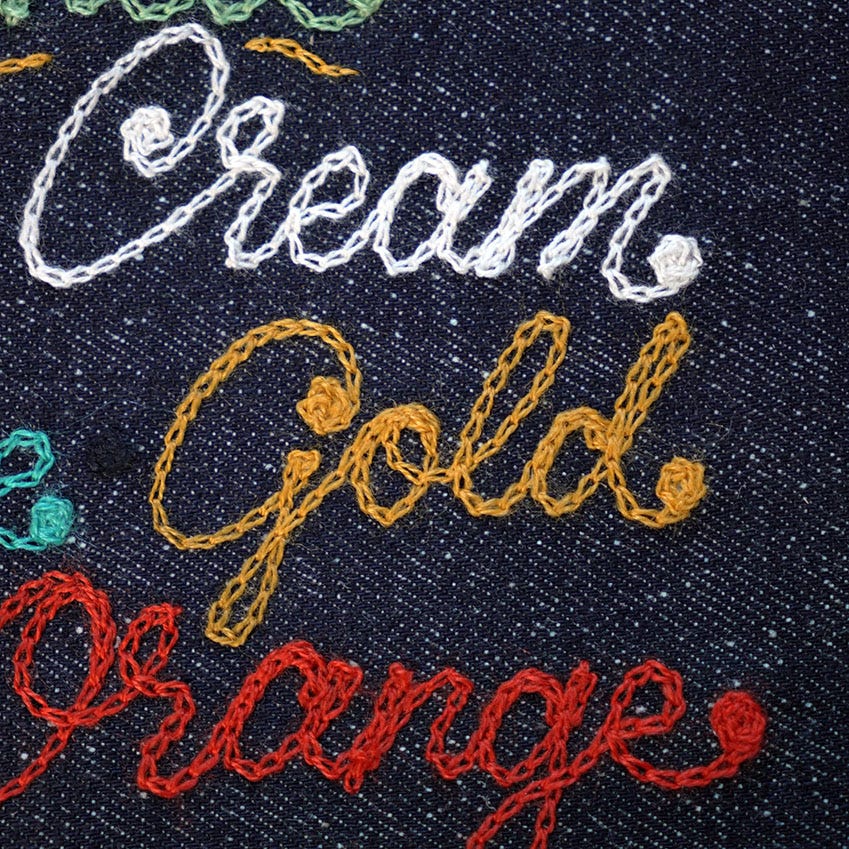
Look closely at chainstitch lettering and you’ll often notice small loops at the beginning and end of words. These aren’t just decorative flourishes, they’re functional. Operators often start and end words with tight circular motion, creating small loops that help lock the thread in place before tying off.
These loops became a signature element of chainstitch script. Operators incorporated them into the letterforms, turning a technical necessity into a stylistic element, a small or large circle that flows naturally into the first capital letter, or extends from the final stroke.
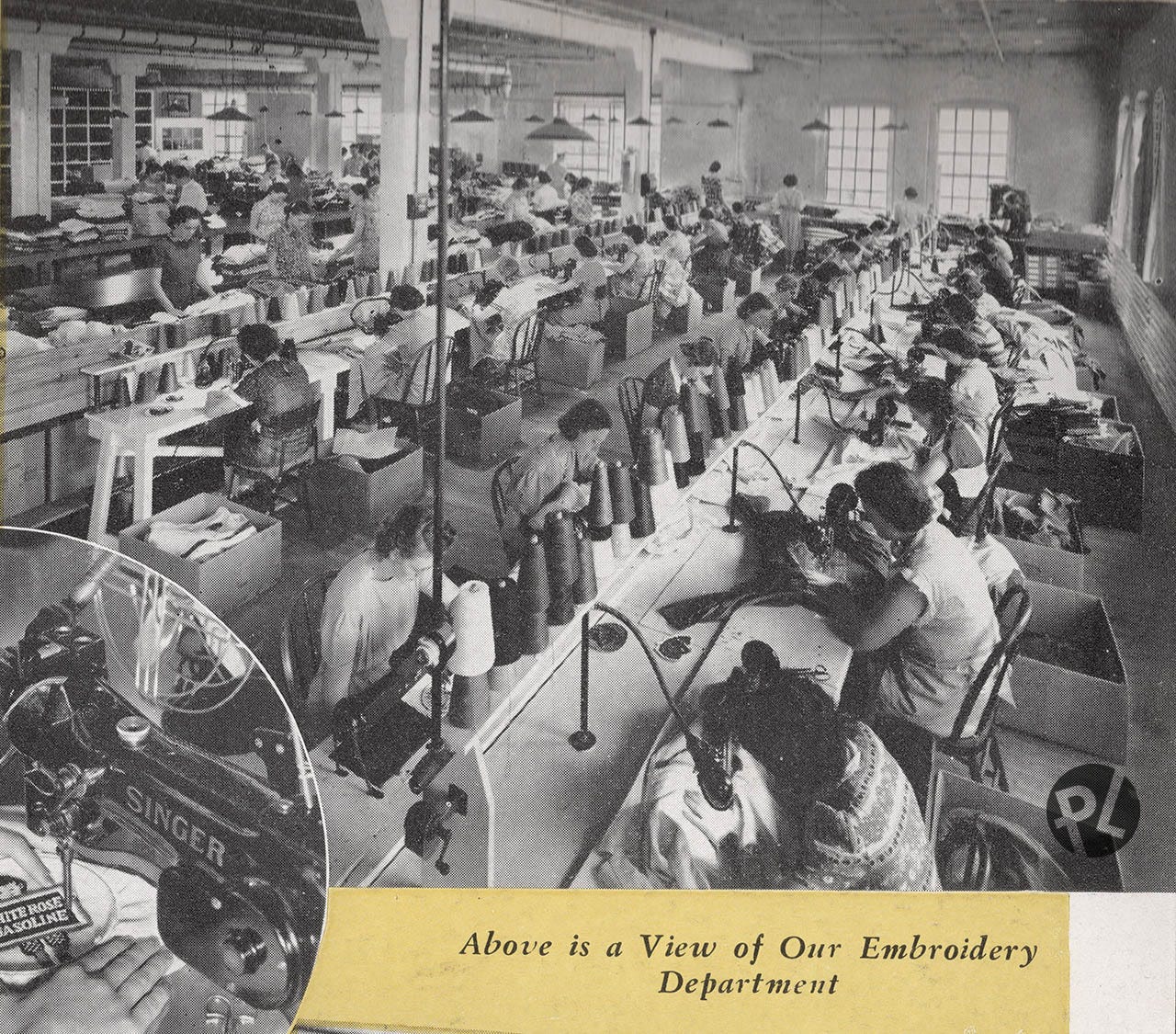
Most lettering shops were production businesses operating on tight margins and deadlines.
When a bowling league ordered thirty personalized shirts, efficiency was everything because the names were stitched one at a time. The real skill was producing beautiful letterforms repeatedly and efficiently, all day long.
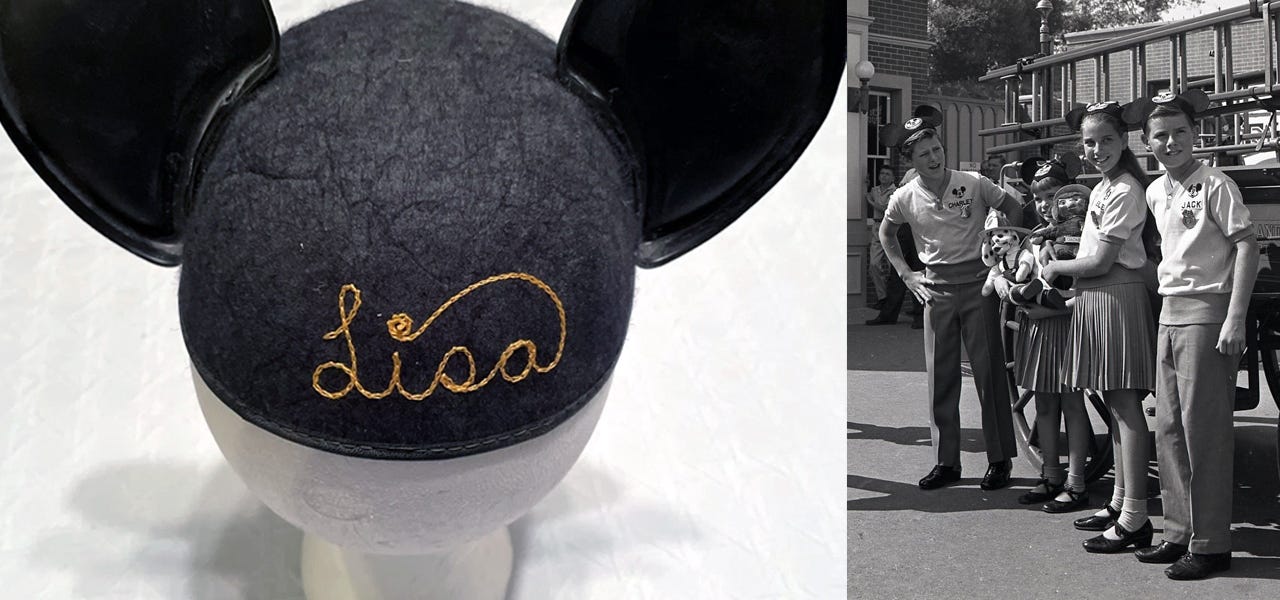
Many of these lettering shops have since closed their doors. Computerized embroidery took over the market. It was faster, more consistent and more economical for large runs. Even Disney parks, which had offered chainstitch personalization on Mickey ears for decades, eventually replaced their Bonnaz operators with computerized machines. The tradition seemed destined to become a footnote in textile history, preserved only on vintage clothing.
However, over the last fifteen years, a new generation has discovered chainstitch embroidery. Artists and designers are seeking out these old machines, learning the technique, and approaching it with fresh eyes. What was once purely utilitarian production work is being reimagined as an artistic medium and business avenue.
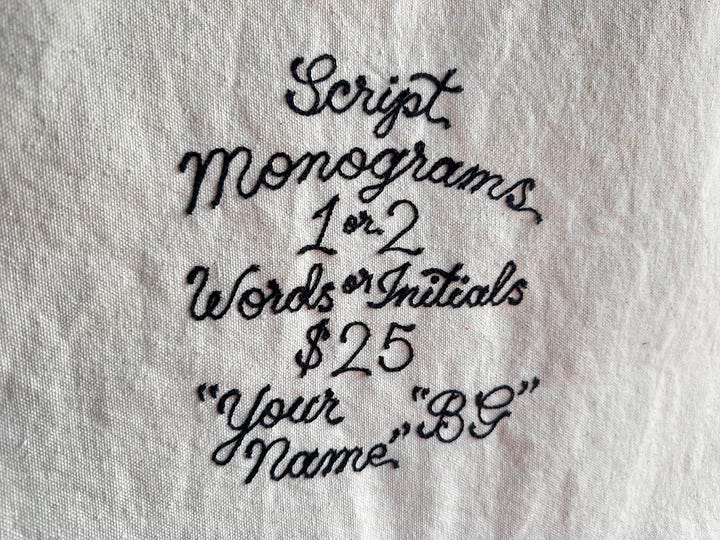
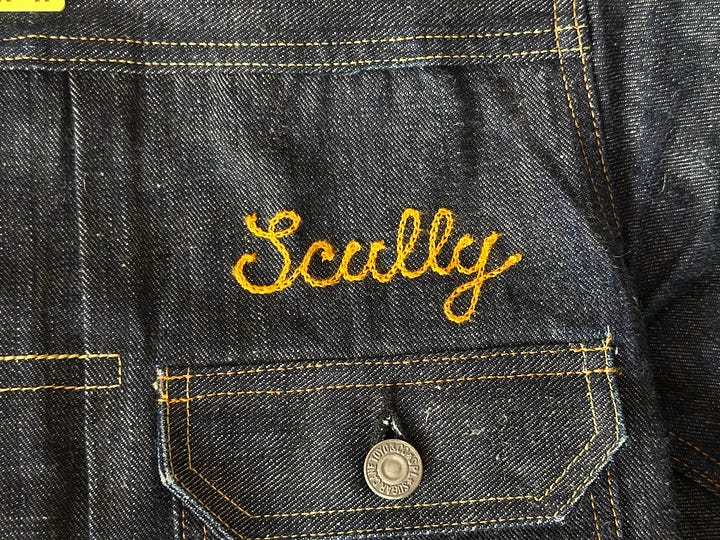
The revival has also brought new appreciation for the original craft. Contemporary operators understand the skill required because they’re developing it themselves. They recognize the production operators of previous generations not as anonymous laborers, but as craftspeople who honed an extraordinary skill.
There’s something irreplaceable about hand-operated chainstitch script. The slight irregularities, the flow, the personal quality of the letterforms - these qualities mark it as unmistakably human-made, impossible to replicate digitally.
But there is value in preserving and extending this letterform style to contexts where chain stitch embroidery isn’t practical or accessible. A font can bring the visual language of chainstitch to logos, packaging, mockups, and designs where embroidery would never be feasible, while still honoring the craft that inspired it.
Chainstitcher Script is our attempt at that preservation - a monoline script designed directly from the hand-operated look of chainstitch embroidery. It captures the human touch you’d get from an operator on a Bonnaz machine: bouncy connections, slightly irregular turns, and a looseness that feels stitched, rather than typeset.
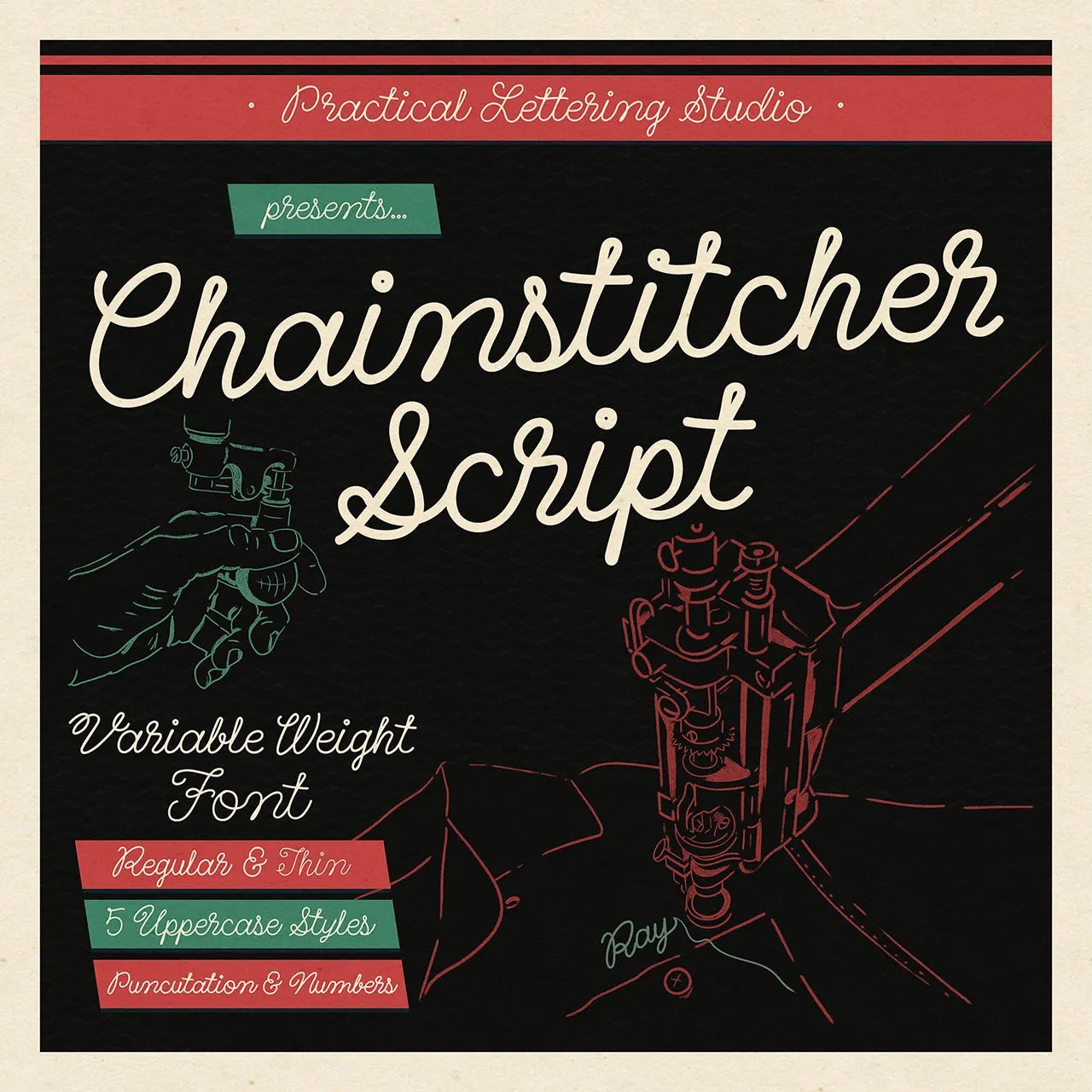
Chainstitcher Script can be used by embroidery operators for layouts and mockups. It also lends well to logo, patch and packaging design. Years of operating these machines taught me how letters should connect, how the letterforms should flow, and what makes the script feel like it’s hand lettered. Give it a try at PracticalLettering.com.
No posts
Comments
Nothing yet. Say the first thing.
Sign in to join the conversation.