
Bryan Mound sits off a two-lane road outside Freeport, Texas. From the shoulder you see pipes standing up out of the grass and the tops of a few tanks.
Under that lot sit hundreds of millions of barrels of crude, stored in salt caverns hollowed out of the coastal domes. Presidents use that oil in a crisis the way they reach for a carrier group.
It’s not flashy, but it is a geopolitical tool as important as the military.
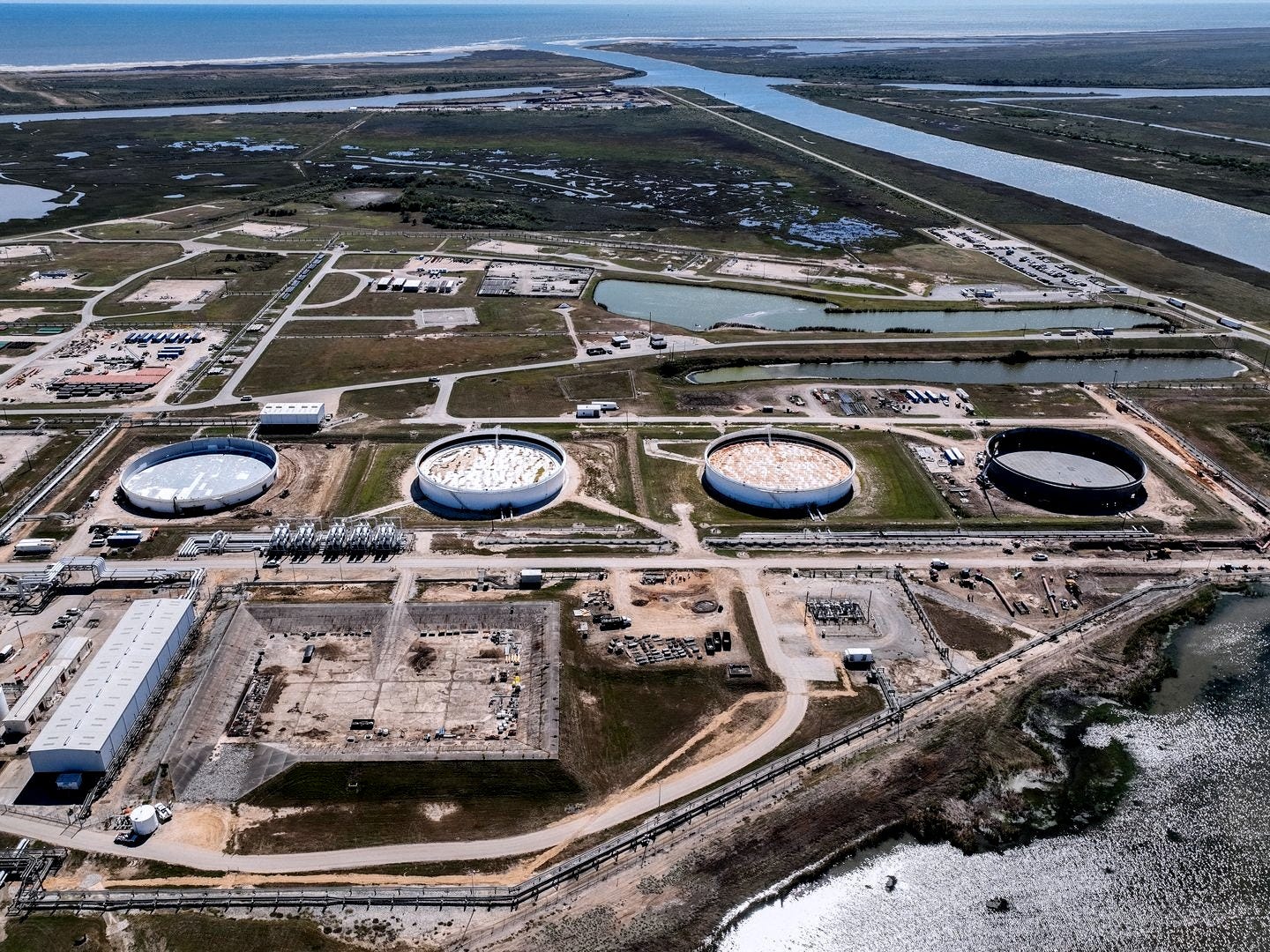
Washington calls it the Strategic Petroleum Reserve.
But the US is not the only one:
China sits on about 1.4 billion barrels.
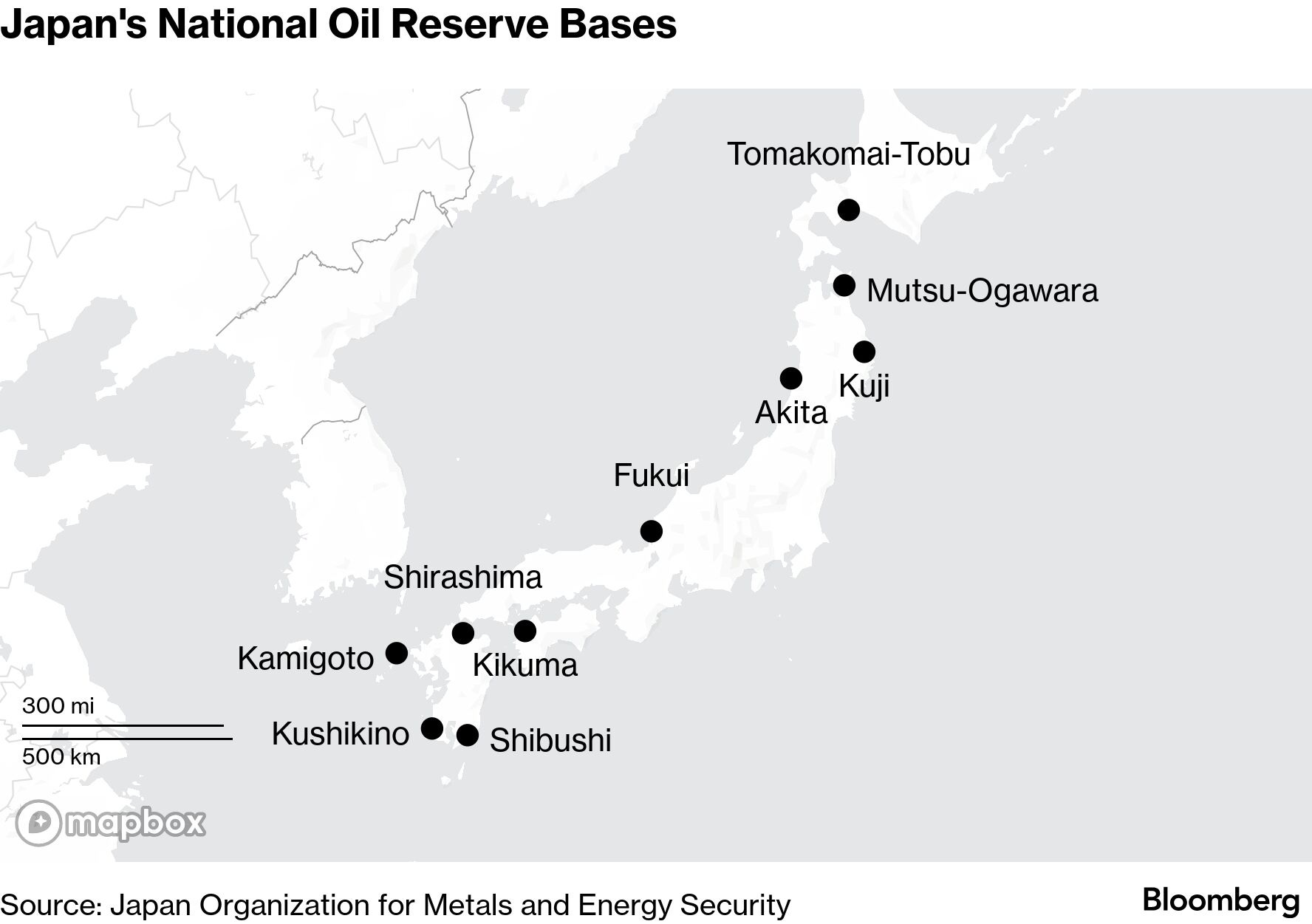
Japan’s holds 263 million.
Saudi Arabia keeps 82 million barrels in the ground.
Each of these governments buys crude at market price and leaves it sitting for years, paying for oil they have no intention of selling.
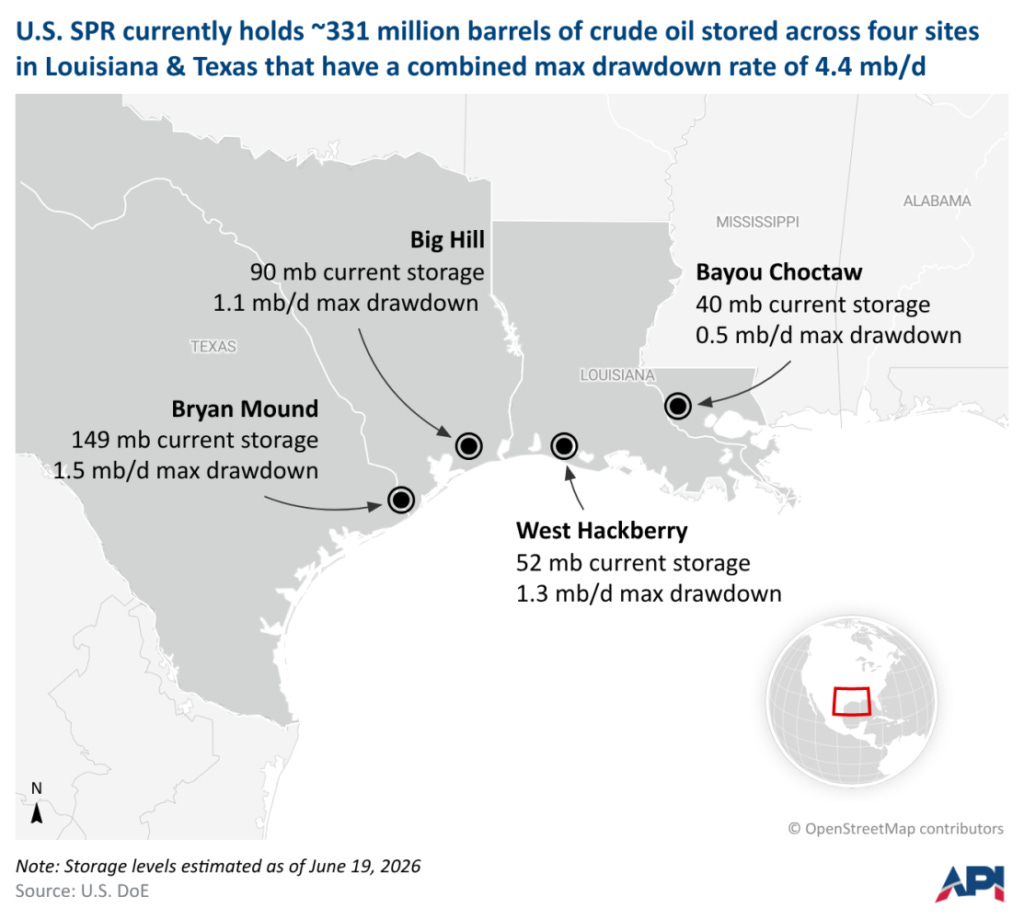
The US has an extensive network:
So does Japan:
But why would they bury so much valuable black gold under the ground? But that is the point of a strategic petroleum reserve.
A strategic petroleum reserve is a geopolitical risk management tool. It gives an important factor to governments: optionality.
What an SPR really buys is time for a country to strategize, hedge, and maneuver to keep its geopolitical edge.
To answer that, we must understand the details of the hack and its consequences. I want to start instead with definitions first, the model, and then why nations would keep an SPR in the first place.
The bottom of this article could be cut off in some email clients. Read the full article, unbroken here.
There’s a lot of confusing terms related to strategic reserve petroleum reserves. Many get thrown around without definitions. But the basic idea is related to storage, political dynamics, and geopolitical organizations that support nations with an SPR.
So it’s best to give you an illustration. Quick pass, then we build:
SPR (Strategic Petroleum Reserve): government-owned oil, stored underground, off-limits until the government says sell.
Barrel: 42 gallons. About eight fill-ups for a car.
Crude: raw oil straight out of the ground. Most reserves hold this.
Product: what a refinery turns crude into. Gasoline, diesel, jet fuel.
Salt dome: an underground salt pillar, hollowed out with water. Where America keeps its reserve.
Net imports: oil a country buys from abroad minus what it sells. The 90-day rule is measured against this.
Cartel: sellers who agree to hold supply back so prices stay high. In oil, that’s OPEC, founded in 1960.
Embargo: refusing to sell to one buyer at any price. Harder to answer than a price hike.
IEA: the buyers’ club, founded 1974. Thirty-two wealthy importers, each holding 90 days of net imports.
Collective action: the unanimous vote that triggers a coordinated release. Six in 52 years.
While these aren’t all terms, they’re used pretty often. And you’ll see them more later on. But what’s the model that a SPR is based on?
The hard fact in a geopolitical standoff: the side that runs out of options first loses. This is consistent from military sieges to trade wars. The side with the more resources buys optionality. Optionality buys bargaining power.
The same rule goes for energy crises. And an SPR gives that optionality:
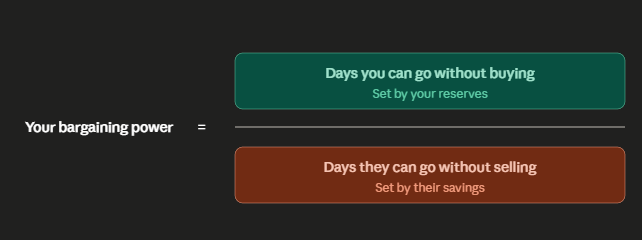
Bartering power here is a buffer here. If you’re against an oil producing nation, your leverage and bargaining power is greater when don’t rely on the next cargo. Or a sudden drop in oil inventory.
A government with 90 days of crude oil can mitigate a price spike, production cut, and refuse terms that would be unfavorable to it. Take that away, and leverage shifts to the producers or whatever geopolitical actor is preventing oil from getting through.
They key concept here is that optionality and expanded strategic breadth is the point of a Strategic Petroleum Reserve. To maintain freedom of action, an SPR must exist. But are there the specific types of freedom does it give to nations?
The ability to say ‘no’ outright is a superpower in international diplomacy. It means you belong to a select club: one with more resources, but also a framework help cover you.
In the case of oil, this means a network like the International Energy Agency (IEA) that sets rules and standards. Members act like sort of a sort of union, acting together and making each country’s SPR effectively the whole membership’s SPR. A producer or bad actor trying to squeeze one finds they’re squeezing them all at once.
But this wasn’t always the case. We have to look back to 1973: the Yom Kippur War.
Arab producers cut output and blocked shipments to governments that had backed Israel in the Yom Kippur War, and crude went from about $3 a barrel to $12 inside three months.
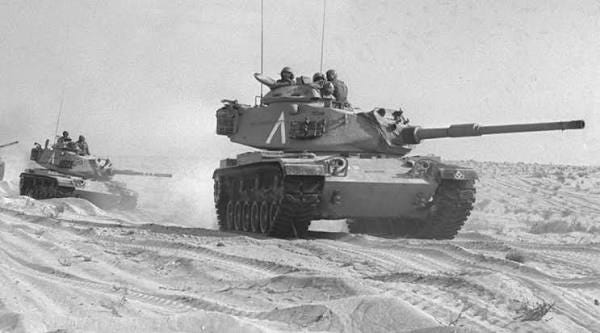
Of course, there was lasting political damage. Within eight weeks, the Western aligned nations began to go their own way, which was what OPEC wanted. In Asia, Tokyo shifted its public stance on the Middle East, while in France, Paris opened a private channel to Arab capitals hunting for a national exemption. This weakened the US and Western powers’ bargaining hand.
October 1973 is a textbook example of what happens to a countries when they lose that optionality that SPR or the IEA membership gives.
At a national level, what an SPR does for diplomacy seems complex, but it helps in a few ways:
Optionality. This again. But you’ll see it come up more. A reserve buys a government the right to refuse. Every diplomatic position rests on the ability to walk away from a bad offer, and a country running on fumes cannot walk anywhere. It buys space for time, so that different options can be considered.
Credible patience. The hard reality is 90 days of oil will not outlast a determined embargo. With an SPR, it lets diplomats and leaders room to breathe and consider a wider range of options. This lends an uncertainty factor to adversaries, especially when multiple nations with SPRs work together.
Collective bargaining. SPRs together allow one nation to support another. A cartel or group of bad actors has leverage if it can pick off nations one at a time by offering exemptions to the desperate. Shared stockpiles remove the desperation, so there is less chance for aligned nations to act desperate.
Signalling. Diplomacy relies on signaling, and SPR release announcements are exception. An announced release is a message to both the market and geopolitical rivals. It can be used to signal strength and prevent economic panic.
This all returns to what we call the patience gap. The side with more time sets the terms, and the negotiation follows from there.
The SPR gives a quantitative measure. It means that a government can calculate that national patience in barrels of oil. Then figure out what options they have in public, and the domestic policy they must maintain in private.
Otherwise you get this:
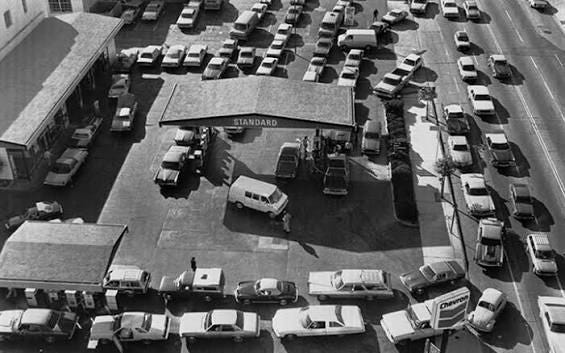
Quantitative measure of time for military or political action, anytime a geopolitical crisis with oil threatens.
But let’s get back to the International Energy Agency. Members cover each other. A producer cutting off one country now faces thirty, because the others can supply what the target lost.
Every member holds emergency stocks equal to at least 90 days of net imports:
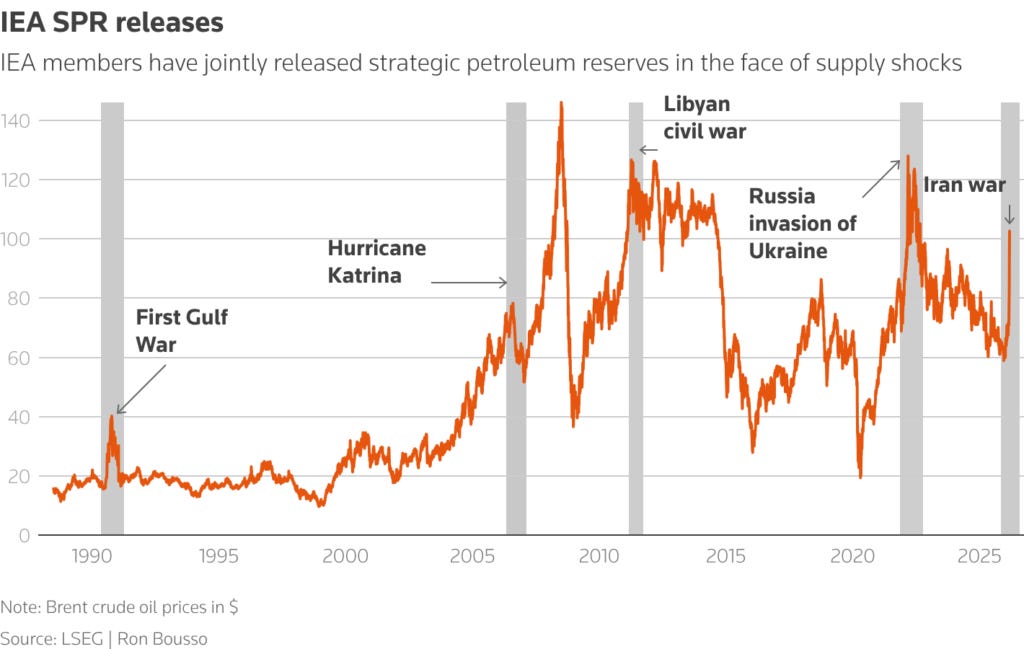
Oil is the collateral, and the bargaining power is the asset. In reality, member governments hold higher oil reserves than the 90-day stockpile mandated by the IEA.
That measurement explains why the 90-day rule survived 52 years of argument about energy policy. Governments have fought bitter fights over drilling, pipelines, and climate targets.
The stockpile rule stayed in place through all of them, because every side of those fights wants the same thing from it: room to say no.
But it also has another form of leverage.
A cartel’s power sits in a calendar. Which is what OPEC is.
Oil producers (especially the gulf states) hold a huge share of the cheapest oil, giving them immense leverage. And in an oil crisis that matters for one reason: the buyer runs short before the seller runs out of patience.
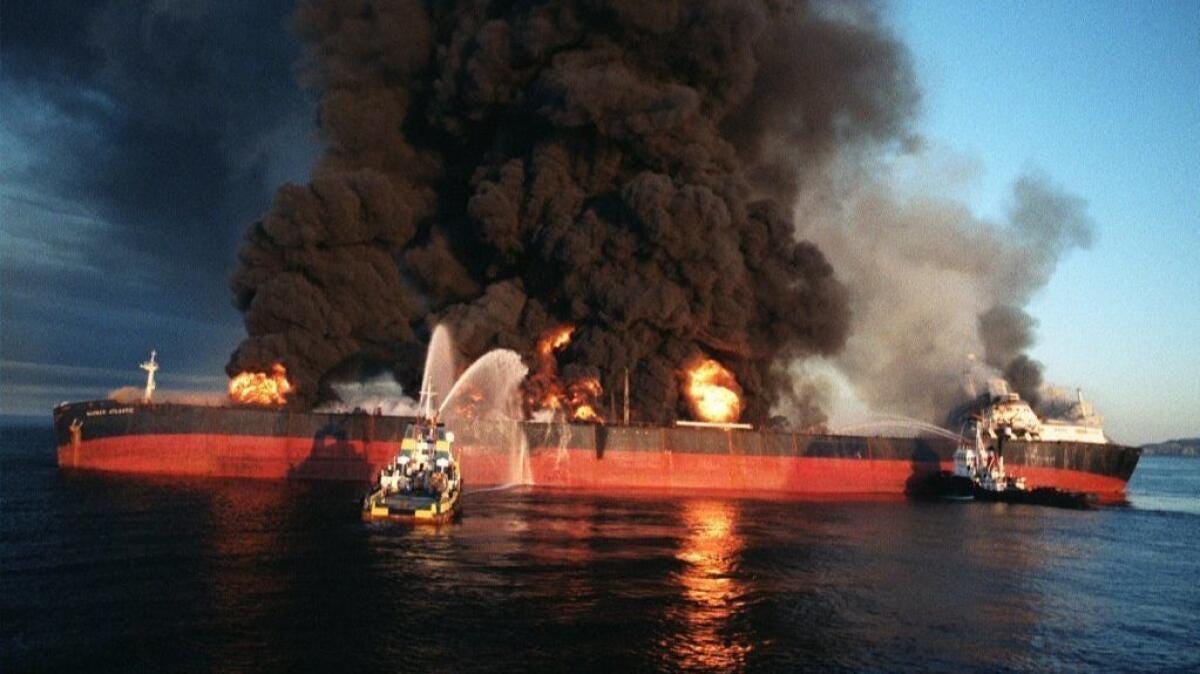
When cartels dominate the oil industry, a strategic petrol reserve becomes an instrument of alliance management. Or even maintaining national sovereignty. The barrels matter less than the obligations attached to them:
Leverage over your own allies. Members owe each other oil in a crisis, and a collective vote triggers the sharing. The country holding the biggest reserve shapes the terms on which smaller ones get supplied, and every member that joined gave up the right to cut private deals with producers. The reserve is the entry fee and the leash at once.
Disarming the other side’s best weapon. A threat works against someone who cannot absorb it, and nobody else. The 1973 embargo worked because the West had nothing buried. No embargo since has produced the same panic, and producers stopped reaching for that tool. Removing a weapon from the board is a permanent gain.
Buying freedom of action. A country that depends on one supplier ends up shaping its foreign policy around that supplier’s preferences. Reserves cut the wire. The West could sanction Russian oil in 2022 because it could replace the barrels it refused to buy, and IEA members ran two collective releases that year to make the policy survivable at home.
The hole in the bloc. The whole design was meant to turn the industrial democracies into a single buyer nobody could split. It has 32 members. The largest oil importer on earth is not one of them. American analysts estimate China closed 2025 sitting on about 1.4 billion barrels. This more than all 32 members hold in government stocks combined, and it owes nobody a vote, a report, or a barrel.
What this means is obligations are a burden. Different countries see it differently:
The IEA network. The older one is the IEA network, drawn up in the 1970s by US-aligned countries in pain after the 1970s Oil Shock. Members promise to hold stocks, to report what they hold, and to release together on a vote.
Associate nations. Fourteen countries sit at the table without signing the contract. China, India, Brazil, and Indonesia take the data, the forecasts, and the meetings. They owe no stockpile, no report to file, and no share of any release. Access without obligation.
Non-members. Everyone else, and most of them sell oil rather than buy it. Saudi Arabia, Russia, and Iran stockpile to have oil to ship, without driving down prices. Or to keep their militaries and domestic industries going.
Notice that there are several major oil producers not in the IEA network:
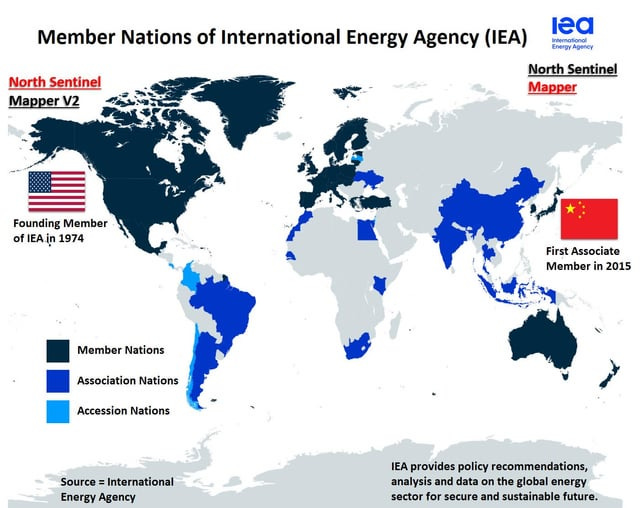
Each association is a geopolitical hedge. Each one prices a different fear:
Member. Collective defense. An IEA member worries about a shortage it has to ride, so it relies on allies.
Associate. They maintain their own SPRs, but retains the options of to work with the IEA.
Non-member. A non-member fears the day nobody calls, so Gulf states park oil inside their customers’ borders and Venezuela stores what it cannot sell.
But geopolitics isn’t the only reason. As I like to point out, political economy is the foundation of nation-states. So geopolitical needs are tied tightly with economic ones.
A country spends abroad what its economy generates at home. SPRs oil reserves defend that base, and they pay for the tools built on top of it.
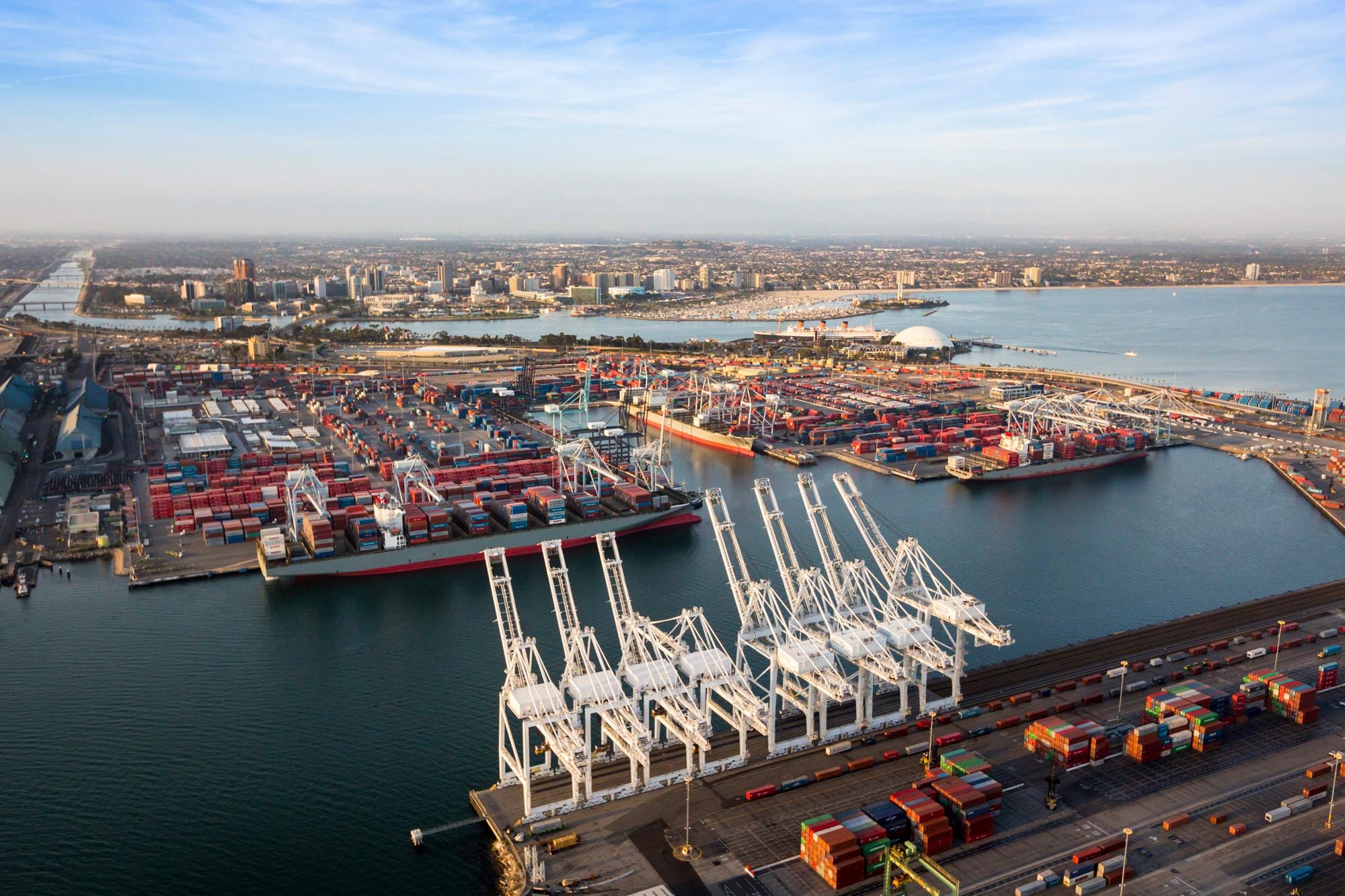
Every insurance policy creates the same temptation, and oil reserves have no special protection against it. Governments pay the premium across decades.
The payout feels free on the day it lands. And there are four dynamics:
Leverage over your own allies. Membership costs something real. A member holds 90 days of stocks the government can reach, keeps a plan to cut national oil use by a tenth on command, and can force its companies to open their books. In return, nobody gets picked off alone. Every release needs a unanimous yes, so the smallest member can block the biggest.
Disarming the other side’s best weapon. A threat works on someone who cannot absorb it and on nobody else. In 1973 America had no reserve at all, and Europe held stocks on paper with no way to act together, so allies bid against each other. No oil embargo since has caused that kind of panic.
Buying freedom of action. A country leaning on one supplier ends up shaping its foreign policy around that supplier’s tastes. Storage cuts the wire. Europe and America banned Russian oil in 2022 and could afford to, in part because members opened their reserves twice that year, 62.7 million barrels in March and 120 million in April.
The hole in the bloc. The design was meant to turn the rich importing democracies into one buyer nobody could split. Thirty-two countries signed. China took a seat as an associate in 2015, which brings the data and the meetings and no duties at all. It closed 2025 holding about 1.4 billion barrels, the largest national pile on earth, and it owes nobody a vote, a report, or a barrel.
The strategic benefits of a reserve are paid across decades by people who will never notice. Its a down payment and insurance that most us won’t see. And probably won’t see until it fully runs dry.
Leaders face a permanent temptation to drain it. But if it is frivolously drained for self-inflicted mistakes, it weakens a country. The difficulty if that is a true emergency or one used to prop up his declining poll numbers and failed policy at home.
Economists call this moral hazard, and here it takes a specific shape. A release during a mild squeeze also costs a president nothing at the polls, and saves drivers a few cents. It buys them political capital to do other things.
As the US SPR did during the Ukraine War and now during the Iran War:
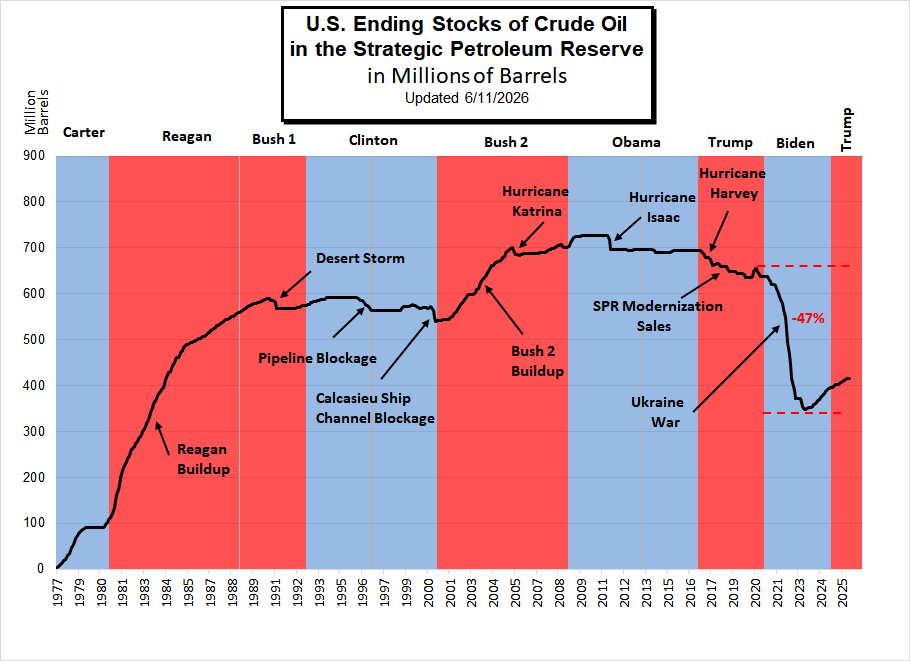
I don't think that line means the system is broken.
It does mean the buffer available for the next crisis is about half what it was for the last one. It limits military power projection and sustainment.
Force is the argument a country reaches for once its other arguments run out.
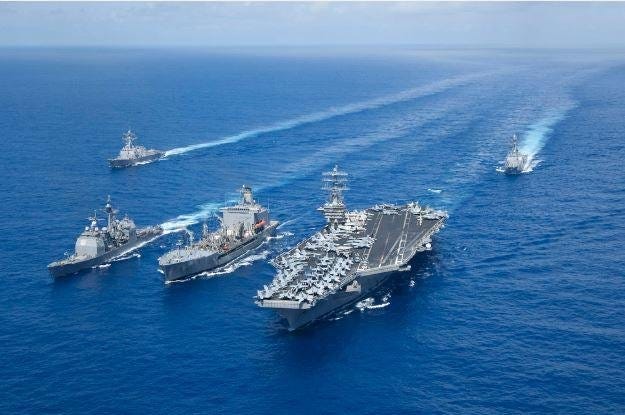
Armies burn fuel faster than cities do, and the burn rate is what turns an energy problem into a war problem. You cannot project power without sufficient stocks of fuel.
Logistics and sustainment are a constant problem:
Operational tempo. An armored division consumes more fuel than a small town, and a carrier air wing consumes more than the division. Fuel sets the ceiling on how long a force can fight and how far it can go. Armed forces keep their own war stocks for that reason. The national reserve sits behind those, one layer deeper.
Power projection. Fighting far from home is a fuel problem before it is a shooting problem. The Pentagon burns about 4.6 billion gallons a year, more than most countries, and moving that fuel is the most dangerous job in a war zone. A state that cannot guarantee its own supply fights near its borders or not at all.
Sovereign supply. A national stockpile is the last crude a government can move without asking a market for permission, at the moment when markets stop selling to anybody at any price.
Escalation avoidance. The alternative to a full reserve is force, and force is the expensive option. A salt cavern costs a few billion dollars and holds its contents for decades. A sustained Gulf deployment costs that much in a season and carries the risk of the war it was meant to prevent.
The hard ceiling. A reserve has a maximum flow rate as well as a total, and the flow rate decides whether it matters in a war. The American reserve was designed to pump 4.4 million barrels a day
There’s that optionality again, except it gives military optionality. You can’t sustain hard power leverage. Even if you have sufficient fuel, it does limit your campaigns. It limits the last argument of kings (force) to the last whimper of kings.
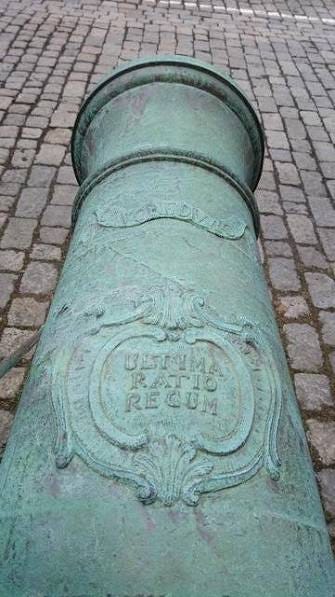
Fuel gets seen as only used to fuel jets, tanks, and ships. But its also used to sustain the humans that are on those ships.
Fuel isn’t only for the weapons or equipment used in the kill chain:
Water purification
Lubricants
Ammunition transport
Generators for radios and radar
Lubricants, grease, and hydraulic fluid
Air conditioning in desert heat
These are only a few of many. A small drop in the reserve of that fuel can be catastrophic and affect other theaters. Reallocation of reserves can weaken a superpower in other theaters.
So the reserve does not entirely remove the military option. What it does do is pay for the weeks when the military option is still available.
Four numbers, in order of how much they’d change my mind:
The refill schedule. Exchange agreements will dictate how global stockpiles recover once the Iran crisis subsides. Watch whether nations can successfully rebuild these buffers through structural refiner returns rather than being forced to buy replacement barrels on the open market, which would trigger a secondary, post-conflict price spike.
China’s drawdown. Beijing flipped from aggressively building its massive crude stockpiles to systematically drawing on them after the February escalation. The exact volumetric pace of this burn is the ultimate bellwether for the conflict's timeline. A high-velocity drawdown may mean Beijing expects a short-lived crisis. A protracted velocity may mean preparation for a protracted, multi-year conflict.
The Republic of Korea. Unlike the rest of other IEA nations, South Korea’s strategy is managed by the state-owned Korea National Oil Corporation (KNOC). Unlike Japan's heavy public release, South Korea has aggressively guarded its pure government stockpile to shelter its massive petrochemical and industrial manufacturing sectors. A release here would signal a major shortage.
OPEC exits. If a second member follows the UAE out, the cartel logic that justified the whole system starts to dissolve, and the argument for reserves shifts from cartels to chokepoints.
Thanks for reading!
As always, thank you, paid subscribers, for supporting The People’s Art of War.
Before then, if you have any questions or comments, feel free to comment. I’ll answer them in a follow-up podcast or article.
And if you haven’t already followed:
Spotify: Statescraft
YouTube: People’s Art of War
Comments
Nothing yet. Say the first thing.
Sign in to join the conversation.