
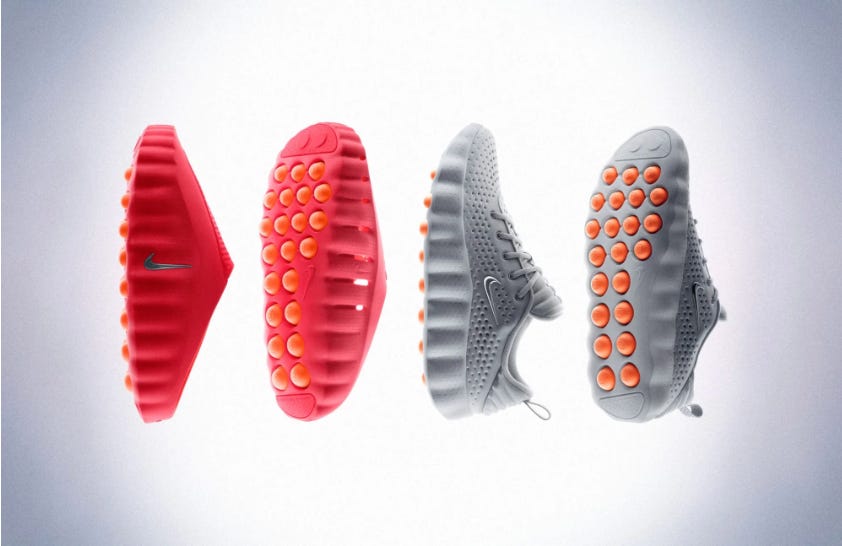
Nike just spent eight years building a shoe that names the right mechanism and delivers the wrong intervention.
The Mind 001 and Mind 002 launched this week from what Nike is calling the Mind Science department.
Twenty-two foam nodes under each shoe, designed to wake up the mechanoreceptors in your soles and bring focus to the brain.
The science Nike is naming is accurate. Plantar mechanoreceptors do feed the brain a continuous map of position, pressure and movement, and that map shapes how posture and gait are organized. Posturepro has been teaching this since 2006.
Two peer-reviewed studies on footwear draw the line Nike’s marketing department did not.
Robbins, Gouw and McClaran (Journal of the American Geriatrics Society, 1992) tested the assumption that thick, soft midsoles improve stability in older adults. They found the opposite. Thicker, softer shoe soles produced worse balance, not better. Cushioning attenuated the very sensory input the brain uses to organize posture.
Palluel, Olivier and Nougier (Behavioural Neuroscience, 2009) tested the inverse. They had elderly subjects walk in sandals with spike, textured insoles for five minutes. The result was a lasting improvement in postural control, measurable after the insoles were removed. Targeted stimulation at specific zones did what cushioning could not.
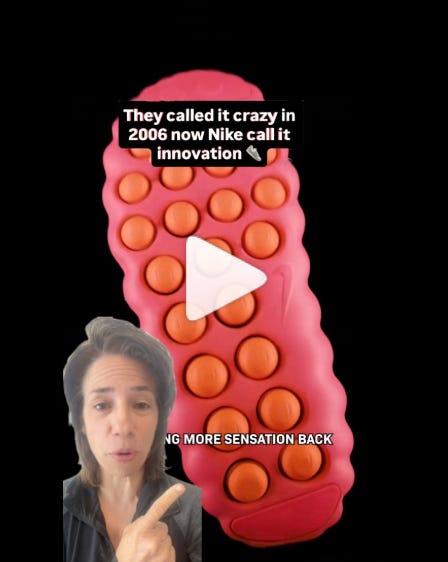
The brain is not organizing posture randomly. It is organizing posture based on the sensory input the nervous system is receiving from below.
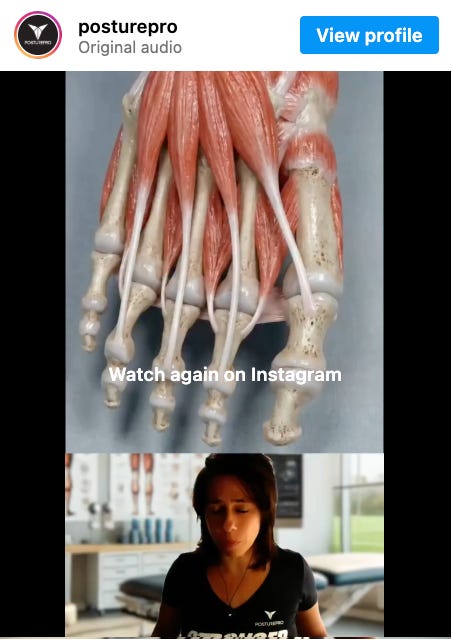
This is why a foam node feels good and changes very little. The cushioning under the foot moves. The motor pattern locked in by the nervous system does not. The body returns to the same protective strategy it has been running because the cushioning never let new information through in the first place.
Wang and Newell (Experimental Brain Research, 2012) showed that asymmetry of foot position and weight distribution channels the inter-leg coordination of standing. Both position and pressure influence postural control. The brain weights this information against vision and the vestibular system to organize balance. When one channel is muted, the others compensate, and the pattern reorganizes around the muted input, not the corrected one.
Posturepro Therapeutic Insoles deliver calibrated stimulation to specific mechanoreceptor zones throughout every hour of standing and walking, inside any shoe, including the Nike Mind. Not once in a marketing cycle continuously. The goal is to change the sensory input the nervous system is working from, so the motor pattern it generates has a reason to shift.
That is the pathway Nike’s launch is describing the result of and the one their engineering didn’t deliver. Correct the Pattern here.
References:
Robbins SE, Gouw GJ, McClaran J. “Shoe sole thickness and hardness influence balance in older men.” Journal of the American Geriatrics Society, 1992. PMID 1401691.
Palluel E, Olivier I, Nougier V. “The lasting effects of spike insoles on postural control in the elderly.” Behavioural Neuroscience, 2009. PMID 19824780.
Wang Y, Newell KM. “Asymmetry of foot position and weight distribution channels the inter-leg coordination dynamics of standing.” Experimental Brain Research, 2012. DOI 10.1007/s00221-012-3212-7
Nike. “Mind 001 and Mind 002, official launch announcement.” nike.com, 2026.
Related reads to complete your posture correction:
Comments
Nothing yet. Say the first thing.
Sign in to join the conversation.