
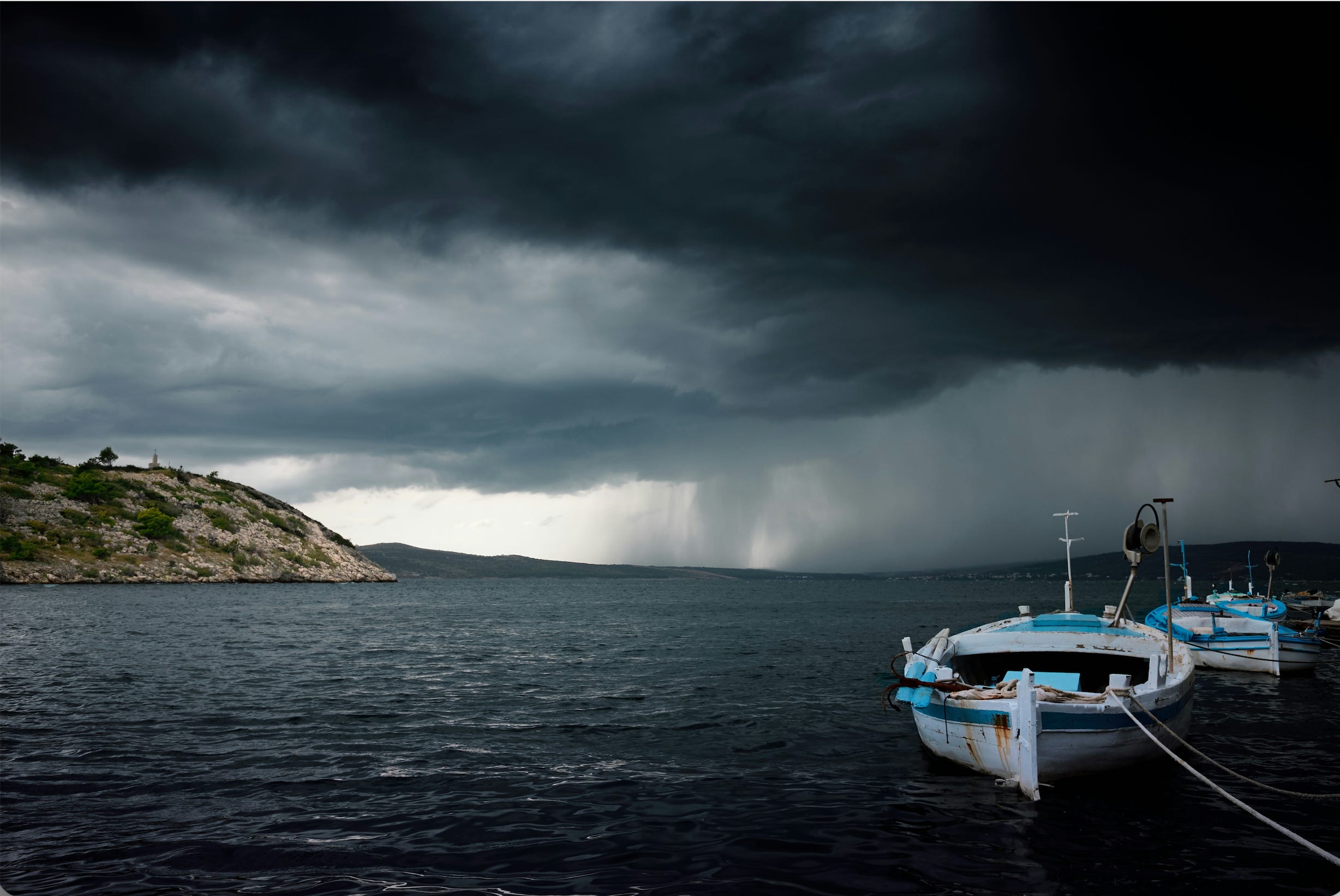
Photo by Frans Ruiter on Unsplash
In Matthew 14:22–33, we know the familiar Biblical account of Jesus sending the disciples ahead in a boat while he goes up the mountain alone to pray. The sea becomes rough, the wind is against them, and they spend the night struggling to make any progress. Then, in the darkest part of the night, Jesus comes towards them, walking on the water.
This is a story for anyone who has known what it is to keep rowing and still feel as though they are going nowhere. The disciples are not disobedient, Jesus himself has sent them into the boat, but they find themselves battered by waves and opposed by the wind. It is a gentle but important truth: being where God has called us to be does not always mean that life will feel calm or even safe.
Matthew says that the boat was many stadia from land, meaning a long way from the shore. The disciples are not close to an easy escape and they are out in the deep, exposed, tired, and fearful. Believe me I know what this is like. Recently in my kayak I was caught battling against the wind and sudden waves that blow up on Lake Ontario, and it can be frightening when you notice you are making little to no progress but you are exhausted with making such physical effort. It can be very frightening.
Share Contemplative Christian in a PostSecular Culture of Collapse
We may know that place: a season when the shore seems far away; when security, health, home, money, friendship, or confidence feel beyond reach. There can be a particular loneliness in struggling through the night, sometimes called a dark night of the soul.
Meanwhile, Jesus is on the mountain praying. He is not indifferent to their danger. His prayer is part of his love for them. Before he comes to them in the storm, he is turned towards God the Father the Creator reflecting his dependence on the relationships of the Holy Trinity.
I am reminded that contemplative prayer does not mean escaping the pain of the world, it means being rooted deeply enough in God to meet the pain of the world with love.
Jesus comes “in the fourth watch of the night.” In the Roman way of marking time, this was roughly between three and six in the morning: the hour when night feels longest and human strength is lowest. Matthew seems to deliberately invite us to notice this. Jesus does not always come according to our preferred timetable, yet he comes. Sometimes he comes at the hour when we have exhausted our own resources and can no longer pretend that we are in control.
When the disciples see him, they do not recognise him. They think he is a ghost, and they cry out in fear. The Greek word for fear here is phobos, from which we get the word ‘phobia.’ It is not mild concern. It is the fear that takes hold of the whole person, the fear that imagines danger before it can recognise love.
How often can fear do this in us? We may pray for God to come close, yet when Jesus comes in an unfamiliar form, we do not recognise him. Often we want to be rescued from difficulty. A challenging conversation, an unexpected person, a small opening of hope, a call to take one faithful step: these may not look like the rescue we expected. Fear can make us mistake a presence of the love of God for a new unknown threat.
Jesus speaks straight into their terror: Take heart; it is I; do not be afraid. The Greek phrase translated ‘take heart’ is tharseite. It is an imperative to be courageous, to take confidence, to let your heart be strengthened. Jesus does not shame them for being afraid, but instead he gives them a word to stand on. Courage is not the absence of fear, it is hearing the voice of Jesus the Christ within fear and allowing that voice to become more real than the storm.
Then comes the deepest phrase of all: ‘It is I.’ In Greek, it is simply egō eimi: ‘I am.’ Of course, it can mean, ‘It is me’, however it also strongly carries an echo of God’s self-revelation to Moses: ‘I AM’ or Yahweh. On the waters of chaos, in the middle of the night, Jesus speaks the divine name. He is not merely saying, ‘Do not worry, it is me Jesus.’ He is, I believe, revealing that God as the ‘I AM’ who is Jesus is present with them in the storm.
This does not mean that the wind immediately disappears. The disciples still have waves around them. But the most important reality has changed - Jesus is there.
In contemplative prayer, we may not receive quick answers or a sudden removal of every trouble, but we learn, slowly and deeply, that we are not alone. Beneath our anxious thoughts, under the chaos of life and what may happen next to us, God is present: egō eimi - I Am.
Peter responds with a bold and vulnerable request: Lord, if it is you, command me to come to you on the water. He does not ask Jesus to make the sea calm first. He asks to come nearer to Jesus. That is the heart of prayer: not simply wanting a safer life, but wanting Jesus Christ himself.
Jesus answers Peter with one word: Come. The Greek is elthe - literally come here. It is simple, direct, and personal. The invitation does not explain the storm. It does not give Peter a map or a guarantee. It gives him Jesus’ word. Peter steps out, not because water has become naturally safe, but because he has heard Jesus call him and he instinctively trusts.
For a moment, Peter walks towards Jesus. Then he notices the wind.
The Greek here states that, seeing the wind, he became afraid.
blepōn de ton anemon ischyron ephobēthē.
This is so human. He had already seen the wind, the storm was there before he stepped out from the boat, but now the storm becomes the centre of his attention, and Jesus as the ‘I AM’ is moved to the edge of it. When fear fills the whole horizon, we begins to sink.
Peter’s prayer as he sinks is one of the shortest and truest prayers in the Gospels: “Lord, save me!” There is no polished language, no explanation, no attempt to look strong. In Greek: Kyrie, sōson me - Lord, save me. It is the prayer of a person who knows they cannot save themselves. It is a prayer we can pray when words fail, in grief, panic, temptation, illness, exhaustion, or despair.
Matthew tells us that Jesus immediately reached out his hand and caught Peter. The word is eutheōs in Greek means at once or straightaway. Earlier, Jesus came in the late hours of the night, now, when Peter cries out, his hand is immediate. Jesus may not always prevent us from entering difficult waters, but he does not stand at a distance when we begin to sink.
Jesus asks Peter, You of little faith, why did you doubt? The Greek word for doubt is edistasas, related to distazō. It suggests being divided, standing in two minds, wavering between trust and fear. Jesus is not crushing Peter with criticism, he is gently naming the divided heart. Peter has faith - he stepped out of the boat - but it is a fragile faith, pulled in different directions distracted in this situation by the storm.
Perhaps this is a word for us too. We need not wait until our faith is perfect before we come to Jesus. Peter’s faith, courage and trust of Jesus was mixed with fear, hesitation, and doubt. Yet Jesus still called him, received his cry, and took hold of him. The loving restorative purposes of God are not reserved for those who never waver. Instead they are given to those who turn towards Christ, even with trembling hands.
When Jesus and Peter get into the boat, the wind ceases. The disciples worship Jesus, saying, Truly you are the Son of God. The story ends in worship, not because the disciples have become fearless heroes, but because they have seen who Jesus truly is. The storm has revealed something about Jesus to be the Christ that calms the sea: he comes near, he speaks peace, he calls, he saves, and he holds.
This passage invites us to sit quietly with a question: where is the storm in me today? Perhaps it is obvious; perhaps it is a low, constant unease. We do not need to deny it or make it sound holy. We can bring it honestly before God. Then we can listen for the voice of Jesus: Tharseite. Egō eimi. Mē phobeisthe. Take heart. I Am. Do not be afraid.
Perhaps we may hear, beneath all the busyness and bustle of our lives, one more word: Elthe. Come. Come as you are, come with your questions, your weariness, and your fragile faith. Come, not because you are strong enough to cross the water alone, but because Jesus the Christ is there, his hand already reaching towards you.
Share Contemplative Christian in a PostSecular Culture of Collapse
Comments
Nothing yet. Say the first thing.
Sign in to join the conversation.