
What can a game review accomplish? How do scores work at different publications? And why are critics often treated like popular parasocial pals and recurring main characters in social media discourse?
Every month or so through the rest of the year, I’ll be chatting with critics across text, audio, video, and beyond to learn how the craft works for some of its top practitioners. And along the way, I’ll show you the countless ways a review can be prepared.
This week, you’ll hear my conversation with Harper Jay, a meticulous and thoughtful critic who wrote an essay on the craft that inspires me to this day: Video Game Criticism Is a Kindness. And in August, you’ll hear my chat with Christian Donlan, the award-winning critic and author who finds the human in every little piece of software that his fingers tap. (This conversation was originally scheduled to air next week, but I’m recovering from laryngitis. So, next week listeners will get a remix of some of my favorite Patreon bonus segments.)
These are two spectacular conversations that left me inspired. I hope they do the same for you. These conversations focus largely on text, but as summer turns to fall, the series will expand!
Act 1: Why Game Criticism Is a Kindness
Act 2: What a Game Review Can and Can’t Do
Patreon Bonus: The Real Reason Review Scores Make People So Mad
Harper Jay: Critic and Writer

Until July 9th, first-time Patreon supporters get their first month for $2. That includes everything: the bonus segments for every episode; Past Games, the monthly series on the histories of classic games; the book club series, in which I have full-spoiler conversations with directors of hit games.
For this week’s 25-minute bonus section, I invited Patreon subscribers to submit their questions about game reviews, including…
Why don’t most outlets use the full 10-point scale?
What’s the difference between criticism and reviews?
Do formats (text, video, audio) change the way critics think about games?
Hear the answers when you support the long-term health of this show for just two bucks!
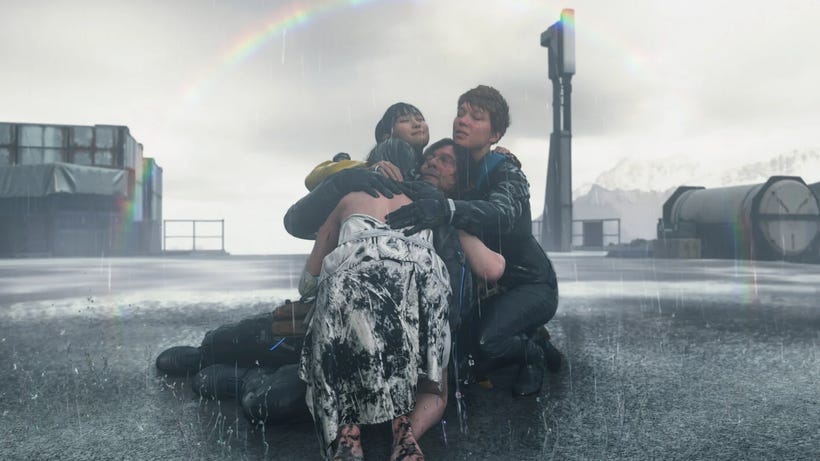
Games Criticism Is A Kindness (Kotaku)
Kieron Gillen (Wiki)
The New Games Journalism (Kieron Gillen’s workblog)
Art for Art’s Sake (The Art Story)
Alan Moore Interview: Magical Consciousness, Disowned Works, and the Long London Quintet (Retrofuturista)
PsychOdyssey: The Making of Psychonauts 2 (Double Fine)
Trash, art, and the movies by Pauline Kael (Harper’s)

The Arcade Review: Issues 1-3 (StoryBundle)
The New Games Journalism, Same As The Old Games Journalism (Aftermath)
A Dialogue with Austin Walker (Unwinnable)
The Final Fantasy VII Letters, Part 1 (AV Club)
Bow N***** (Always Black/Archive.org)
Playing Metal Gear Solid V: The Phantom Pain (New Yorker)
Available on Patreon.com/postgames
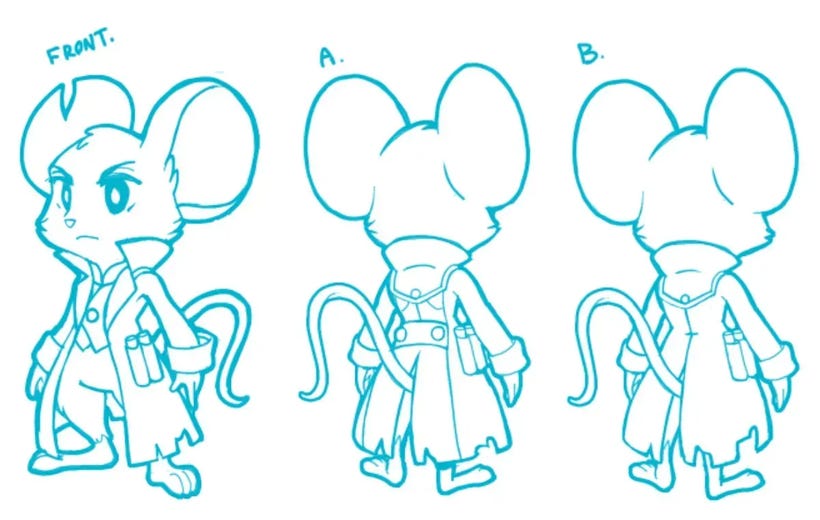
Maps, mice, and moody hues: The making of Mina the Hollower (Mothership)
Killing Discs Could Mean More Expensive Games, And Fewer Discounts: ‘This Move Is All About Profitability And Control’ (Kotaku)
Xbox testing disc-to-digital feature that digitizes a physical game collection (The Verge)
Consoles continue their trend of just becoming worse PCs (PCGamer)
Rhythm Paradise Groove review - a joyful and generous celebration of beat-matching (Eurogamer)
Krafton Agrees to Pay ‘Subnautica 2’ Bonuses as Developer’s CEO Resigns (Bloomberg)
“An interactive meditation on all things contradictory in dog-human relationship.” (Itch.io via Warp Door)

Disneyland’s Pirates of the Caribbean goes high tech. And it’s losing its mystique (LA Times)
‘Dead but Dreaming of Electric Sheep’ is full of beautifully written grotesqueries (NPR)
The Leopard Man (1943) Original Motion Picture - Film Noir (YouTube)
Guide to Horror (Neil Cicierega)
Comments
Nothing yet. Say the first thing.
Sign in to join the conversation.