
This post is part of our Guest Writer series, EXTENDED THINKING, where we invite the most compelling writers, strategists, and thinkers out there to give us their best takes on culture. This week, we are having an essay by Peder Haugfos, a creative strategist & Creator working at the intersection of media, culture, and audience development. His client base includes the BBC, Fjällräven, Music Norway, and Wolt+.
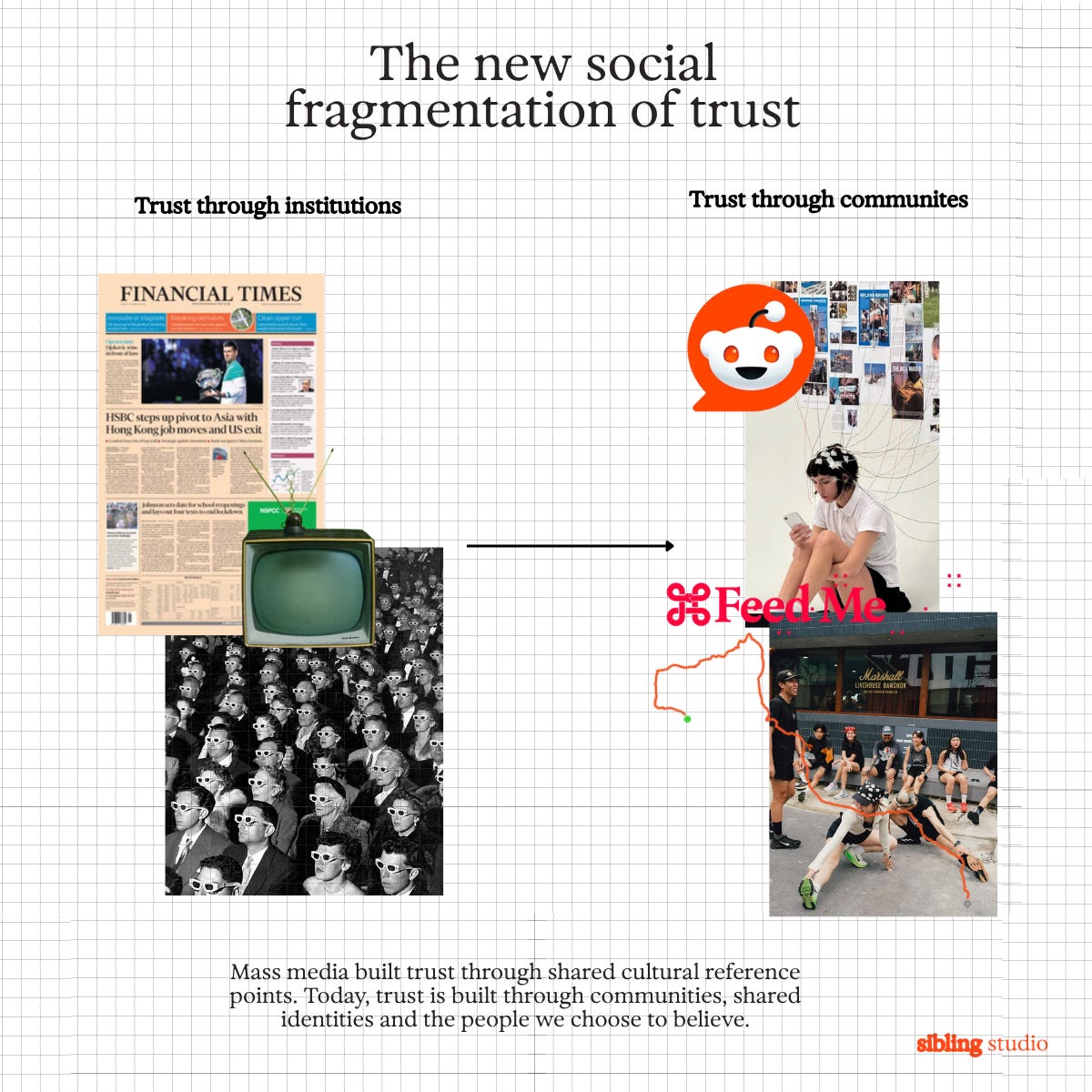
For decades, modern society gathered around a single, glowing bonfire. Every evening at 7 p.m., millions of families sat in front of their television sets to watch the news. I see this society as a cultural campfire—a unifying ritual that establishes a shared baseline of reality. The following morning, colleagues gathered around office watercoolers and lunch tables to debate and digest the exact same narratives.
Media organisations and major brands did not earn trust simply because they possessed massive distribution networks; they earned it by acting as these shared cultural meeting places. Through decades of repetition, their recognizable formats, familiar aesthetics, and authoritative structures became trusted symbols of truth.
But that campfire has been systematically dismantled.The speed of modern distribution has accelerated to a dizzying pace. While it took radio 38 years to reach 50 million people, television reached that milestone in 13 years, the internet in three, Facebook in one, and Pokémon Go in just 19 days.
The mistake many institutions make is assuming that a fragmented culture requires a fragmented brand. I would argue the opposite. Yet, while we have mastered the mechanics of instantaneous distribution, trust has not followed the same hyper-accelerated trajectory. Trust is still built at a human pace—and it is rapidly eroding as institutions sacrifice long-term consistency to chase the next fleeting trend cycle.
Today, I see this collective campfire has been replaced by thousands of localized, intense micro-flames. We no longer look to top-down institutions for a sense of direction; instead, we seek sanctuary in Discord servers, niche podcasts, Reddit threads, hyper-curated newsletters, and localized running clubs.
This shift represents a fundamental rewriting of how identity is constructed, creating a profound effect on culture at large. We are living in what Dazed Studio calls a “subcultural renaissance,” where subcultures have become the primary lens through which global youth experience the world. Culture no longer scales from institutions downward. It scales sideways—from trusted people to trusted people, between communities that already exist.
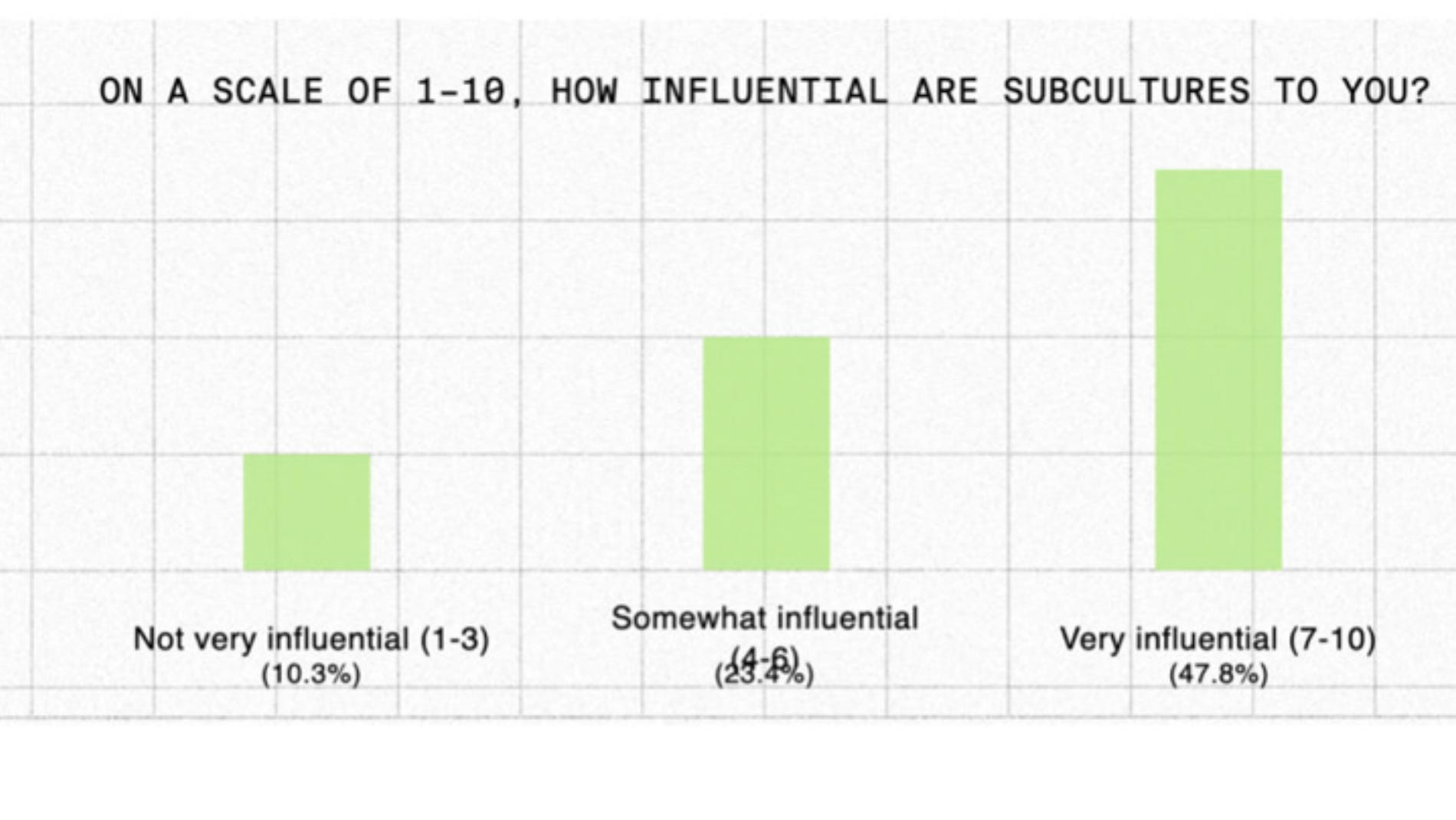
This reality exposes what has become the great “demographic fallacy” of modern strategy. For years, brands and media executives have spoken of Gen Z or Gen Alpha as if they were monolithic blocks that could be reached with a single, uniform tone of voice. In reality, mass culture has splintered into highly distinct, interest-based worlds.
A 16-year-old gamer in Norway may share virtually no cultural common ground with their immediate classmate, yet share a profound alignment in values, language, and trust with a 40-year-old in an international gaming community. Culture now spreads through shared passions and active participation, entirely bypassing traditional demographic boundaries.
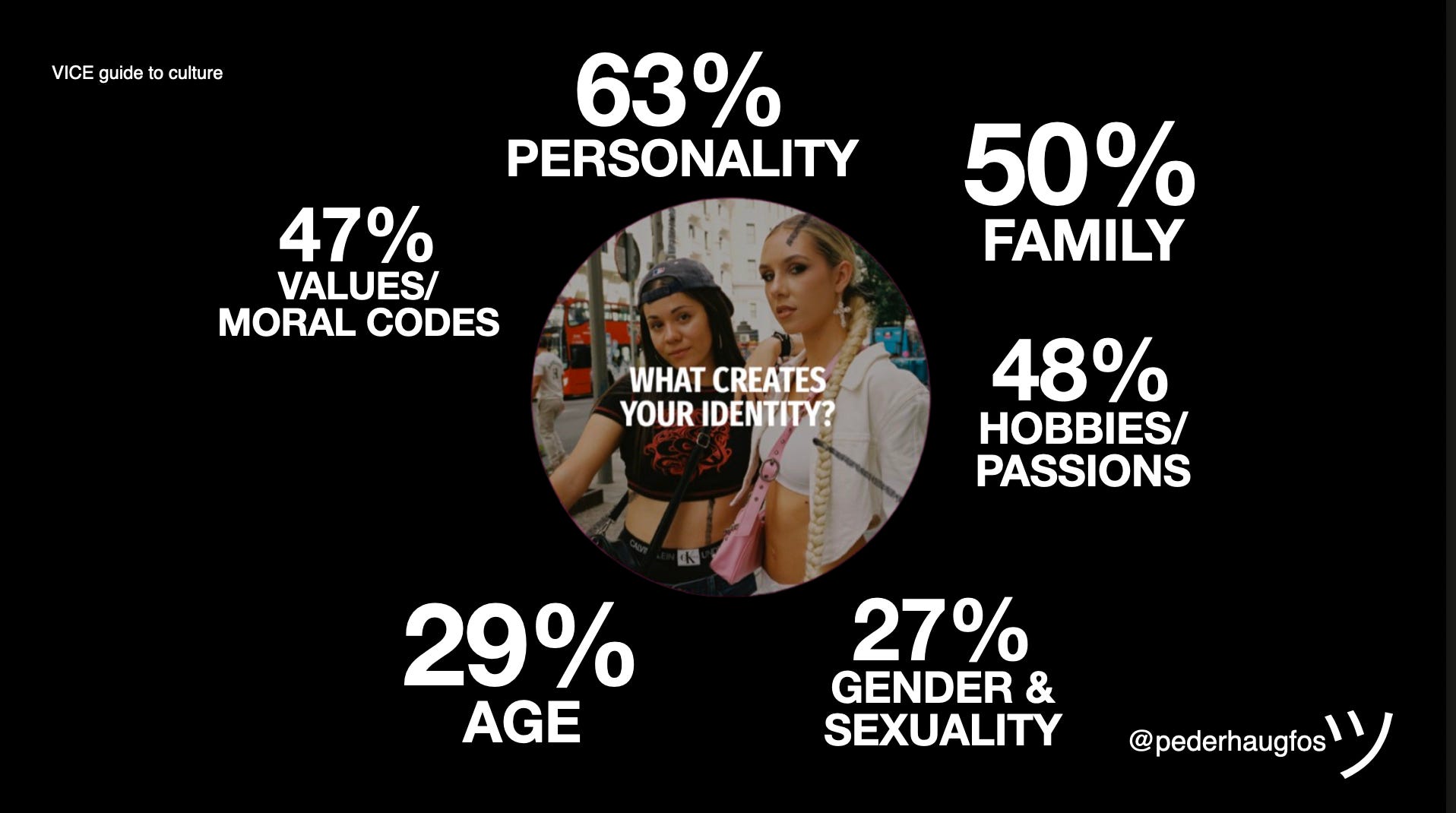
According to quantitative findings from Vice’s Guide to Culture (2023), younger audiences have a highly decentralized relationship with identity, prioritizing personal values over traditional societal markers when defining who they are:
Traditional Target: [ Gen Z (16-24) ] ───► Broad, Weak Engagement
Actual Culture: [ Shared Passions & Values ] ───► Deep, High-Trust Belonging
When media organisations attempt to penetrate these highly protective subcultural spaces using a patronizing, try-hard tone—exemplified by the infamous “How do you do, fellow kids?” meme—the cultural backlash is swift. Kantar’s annual youth study in Norway confirms that young audiences frequently label these forced, platform-native attempts by legacy media as “rally cringe“ just because they try to fit in to “their” TikTok-lifes with people in their age. Distribution in the right channels is not relevance itself.
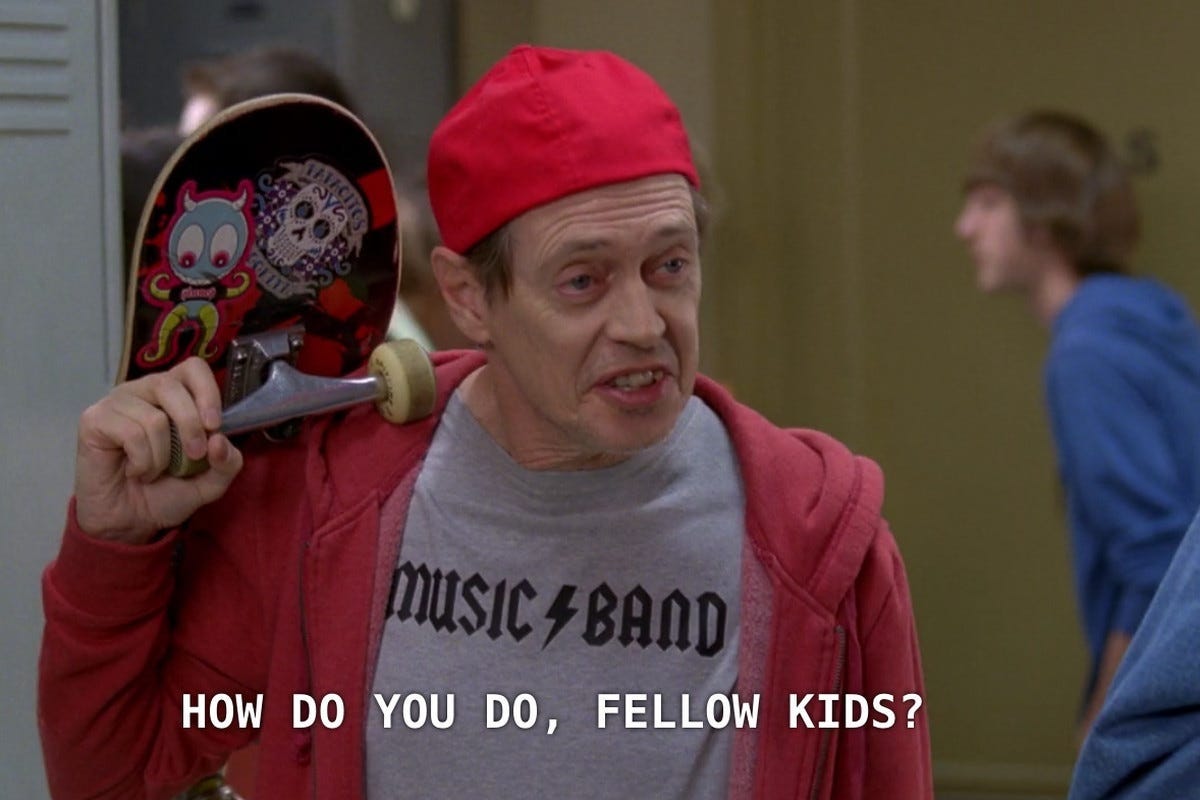
In trying to appear younger, some publishers abandon the exact editorial authority and distinctiveness that once made them a trusted refuge in an increasingly noisy information landscape.
Youth trend reports for 2025 and 2026 are dominated by concepts such as offline, pre-internet, heritage, slow living and nostalgia. Together, they point towards a broader cultural longing for what feels tangible, human and real. It isn’t retro aesthetics—they’re cultural responses to algorithmic abundance.
The same shift is described in The Social Internet, a BBC Research & Development study I contributed to. Young people are not abandoning the internet—but they are gradually moving away from open, algorithmic feeds and towards smaller platforms (that’s actually social) communities built around relationships, shared interests and genuine participation. Young people have never wanted to be told what to like. Every generation has built its identity by discovering music, fashion, ideas and communities on its own terms—often in opposition to mainstream culture. As algorithmic platforms increasingly decide what deserves attention, many young people are pushing back. The growing appeal of smaller communities, trusted curators and offline culture isn’t simply a rejection of technology; it’s a rejection of having discovery outsourced to Big Tech. We´re living the age of passive consumption into what Henry Jenkins argued years ago, digital culture is increasingly participatory rather than consumptive. People don’t just want content—they want meaningful ways to contribute to the communities built around it.
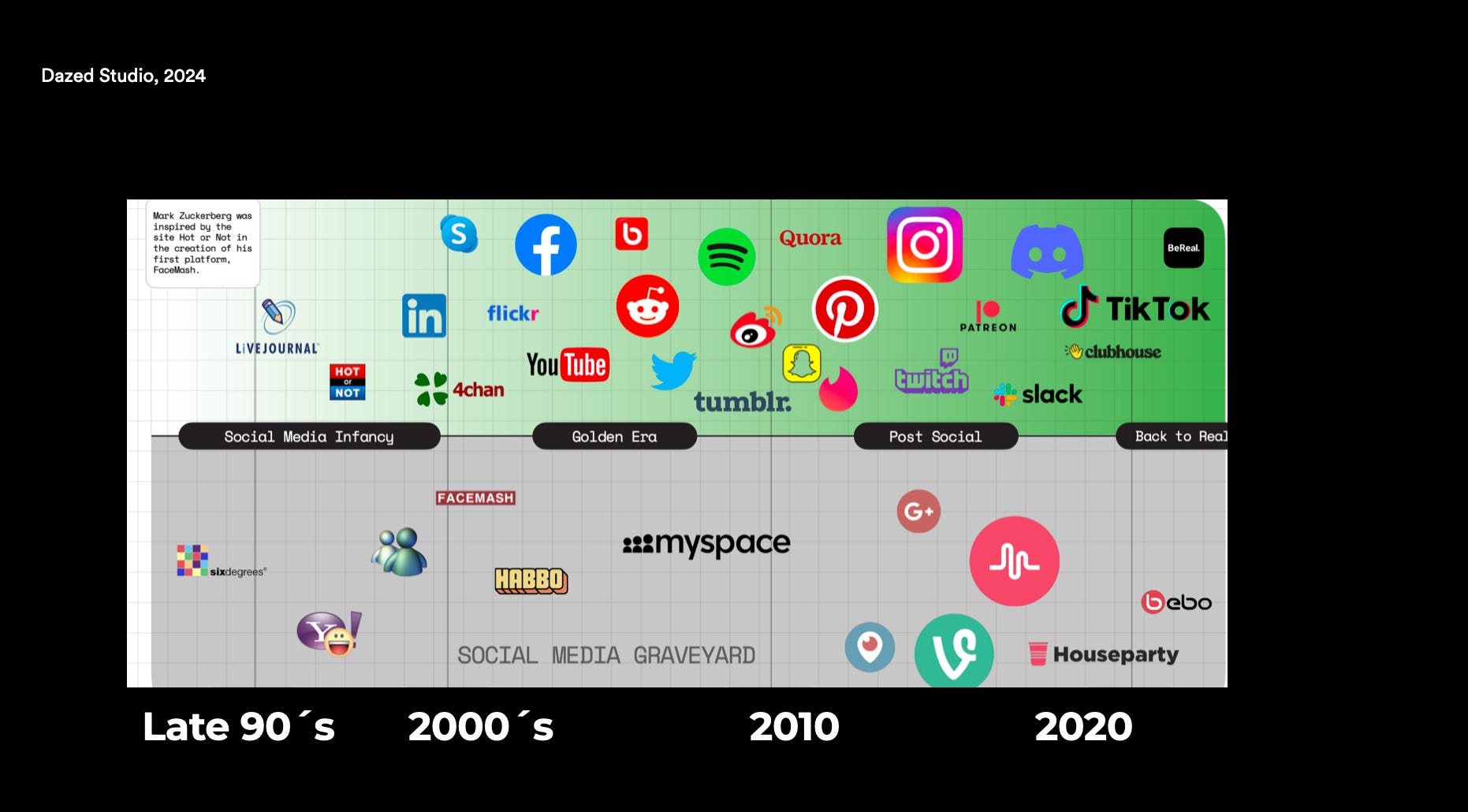
As the internet reorganises itself around smaller communities of interest, it is increasingly people—not institutions—that act as gateways. Audiences don’t just follow brands anymore. They follow individuals with deep expertise, clear perspectives and genuine credibility inside the communities they already care about, if they like a brand, this is how others discover.
This cultural shift does not just change where we look for information; it fundamentally changes how we recognize truth in aesthetics.
For centuries, society relied on remarkably consistent visual codes to signal credibility: black ink on white paper, the evening news anchor in a tailored suit, the familiar voice on the radio. These were never merely design choices—they became the visual grammar of journalism. Through repetition, audiences learned to read these conventions as signals of verification, editorial judgment and institutional authority. Read my full article on how Journalism has never been defined by facts alone. It has also been defined by the visual and editorial conventions people have learned to associate with credibility. Over time, these conventions become cognitive shortcuts for trust. Change them too radically, and you risk changing not only how journalism looks, but how it is understood.
When media organisations migrate onto third-party social platforms, they often strip away these crucial visual anchors. Academic research on the “aestheticisation of journalism” warns of this exact hazard: while adapting to new, platform-native visual styles can make stories more immediately engaging, it also dangerously blurs the boundaries between verified reporting, commercial marketing, and pure entertainment (Cramerotti, 2009; Novikova, 2014). When everything is edited to the same frantic rhythm, set to the same trending audio, and framed in the same vertical format, the distinction between a war correspondent and a lifestyle influencer begins to dissolve. If one thinks that social media are primary platforms for young people’s news consumption today, these people are seeing content that is no longer medium or publication-specific. This fit for platform-strategy, then leads to more competition in an already highly competitive market for legacy media companies.
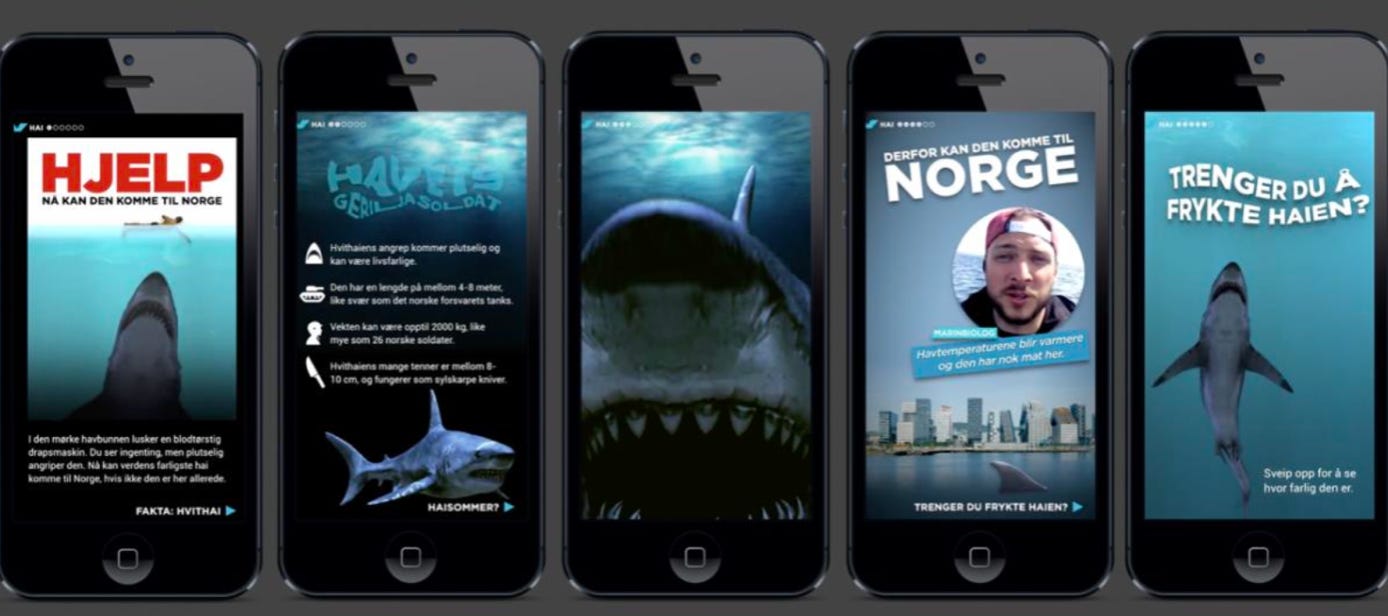
We see this playing out in the strategies of major media players. In a study I did on how to design for trust in social media, I looked into the strategies of two major media companies in Norway. While Norwegian newspaper VG optimized heavily for discoverability—shaping its Snapchat and TikTok feeds around commercial movie aesthetics and rapid-fire editing—public broadcaster NRK P3 took a different path. They refused to let platforms dictate their visual identity. Utilizing a strict, cohesive playbook of aesthetic signatures, NRK P3 treated its visual language as a long-term investment in recognition. They designed social content not as a replacement for their brand, but as a branded gateway back into their own ecosystem.
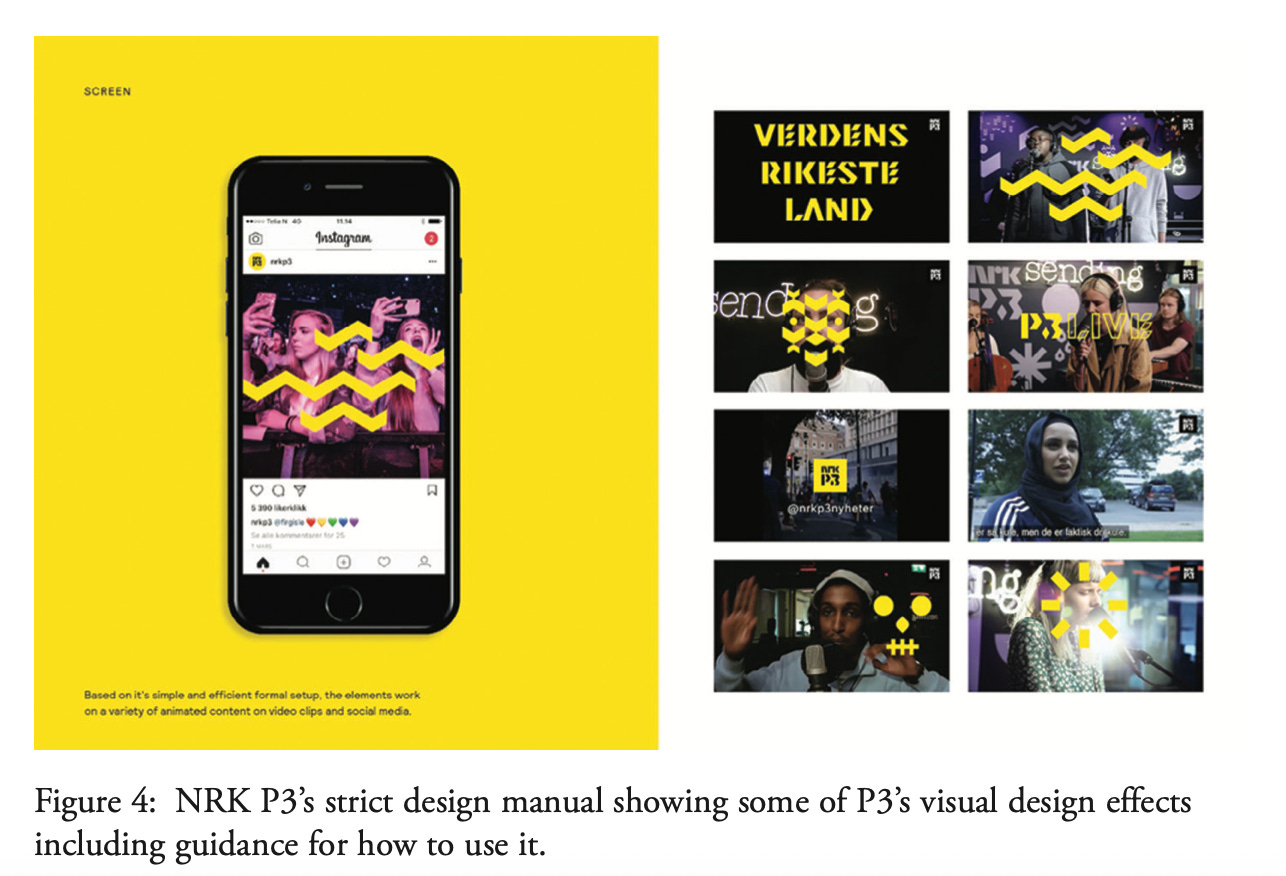
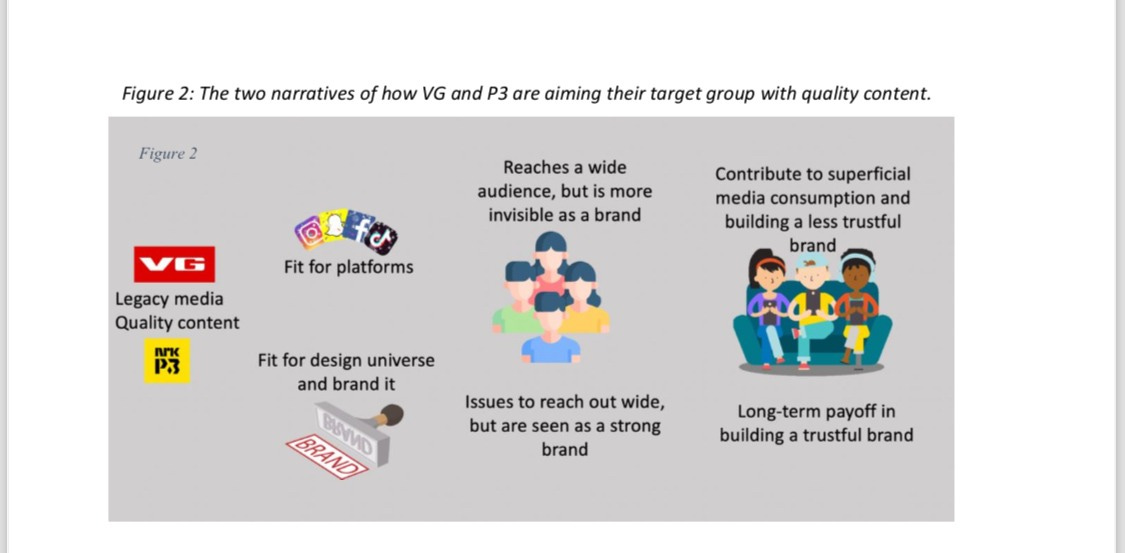
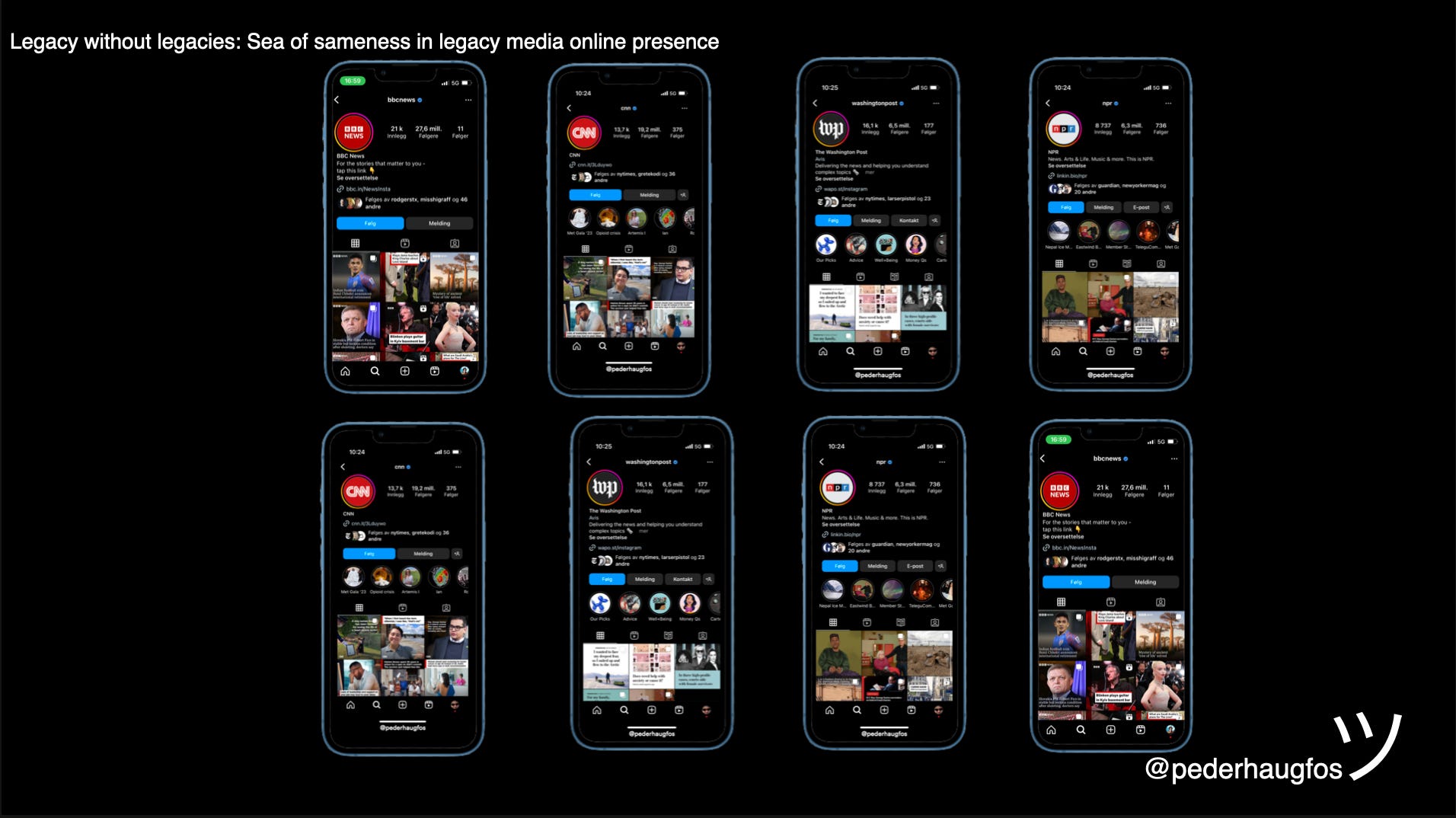
That is a point we often forget as journalism adapts to new platforms. Every time we adopt a new visual language, we also change the way audiences perceive us. When institutions fail to maintain this distinctiveness, they fall into what writer Alex Murrell calls “The Age of Average”. Across the globe, legacy giants like CNN, The Washington Post, and NPR look far more alike today than they did three decades ago (Schulz et al., 2020). The reporting itself may remain high in quality, but the unique cultural signals that once whispered “this is journalism” have been watered down in a sea of algorithmic sameness. Especially legacy brands and public organizations need to think twice, while more transactional brands still can do whatever they want.
As one observer recently put it:
“Today’s digital audience can smell a corporate aesthetic 100 miles away. Brands often resemble one another far more than they realise. When everyone communicates the same way, nobody stands out—and engagement disappears.”
Former BBC Director-General Tim Davie captured the challenge well:
“Rather than following audiences to where others take them, we should double down on what audiences see as uniquely ours.”
The difference today is that platforms optimize for attention, while journalism is built on context, verification, and trust. As a result, publishers, creators, and brands increasingly speak the same visual language, adopting TikTok’s style, rhythm, and trends.
As generative AI makes frictionless content production cheaper and faster, this flattening of culture will only accelerate. Yet, Reuters Institute research highlights a crucial counter-trend: audiences place significantly less trust in AI-generated journalism, and merely labeling content as AI-assisted can instantly degrade its perceived credibility.
If we optimize our visual and editorial language solely for platform mechanics, we risk optimizing away the very qualities that make us trustworthy in the first place. AI isn’t disrupting this strategy, it completes it.
The temptation to constantly pivot, rebrand, and adapt to the latest digital trend is based on a false premise: that cultural relevance is a game of speed. In reality, the opposite is true. The UTA Culture Index (2026) offers a powerful corrective to the “adapt-or-die” narrative. Their quantitative research reveals that in a highly volatile, fragmented world, consumers of almost every age reward brands that have stood the test of time.
According to UTA’s findings, durability ranks as the number one driver of cultural relevance among the general population (85%), holding remarkably steady across generations:
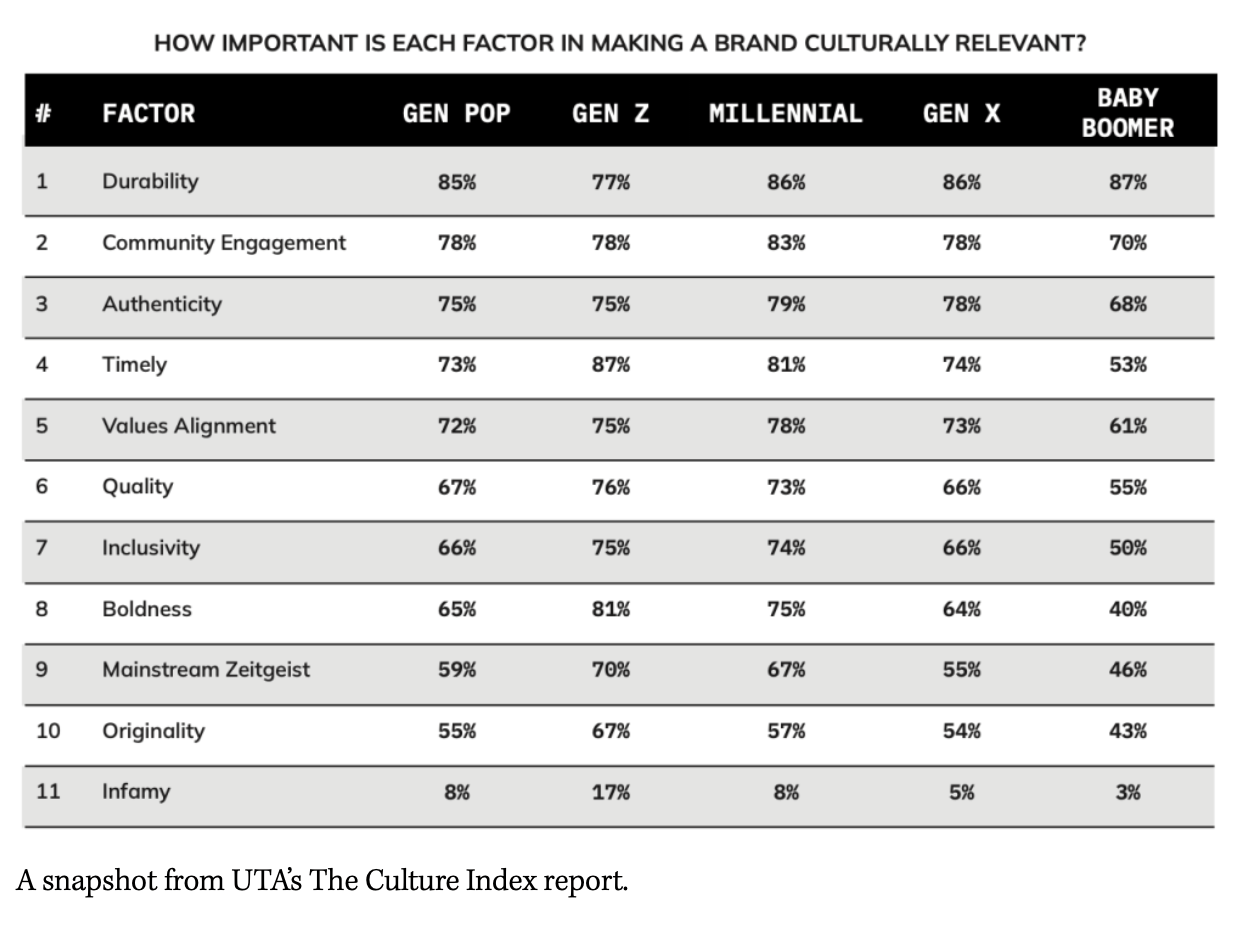
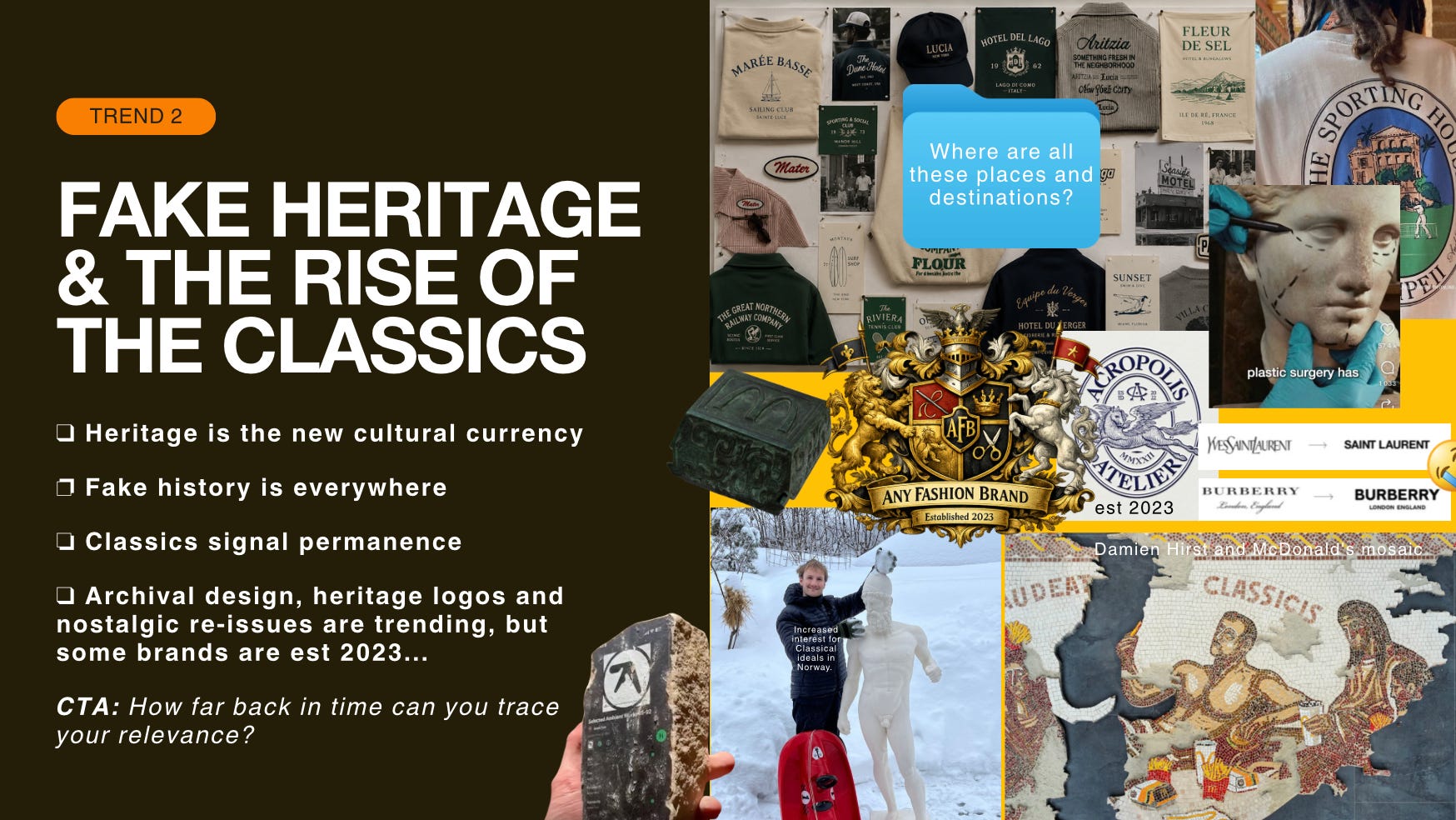
The implications of this data are profound. In our rush to modernize, we have treated longevity as a liability rather than our greatest asset. The rise of fake heritage in modern branding also understates this shift. Brands are making history because audiences increasingly trust things that appear to have survived time. From Psychology literature, we see that identity depends on continuity. Without repetition, there is no identity. Brands that constantly reinvent themselves in pursuit of relevance often erode the very cultural cues people use to recognise and trust them. One reason heritage matters is that trust is inherently conservative. People place confidence in what remains recognisable over time. Familiar visual codes, recurring rituals and consistent behaviour become psychological anchors in an increasingly unpredictable world.
Furthermore, the UTA Culture Index highlights a fundamental law of modern culture: you can buy fleeting attention, but you cannot buy cultural significance. Relevance almost always generates reach, but reach almost never automatically generates relevance.
When organisations chase raw reach by mimicking the latest platform trends, they fragment their own brands, diluting their cultural capital for temporary spikes in views.
If top-down broadcasting is dead and platform-native mimicking is “cringe,” how do organisations build trust in a fragmented world?
The answer lies in moving from broadcasting to belonging. As edition+partners (2024) argue in The Next Big Bang: The Brand Universe Solution to Growth, modern consumers expect brands to possess a synchronized cultural relevance that connects seamlessly across their entire universe of interests. A brand needs to show up in a relevant way across niches rather than try to go viral throughout the algorithms. Belonging is king. Every organisation already exists inside multiple cultural ecosystems. The challenge is to identify them and build relevance from within.
The goal is no longer simply to broadcast more effectively. It is to become something people genuinely want to belong to. That doesn't necessarily mean fragmenting your brand to mirror a fragmented culture. Quite the opposite. Real, smart is the new Hot, as Lucinda Bounsall describes it.

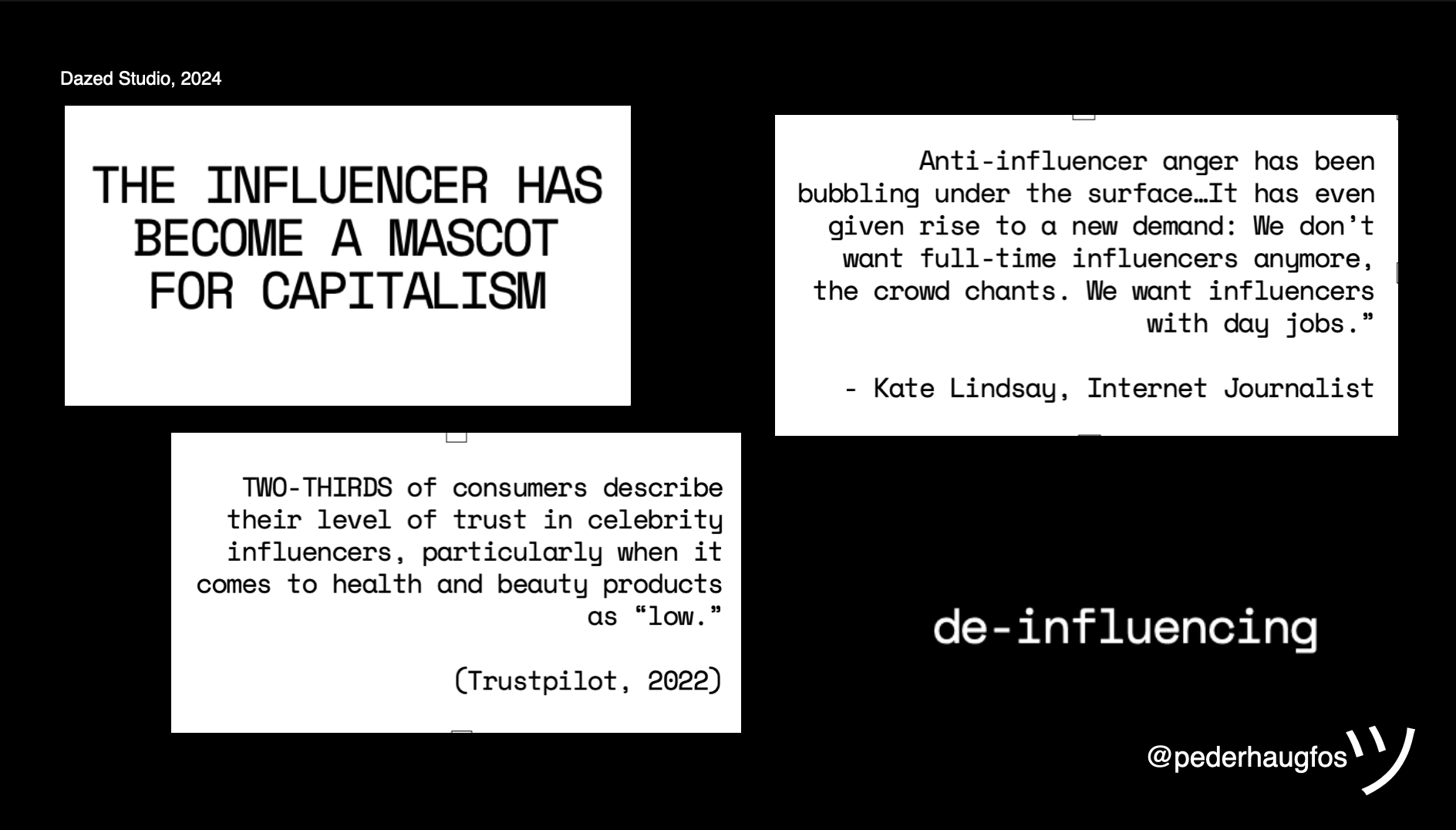
Many organisations, for a long time, have tried to solve this relevance problem in distribution by buying credibility through transactional influencer partnerships. The modern audience is highly media-literate and recognizes these deals for what they are: corporate entities attempting to lease someone else's relationship. The rapid rise of "de-influencing" is a symptom of this deep commercial fatigue. Indeed, two-thirds of consumers now describe their trust in celebrity influencers as "low" (Trustpilot, 2022). As internet journalist Kate Lindsay notes, society is rejecting full-time, polished commercial vehicles in favor of "influencers with day jobs".
This shift is the foundation of The Bellwether Strategy.
“If you only read the books that everyone else is reading, you can only think what everyone else is thinking.”
— Haruki Murakami
Culture doesn’t remember brands that fit in. It remembers the ones that became reference points. The mistake isn’t that institutions haven’t adapted to a fragmented culture. It’s that they’ve adapted by fragmenting themselves, instead of letting trusted people carry a coherent identity into fragmented communities. Rather than reshaping an entire institution to imitate a platform, organisations should identify and empower the “bellwethers”: ” the authentic, knowable voices” as BBC Future Of Social names them. Who has already served as a trusted reference point inside specific cultural niches. These are the historians, the economists, the local people see and know, and the passionate experts who possess genuine, earned credibility within their respective communities. Old or young, it doesn’t matter. Over the past few years, I’ve been working with what I call the Bellwether Strategy—a framework I’ve used with broadcasters, publishers, and brands looking to stay relevant across increasingly fragmented audiences. The idea is simple: every community already has trusted guides. They just don’t wear bells yet. The real opportunity isn’t partnering with the loudest voices, but recognising the people their communities already trust—before everyone else does. By giving these people visibility, organisations don’t just borrow credibility; they help create the next generation of cultural reference points, benefiting both the thought leader and the organisation.
[ Traditional Model ] Institution ───(Broadcast)───► Mass Audience ───► Fragmented Attention and inconsistent aesthetic perceptions from the audience
[ Bellwether Model ] Institution ───► [ Bellwether / Expert Nodes ] ───► Trusted Communities ───►Earned Cultural Relevance ───► Trusted Reach
Young people don’t build identity in isolation—they build it through belonging. Every generation negotiates its sense of self within communities, adopting shared symbols, values, and rituals while expressing individuality through them. Brands that speak only to the individual often overlook this fundamental truth: identity is not formed alone, but in relation to the people and cultures we choose to belong to. For organisations, this means relevance isn’t created by speaking to a single demographic identity, but by showing up authentically across the different communities that shape a person’s sense of self. This is where trusted bellwethers become powerful—they act as cultural bridges, helping one coherent institution resonate across many identities without forcing the institution itself to fragment.
Trust transfers through people more easily than through institutions, and it is the most important KPI that nearly anyone measures. Institutions earn trust slowly. Trusted people can introduce institutions into communities where they otherwise have no cultural permission to exist.
We see this strategy driving the most successful media models of the modern era:
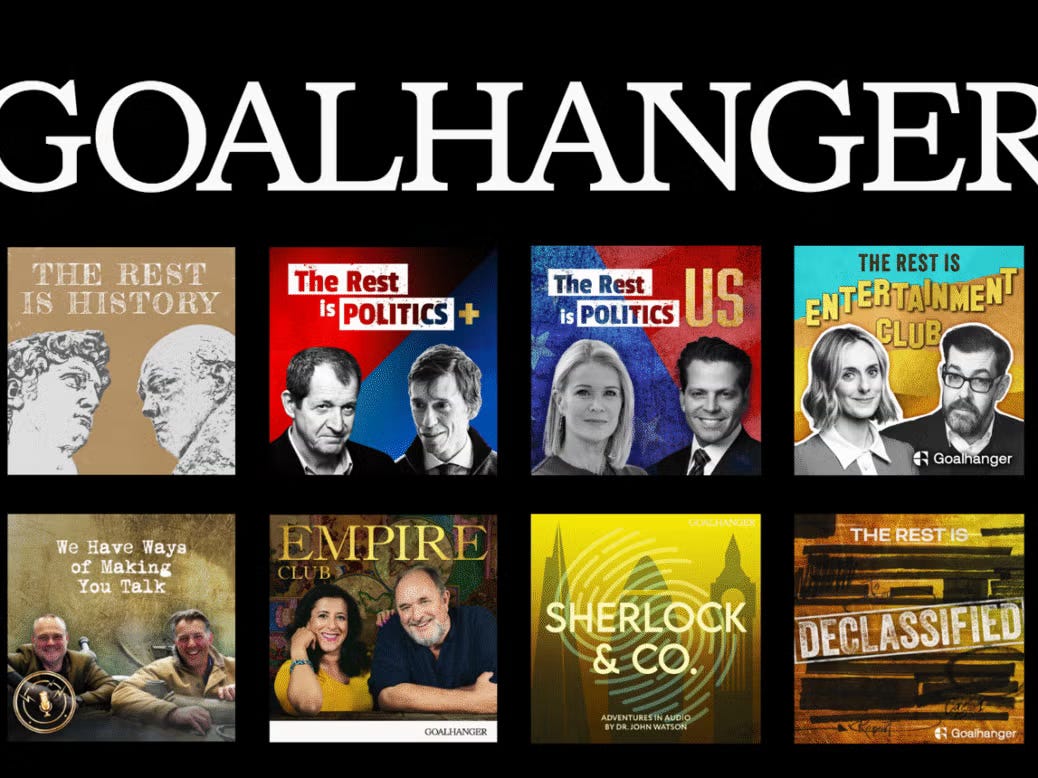
Goalhanger Podcasts: Sensationally successful shows like The Rest Is History and The Rest Is Politics do not seek generic, mass-market appeal. Instead, they build a broad network of deep, highly focused niches, each anchored by experts with undeniable credibility. A 70 old man can rizz Gen Z even more than a 19 Y/= good-looking news reporter on TikTok.
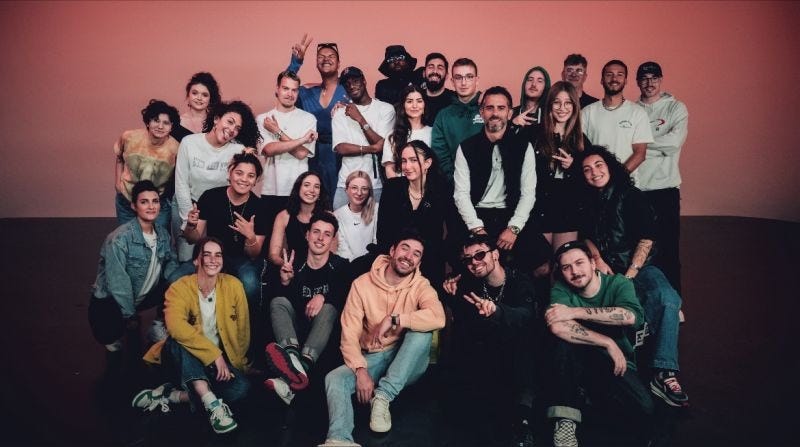
Tataki (RTS Switzerland): Rather than trying to speak to every subculture through a single, corporate voice, Tataki collaborates directly with respected voices from diverse communities, using them as trusted bridge builders.
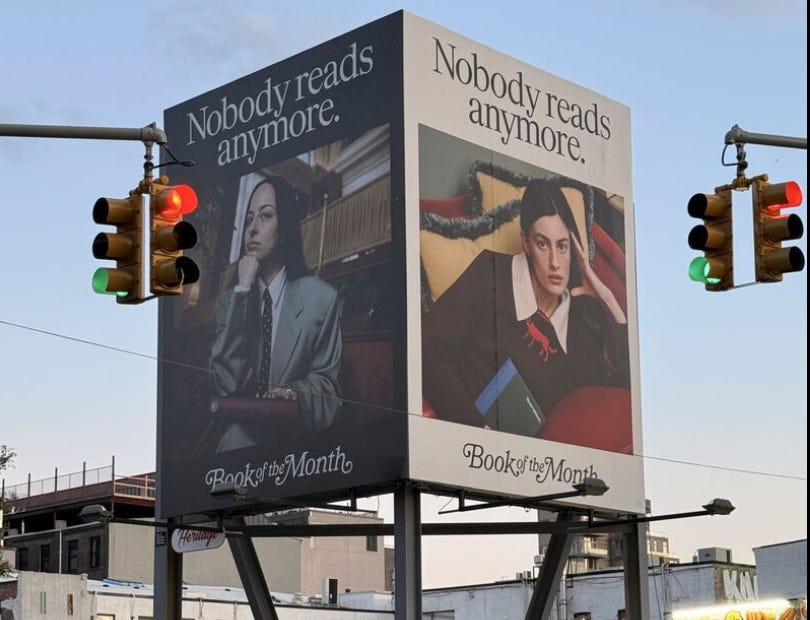
Book of the Month: On their centennial, they launched the ironic campaign “Nobody Reads Anymore”—a brilliant cultural commentary on choice paralysis. In a world of infinite, algorithmically served content, Book of the Month understands that its real value is not the books themselves, but the trusted human curation they provide.
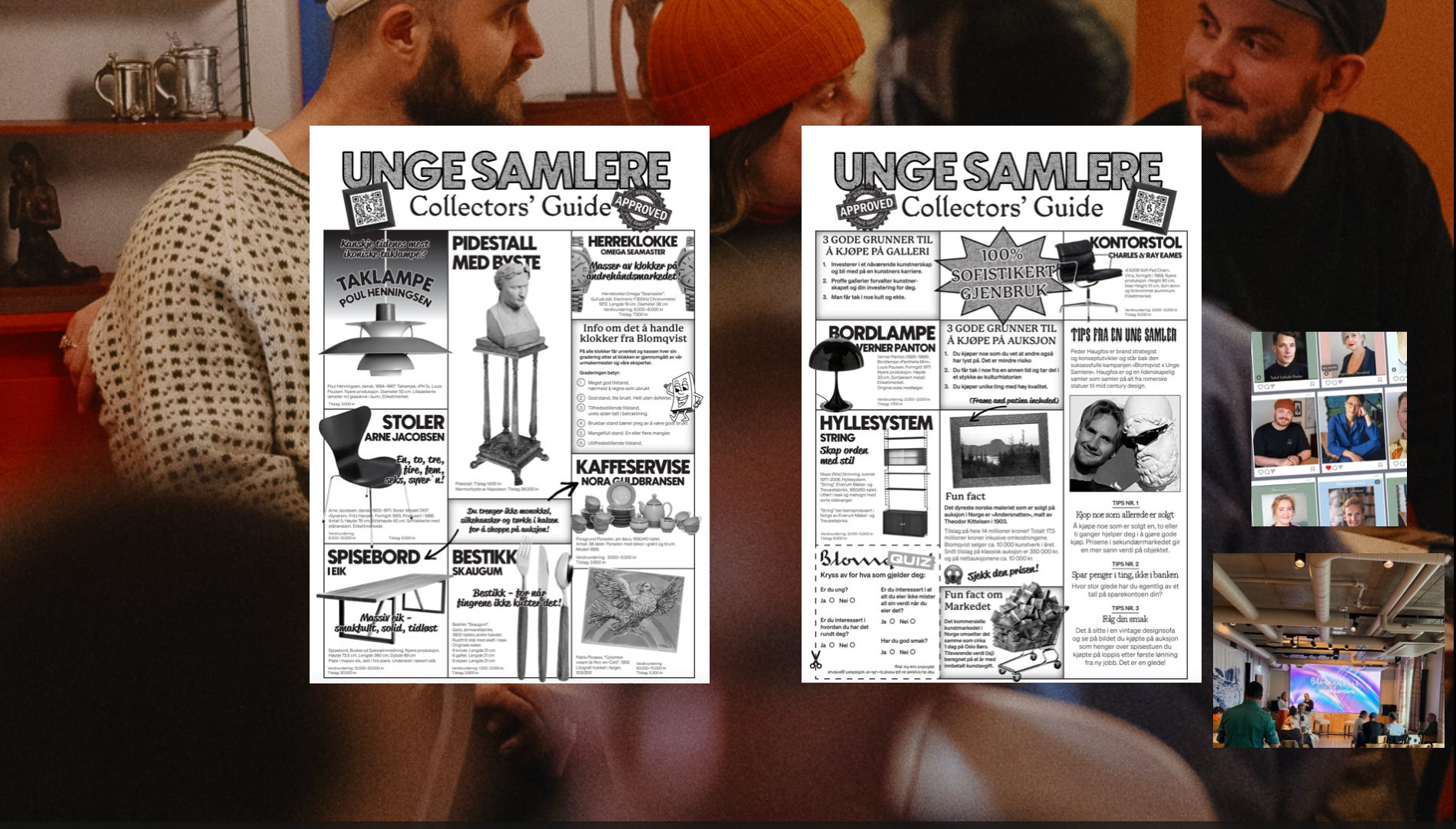
Blomqvist Young Collectors: Instead of trying to make Norway’s oldest auction house “look younger,” we built a genuine community around collecting through editorial storytelling, physical and experiential activations, and trusted ambassadors across different subcultures. By giving people experiences they genuinely wanted to be part of—and proud to share—Blomqvist didn’t have to chase distribution. The community distributed the brand on its behalf, helping make collecting culturally relevant for a new generation (and make old antique stuff trending up north).
To successfully navigate cultural fragmentation without fragmenting your own brand, organisations can employ this five-step strategic framework:
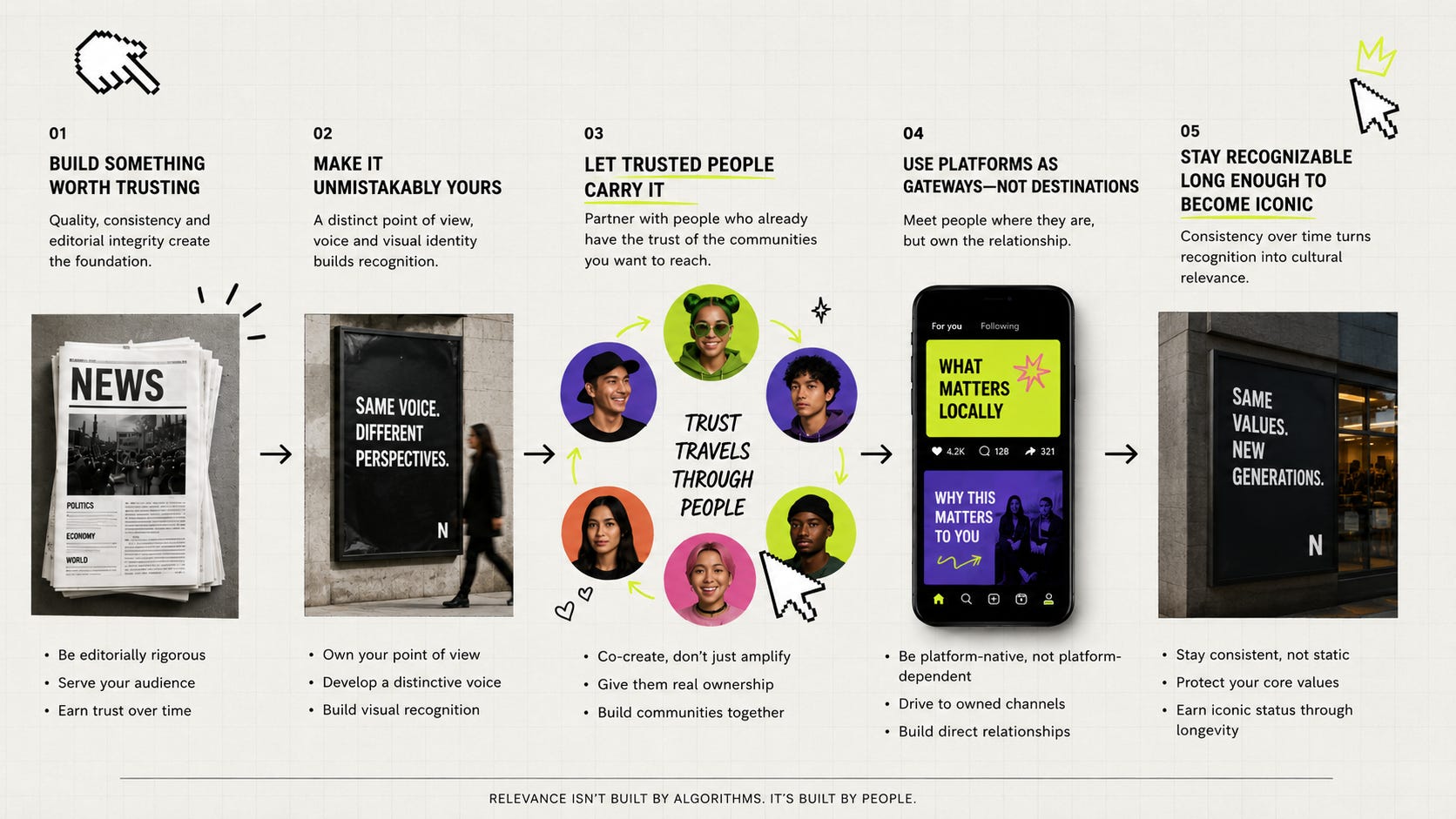
Trust doesn’t begin with distribution. It begins with substance. Build something people would choose even if no algorithm recommended it. Quality, editorial integrity, and a clear point of view are still the foundation of cultural relevance.
Don’t optimize until you disappear. Protect the visual codes, tone of voice, and cultural signals that make people recognise you instantly. In an internet where everything looks the same, distinctiveness is trusted.
Culture spreads through people, not institutions. Find the experts, enthusiasts, and respected voices who already have credibility inside their communities. Let them feel ownership and be your best ambassadors who can inspire fans. Don’t just ask them to promote your content—invite them to shape it.
Meet people where they are, but don’t build your future on borrowed land. Use platforms to spark curiosity, then guide audiences toward spaces you own—where context, community and trust can grow over time. Remember: in 2026, the most powerful communication about your brand often comes from people, not from your brand itself. Give them something worth sharing.
Relevance fades. Recognition compounds. The organisations that become culturally significant aren’t those that reinvent themselves every year—they’re the ones that remain unmistakably themselves while culture changes around them. Consistency isn’t the opposite of innovation. It’s what makes innovation believable.
The ultimate promise of the Bellwether Strategy is that it allows organisations to respond to a fragmented culture without fragmenting their own identities. In a decentralized cultural landscape, the institution itself does not need to be everywhere. Its stories and values are carried forward by authentic, trusted people who already hold credibility where those stories are told. Your identity doesn´t need to be changed, but where you show up could easily change, and that could be your relevance in modern age. The challenge is not to change who you are.
The challenge is to change how what you already are finds its way into new communities.
That is ultimately a question of relationships, not reach. Of trusted people, not platform mechanics.
This doesn’t mean institutions should stop experimenting. Quite the opposite. UTA’s Culture Index identifies experiential activations as one of the strongest ways for brands to build cultural relevance, particularly among younger audiences. The difference lies in where and how experimentation happens. A thoughtful collaboration with emerging designers, a community-led event, or a culturally meaningful activation can strengthen a brand precisely because it has something original to contribute. Projects like Blomqvist Young Collectors weren’t designed to chase algorithms, but to create experiences people genuinely wanted to be part of, and proud to share. The stories spread through word of mouth, user-generated content, and cultural publications rather than corporate channels. That’s very different from brands jumping on trends they didn’t start or borrowing aesthetics they don’t truly understand. One builds cultural capital. The other often spends it.
In a world where almost everything can be algorithmically optimized, copied, and synthetically generated, the ultimate competitive advantage is no longer whatever is newest. It is the assets that have stood the test of time. The most valuable tool your organisation owns is not its next platform-native social media strategy. It is the unique, enduring identity that has been quietly waiting in your archives all along. Relevance can no longer be declared from the top down. It has to be recognised from the bottom up. Young people don’t want institutions to tell them what matters. They want to discover it themselves, through people and communities they already trust. They need to see themselves reflected—not in a brand pretending to be someone else, but in people, stories, and values that genuinely resonate with who they are. The feeling that “this is worth following” has to feel like their own decision, not yours.
Don’t fragment your identity. Fragment your distribution.
No posts
Comments
Nothing yet. Say the first thing.
Sign in to join the conversation.