
The first postcard I ever sent from abroad was from China. It was the summer of 2008, a few months before the Beijing Olympics, and I was tagging along on a business trip with my dad. I was eleven.
I remember the scale of everything. The construction cranes on every skyline. The way the whole country felt like it was in the middle of becoming something. I remember being stopped by tourists from the countryside who wanted photos with the cute young white girl, which was an early and genuinely disorienting lesson in what it means to be a novelty in someone else’s country.
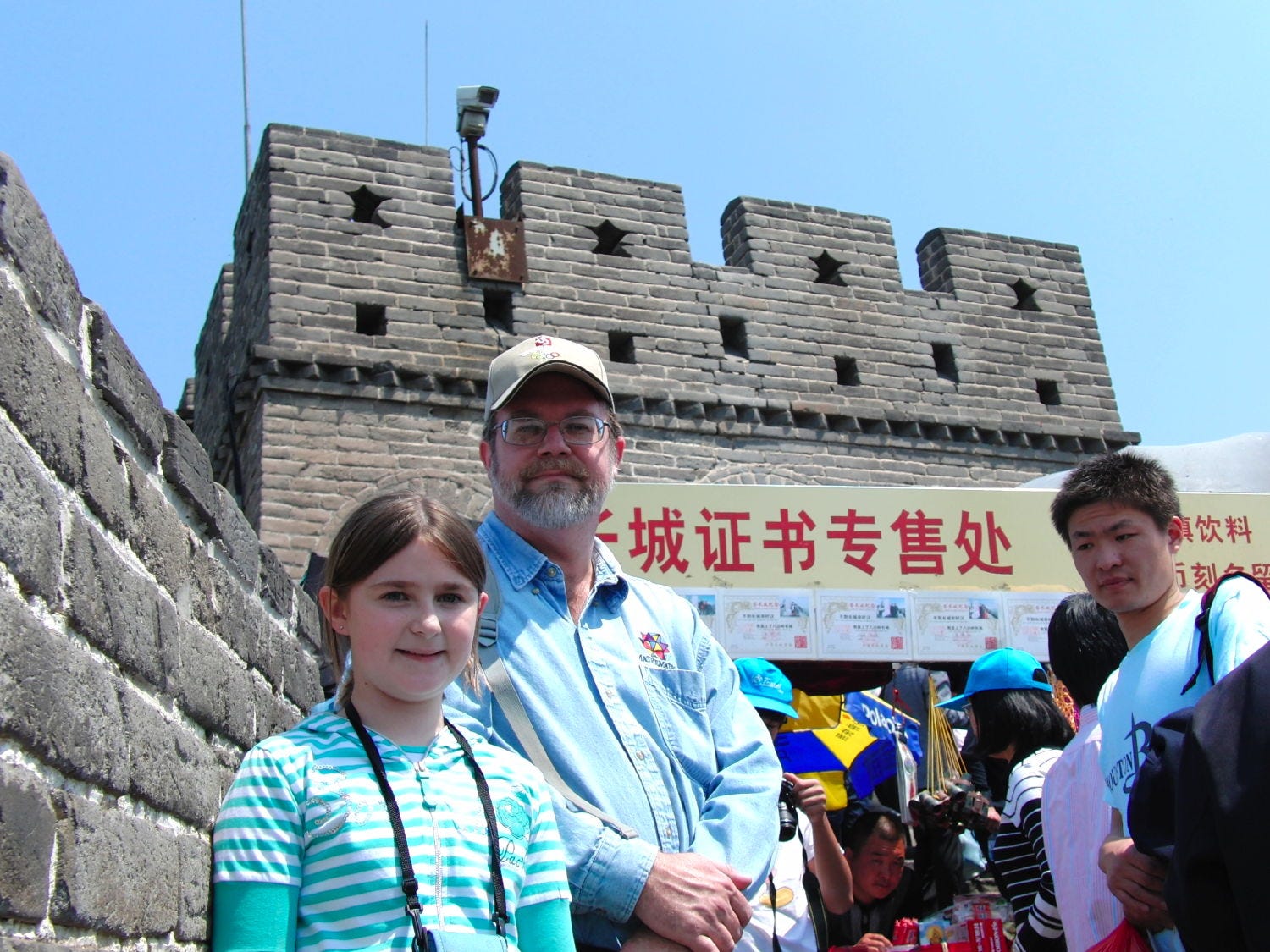
I don’t know what I wrote on the postcard. Something about how many people there were, probably. Or about trying duck for the first time and becoming instantly obsessed.
What I didn’t write, because I was eleven and had absolutely no framework to write it, was anything about what I was actually seeing: a country in the middle of an economic transformation of historic scale, the Olympics as a coming-out party for a rising power, the particular electric feeling of a place that has decided it has something to prove to the world.
My relationship with China now is more complicated and, I think, more honest. I’ve done the reading. I understand what “socialism with Chinese characteristics” actually means, and I hold it with the nuance it deserves.
There are genuine things to admire in what the CPC has built, in the state ownership of key industries, in the lifting of hundreds of millions of people out of poverty, and in China’s resistance to U.S. imperial pressure. There are also real criticisms to make.
What I refuse to do is let the U.S. government and its media apparatus tell me how to think about it. The same people who want me to fear China are the ones who lied about Iraq, who fund the Israeli military, who are perfectly comfortable with American poverty as long as the stock market is up. I’m not taking foreign policy cues from them.
But I’m getting ahead of myself. That political clarity took years to develop. In 2008, I was just a kid with a postcard.
I chose to go to university in the UK partly because I’d always wanted to study abroad and partly, if I’m being honest, because of the Ryanair flight map. The UK put me within cheap-flight distance of most of Europe. I was eighteen, and I had priorities.
I started Addie Abroad in my first year, originally as a way to document where I was going and justify to my parents that all those weekend trips were, in fact, educational.
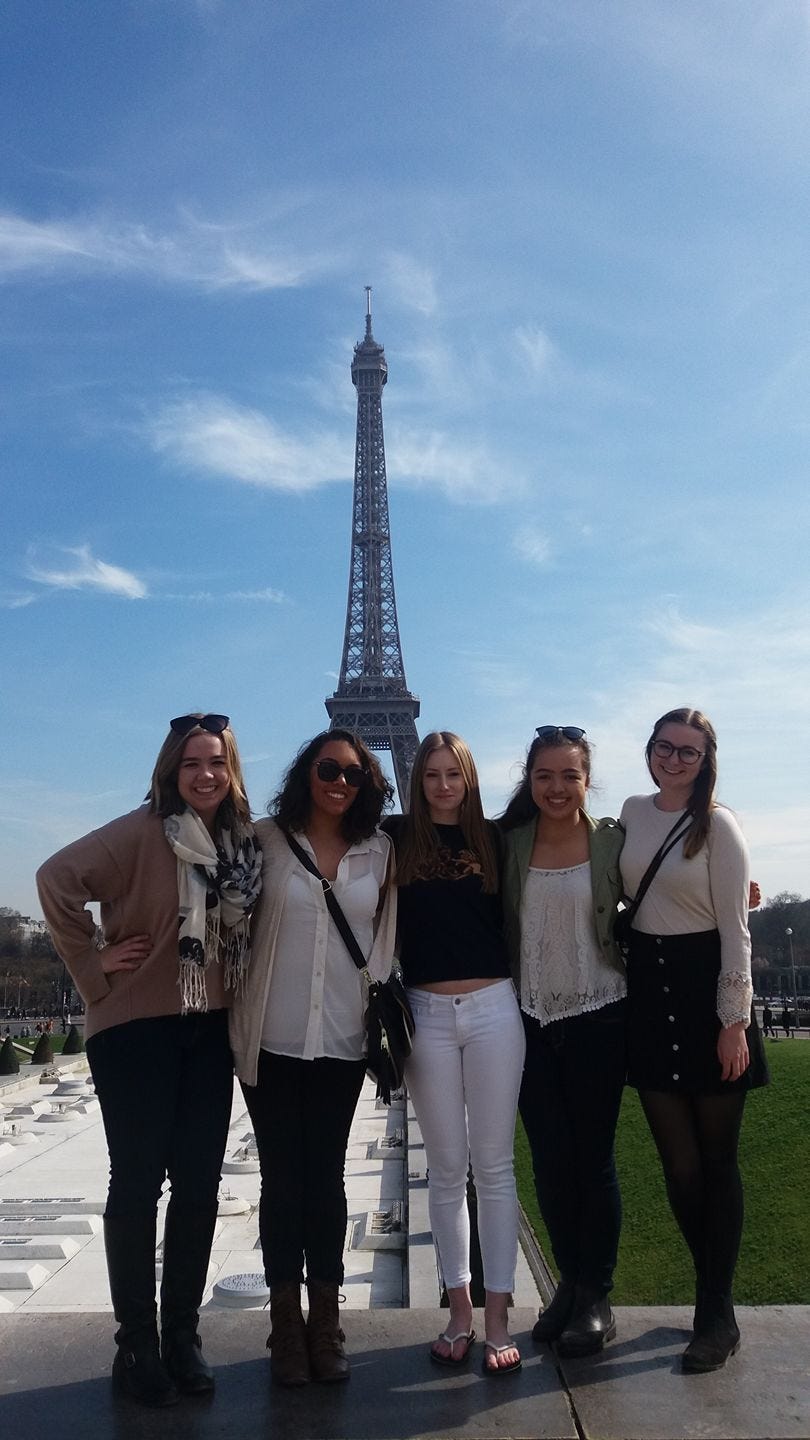
I studied social anthropology, which turned out to be the best possible degree for someone who wanted to spend her life moving through places and actually understanding them.
Social anthropology is, at its core, the study of how societies are organized, and once you start looking at that seriously, colonialism is everywhere—because colonialism is how most of the world got organized into what it currently is.
It was in my coursework that I first really sat with that. Not as an abstraction, but as a specific, ongoing, material reality.
I remember reading an article—I couldn’t tell you which course it was for—about how Israeli settlers pull up Palestinian olive trees and replace them with European trees. Olive trees that families had tended for generations. Replaced, deliberately, with something that doesn’t belong there, to make the land look like somewhere else.
I read that and something went very quiet in me. I had heard about “the Israel-Palestine conflict” my whole life, framed as ancient and complicated and intractable, two sides, very sad, no easy answers. And then I read about the olive trees and I thought: this isn’t complicated. This is a land grab. This is what colonialism looks like. It has always looked like this.
That was the first crack. It would take years for the rest of it to open up.
In the meantime, I spent four years filling the blog with guides to Copenhagen and Vienna and Costa Rica—where to stay, what to eat, how to get there without spending a fortune. I loved it. I still love it.
But I was also, quietly and without quite knowing it, accumulating questions that didn’t fit in a travel guide.
Who decided this castle was a tourist destination and not just the place where someone’s ancestors were kept out? What is this city’s tourism economy actually doing to the people who live here? Why does moving freely through the world feel so unremarkable to me when it’s something most of the people I’m visiting will never get to do?
I was noticing things. I wasn’t writing them down.
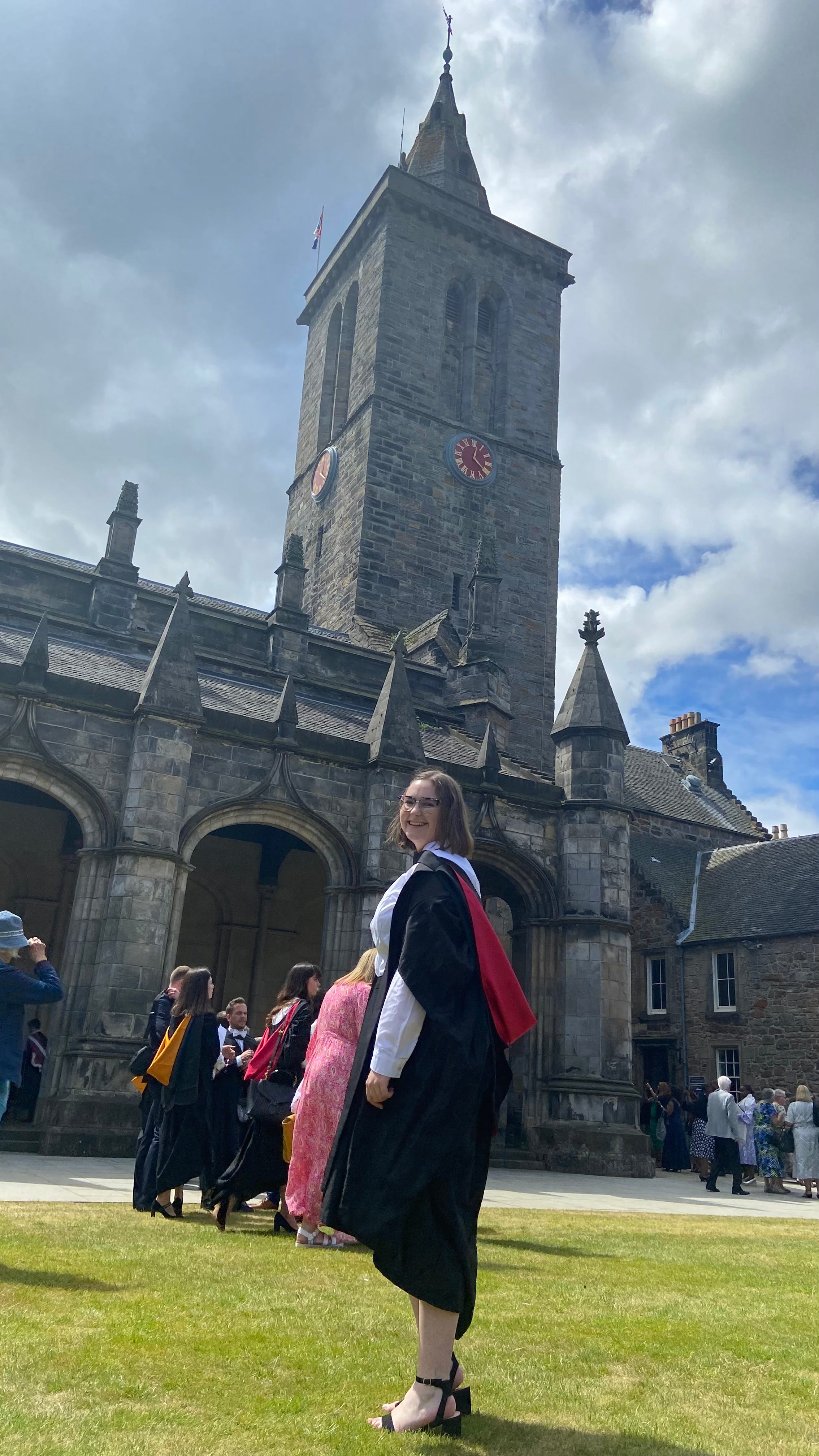
I graduated in 2020. You know how that went.
I went home for spring break in March and ended up staying at my then-boyfriend’s parents’ house for the rest of the semester, finishing my degree from someone else’s guest room. There was no graduation ceremony. Our diplomas just got mailed to us.
That same summer, George Floyd was murdered by a Minneapolis police officer with his hands in his pockets, and the country caught fire. I watched cities I knew—cities I’d written cheerful travel guides about—fill with people who had decided that enough was enough. I watched the state respond to grief and rage with more violence, more rubber bullets, more curfews.
The pandemic made the class structure of American life legible. The uprisings made the racial structure of state violence undeniable. Both at once, in the same summer, with nowhere to go and nothing to do but pay attention. I read a lot. I thought a lot. I got, as my mom would say, a lot of opinions. What I was actually doing, though I didn’t have the word for it yet, was building a politics.
And then October 7, 2023 happened. And the weeks after it. And the months.
Here’s the thing: I already knew it wasn’t complicated. I remembered the olive trees. I knew what occupation looked like and I knew what was happening in Gaza was not, as the TV kept insisting, a complicated situation with many sides. But it hadn’t been at the forefront of my mind—not in the urgent, daily way it suddenly became.
I dove in. I read Angela Davis’ Freedom Is a Constant Struggle, which traces the connections between Black liberation in the U.S. and Palestinian liberation in ways that felt, once you saw them, completely obvious and impossible to unsee. I read Minor Detail by Adania Shibli, which is a novel, technically, but reads like an act of witness—quiet and devastating and precise.
I went to protests. I started showing up, and then I started organizing, and somewhere in that process I joined the Party for Socialism and Liberation, where I found people who had a framework for what I was seeing and a commitment to doing something about it.
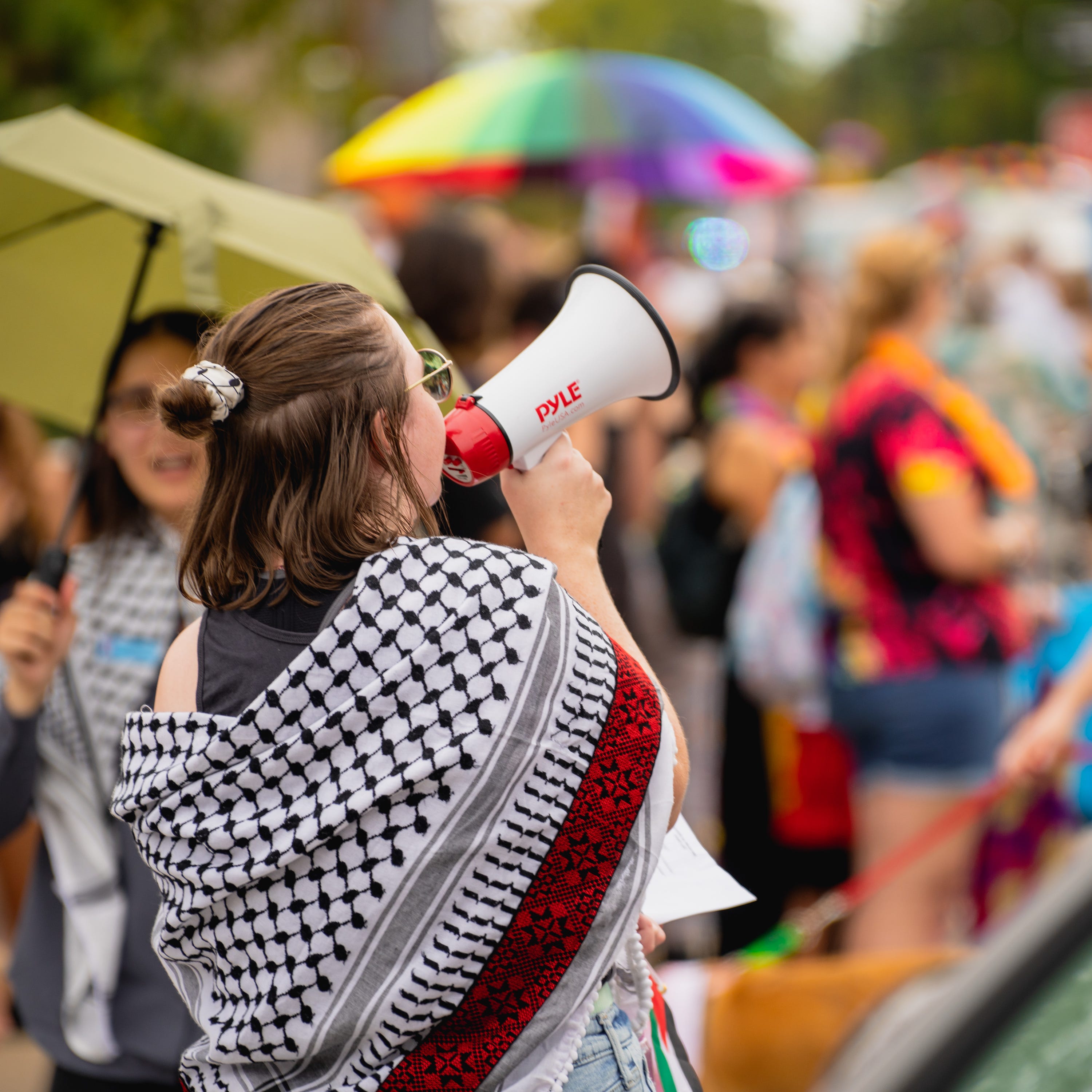
My agreement with framework didn’t come from nowhere. It came from years of noticing things while traveling and not knowing what to do with what I noticed. It came from a pandemic that made the machinery of capitalism briefly visible. It came from the olive trees.
October 7 didn’t radicalize me so much as it made a certain kind of fence-sitting permanently impossible. You either see it or you don’t, and I saw it.
I grew up two and a half hours from St. Louis and until a year ago, I could have told you almost nothing about it. Not its history, not what it meant, not why it mattered.
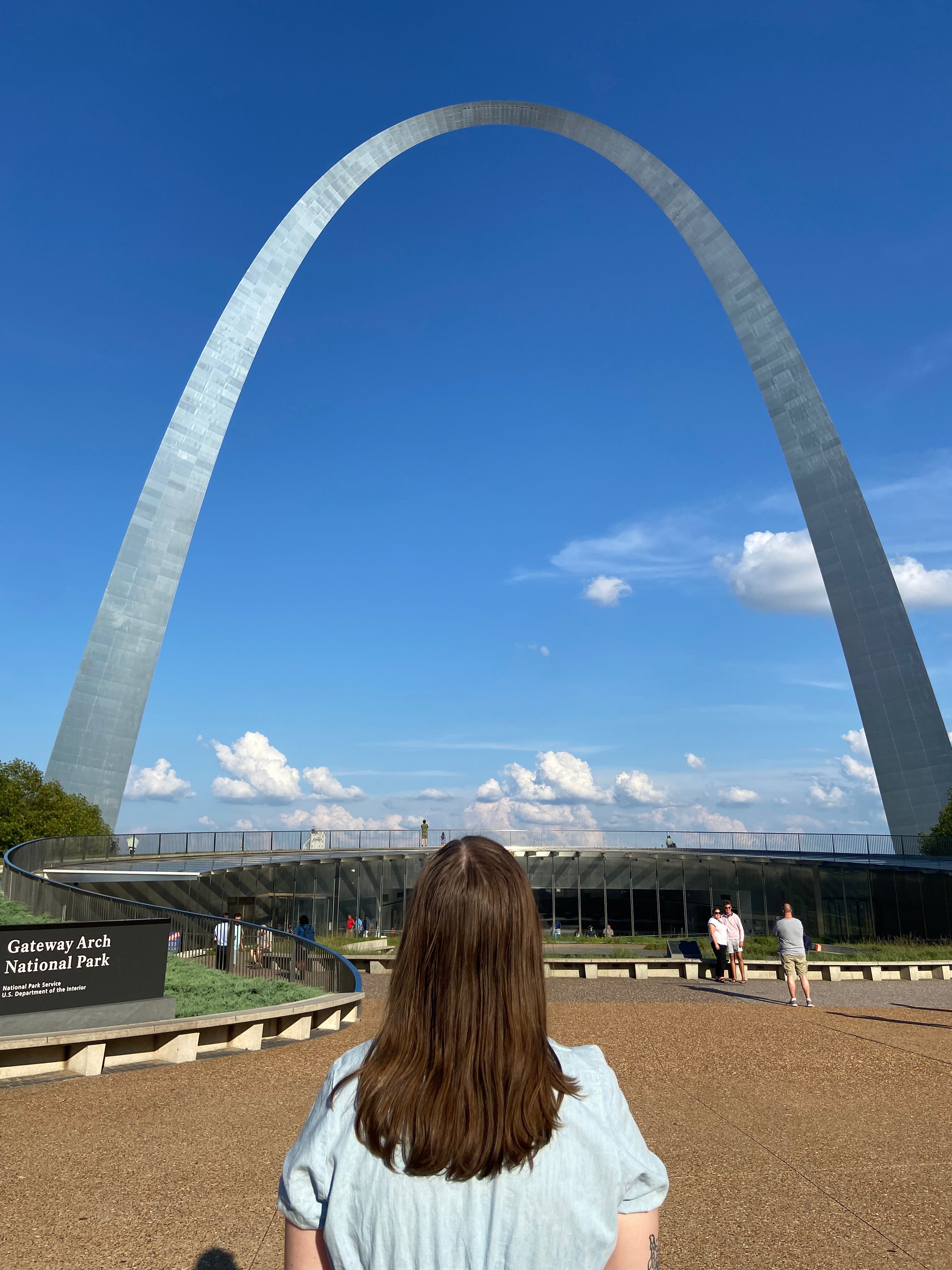
A comrade recommended I read The Broken Heart of America by Walter Johnson when I moved here with my now-husband for his job, and if I could make everyone read just one book in this life, it would be that one.
If you want to understand St. Louis—the geography of it, the racial politics of it, the way it became what it is—read that book. It traces the city’s history as a site of Indigenous dispossession, slavery, westward imperial expansion, and twentieth-century white flight and deindustrialization all the way to the murder of Michael Brown, and it does it in a way that makes you feel the shape of the thing.
You start to see the city differently. You drive through a neighborhood, and you understand, at least a little, why it looks the way it does and how it got that way and who made those decisions and who paid for them.
That feeling—of suddenly seeing the structure underneath the surface of a place—is exactly what I’d been experiencing, without fully naming it, in every city I’d ever visited.
The difference is that in St. Louis I live here. I’m not a tourist moving through. I’m a resident, and an organizer, and I have some stake in what happens next.
We work on policing. On gentrification and displacement, watching neighborhoods get “revitalized” in ways that make them affordable for some people by making them unaffordable for the people who were already there. On community recovery after the May 2025 tornado that tore through the North Side of the city—a majority-Black part of town—and watching how slowly the resources moved (or still haven’t moved) compared to how fast the damage had happened.
It turns out that all of this is travel writing. Or at least, it’s the same set of questions.
Who gets to move through a place and on what terms. Who built the infrastructure and who benefits from it. Whose history gets memorialized and whose gets paved over.
I’ve been asking these questions about every city I’ve visited for a decade. It just took moving somewhere and putting down roots to understand that the questions don’t stop when you’re home.
I’ve been writing Addie Abroad for ten years. I love it and I’m going to keep writing it. But I’ve reached a point where continuing to write about travel without writing about the politics of travel feels dishonest. Not wrong, exactly. The guides are useful, and the recommendations are real, but they are incomplete in a way I can’t keep ignoring. I know too much now to keep writing like I don’t.
So this is the other side of the coin. The place for the postcards I didn’t send. The thoughts I had on the train, the things I noticed and didn’t know how to work into a post about where to eat, the questions I’ve been accumulating for ten years and am only now starting to have the framework—and the nerve—to write down.
I believe in a free Palestine. I believe in a socialist reconstruction of society. I believe that none of that is separate from the question of what it means to get on a plane, or to stay home, or to live somewhere and try to understand it.
I’m glad you’re here. Let’s get into it.
Comments
Nothing yet. Say the first thing.
Sign in to join the conversation.