
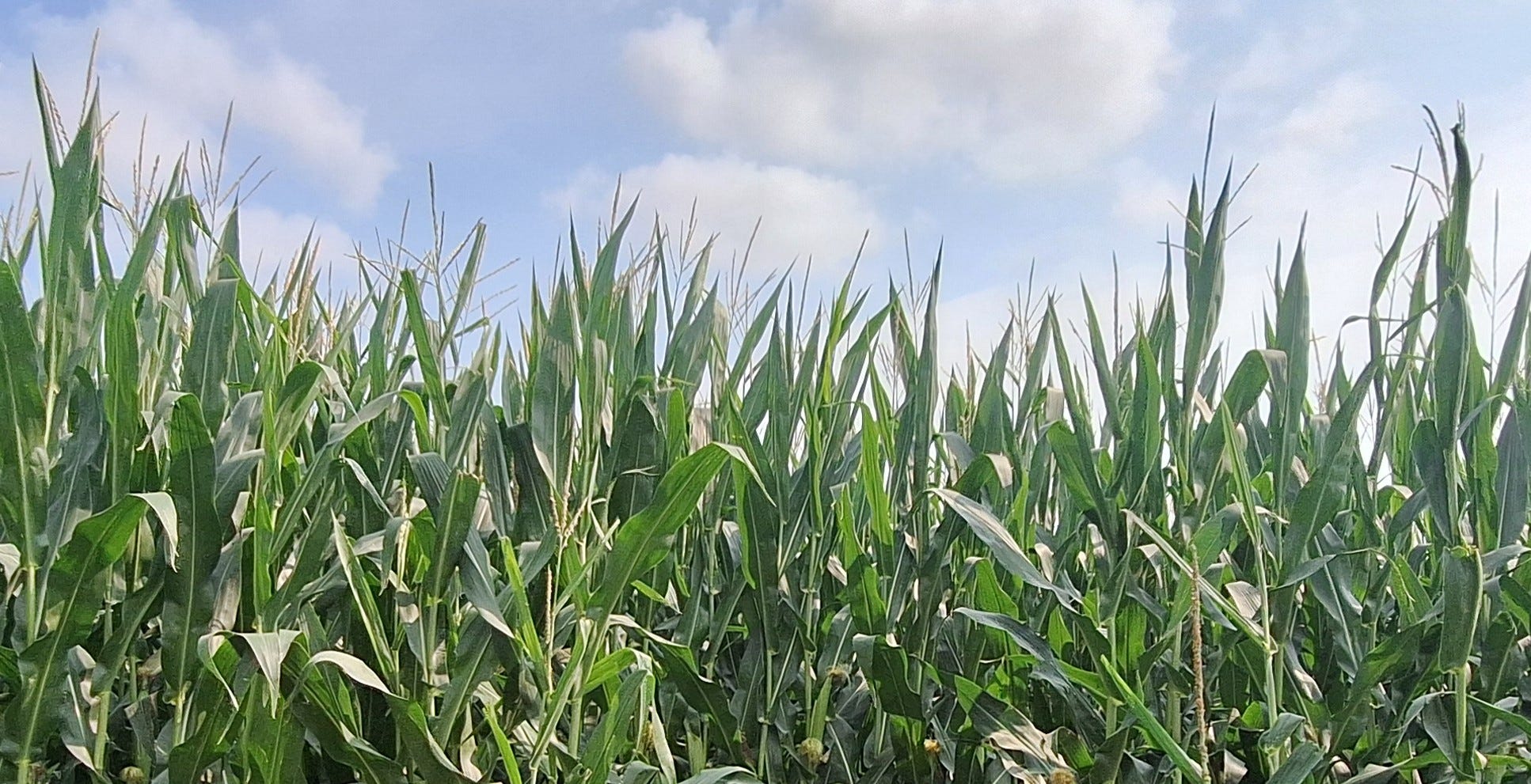
The bedroom windows looked like they’d been crying all night. As the sun rose, they dried their tears, but out across the valley, the mist hung over the prairie all day like a faded gray blanket it couldn’t kick off.
The air this week is heavy enough to feel like wet wool in your lungs. The 115-degree heat makes breathing hard, but the humidity is unmatched. It makes you think “sauna” and saunas you can survive. Heck, some people pay to sit in them.
Farmers call this “corn sweat.” So much corn, over so many miles, transpiring in the hot Iowa July sun. You can almost see it: Corn stalks lifting their leaves like arms, waiting for a breeze to dry their pits.
But it’s much worse than that.
Because in this air, this water that encompasses us, this heat that soaks our socks and sends sweat trickling down the smalls of our backs just standing still, are the particles left behind by that helicopter I passed a mile down the road, the planes I hear overhead every day and the tractor pulling a 10-row sprayer next to the highway I traveled yesterday.
It is not just hot. It is not just humid. It is air laden with chemicals. Dicamba and 2,4-D, brought to market in the last 10 years due to the inevitable weed resistance to glyphosate, are more prone to drift and can transform into a gas that travels for miles. This isn’t radical Lefties publishing this info, it’s Ohio State’s ag school.
Aggies measure what these chemicals do to food crops that don’t have the genetic modifications to resist them. (Stunted growth, cupped leaves, dead and twisted branches, in case you want to know.) We humans don’t have any genetic modifications to resist them either, but not enough scientists measure what they do to us. (Spoiler alert - liver cancer is on the short list.)
Instead, we blame our high cancer rate on radon and binge drinking. On a good day, and we’ve had a few lately, we start to suspect the water. But no one’s talking about the air. While Bayer continues to rake in billions thanks to a bought-off Supreme Court, it shares a sliver of the market with its lesser-known evil twins Corteva and Syngenta. All three pump this stuff into the veins of the commodity farming corpus and out into the air we breathe.
It is a sin no one is willing to own. Air moves invisibly across property boundaries and state lines. Who would ever be to blame?
The airwaves are no different. Rachel Maddow, MeidasTouch, Jesse Watters. They are not just fast-talking, loud and obnoxious. They are killing us with their pummeling, toxic bombast, from the Right and the Left. Saying more, analyzing more, having more opinions suffocates us like a toxic fog so that when it finally clears we appreciate even more the high-pressure system that blows in, bringing a bright sun with it.
But we can’t wait for the wind. We must protect ourselves as we move through this mess, sweat it out, hydrate, cool off when we can, then get the work done. We can’t distract ourselves with too much talking and reading about the headlines. We can’t think about them too much, because that just makes us sleepless at night and useless the next day.
What more do you really need to know? Which of the sordid details or fascinating insights changed your life today?
Because those news folks have one job – make profits for shareholders and men in the C Suites we never see. And the nonprofits? They are so much better, but still have funders to please.
We the people, on the other hand, have many jobs. Our job is to clear the air. Our job is also to drag the trash from the silted rivers. Our job is to grow healthy food and people to nurture us, to share any money, kindness and passion we can spare. This work is exhausting. It’s infinite. And it’s hard to see from here if we’re making any progress. Most days, I think we’re backsliding. But we can’t afford to stop working and wait until November 3rd to see if our faith in elections is either restored or shattered.
These elections have become a function of power in ways they never have been before. It is no longer enough to show up and vote. It will now be about organizing a mass movement of voters, poll watchers, attorneys and other election protection professionals and volunteers to demand our basic human rights – the right to determine who governs us, the right to stop destroying ourselves with every breath and bomb, and the right to a healthy, hopeful and promising future.
Get ready to do uncomfortable things – talking to strangers, passing out fliers, writing letters and meeting people where they are, not waiting for them to show up where you are.
Then we’ll walk together into a place where the air is sweet and the water clear.

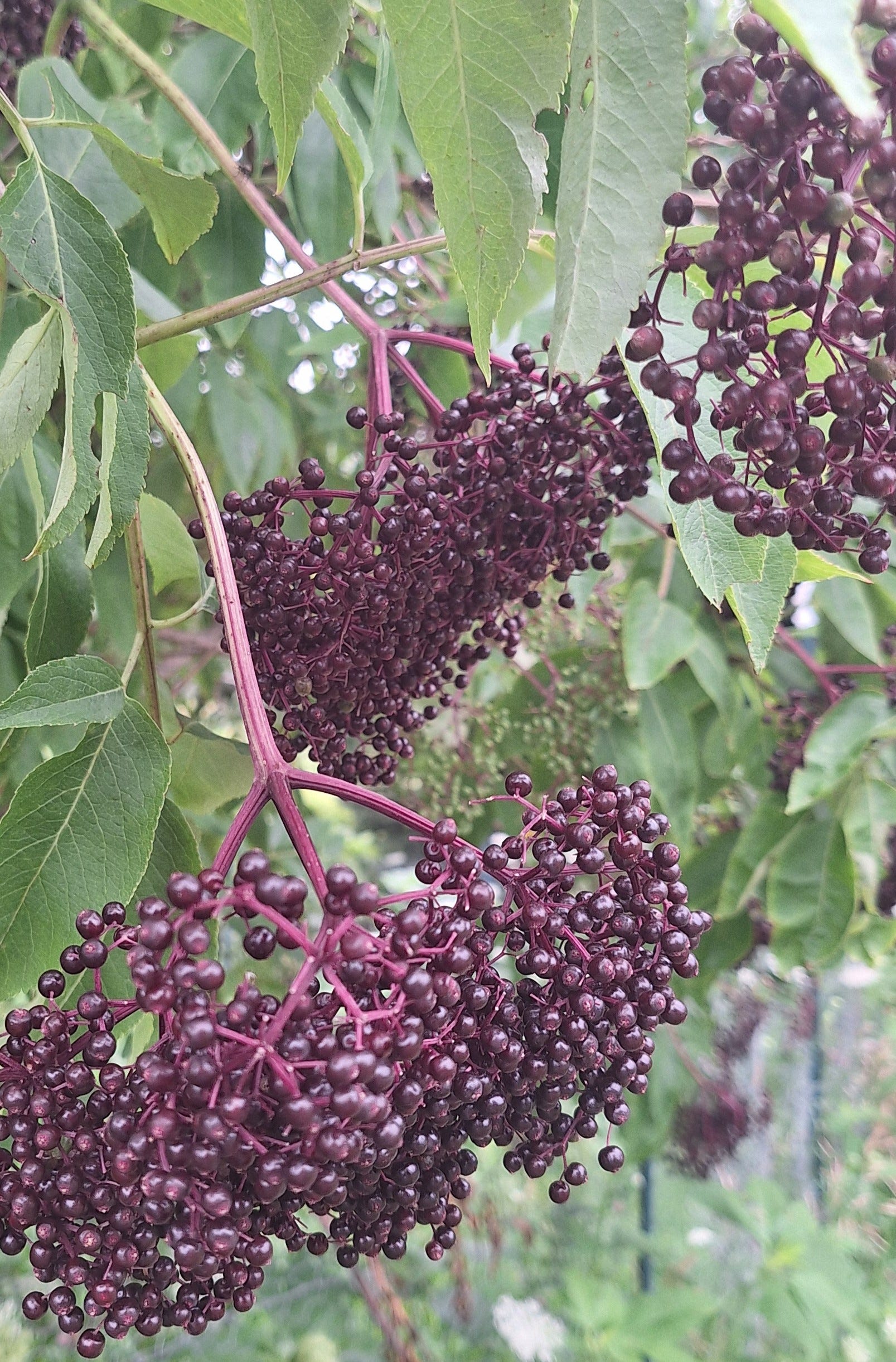
It’s elderberry harvest time! University of Missouri research shows that elderberries help keep the doctor away. We’ll have freeze-dried ones for sale at the Chestnut Festival Oct. 18th.
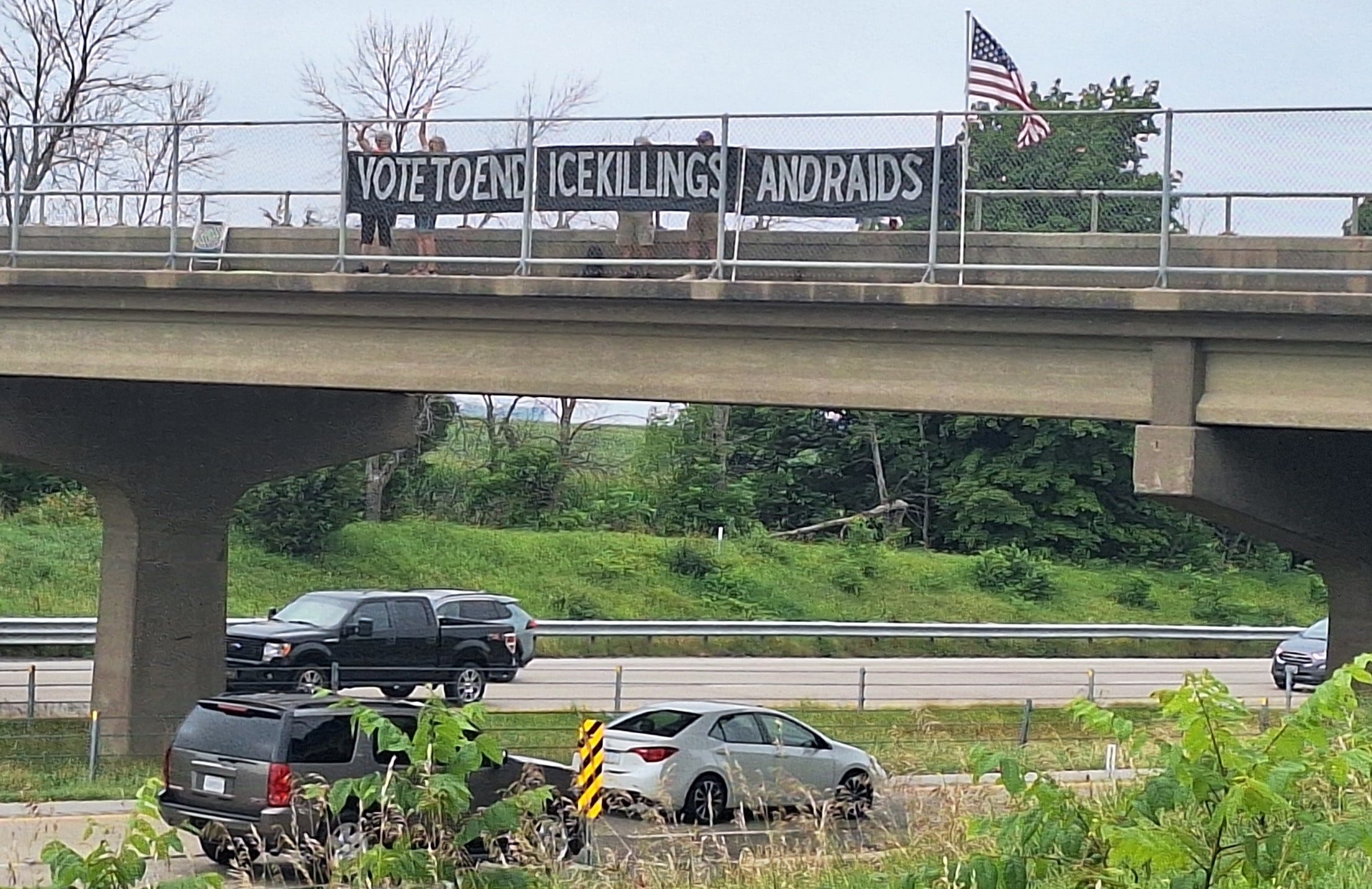
Doing our part in rural Iowa! About a half dozen of us dropped another banner over I-80 last weekend. One member of our cohort estimates 1,200 cars see our message every time we do this. If YOU see a banner, honk! Better yet, join a banner drop. Check mobilize.us for what’s happening in your area.
Another thoughtful, well-researched piece by More Perfect Union. Now AI companies are going after the activists investigating them.

We have a WWOOFer visit planned for the first two weeks of August. If he gets here, we’ll be dismantling the chicken pasture fence and checking the integrity of the coop.
Join the national Indivisible call tomorrow night to learn how to protect the vote in November.
Check out the stories we’re telling at Barn Raiser as we cover rural election issues across the nation.
Thanks for reading! See you next week!
Suzan
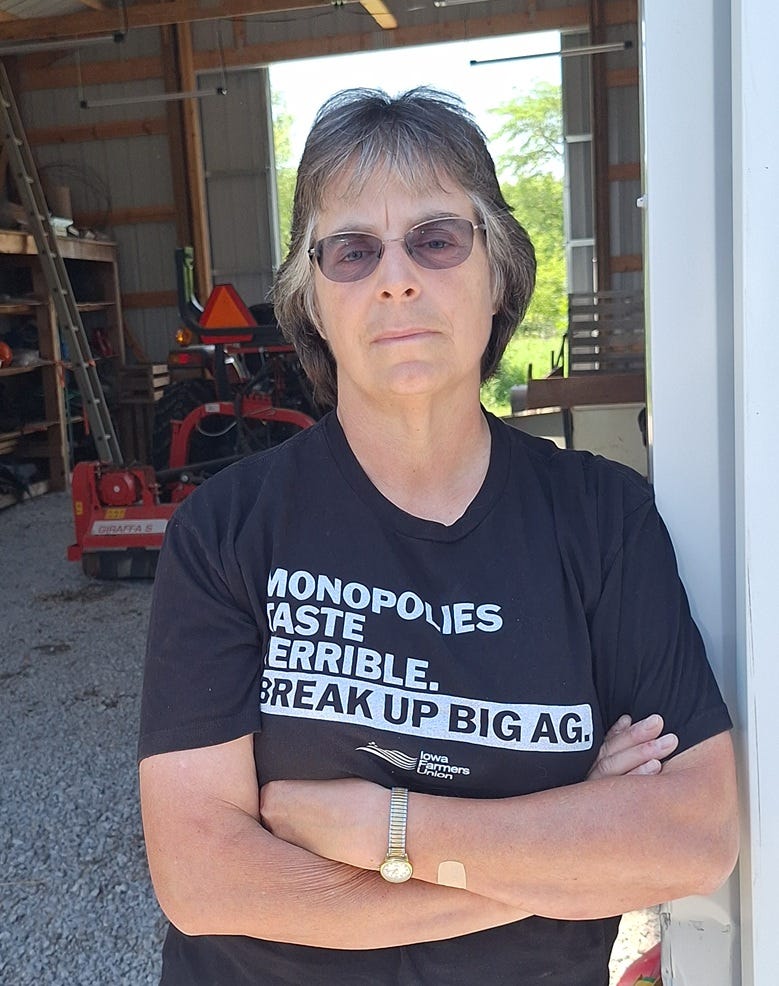
Suzan Erem is an award-winning author, editor, publisher, community and union organizer. She now farms Asian pears, elderberries, Haskap, serviceberries and chestnuts in rural Cedar County IA where she and her husband are WWOOF and Hipcamp hosts. See the farm at dracohill.org. She is currently serving as Elections Editor for Barn Raiser Magazine.
Comments
Nothing yet. Say the first thing.
Sign in to join the conversation.