

Hello,
Here is your weekly dose of wisdom for smarter living. If you are new here, check out the archive for all the essays and tools for learning. To support my work, you can upgrade to a paid subscription for $9 per month or $60 for an entire year. There’s so much more for paid subscribers in 2026.
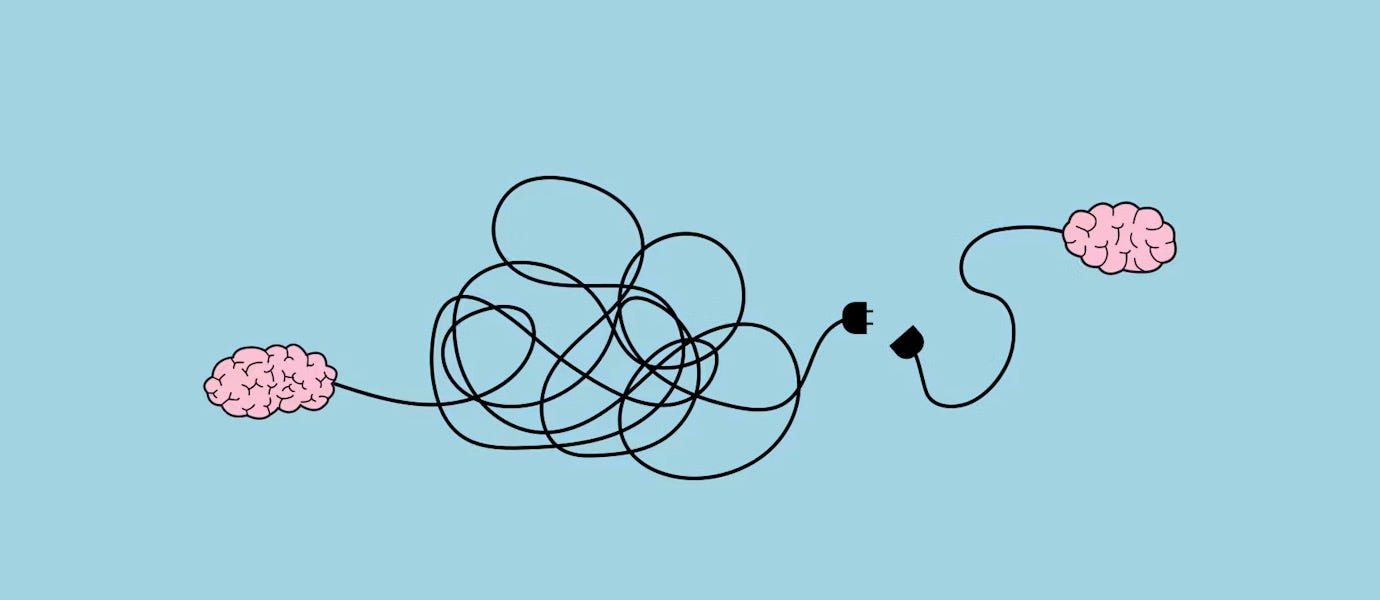
Your brain runs on four settings. Four voices that require your attention for thinking clearly. Most people don’t listen the wisdom of all four. Brain dominance pioneer Ned Herrmann defined four thinking styles: analytical, practical, relational, and experimental. You switch between them all day without noticing. The problems start when just one of them runs your life. You’re probably favouring one or two of the styles. And judging the others.
Most people treat Herrmann’s model like a personality test. A box they shouldn’t try to get out from. But it’s not.
Your entire life requires all four.
First, the analytical brain. This is the “what?” part of your mind. It lives on facts, logic, and data. It’s the engineer, the critic, the part of you that reads the manual first. It needs to know why something works, not just that it works. You’re using this when you’re building a spreadsheet, dissecting an argument, or demanding proof. It’s necessary.
But there’s more to life than facts.
Then, the practical brain. It’s interested in the “what.” It’s the organizer or the doer. It takes an idea and starts with, “What’s the first step? And the second?” This is the part of you that makes lists, follows required instructions, and implements the plan, the analytical brain. It’s the engine of execution. But without a destination, you’re just a highly efficient machine going round in circles.
Now, the relational brain. It’s feeling, intuitive, connection-driven. It’s the heart of the team. Very empathetic if you allow it to do its work. It cares about the people in the room and the unspoken words. You’re in this space when you’re listening to a friend, sensing team morale, or making a decision based on a gut feeling. People mock this as “soft,” but a decision that ignores this style of thinking will fail because it overlooks the importance of people. Everything grows from the relational brain.
Finally, the experimental brain. The “what if?” side of the mind. This is the big-picture dreamer. The rule-breaker. It’s the part that hates manuals. But sees connections no one else does. You are working from here when you brainstorm with a blank whiteboard. Or skip steps to find a shortcut. Even when you imagine a future that doesn’t exist yet. It’s the source of novelty. But left unchecked, it can also be a source of chaos.
You can make the most of all of them if you stop choosing a favourite. Or stay in staying in just one mode for too long. Learn to use all of them, at the right time. You need the experimental brain to imagine a new life. You need your analytical brain to determine if an idea is worth your time. And the practical brain to build the steps to get there. And you absolutely need the relational brain to understand who you’ll become and who you’ll need to build your best life. Your whole life requires all four. The trick isn’t balance. It’s access. Know which voice to turn up and which to mute depending on the experience.
“Artists have an interest in … so-called inspirations; as if the idea of a work of art, of poetry, the fundamental thought of a philosophy shines down like a merciful light from heaven. In truth, the good artist’s or thinker’s imagination is continually producing things good, mediocre, and bad, but his power of judgment, highly sharpened and practiced, rejects, selects, joins together; thus we now see from Beethoven’s notebooks that he gradually assembled the most glorious melodies and, to a degree, selected them out of disparate beginnings. The artist who separates less rigorously, liking to rely on his imitative memory, can in some circumstances become a great improviser; but artistic improvisation stands low in relation to artistic thoughts earnestly and laboriously chosen. All great men were great workers, untiring not only in invention but also in rejecting, sifting, reforming, arranging.”
Source: Human, All Too Human
“Above all, do not lose your desire to walk: every day I walk myself into a state of well-being and walk away from every illness; I have walked myself into my best thoughts, and I know of no thought so burdensome that one cannot walk away from it. Even if one were to walk for one’s health and it were constantly one station ahead—I would still say: Walk! Besides, it is also apparent that in walking one constantly gets as close to well-being as possible, even if one does not quite reach it—but by sitting still, and the more one sits still, the closer one comes to feeling ill. Health and salvation can be found only in motion… if one just keeps on walking, everything will be all right.”
Source: Letters and Documents
Think Like a Renaissance Genius. These Habits Still Beat Modern Advice
I’ve been learning how genius minds think, solve problems, invent breakthrough ideas and set their souls on fire for a few years now. I found out that no group of people did this better than the thinkers of the renaissance. People like Leonardo da Vinci, Michelangelo, and Francis Bacon didn’t live like modern specialists. They didn’t lock themselves into a single path for life. They thought of life as a connected system. I will attempt to summarise how they became geniuses in a few minutes. And how you can apply thinking processes in your life.
About me: I’m Thomas. My essays cross between productivity, philosophy, psychology. I also write a Fast Company column on smarter living. My readers include intellectually curious people from Microsoft, Google, Amazon, Salesforce, LinkedIn, Apple, BBC, HubSpot and Morning Brew.
Postanly Weekly is a reader-supported newsletter. To support my work, you can upgrade to a paid subscription for $9 per month or $60 for an entire year. There’s so much more for paid subscribers in 2026.
No posts
Comments
Nothing yet. Say the first thing.
Sign in to join the conversation.