The House of Representatives and Library of Congress are pursuing custom AI initiatives like Mia and PRISM, raising key questions about model selection, security, and vendor lock-in. Weighing closed versus open-weight models, retrieval-augmented generation, and fine-tuning, durable success depends on investing in institutional data infrastructure rather than any single AI model.
Meta's Muse Glimmer, Moonshot AI's Kimi K3, and Thinking Machines Lab's Inkling mark major open-weight AI releases, reshaping competition with closed providers and raising policy questions around foreign models, security, and accountability.
The European Parliament, Chile's Chamber of Deputies, and the US House of Representatives are testing distinct approaches to institutional AI adoption — centralizing access through a new platform, regulating disclosure and accountability, and empowering staff to build their AI tools — revealing three competing theories about legislative AI risk.
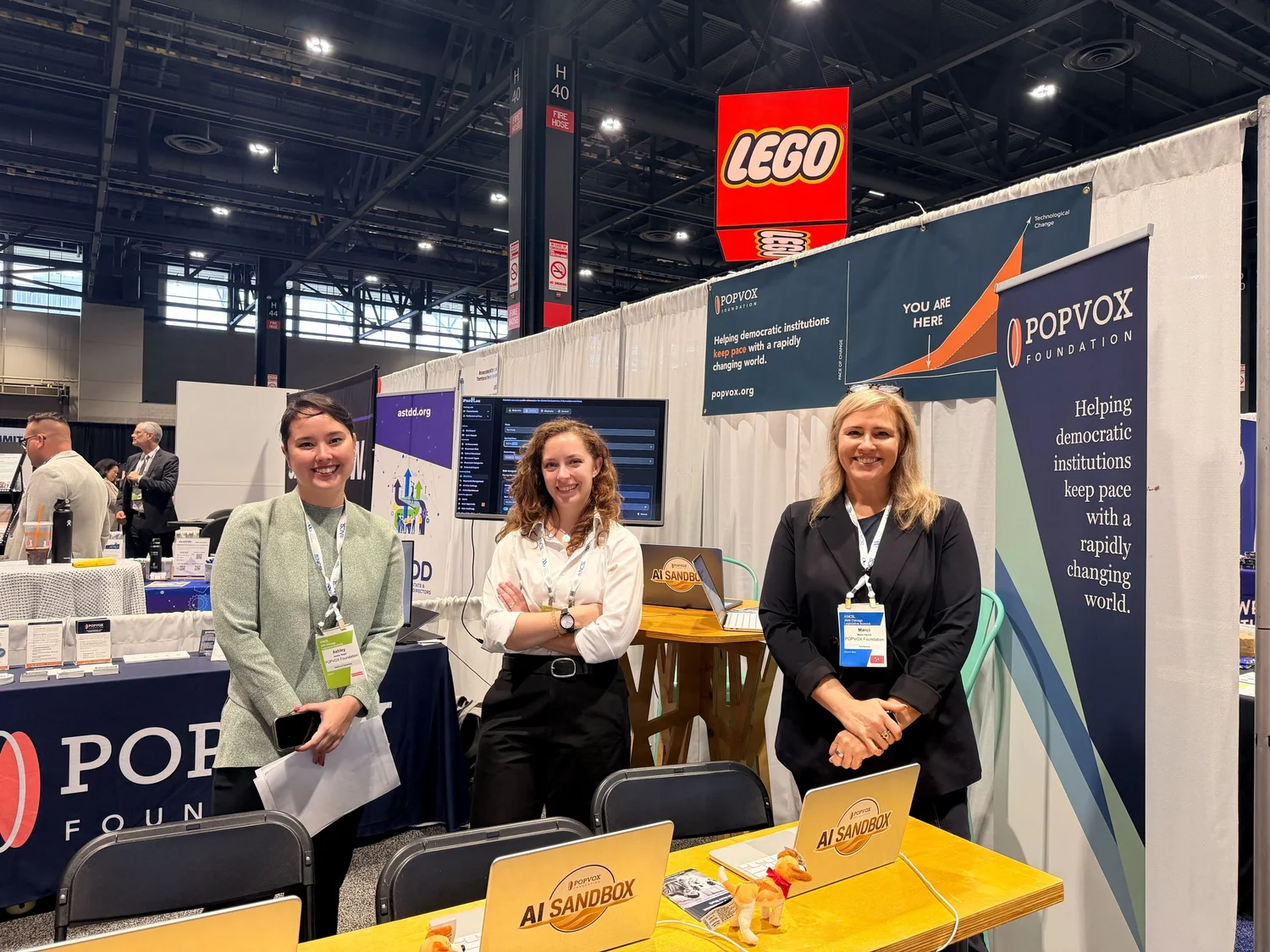
POPVOX Foundation brought AI sandboxes, casework research, and global parliamentary partnerships to the 2026 NCSL Legislative Summit in Chicago, unveiling State Legislative Capacity in the AI Era, demonstrating hands-on AI tools for legislative staff, and convening state and international leaders on constituent services, casework innovation, and the Digital Parliaments Project.
Open-weight AI models from China and the US are closing the gap with frontier systems, autonomous AI cyberattacks are raising new security concerns, and the House launches an Innovators Pipeline for staff-built tools. State legislatures also confront capacity gaps in adopting AI responsibly.
State legislatures across 22 states are adopting AI for bill research, constituent communication, and back-office operations, from Arizona's Skywolf to custom GPTs built by lawmakers. Our new report examines governance gaps, capacity-building strategies, and practical recommendations for responsible, institution-wide AI adoption in America's statehouses.
State legislatures across the US show uneven AI adoption, with staff usage nearly doubling in a year while formal policies lag behind. Institutional knowledge often rests with single experts, and human review requires genuine source verification, not passive oversight of AI-generated output.
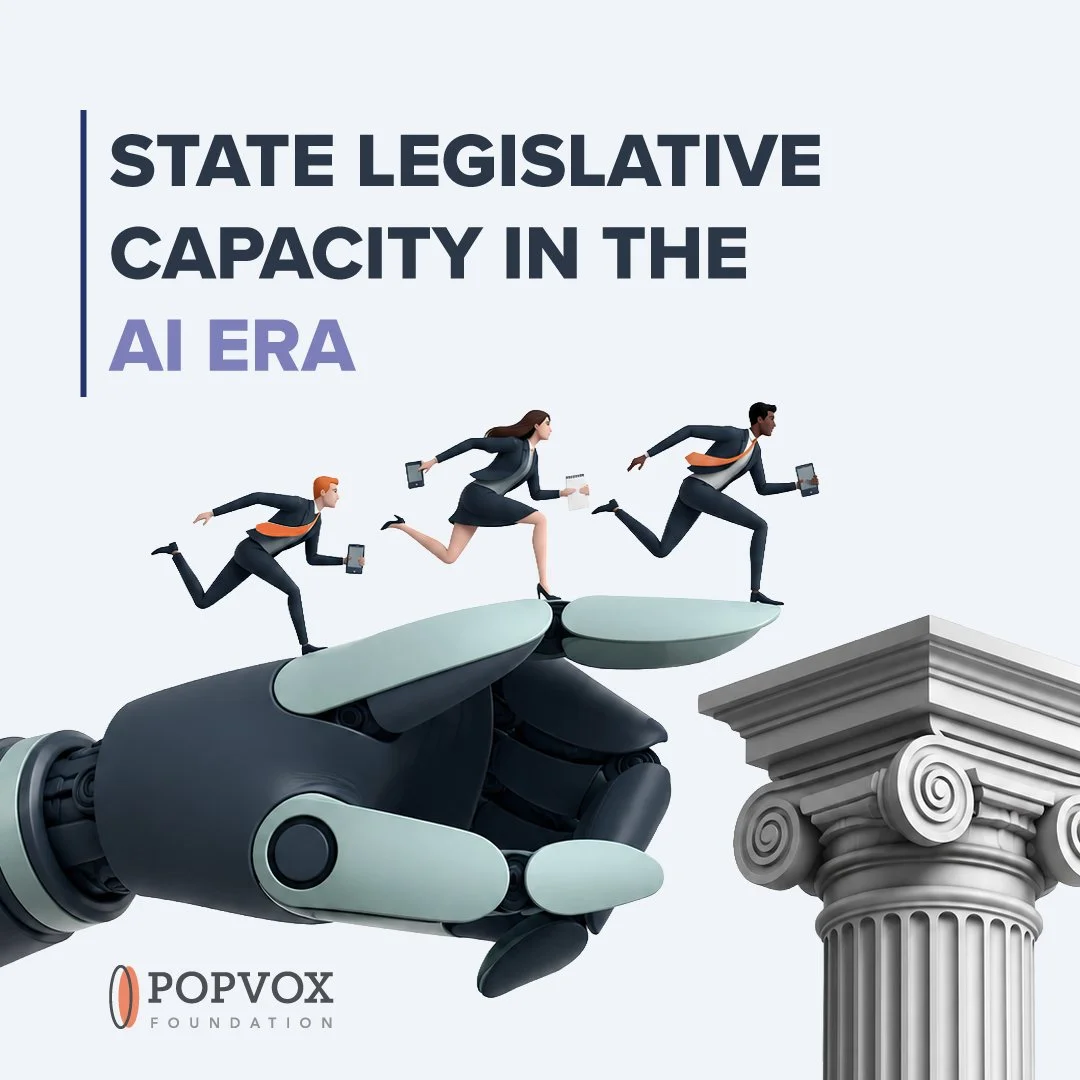
State legislatures face a widening “pacing problem” as generative AI reshapes lawmaking faster than institutions can adapt. Drawing on interviews across twenty-two states, State Legislative Capacity in the AI Era examines staffing, institutional knowledge, network relationships, and technology adoption, revealing where legislative capacity lags and where states are quietly outpacing Congress.
POPVOX Foundation's Three Horizons Vision (H3) Project maps the gap between Congress' governing demands and its institutional capacity. An interactive microsite invites Members, staff, and civil society to classify reforms across three horizons and five domains, shaping a capable Legislative branch.
AI is reshaping how young people weigh career decisions, but San Francisco and Washington calculate the risk differently. San Francisco channels AI anxiety into startup bets and Big Tech tradeoffs, while Washington treats it as another policy input shaping mission-driven work, prestige, and personal brand.