
Today in papal history marks the date that Pope St. Simplicius, the 47th Bishop of Rome, passed to his eternal reward.
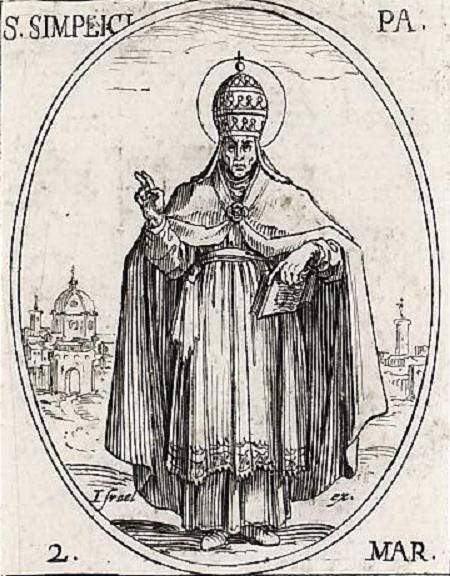
A native of Tivoli (a region in Central Italy), St. Simplicius was elected pope on March 3, 468 following the death of his predecessor – Pope St. Hilarius – after serving as a priest under both he and St. Leo the Great. Simplicius dealt with a number of heresies, chief among them being Eutchyianism (a form of Monophysitism) which taught that Christ bore one nature made up of human and divine elements (as opposed to him having both human and divine natures).
Simplicius also wrestled with the fallout from the Ecumenical Council of Chalcedon in the Eastern Church, particularly with how much power the Patriarch of Constantinople would have. Given that patriarchate’s location in the seat of the Empire, he wanted to say, “I’m basically the pope of the East.”
Simplicius, siding with similar rulings by both Leo and Hilarius before him, replied (to paraphrase):

Simplicius is best known for navigating the Barque of Peter through the end of the Western (Roman) Empire and into uncertain times. Though the Roman Emperors were basically empty shells wielding little real power by that time, barbarians finally conquered Italy and appointed Odoacer, an Arian and leader of the Heruli tribe, as their king.
Surprisingly little persecution of the Church occurred, however, as the invaders fully tolerated the religion of their Catholic citizens and allowed its administrative structure to stay in place. This freedom allowed Simplicius to care for his flock and sow seeds of the Good News among the Germanic tribes occupying Italy.
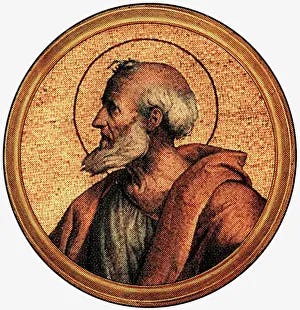
St. Simplicius’ death was the center of a bit of controversy regarding who would succeed him. Though Odoacer tolerated the Church and her practices, he still wanted to influence who the next Bishop of Rome would be.
After the pope’s death, Odoacer and his Roman prefect, Basilius, tried to say that Simplicius had lobbied for an order that no one could be consecrated without Basilius’ consent.
The clergy in Rome said, “Nice try,” reminding the power-hungry prefect that the process for electing a pope had already been decided years earlier by Pope Boniface I and Emperor Honorius. The clergy affirmed that only a Bishop of Rome who had received, through the proper canonical form, “Divine approval and universal consent,” would be regarded as the rightful pontiff.
Simplicius died on March 10, 483, was buried in St. Peter’s Basilica, and was venerated as a saint not long after his death.
Pope St. Simplicius, pray for us!
Pope Pius VI – who reigned as pope from 1775-1799 – was not only the man who was pope when the USA gained its independence from Britain (in fact, he approved the appointment of America’s first bishop, John Carroll of Baltimore), but also the one who witnessed the start of the French Revolution.
In particular, on this day in 1791, Pius VI officially condemned the Civil Constitution of the Clergy, basically the oath of fidelity demanded of clerics to the French Government, along with the Revolution itself.
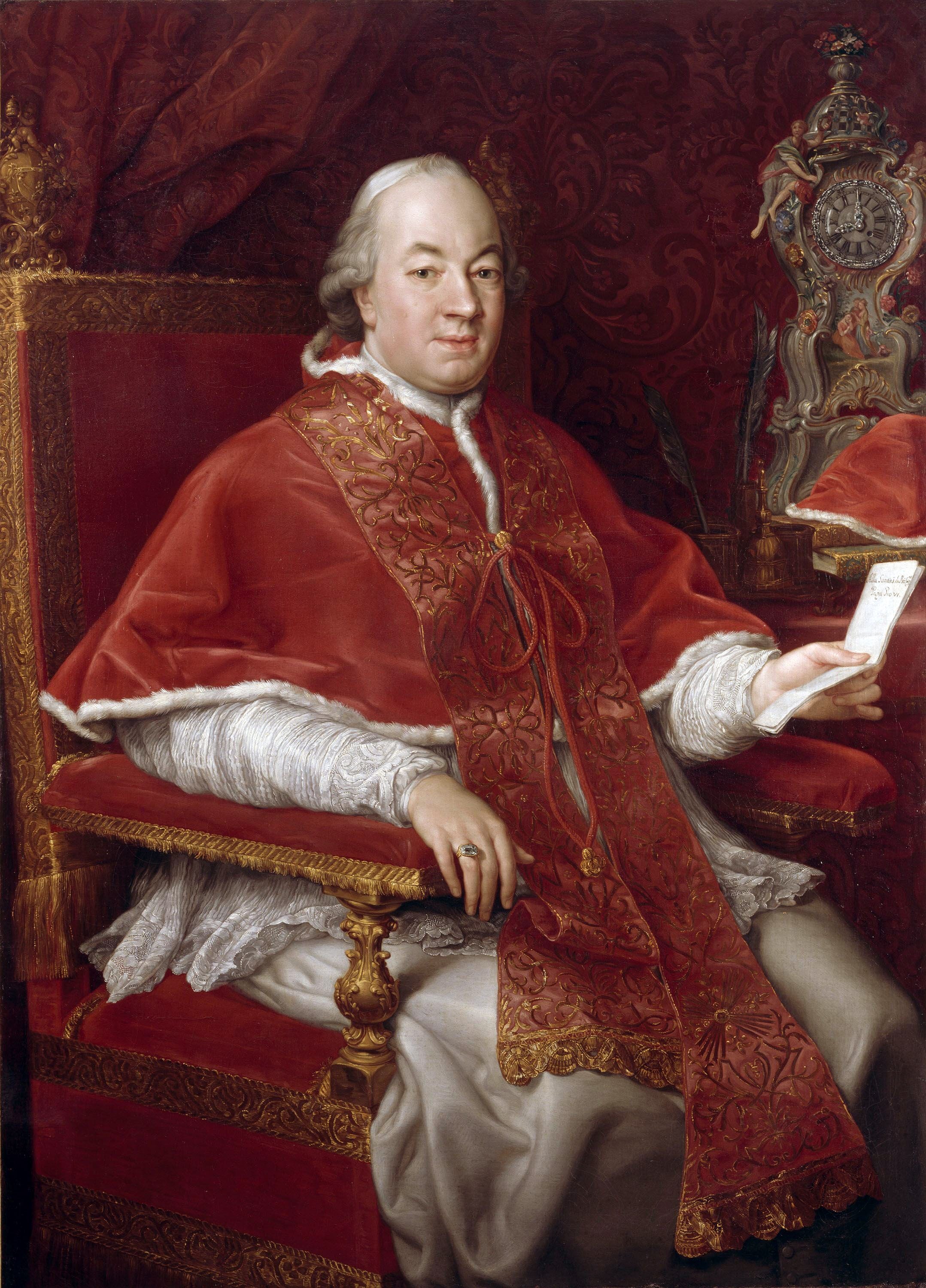
For his efforts, Pius VI ended up being driven from Rome and dying in exile in 1799.
His immediate successor, Servant of God Pope Pius VII, had this to say about Pius VI’s heroic actions prior to his death:
From these events men should realize that all attempts to overthrow the “House of God” are in vain. For this is the Church founded on Peter, “Rock,” not merely in name but in truth. Against this “the gates of hell will not prevail”, “for it is founded on a rock.” There has never been an enemy of the Christian religion who was not simultaneously at wicked war with the See of Peter, since while this See remained strong the survival of the Christian religion was assured.
Comments
Nothing yet. Say the first thing.
Sign in to join the conversation.