
When a new technology arrives on the scene that is better for the environment, there often comes with it a blind acceptance that it is “good” for the environment.
It is drilled into us that we should cut our carbon-footprint and lower CO2 emissions, so when electric vehicles started to gain in popularity, we collectively accepted them as the green option.
Never forget, the electric car is here to save the car industry, not the planet. — Brent Toderian
Electric vehicles are the greener alternative, and a step in the right direction. But they are not rubber band-powered bamboo go-karts… there contain rare earths (cobalt) and other materials that are not necessarily a shade of green.
But again, they are a step in the right direction.
In the same vein, electric bikes are starting to replace cars for short trips and work commutes. This is two steps in the right direction. But unlike the actual Two-Step, we don’t want to take one step back for every two steps forward.
So our goal in this article is to know more about the make up of ebikes, and how we can keep them out of landfills, toxic materials out of the soil, and overall make sure we are not creating ebike trash.
Uber made the headlines recently when it was discovered that the were trashing many of the e-bikes owned by Jump after acquiring the company. This is a huge waste, as well as antithetical to how Uber likes to position itself
As the largest mobility platform in the world, we know that our impact goes beyond our technology. We want to do our part to build back better and support a green recovery in our cities and communities.
Dara Khosrowshahi, Uber CEO
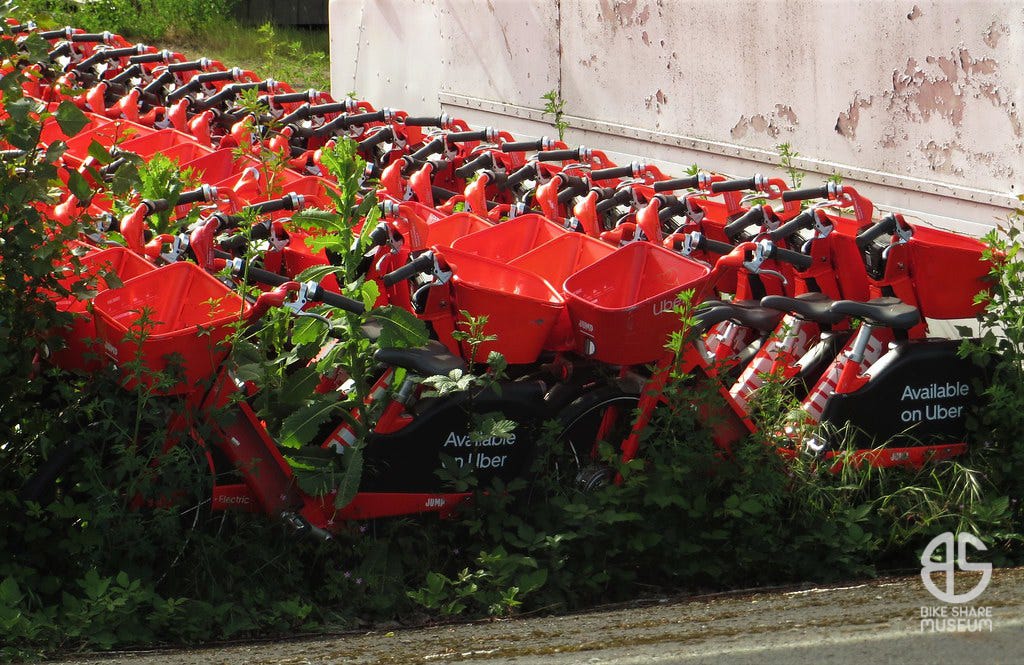
Uber is sending tens of thousands of its electric Jump bikes to the scrap yard, weeks after offloading the money-losing bike-share division on Lime. The news of the scrapped bikes has incensed bike enthusiasts on social media, one of whom decried the act as “unconscionable.”
“I can’t tell whether it’s misinformed, or whether it’s calculated and cynical,” a former Jump employee said. “But it’s just affecting everyone the wrong way.”
Reported on The Verge
In the tech world, it is normal to cut losses on a product and move on. But scrapping an inferior software, while might piss off a few developers, does not have the same ramifications as scrapping 10s of 1000s of functional ebikes.
That is the reality of business. Uber found it “too complicated” to recycle the old Jump bikes. Logistically and financially, it probably was. But as one reporter said in his article:
It should have recycled them, sold them on, or just done literally anything else.
Matthew Beedham
As easy it is to shake our collective fist at Uber… do people act differently when it comes to disposing their ebikes? Not always!
Most bikes that fall into disrepair are trashed. We simply don’t know what to do with them. And scrapping it is the obvious way for your to get rid of it.
There are a few other contributors to ebike trash. They are not necessarily something that can be fixed easily, but they are something to keep in mind.
Lower quality, more trash
There are a lot of poorly made ebikes on the market. Which is because high quality, solid ebikes are expensive. When someone who is new to ebiking wants to get one, they do not know if they will like it. Or use it as much as they hope.
So why spend 2 grand when you can try it out on a low-end model for 600 on the cheapo online marketplaces?
This way of thinking fuels the low-end market which keeps producing bikes that breakdown more easily, motors that lock up, and batteries that catch fire. No one wants this, but people are willing to take their chances.
Maintenance Know-how
Americans don’t ride ebikes as much as in other countries. Our roads are not build for biking. Most Americans would have an easier time changing flat tire on a car blind-folded than they would fixing anything on a bike.
Lacking basic bike maintenance skills leads broken down bikes to be ignored until they are discarded or given away.
Costly Repairs
I was in the bike shop a few months ago because I need my wheel trued. It cost me 30 bucks. A full tune-up which would be nice is 100 bucks. Those are not small costs, especially if the bike is not on the high-end.
That was a regular bike shop. Ebikes are still not that commonplace, and technicians are even fewer and farther between than local bike shops. This means higher costs for the rider for replacement parts and shipping.
There is no on at fault in any of these. It’s just the reality of the cycling situation we have here in the US. And hopefully there are fixes down the road to mitigate these contributors to ebike trash.
Ebike brands need to understand their impact on ebike trash and actively work towards reducing it. It is a move that is great in the long run, but unfortunately, most brands right now are focused on the short run, grasping to gain marker share.
It is an emerging market, and no brand in invincible. They need to focus on being stable before they can focus on longer term things.
But this does not have to be mutually exclusive. There are are things brands can do.
Educate the customers
People who buy into a brand would typically like to refer to the brand for any issues. Instead of relying on customer service agents, which can be costly, or training and hiring technicians, which is not even feasible, brands can create a resource online for customer to use for maintenance and repairs.
How to tune up, tighten cables, fix chain issues, change a tire, diagnose problems with the motor or controller. These things not only relieve your customer service reps from a mountain of emails, it relieves the rider. They now know they have something in their pocket when things go wrong.
Youtube is great for learning general tips, but not specifics. There are hundreds if not thousands of ebike models, it does affect the riders confidence if there is something tailored to their own model.
Recycle Programs
Call2Recycle is a program for battery recycling after the batteries die. Customers need to know about these programs and the details when they make a purchase. Actively get the information out there before it is needed.
As well, riders need to know what they can recycle, and where and how, when the bike is too old or beyond disrepair.
The brand’s role in reducing ebike trash comes after the purchase is made, however, it is up to us, as individual to our due diligence on the brand and ebike before we purchase.
We, as ebike riders, need to take responsibility as well. It is not solely on the brand to educate or train its customer. It is also on us as customers to train the brand on what we need to know.
Individuals need to do their due diligence on the brand, the components, and the batteries before making a purchase. Researching and understanding the product first can lead to safe conditions for the life of the battery and the bike.
Individuals also need to assess the quality of the company they are purchasing from to make sure they are not buying something designed for quick sales by a fly by night company. Those will 100% end up in the landfill. And the only way to combat that is to only buy from reputable companies.
To get better acquainted with an ebike, individuals should also get to the the make-up of a ebike so they know how to take care of theirs.
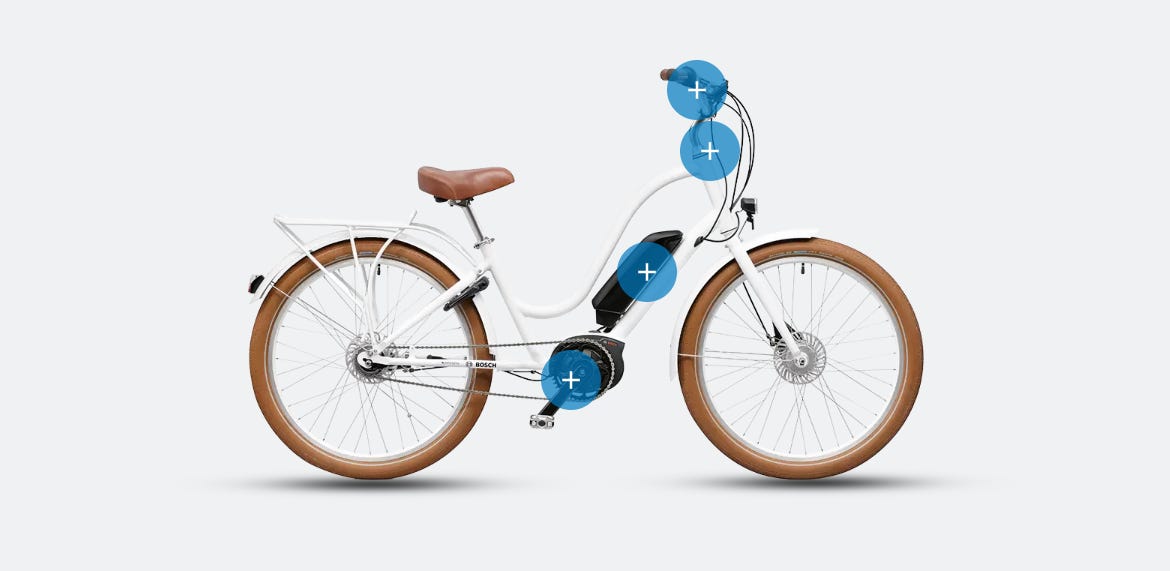
The Bike
The Motor
The Battery
If any of these 3 parts break or wear out, the entire unit is un-ridable, which leads to the unit being abandoned or thrown out. Because unlike tin cans and cardboard boxes, most people don’t know where to recycle bikes… or batteries.
So it is important that we
a) know how to keep components maintained so they can be ridden or resold.
b) know how and where to recycle an ebike that is beyond repair.
So let’s look at each part separately so we know how to keep them in good working condition so they can be used and resold, and kept out of the landfill.
The Bike
The number 1 reason for bike trash is that they fall into disrepair. Bikes are machines, and they need upkeep, but oftentimes they are set aside for a season or two without be ridden or tuned-up. This leads to rust, squeaky brakes, loose cables, and flat tires.
Before we get to the “e” part of ebikes, we want to make sure that each season you check a few parts to make sure that it is in proper working condition.
Tires – Tires will last years, and tubes can too. Keep them inflated even when not in use, and fill them with Slime so you aren’t put out for small punctures.
Chain – The chain needs oil like you need water. Get a bottle of bike chain oil and keep it oiled. If it gets gunky, you can use a chain cleaning kit, or just a brush with mild detergent to clean it off. And then oil it up good.
Cables – Over time all cable will get loose. Brake cables and gear cables. They can easily be tightened by twisting the nut on the handlebar and derailleurs. Find tips online so you don’t have to pay at a bike shop.
The Motor
Truth be told, you are probably not going to be able to fix your motor. Whether it is a mid-drive or hub motor, it will require a technician to fix a motor that breaks or locks up.
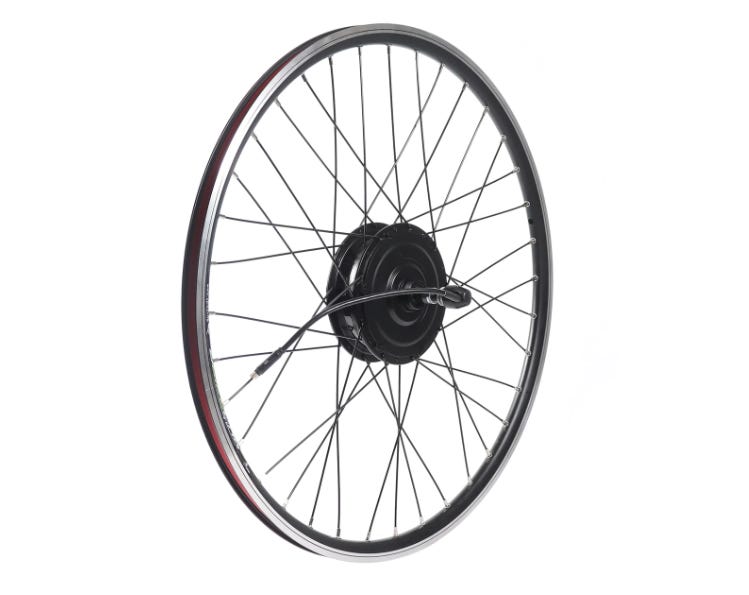
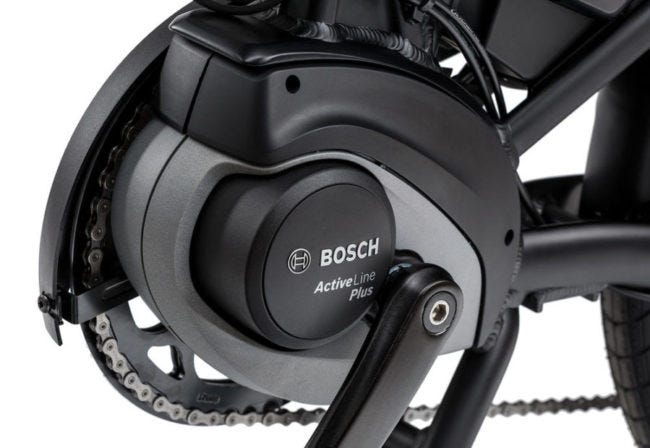
What you can do it make sure you buy a bike with a motor that is serviceable. That can either mean there is someone in your city that can and will service an ebike motor.
Not every bike shop will be able to service you, even if they sell other ebike brands. There are liability and technical issues that might get in the way off getting a motor serviced.
Two things you can do to mitigate a potential problem here:
Ask a local shop what brands they service
Ask the bike manufacturer if they have service personnel in your area
Ask any brand you are thinking about what they will do to fix or replace a motor
Just asking before you buy a new ebike can save you a lot of headaches later, as well as keep your bike running smoothly and out of the landfill.
The Battery
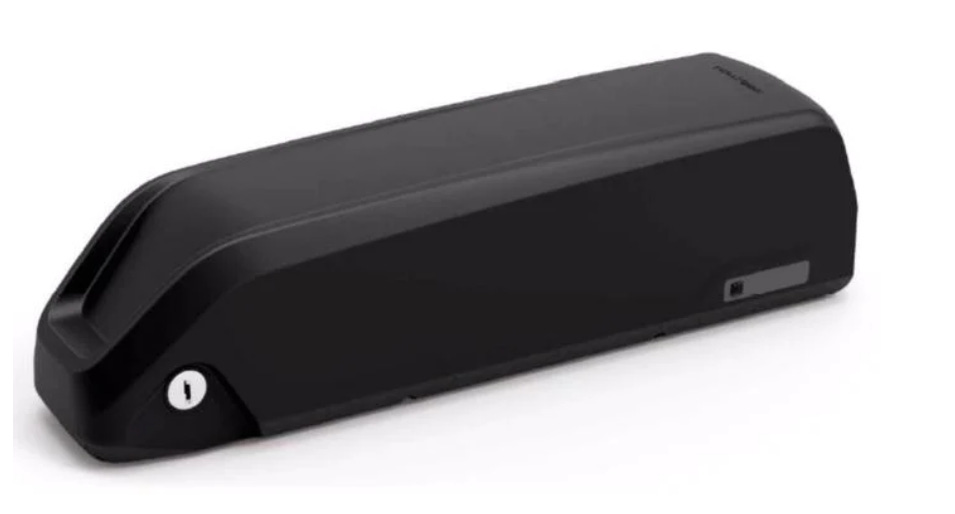
Now this is the topic you hear the most about.
Most ebikes use Lithium-ion (LI) batteries as they are the best for their power capabilities and for mass production. But as you saw on the news, there have been over 200 fires in NYC alone this year cased by LI batteries.
There are 3 reasons for this:
Poor construction
The casings are of low quality, and flammable electrolyte inside the battery cells leaks out and ignites. This can happen while you are on your bike as well.
Overheating
Batteries get hot when used at high intensity for a longer than usual durations. Overheated cells can catch fire and case a chain reaction. Riding in high temperatures for long distances can lead to overheating.
*Most Importantly*
Mismatched Chargers
Manufacturers don’t want batteries to catch fire, so they make sure that the charger provided with the battery cuts off when it is fully charged. But many people don’t realize that using a mismatched charger might not turn off when the battery is fully charged. And over-charging means overheating… which leads to fire.
So make sure you only buy a battery from a trusted brand that has reviews from customers, and make sure you always use the original charger that comes with your battery!
Never throw out your ebike battery with the trash. Your battery probably has a 2-3 year warranty, and when it dies, most of it can be recycled.
Wasko notes that Bosch batteries are currently designed to last for many miles and years of service, but there is no set amount of time that a battery might last. That depends largely on the conditions in which the battery is used and how often it runs. A typical life span for a battery is between two and seven years. Bosch does guarantee that its batteries will maintain at least 60 percent of their capacity during their warranty period, generally two years from consumer purchase.
And some batteries are more difficult to repair than others. Lower-quality batteries are more challenging to repair, and in many cases, they aren’t repairable at all. Battery cases that are glued closed, for example, present a particular difficulty. There is no way to access the cells within the battery without destroying the casing itself, thereby rendering the unit useless.
Ebikes are still fairly new in the US, so it can be hard to find information on where to send old batteries. But there are companies who work with bike retailers to make sure these batteries don’t end up in the landfill.
Not every part of a lithium-ion battery can be recycled, but most of it can, so reach out to your local bike shop and ask if they take in old batteries to be recycled.
Most of the time they do it for free.
Reports show that the ebike industry will grow by 23% by the year 2030. If we are not careful, the good done by reducing traffic and CO2 emissions can be undone by creating a system of over-producing ebike trash.
So to wrap up…
Maintain the bike - keep everything oiled and in good condition so you can ride safely or resell it when you are done
Buy serviceable motors - talk to the bike brands before your make a purchase to see if you will be able to get help when you need it.
Recycle batteries - make sure these don’t find there way to the bin but to a licensed recycler
Ebikes are a good thing. Let’s keep them that way!
We want to get more people on ebikes. Because when people get on ebikes, there are more smiles and unexpected experiences. This is good for you and everyone around.
You can support Popcycle by sharing your stories with us or our stories with your friends so we can build this community together. Contact Dan directly with any questions!
No posts
Comments
Nothing yet. Say the first thing.
Sign in to join the conversation.