
Pollutical takes a lot of time and energy because I’m determined to make it reliable, well documented, and useful, which means lots of research. I’m not just giving you my opinion.
If you’re in a position to do so, please help keep Pollutical going!
DonorBox lets you customize your support to match your resources. Set an amount you can afford. It can be recurring or one-time. Or, of course, subscribe. Whatever works for you—every contribution makes a huge difference.
Thank you very much!
Click to support Pollutical on DonorBox
Lots and lots of people are already dying from the environmental crisis, like the 8.7 million who die every year from particulate pollution from burning fossil fuels. I’m not talking about climate change. This is regular old car exhaust, smokestack output, and other crap that we breathe in that can kill you. Are the people in charge saving those people? They aren’t.
There's an idea throughout most of “the West” that democracy consists of letting the people vote every few years and then getting them the hell out of the way so the big shots can run things. And for the most part, we don't get to vote on specific issues—we vote for a party and then assume that the new government that will deal with those issues.
So it's not surprising that most people in these countries assume that the government is taking care of the important issues in life—making sure that our food doesn't kill us, that drinking water goes in one set of pipes and sewage goes in a completely separate set, and that the military has uniforms and guns on the off chance that someone tries to kill us—that kind of thing.
One of the things many of us assume the government’s got a handle on is this environmental stuff they talk about on the news once in a while.
But they don’t.
As I've said before in this series of articles: if you're under 30 (give or take) there's a very good chance that you won't have the opportunity to live out your natural lifespan. You’ll die younger than necessary because of the environmental crisis.
To be clear, lots and lots of people are already dying from it, like the 8.7 million people who die every year from particulate pollution from burning fossil fuels. I’m not talking about climate change. This is regular old car exhaust, smokestack output, and other crap that we breathe in that can kill you. Are the people in charge saving those people? They aren’t.
By the way, 8.7 million is a little more than the total population of New York City. The equivalent of one NYC dies every year, right now, from one environmental problem. This doesn't include people poisoned because they live near a battery recycling plant or Black women who get cancer from using the wrong brand of hair-straightening product. It doesn't include people drowned by climate change floods or starved in climate change droughts or burned to death in climate change wildfires.
That's how things are going already, and it’s getting worse fast, so clearly our system for coping with environmental degradation isn't up to the task.
We can't afford to just vote and then fuhgeddaboudit anymore. And if you're under 30, then you should probably act up before it kills you.
Don't believe me? Let's look at just one of the things that environmental models never take into account.
Our environmental modelling is actually very sophisticated and has been very accurate for years (despite what climate change deniers say). But there are always things we overlook in any complex system and sometimes they’re critical.
Here's an example.
Including social factors seems like it would be essential when you’re dealing with a man-made environmental polycrisis.
What factors affect whether environmentally-induced civilizational collapse happens? It obviously involves levels of CO2 in the air, ocean acidification, levels of biodiversity, and other measurable effects dealt with by the hard sciences. But what about social factors? And social science?
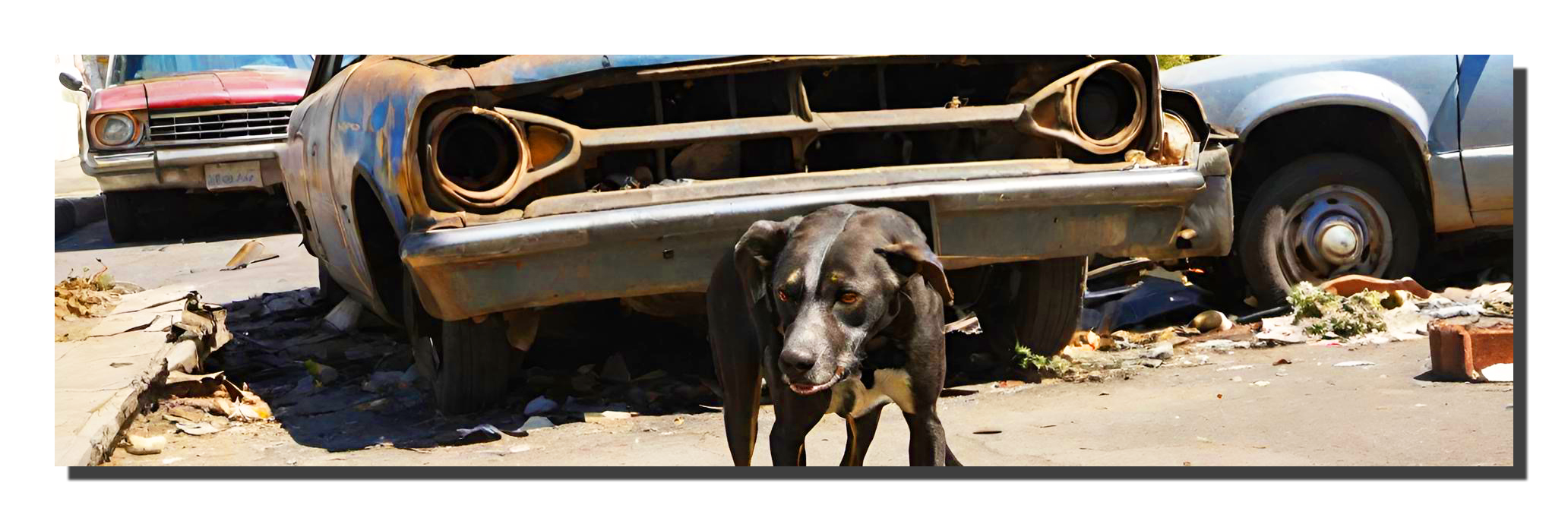
We’re not analyzing something that’s coming at us from outside, like a meteor that’s going to hit the Earth. We’re trying to understand something we’re doing that’s affecting the planet. Including social factors seems like it would be essential when you’re dealing with a man-made environmental polycrisis.
As one example, we hear again and again that we have the technical means by which to put environmental solutions in place, but that the necessary political will to do so is lacking. (You don’t even need to agree with the first part of this assessment—that we already have the necessary tools at hand—to see the truth of the second part: we are manifestly, by far, not doing all we could, whether or not it would be enough.) Political will isn’t atmospheric CO2 or degrees of warming—it’s a social factor.
1. “Landscape planning to achieve sustainability: The Iztaccihuatl-Popocatepctl region, Mexico, case study,” Juan Manuel Chavez-Cortes. University of Liverpool, October, 2004.
2. “Renewable energy and economic growth nexus : a case of United Arab Emirates,” Farrukh Nawaz Kayani. International Journal of Energy Economics and Policy 11 (5), S. 504-509 (2021)
3. “Transcript from an interview with Abhijit Banerjee [winner of the The Sveriges Riksbank Prize in Economic Sciences in Memory of Alfred Nobel 2019],” Abhijit Banerjee. NobelPrize.org, December 6, 2019.
4. “Environmental Impact Assessment for the Proposed Greenfield Copper Refinery Project (1.0 MTPA) at Adani Port Special Economic Zone Land in Villages Siracha and Navinal, Taluka Mundra, District Kutch, Gujarat,” Adani Enterprises Limited (AEL) Siracha and Navinal Villages, Taluka Mundra, District Kutch, Gujara, February 2020.
5. “Mining in the Philippines Concerns and Conflicts,” Columban Fathers. Society of St. Columban, Widney Manor Rd., Knowle, Solihull B93 9AB, West Midlands, UK (2007).
If the absence of political will is at least one key reason for our failure to get the job done, then a large part of the problem is social, and a large part of the solution will have to be social too.
Without trying to exhaustively list what the necessary social conditions might be for creating and enacting a solution, it’s enough for the purposes of this article to point out that one aspect of a solution absolutely must be social, in this case geopolitical. That is, we’ll need a a reasonable degree of international cooperation in which governments act collectively and with some measure of good faith. Without it, we’re done.
A survival plan has to work cooperatively or it’ll fail.
A workable, effective environmental survival plan is something nations have to implement in common—not because it makes us feel warm and fuzzy, but because that’s the only way it’ll work:
Europeans enjoy high environmental standards. However, even robust EU environmental legislation is not sufficient to address transboundary and global environmental degradation, nor to sufficiently reduce the impact of the EU's economic activity on natural resources worldwide. The environmental ambition of the European Green Deal will not be achieved by Europe acting alone.
Confronting the triple crisis of climate change, biodiversity loss and pollution requires commitment and effective cooperation at the international level. These crises reinforce each other, further damaging the environment and our health. Therefore, all need to be resolved if we want a viable future.
6. “International cooperation,” Directorate-General for Environment. European Union, undated.
7. “In this Together: International Collaborations for Environmental and Human Health,” Jaime S. King et al. Journal of Law, Medicine & Ethics , Volume 51 , Issue 2: International Collaborations: The Future of Health Care, Summer 2023 , pp. 271 - 286. DOI: https://doi.org/10.1017/jme.2023.82
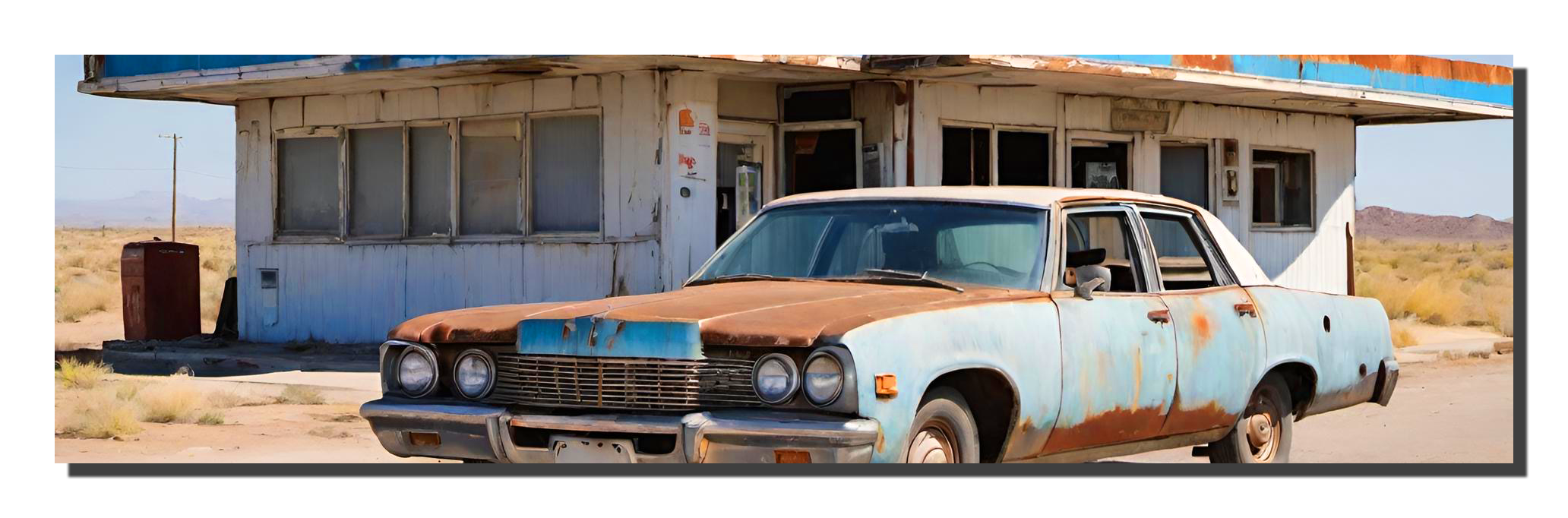
If most nations agree to reduce their GHGs, for instance, but a few don’t comply and gain an economic advantage as a result, soon those who originally followed the agreement are likely to reduce their compliance or start dropping out entirely. We won’t meet our targets and we won’t survive.
A survival plan has to work cooperatively or it’ll fail.
There are plenty of existing obstacles to cooperation and good faith already, and the agreements we’ve reached so far have a mixed record. The Montreal Protocol (1987) quickly succeeded regarding ozone-depleting CFCs, while The Paris Agreement (2015) has so far failed to reduce global GHGs at all—they’re still rising. The last thing we need are any more hurdles, but we’re bound to get a few.
There’s one social factor I want to highlight that I haven’t seen addressed at all in the context of environmental solutions.
The environmental polycrisis tends to support xenophobic politics, and xenophobic politics tend to undermine solutions to the environmental polycrisis. It's elegant.
Once again, we don’t have to agree on every detail of the underlying facts—just the general outline. First, the increasing intensity of the polycrisis will generate large-scale migration. Some will be within nations, but as things advance it will be increasingly international.
At the same time, there will be increasingly frequent local disasters and deprivations—wildfires, floods, hurricanes, mudslides, droughts, crop failures, etc.—that will generate varying degrees of political instability as governments at all levels are required to respond to problems that drain their resources and whose root causes they can’t address on their own, instead offering limited, temporary benefits like food boxes, relocation funds, donated clothing, and short-term shelter—emergency provisions for some, free paupers’ funerals for the rest.
Political instability is an invitation to political opportunism of many kinds. But when it’s combined with large-scale immigration, that’s a recipe for fear-mongering, scapegoating, and xenophobia—a combination that’s mother’s milk to right-wing nationalism and fascism.
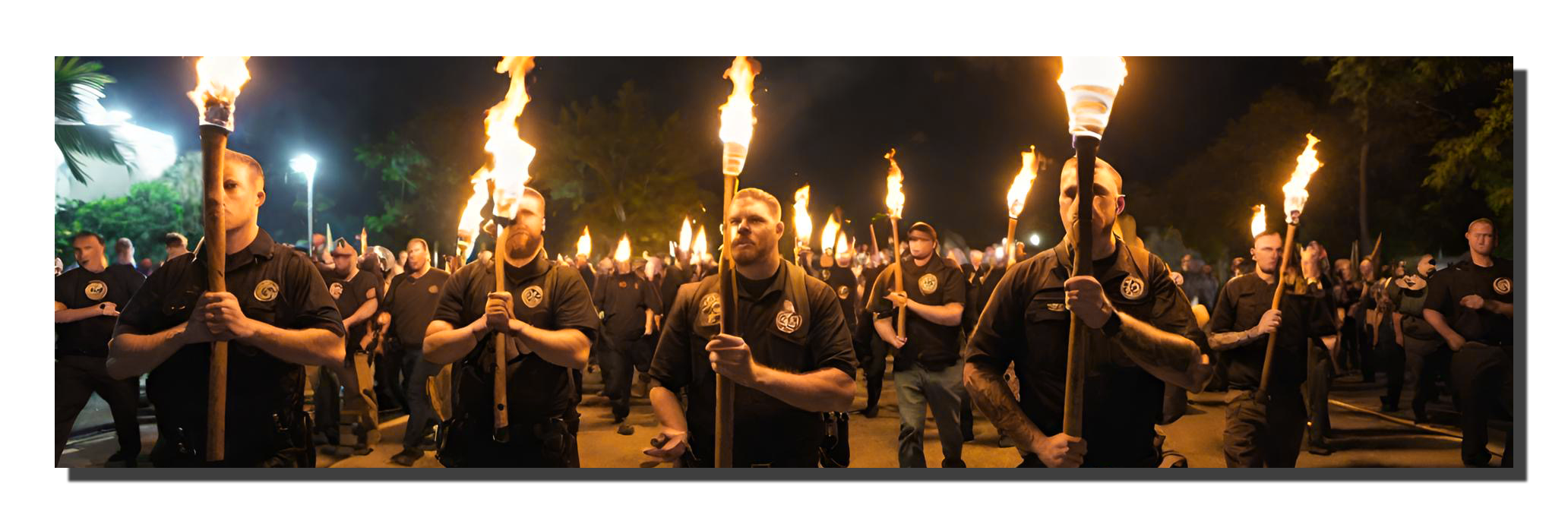
What’s more, research shows (and right-wing demagogues know) that there doesn’t need to be a genuine, logical link between (one one hand) a perceived threat—of unemployment, of loss of status, and so on—and (on the other hand) the resulting rise in hatred of immigrants. A hatred that can be weaponized by right-wing political forces. It happens without logic, automatically.
One simply leads to the other, logically or not, in the brains of lunkhead humans, probably for long-outdated evolutionary reasons related to tribalism and scarcity. People will make up reasons, because that’s what people do when they just plain hate someone and can’t explain it.
This hatred can be mobilized for direct, explicit ways (in elections, for instance, or through groups that participate in direct action, like militias), or indirectly and covertly, by working to affect the overall social climate (as with pressure groups that target school boards over the curriculum or efforts to ban books).
As Esses and Hamilton report:
In its nationally representative survey of over 14,000 adults from 14 countries in the summer of 2020, the Pew Research Center (Poushter & Huang, 2020) found that people viewed climate change and the spread of infectious diseases as the top two perceived threats to their nations... Though these threats are not specific to immigrants and immigration… the generalized feeling of threat is a strong predictor of xenophobia (Clissold et al., 2020) and prejudice toward immigrants (Murray & Marx, 2013). Feelings of lack of control have also been found to be associated with prejudice toward immigrants, either on their own (Harrell et al., 2017) or as a moderator of threat perceptions (Greenaway et al., 2013). What is particularly striking about these findings is that perceived lack of control does not have to be related to the issue at hand—immigration—to influence attitudes toward immigrants. Instead, generalized feelings of lack of control, or feelings of lack of control over specific threats to one’s nation unrelated to immigration, are sufficient to elicit negative immigration attitudes.
8. “Xenophobia and anti-immigrant attitudes in the time of COVID-19,” V. M. Esses, and L.K. Hamilton. Group Processes & Intergroup Relations, 24(2), 253-259 (2021). DOI: 10.1177/1368430220983470
In other words, any situation that increases social stress and feels like a loss of control—like increasing disasters flowing from the polycrisis—tends to generate increased xenophobia that is then available for use by those who would manipulate it, focus it, and direct it toward supporting an exclusionary ideology like right-wing nationalism, racial supremacy, and fascism.
The modern far right takes multiple forms, and its factions are sometimes at odds, but one common theme among virtually all its permutations is a “fear of white extinction” that thrives in an atmosphere of racial consciousness and xenophobia. As Chetan Bhatt, at the London School of Economics and Political Science, points out:
‘White extinction’ is… a defining idea of the contemporary Western far-right. The ‘fear of white extinction’ unites virtually all European and North American far-right tendencies, despite the ideological dissimilarities and conflicts between the alt-right, the alt-lite, the counter-jihad movement, among others. [
9. “White Extinction: Metaphysical Elements of Contemporary Western Fascism,” C. Bhatt, Theory, Culture & Society 38(1), 27-52 (2020)
Whether the people manipulating this social force are true believers or cynical opportunists (or some of each) doesn’t matter. A leader will emerge, with a hierarchy beneath them that creates and enforces a retrograde, reactionary social order relying on force, idealizing the past, cheapening the value of the individual, abhorring anyone alien, and so on. Whether that leader and their party emerge because of the operation of a mystical Führerprinzip or just because that person wants to be rich and powerful, the effect will be the same.
So increasing numbers of increasingly intense climate-related disasters, among the things, naturally create anti-immigration sentiment, thus feeding into far-right nationalist politics and fascism.
We’ve already seen huge growth in right-wing “populist” politics in recent years, with Victor Orban in Hungary, Giorgia Meloni in Italy, Narendra Modi in India, a respectable showing by Marine Le Pen in France, and Donald Trump being elected to a second term in the US.
Both Meloni and Modi have fascist bona fides in their ties to historically fascist political formations. Meloni is a former member of the neofascist Movimento Sociale Italiano (Italian Social Movement, or MSI), founded in 1946 to maintain fascism as part of Italian politics even in a democracy, and her party includes one descendant of Mussolini (Caio Giulio Cesare Mussolini — Mussolini’s great-grandson) and is associated with another (Rachele Mussolini, a Rome city council member). She and her party subscribe to a version of the “white extinction” paranoia mentioned earlier, the “great replacement theory,” a favorite of racist American mass shooters, which claims that a plot exists to increase non-white immigration in white-dominated societies in order to replace white people and dilute whiteness. Modi represents the BJP, the political arm of the RSS, a powerful, explicitly Hindu supremacist organization founded in 1922 and modeled directly on the organizations established by Mussolini and Hitler that were just beginning to gain traction at the time.
10. “Great Replacement: The conspiracy theory stoking racist violence,” Jillian Kestler-D'Amours. Al Jazeera, May 18, 2022.
11. “What links Meloni, Mussolini and Mediterranean refugee deaths?,” Belén Fernández. Al Jazeera, June 26, 2023.
12. “Third Mussolini descendent enters Italian political arena,” Colleen Barry. Associated Press, April 9, 2019.
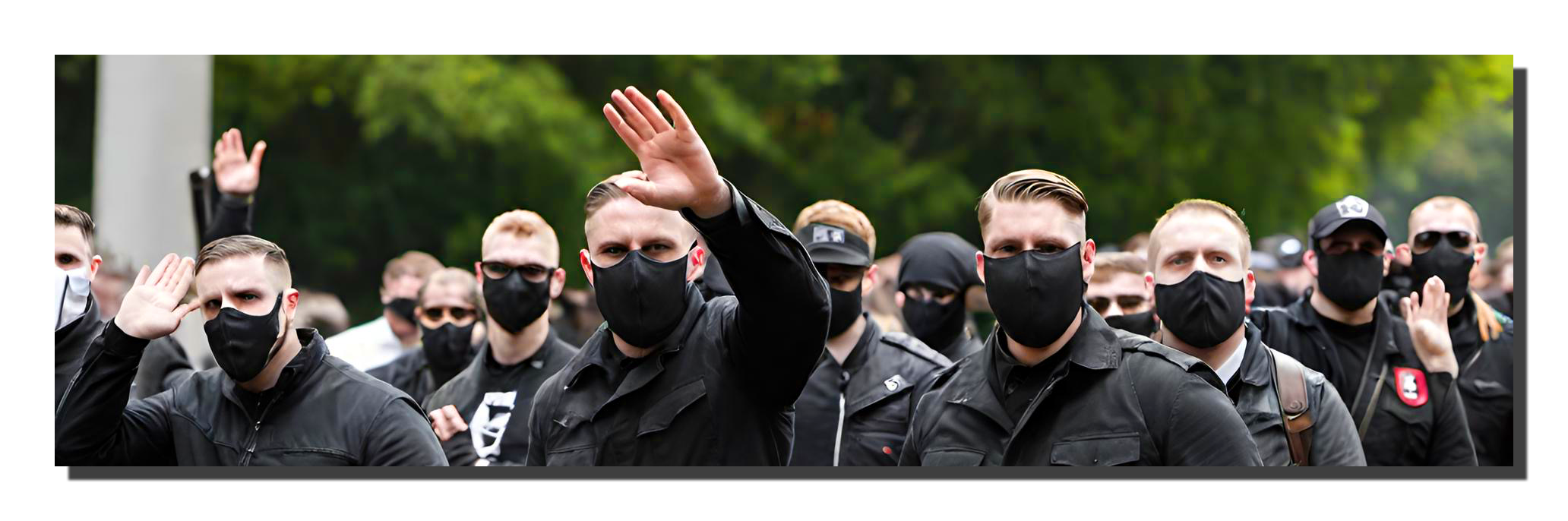
Looking specifically at the United States, which after all has an track record of abandoning international environmental agreements (as well as weakening, subverting, or eliminating domestic environmental protections), I first note that it is losing, or may already have lost, its global economic preeminence. The US may soon be overtaken by China in terms of GDP as measured in Purchasing Power Parity. This may already have taken place as early as 2010.
13. “Is China Already Number One? New GDP Estimates,” Arvind Subramanian. Peterson Institute for International Economics, January 13, 2011.
Why does that matter? As documented by Ballard-Rosa et al in “Economic Decline, Social Identity, and Authoritarian Values in the United States,” this has a powerful depressing effect on the wages and employment rates in many areas of the U.S, and this, in turn, makes these areas fertile ground for authoritarian values, including fascism.
This paper proposes a new answer to why regional economic decline associated with globalization would lead to the types of authoritarian political reactions observed in the United States and other countries around the world. Our framework synthesizes the insights in both the economic and cultural value approaches to understanding the rise of authoritarian populism in the United States. We argue that long-run economic changes from globalization have a negative impact on the social identity of historically dominant groups. This leads to an increase in authoritarian values because of an increased incentive to force minority groups to conform to social norms as compensation for identity losses. We further argue that the effect of economic changes from globalization on authoritarian values is greater the larger the relative size of minority groups in the population. We formalize our argument in a manner intended to capture many of the major insights from the literatures on social identity, the origins of authoritarian values, and the economic consequences of globalization.
14. “Economic Decline, Social Identity, and Authoritarian Values in the United States,” Ballard-Rosa et al. International Studies Quarterly, Volume 66, Issue 1 (2021). DOI: 10.1093/isq/sqab027
If the U.S. continues to decline relative to China, as seems likely for the foreseeable future, the areas conducive to fascism are likely to expand and include a larger proportion of the population. So, the automatic xenophobia associated with crises and loss of control (as embodied by environmental disasters) will likely increase in the U.S. associated economies like those in Europe.
This increase in far right populism or fascism is likely to make international agreements harder to achieve and maintain in light of their distrust of foreigners and their conspiracy theories about “white extinction.” The supremacism, triumphalism, mistrust, and racism of such ideologies don’t lend themselves to good faith negotiations and durable agreements with “outsiders,” especially if they’re of a different race, religion, political or economic system (like socialism), or all of the above.
Certainly, if the United States continues to become increasingly authoritarian—and there are plenty of signs this is likely—it will become less and less likely to work in cooperation with other states for the sake of the environment even after President Trump is gone, and an environmental agreement that doesn’t include the U.S. isn’t worth much.
So much for the necessary cooperation.
The environmental polycrisis tends to support xenophobic politics, and xenophobic politics tend to undermine solutions to the environmental polycrisis. It's elegant.
The likelihood that right-wing nationalism and its variations will continue to rise, and that this will undermine necessary cooperation, is just one example of a social factor that could have a profound effect on the possibility of collapse.
Widespread ignorance about how real the threat of collapse actually is—a real indictment of our educational systems and our media—is another, and there are more.
The fact that I haven’t seen the particular threat I’ve looked at here analyzed anywhere else yet (please feel free to let me know if you have) is a sign of the limitations of our understanding of how likely that collapse may be and our ignorance about what might help prevent or minimize it.
[End]
Comments
Nothing yet. Say the first thing.
Sign in to join the conversation.