
“We’ve only been trying for a few months. Isn’t it too early to worry?”
“It’s been a year. Maybe we just need to relax.”
If you’ve ever found yourself caught somewhere between these two thoughts, you’re not alone.
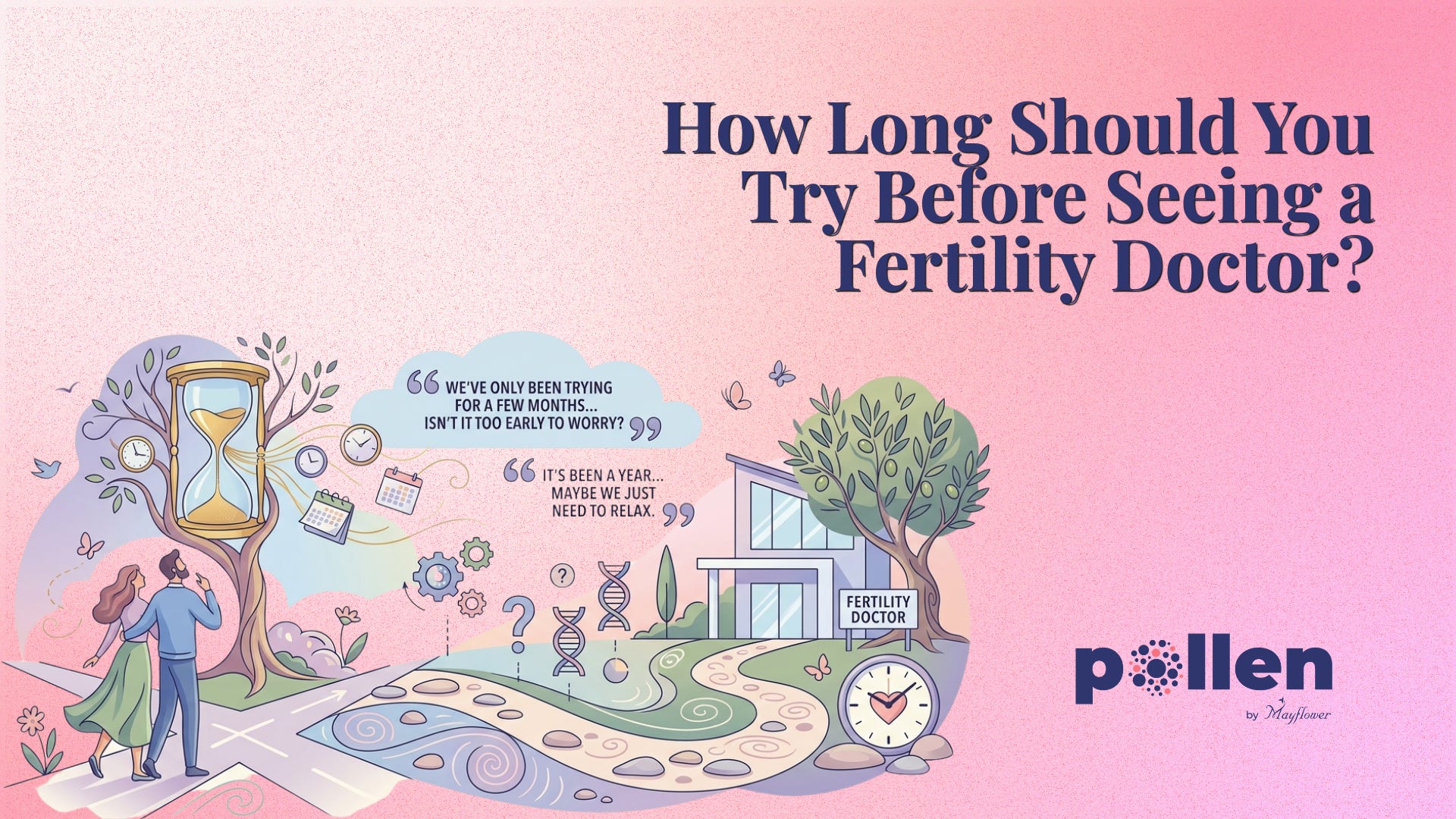
For many couples, deciding when to seek fertility help can feel surprisingly difficult. On one hand, you don’t want to overreact. On the other, you don’t want to lose valuable time waiting for something that may need medical attention.
The truth is, there isn’t one answer that applies to everyone.
Because when it comes to fertility, timing matters; but so does age, medical history, and understanding your body’s unique story.
You may have heard that couples should try for a year before seeking help.
This recommendation comes from the fact that most healthy couples will conceive naturally within 12 months of regular, unprotected intercourse.
If you’re under 35 and have been trying consistently for a year without success, it’s a good time to schedule a fertility evaluation.
But here’s what many people don’t realise:
The one-year rule is not a rule for everyone. In fact, for many couples, waiting an entire year may not be the best approach.

One of the biggest factors affecting fertility is age.
As women get older, both the number and quality of eggs gradually decline. This is a natural process, but it also means that time becomes increasingly important.
If you’re between 35 and 40 years of age, most fertility specialists recommend seeking help after six months of trying.
And if you’re over 40, it’s worth having a conversation with a fertility specialist even before a year has passed. This doesn’t mean something is wrong. It simply means that early information can help you make better decisions. Think of it as getting a map before starting a journey.
There are situations where fertility testing should begin much sooner.
For example, if your periods are irregular, very infrequent, or absent altogether, it may indicate that ovulation is not happening regularly.
Similarly, conditions like PCOS, endometriosis, thyroid disorders, or a history of recurrent miscarriages can affect fertility and deserve earlier evaluation.
We’ve also seen patients who spent years assuming severe menstrual pain was “normal,” only to discover later that endometriosis was affecting their fertility.
The body often gives us clues long before we start trying to conceive.
The challenge is learning when to listen.

When couples think about fertility investigations, the focus often turns immediately to the woman. But fertility is a shared journey.
Male factors contribute to a significant proportion of fertility challenges, which is why evaluating both partners is so important. A history of testicular surgery, childhood undescended testes, injury, infections, certain medications, or previous chemotherapy can all impact male fertility.
One of the simplest and most informative tests in fertility medicine is a semen analysis. Yet many couples spend months investigating only one partner before considering it.
One of the most valuable parts of a fertility consultation isn’t a blood test or an ultrasound.
It’s the conversation.
Your doctor may ask about surgeries from years ago, previous pregnancies, menstrual patterns, medications, weight changes, thyroid problems, or even illnesses you may not think are relevant. And there’s a reason for that.
A surgery performed years ago, untreated thyroid dysfunction, or a hormonal imbalance can sometimes provide important clues about why pregnancy has not happened yet. Fertility is rarely one isolated event. It’s often a reflection of overall reproductive health.

Many people imagine a fertility consultation to be complicated and overwhelming. In reality, the first visit is often about gathering information.
Depending on your history, your doctor may recommend:
Hormonal testing, including AMH, FSH, LH, thyroid function, and prolactin levels
An ultrasound to assess the uterus and ovaries
Evaluation of ovarian reserve
A semen analysis for the male partner
Additional investigations based on your individual history
The goal isn’t to find problems. The goal is to find answers. And sometimes, those answers are reassuring.
If you’re under 35, seek help after one year of regular, unprotected intercourse.
If you’re over 35, don’t wait longer than six months.
And if you have irregular periods, PCOS, endometriosis, previous reproductive surgeries, hormonal conditions, recurrent miscarriages, or concerns about male fertility, consider seeing a specialist even sooner.
Most importantly, remember this:
Seeking fertility advice is not an admission that something is wrong. It’s simply choosing information over uncertainty. Because while patience is important on the fertility journey, informed patience is even better.
At Mayflower, we often tell our patients that fertility care isn’t about rushing into treatment; it’s about understanding where you stand so that you can make the best decisions for the road ahead.
No posts
Comments
Nothing yet. Say the first thing.
Sign in to join the conversation.