
In reproductive medicine, timing is everything.
And yet, ironically, timing is also what we tend to address the latest.
Most of us still practice within a familiar arc, a patient walks in after months (or years) of trying, investigations begin, numbers are discussed, options are laid out. It’s a model that is logical, structured, and in many ways, incomplete.
Because fertility doesn’t wait for intent. It doesn’t align itself with career plans, relationship timelines, or readiness. It simply follows biology.
And biology, as we know, can be quietly unforgiving.

One of the more subtle disconnects in our day-to-day practice is between how fertility feels to patients and how it actually behaves.
A 32-year-old woman with regular cycles, no symptoms, and a “normal” report rarely sees herself as someone who needs to think about fertility preservation. In fact, neither do we, at least not immediately.
Part of the issue is how we lean on markers like AMH. It’s a useful tool, no doubt, but often treated as a reassurance when it should really be a piece of context. It tells us about ovarian reserve, not necessarily about egg quality, and definitely not about how time will play out over the next five to seven years.
Age, still, remains the most honest variable in the room.
And it’s the one we’re most hesitant to centre early on.
If you think about a typical OPD day, there are several patients where this conversation could happen, almost organically.
The late twenties patient with endometriosis, post-surgery, doing well.
The early thirties professional, not planning pregnancy anytime soon.
Someone with a quiet but relevant family history, early menopause, reduced fertility.
These aren’t infertility consults. Which is precisely why the topic doesn’t come up.
There’s often a hesitation, “will this feel unnecessary?”, “Will it sound like overreach? Is it too early to bring this up?”
But here’s the thing! in fertility, “too early” is almost never the problem.
“Too late” often is.
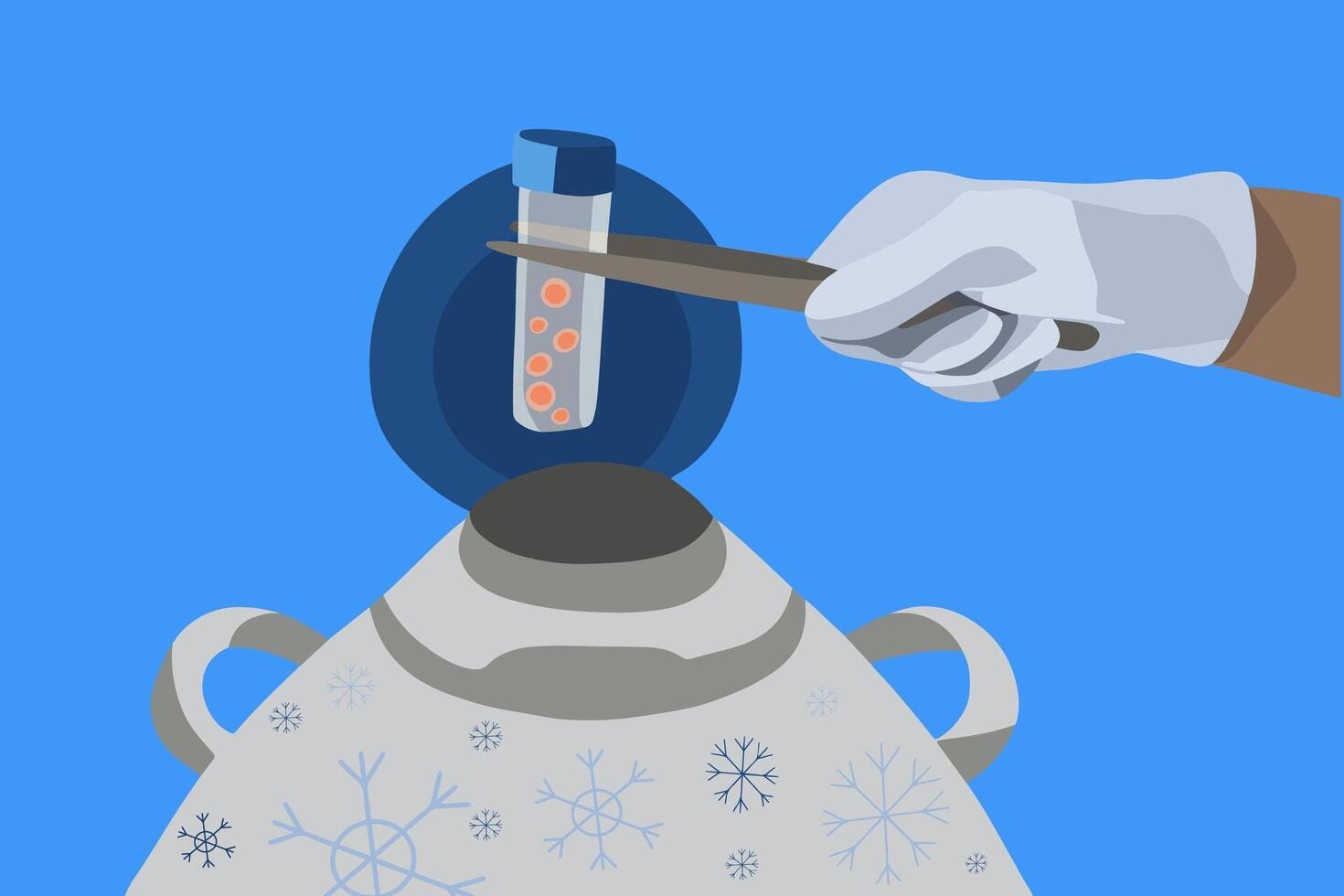
Today’s edition is not about turning every consultation into a pitch for egg freezing, but simply about widening the frame of how we think about reproductive care.
We routinely talk about prevention in other areas of medicine, screenings, vaccines, lifestyle risks, often long before any disease is in sight. Fertility has simply not been absorbed into that mindset yet.
And the value of that option depends heavily on when it’s considered.
There’s also a valid concern here, about not overmedicalising, not creating anxiety, not making it seem like egg freezing is something everyone should do.
That balance matters.
Patients don’t need persuasion. They need clarity.
That means being straightforward about what egg freezing can and cannot do. It improves probabilities; it doesn’t promise outcomes. It works better earlier; that’s just biology. And it may or may not fit into someone’s personal or financial reality—and that’s okay.
But all of that only matters if the conversation happens when it still has relevance.

In most cases, this doesn’t require a long counselling session or a structured protocol.
Sometimes, it’s just a small shift.
Something as simple as:
“Have you thought about your timeline for pregnancy?”
Not as a directive. Just as a nudge.
Some patients will brush it off. Some will engage. And a few might walk away having considered something they hadn’t before, at a point when it could actually make a difference.
We often measure our work in outcomes, cycles, success rates, pregnancies.
But in fertility care, there’s another kind of impact that’s harder to quantify.
It’s the conversation that happens a few years earlier than expected.
The information given before it becomes urgent.
Because sometimes, what we’re really offering isn’t a solution.
It’s timing.
Thanks for spending your time with this laid-back, yet attentive read. If you like it, or would like to share something with us feel free to write to us on publications@mayflowerhospital.com.
No posts
Comments
Nothing yet. Say the first thing.
Sign in to join the conversation.