
On August 29th, 2025 and the entire preceding week, people, organizations, and movements gathered across the Gulf South to commemorate the 20th anniversary of Hurricane Katrina making landfall in New Orleans, Louisiana, Mississippi, and Alabama. I was 12, and far away in Ohio, when Katrina struck but like many people, the aftermath of the disaster, state abandonment, and racist violence are seared into my memory. As a radical Black/African organizer, the continuation of this country’s history of federal government neglect, state and local government targeting, and white supremacist and capitalist terror against our people is something that I can never forget or fail to comprehend. I had grand plans of writing a commemorative piece about Katrina, the Gulf South, the Mississippi Delta, and the role of culture, plantation political economy, climate and ecological crisis, and more. But life got in the way and it is what it is, so maybe another time.
For now, I just want to touch briefly on one element of culture and place and ‘development’ — memory. Not my personal memories, but the place of memory in our placemaking and our movements. The lead up to the commemoration of Hurricane Katrina caught me at a time when I had been reading Clyde Woods’ Development Arrested: The Blues and Plantation Power in the Mississippi Delta1. In what I would consider one of the most important sections, Woods details how the Great Mississippi Flood of 1927 devastated the Mississippi Delta and put the plantation economy in a crisis.
It rained for months until the levees holding back the power of the Mississippi River broke near Greenville, MS and unleashed an ocean on the lands that were populated primarily by Black/African residents and workers. In response to this destruction, the planter class — with crucial help from the federal and state governments — trapped sharecropping Black/African workers and their families in ‘relief camps’ that functioned more as concentration camps for months on end. They did this so that they could force them back into the fields once the floodwaters subsided and the land could be worked again. They even created a system whereby the white planters and their allies received free government relief supplies in their well-maintained camps up on high ground, and they resold them to the Black/African people living in squalor in the low ground camps, in exchange for debt that they would have to pay off by working the fields in the future. This is just a small snipped of the many atrocities committed during the period.
“We must act as if we answer to, and only answer to, our Ancestors, our children, and the unborn.” – Amilcar Cabral
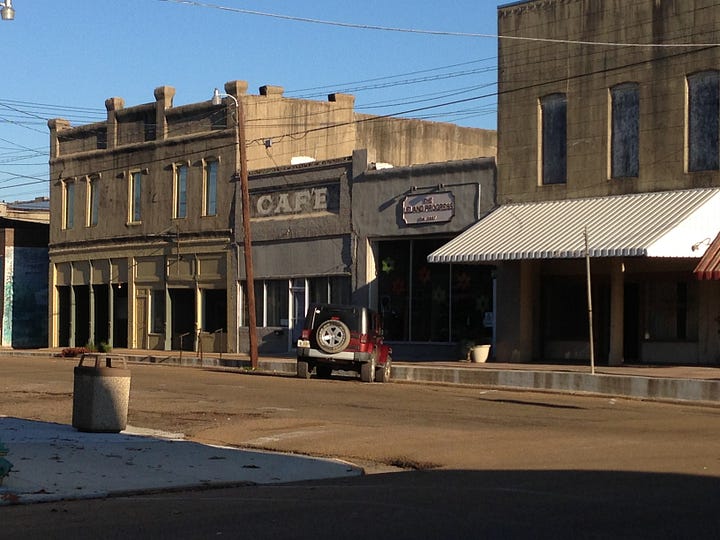
But back to memory. Reading about the 1927 Flood struck me because my Grandma Pat was two years-old at the time and living in Leland, Mississippi. Woods in this section quotes Blues musician Charlie Patton’s famous song “High Water Everywhere”2, in which he shares that he tries to escape the water in Leland by going to Greenville but finds the water is there too, and he is barred from hill country (the high ground), so there is effectively no place for him (or any Black/African person) to go.
Text within this block will maintain its original spacing when published
"Look-a here the water now, Lordy,
Levee broke, rose most everywhere
The water at Greenville and Leland,
Lord, it done rose everywhere
Boy, you can't never stay here"
This struck me because my Grandma Pat was born and grew up in Leland and she moved to Greenville as an adult, where our mom and most of her siblings were born. I had heard our grandma and our mom talk about the various floods and levees before, but in this reading I uncovered details of an event whose disastrous environmental and social impacts revealed the nature of the plantation in which we still live and the ways that the dignity and self-determination of Black/African peoples in the u.s. is denigrated everyday. I have no doubt that the Great Flood of 1927 has how this country carries out ‘disaster response’ to this day, and I’m just as sure that it has directly shaped my life in ways that I might never know — it certainly did for my mom and grandma, and right now I want nothing more than to have one more conversation with them both to understand.
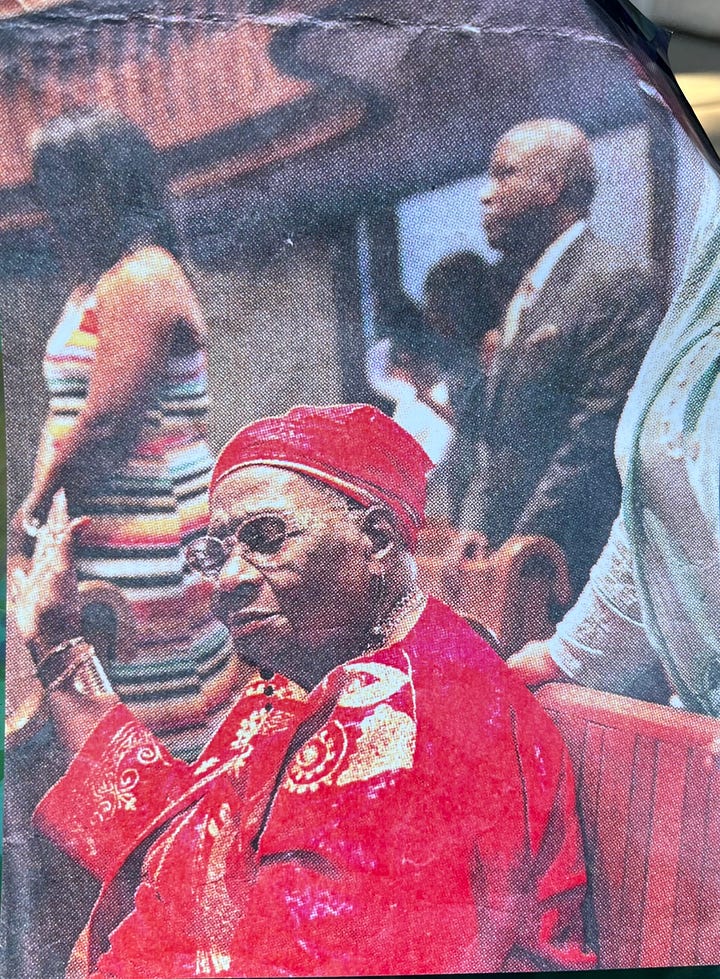
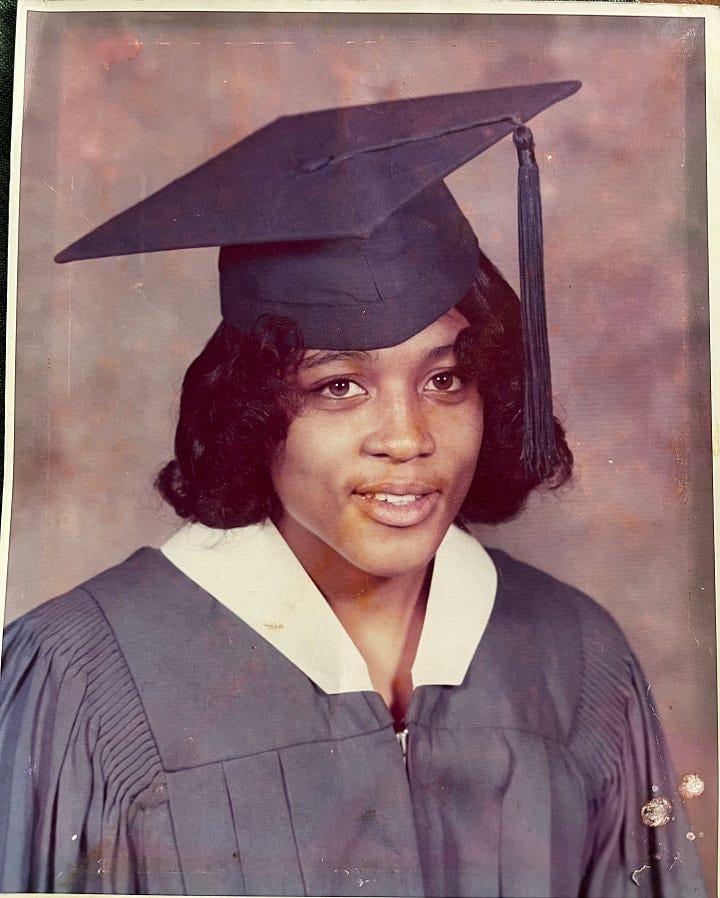
1927 in the Mississippi Delta is not the same as 2005 in the Gulf South is not the same as 2025. Yet, the same battles continue across time and space. These are against capitalist-fueled mass displacement, colonial control over Black/African peoples bodies, direct white supremacist violence, state abandonment and targeting in climate and ecological disasters, and imperialist domination over attempts at self-determination and autonomy.
After the 2015 massacre of nine parishioners at Mother Emmanuel AME in Charleston, SC, I called my mom sobbing about the horror that we were seeing on the news. She listened to me but told me that I needed to remember what we have always known about this country, how it sees us, and what it is capable of. She said to me, “you know what this place is, you cannot let it break you every time it shows you what it has always been”. At the time that made me feel worse, but the more I reflect, the more I see the dynamics of 1927, 2005, 2015, 2025, and many many more instances for what they are, manifestations of the unrepentant foundations of this white supremacist empire.
The plantation is alive and well, it is a key tool and context of the war against African peoples in the u.s., the Caribbean, and globally. If we don’t tap into our historical, political, terrestrial, and ancestral memories of this fact, we fail to understand what we are up against, we allow their assaults to break our spirits, and we lose the recipes for resistance. This one aspect of why the “right of return” is so essential, from New Orleans to Palestine.
Last month, my comrade Erica Caines and I tried touched on this materialist understanding of memory and culture in our piece, “African Peoples, Revolutionary Change, and the Importance of Marxist Materialism”:
“This historical materialist analysis underscores why collective memory is indispensable for Marxism. For Africans in particular, reclaiming our history is revolutionary: its erasure obscures the base’s role in shaping oppression, while its recovery arms us with the knowledge needed to dismantle it.”
Memory, particularly collective memory, is a tool of resistance, and of revolutionary healing. Our remembrance of these tragedies does not call us to wallow in the injustice of an unjust society, but demands that we work to change it: intentionally, systematically, and generationally. Our memories demand that we fight.
There’s much more to be said, but I’ll end with this. I haven’t written that longer piece because it is hard and personal and painful. Our mom and Grandma Pat have passed on, and so when I talk about memory, I feel the void that their lack of Earthly presence has left in my life and my understanding. I miss them, and though they didn’t have all the answers, I miss the wisdom that their lives and their love provided. I pray, I listen to their favorite music, I cook their recipes, I study serious historical materialist perspectives of where they came from to feel close to them. I weep for them and for myself and for all of our people, but their memory fuels my resistance.

To our late mom and Grandma Pat, Kerry Yolanda Patterson Cole and Leola Melvin Patterson-Borrum, and to all the Mississippi Black women who have fought to protect and care for their families the best they knew how. To all the ancestors who have left this world but whose spirit still walks with us.
I am even more behind on writing a review of this book, but y’all gotta read it. I’m about to read the follow up that specifically touches on New Orleans and the aftermath of Hurricane Katrina.
Excerpt from “High Water Everywhere”:
Text within this block will maintain its original spacing when published
Lord, I'll tell the world the water,
done crept through this town
Lord, the whole round country,
Lord, river has overflowed
Lord, the whole round country,
man, is overflowed
You know I can't stay here,
I'll go where it's high, boy
I would goto the hilly country,
but, they got me barred
Now, look-a here now at Leland
river was risin' high
Look-a here boys around Leland tell me,
river was raisin' high
Boy, it's risin' over there, yeah
I'm gonna move to Greenville
fore I leave, goodbye
Look-a here the water now, Lordy,
Levee broke, rose most everywhere
The water at Greenville and Leland,
Lord, it done rose everywhere
Boy, you can't never stay here
I would go down to Rosedale
but, they tell me there's water there
Now, the water now, mama,
done took Charley's town
No posts
Comments
Nothing yet. Say the first thing.
Sign in to join the conversation.