

Host-community residents of a pop-up city in San Martín de los Andes told us they couldn't understand what the event was until they walked into it. Pre-event communications, however thorough, didn't help. What did help was a community dinner, an informal invitation, or a low-barrier first contact. The implication is that while communication with the local community is important, the primary design challenge for initiatives of this kind is participation architecture, and the most important intervention is lowering the threshold of first contact.
In October and November 2025, Edge City Patagonia ran a pop-up community in San Martín de los Andes, Argentina, designed to convene local and international participants around technology, well-being, governance, and social innovation. Hundreds of international participants flew in for the experience, and we wanted to understand how the host community of San Martín de los Andes (SAM) perceived the initiative. During the last week of programming at Edge City Patagonia, we invited 10 local SAM residents to participate in a focus group.
What they told us reflected a clear sequence: pre-engagement confusion (what is this thing?), a threshold moment of first contact (aha!), a strongly positive post-engagement experience (more, please!), and a thoughtful set of conditions for what would have to happen next for a repeat or enduring event (yes, but…). This sequence, from not understanding the point of Edge City to a cautious embrace of future initiatives, forms the core of the study and the framework of this preview.
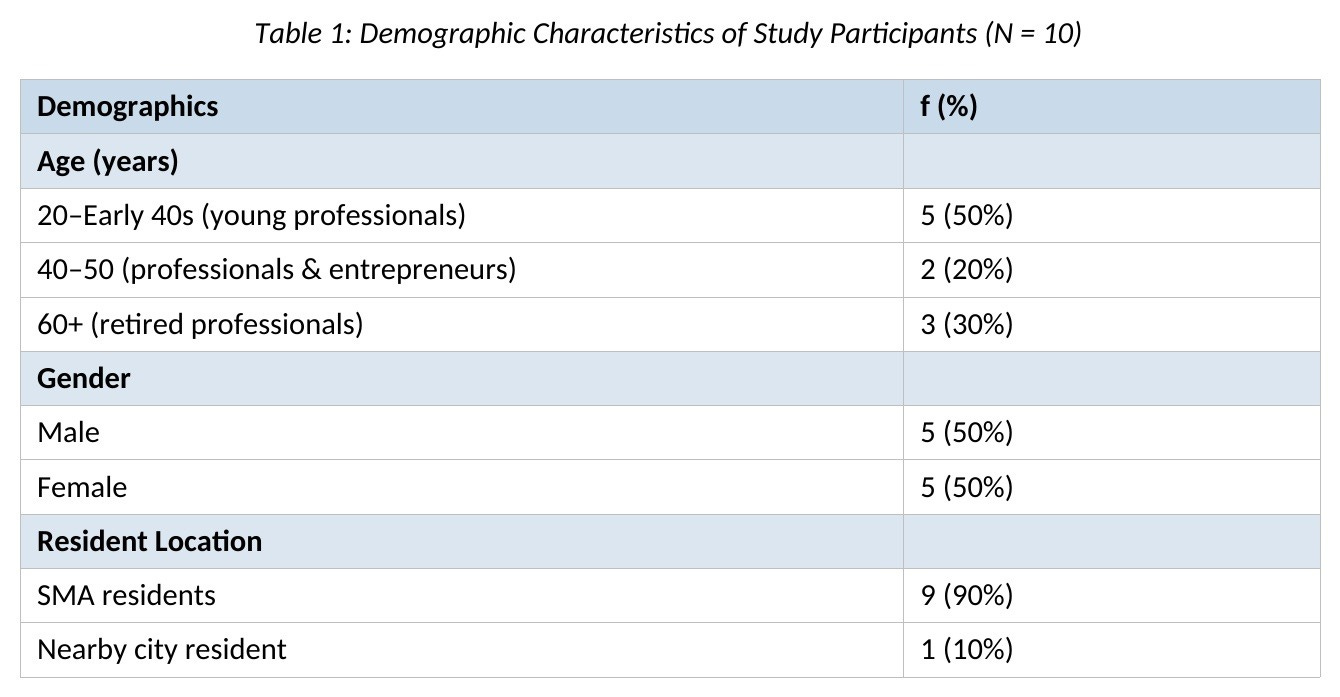
Nearly every participant initially encountered Edge City, having no clear idea what it was. Where awareness existed, it had reached them through personal networks rather than from organizers directly. For some, the opacity actively generated mistrust before any participation had occurred. One participant recalled:
“Lots of people told me not to go — ‘It’s a Ponzi.’ Information wasn’t available on the web. You could only see the residencies and stuff once you paid... It was like, they want me to pay $2,000 just to see what’s happening. It’s kind of sketchy.”
Financial uncertainty compounded the communications gap, and several participants described an event that, in their view, had not been designed in any visible way with local residents as the intended audience.
The most striking finding in the study is what happened when participants crossed the threshold from outside to inside. Comprehension arrived through showing up, often at a community dinner, an informal gathering, or some other low-commitment shared activity. As one participant put it: “I still did not comprehend [what Edge City was] until I attended community dinners and engaged directly with other participants.”
This is one of the study’s most theoretically interesting claims. If the event itself is what makes it comprehensible, then paying particular attention to the participation architecture may be the most important design challenge for initiatives like Edge City. We highlight this finding about the benefits of lowering the threshold of first contact because the data suggest that better messaging about Edge City’s intentions would not, on its own, have moved most of these participants. What moved them toward engagement and subsequent comprehension was signposting that said in effect, "You are welcome to join."
Once participants crossed the engagement and comprehension threshold, their accounts became consistently and emphatically positive. They described an interpersonal atmosphere at Edge City that felt egalitarian and socially stimulating:
“It was crazy to know that I have no idea who I’m talking to. Just a cool person on the other side. I didn’t know if he or she was a millionaire or not. First time it doesn’t matter.”
They valued exposure to ideas and conversations rarely available in their local context, from technology to mental health, neurodivergency, and nutrition. For several participants, the experience extended into lasting friendships, professional opportunities, and concrete personal change. Networking, intercultural exchange, and unexpected personal growth were recurring themes.
Support for Edge City’s return, or for a similar initiative, was nearly unanimous and expressed with genuine emotional investment. “For me it’s a dream,” one participant said. But that support came coupled with clear conditions. Participants called for local residents to play a more visible role in shaping future iterations of Edge City or similar initiatives, as facilitators, instructors, ambassadors, and contributors rather than as a passive audience. They wanted programming co-created with the community before the event, not adapted around it after the fact.
A meaningful minority of participants raised concerns about displacement and social change, specifically the risk that nomadic communities settling into smaller host towns can transform the social and economic character of those places over time, sometimes pushing local residents out. These concerns were not based on vague anxieties either. Many of their observations were grounded in precedent, e.g., participants had witnessed or heard of nomadic communities transforming the social and economic character of other towns. Some of Edge City’s most enthusiastic supporters in the focus group still conditioned their continued support on whether this issue was adequately addressed in the future.
The study notes that this question deserves attention as a research focus in its own right. Research that tracks social and economic indicators in San Martín over successive editions would provide the evidentiary base needed to address those concerns honestly, and we think that work is worth doing.
The picture participants painted is of an event that generated real intellectual, social, and personal value for the host-community residents who engaged with it. Despite its entry point being harder to cross than it perhaps needed to be, we don’t read participants’ critical observations as rejection of Edge City; quite the opposite. Regarding other critical comments, we highlight that participants who raised the sharpest concerns about access and displacement were also among the most enthusiastic supporters of Edge City’s return. Our assessment is that their feedback is the kind that genuinely interests local stakeholders when they think a project is worth getting right.
The recommendations drawn from participants’ comments map to the four phases of the arc that the study identified:
Redesign first-contact materials for someone who has never heard of Edge City (or similar initiatives), and work through the informal local channels participants actually used.
Create deliberate low-barrier entry points (e.g., open meals, free public talks, a local preview event) so first contact can occur as the data indicates it actually does.
Involve local residents in programming as named facilitators, instructors, and ambassadors before the event, instead of as a passive audience during it.
Rather than treating community engagement as a one-time deliverable, consider taking displacement concerns seriously as a planning input, establishing a baseline of local indicators, and building ongoing community dialogue into the model.
None of these recommendations should be interpreted as prescriptive. Instead, they identify decisions that organizers of any initiative, depending on local legitimacy, would optimally make early, explicit, and visible.

These findings are drawn from a single 60-minute focus group with 10 English-speaking SAM residents who all had some prior contact with Edge City, conducted during a single iteration in one host community. We recommend viewing them as a snapshot rather than a comprehensive account of how the broader San Martín de los Andes community experienced Edge City Patagonia. We name several other limitations in the full study.
Our hope is that this study offers a textured view of how host-community residents experience an externally organized pop-up community, and a set of design implications for anyone building initiatives that depend on local legitimacy to succeed. The questions worth pursuing now concern not whether communities like Edge City can launch in places like San Martín de los Andes, but how the door can be opened wider for the residents who already live there.
The full study is available here under a Creative Commons Attribution 4.0 International License.
Help support research and governance of parallel societies. Our organization is still developing. If you want to see the work continue, consider donating in crypto. The goal is less coercion, voluntary interaction, and more decentralization.
A note on our position: four of the five authors of this study attended Edge City Patagonia, though we resided independently in San Martín rather than within any specific residency. Our fifth author conducted the thematic coding without on-site presence to introduce analytic distance. The full study describes this arrangement, and the selection, interpretive, and advocacy risks it introduces, in detail.
No posts
Comments
Nothing yet. Say the first thing.
Sign in to join the conversation.