
Building technology to cause “disruption” is a trending meme in tech, even within Web3 and blockchain. But is being a disruptor really that important? What is its cost?
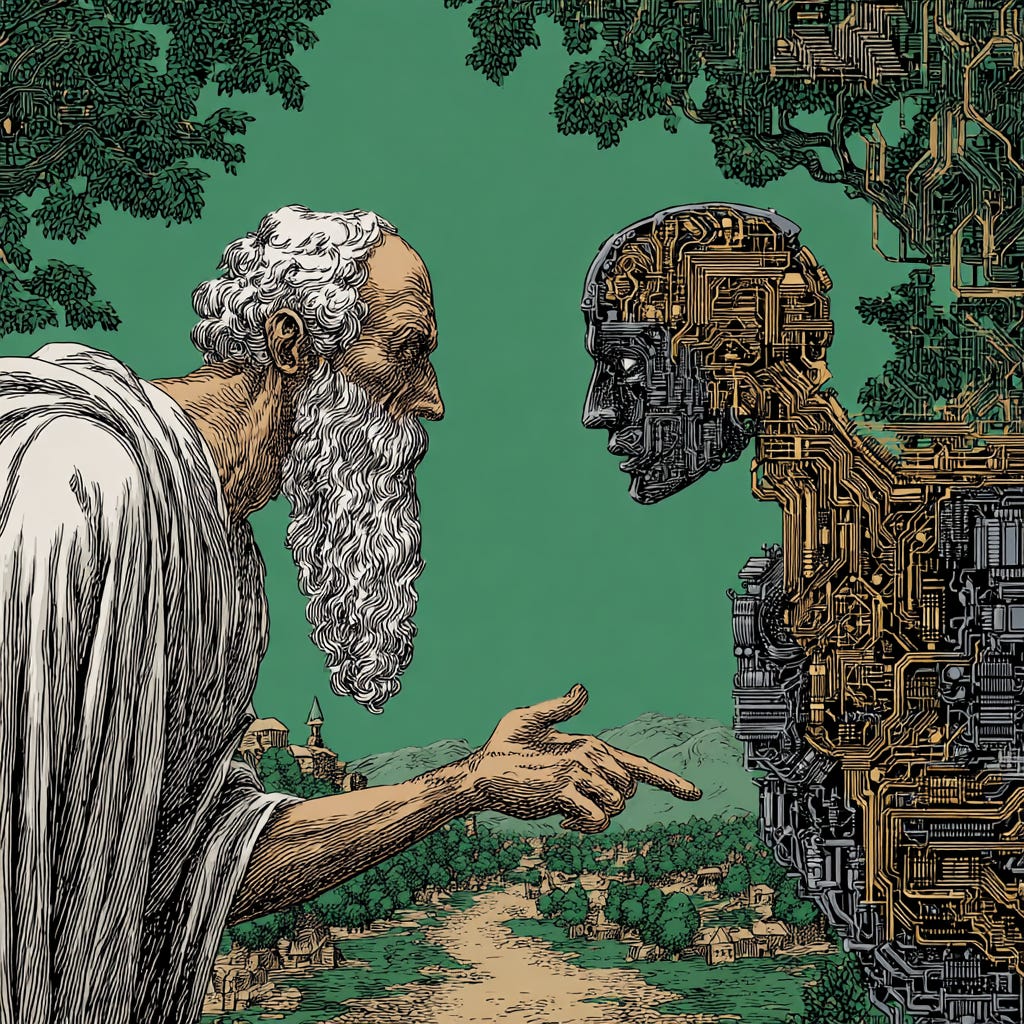
Accelerating technology development to attract investor attention, or LARPing as a “disruptive innovator,” may not drive actual progress. In fact, it can be harmful. Many tech leaders embrace disruption for prestige, investment, and a sense of belonging to an elite circle.
But this ethos does more than confer status and money; it is potentially destructive. When combined with pressure to satisfy investors and stakeholders, it becomes a structural deficiency in all markets. In this sense, we do not need more disruptors; we need responsible builders who weigh consequences as seriously as profits.
Disruption may feel bold or rebellious, but it often produces unintended consequences. Companies focused on disruption and its financial upside frequently neglect downstream harms and externalized costs, leaving the fallout for others to manage.
These problems are not incidental. They are endemic to tech and other capital-intensive industries. Current innovation frameworks are largely incapable of accounting for externalities. Moving from extractive development practices toward responsible progress requires new methodologies, such as Yellow Teaming.
Venture-capital-driven approaches illustrate the problem. The aim is often to move fast, gather user feedback, iterate rapidly, and push aggressively toward product-market fit. Lean startup and agile frameworks exemplify this approach. While effective at accelerating deployment, these models have caused and will continue to cause significant harm to ecosystems, communities, and the planet.
Two companies illustrate these dynamics with particular clarity.
The company famously adopted “don’t be evil” around 2000, a slogan that was suspect from the start. The motto shifted to “do the right thing” under Alphabet in 2015 and was largely removed from the code of conduct by 2018. By then, any pretense had faded.

Google evolved from a search engine into a multipurpose platform in pursuit of profitability, creating one of the most expansive commercial data-surveillance infrastructures ever assembled.
The consequences have been far-reaching. Google’s geofence warrant system allows law enforcement to request location data from all devices within a specified area, effectively turning every smartphone user into a potential suspect. Between 2017 and 2019, these requests increased by over 1,500 percent, with Google receiving as many as 180 requests in a single week. Innocent people have been jailed based on faulty data. The company also faced a $1.4 billion settlement with Texas over deceptive data collection and a $425 million verdict for continuing to collect user data after users believed they had opted out.
Under the banner of innovation, Google relied on rapid iteration and market cycles. There was no methodology for understanding, mitigating, or seriously considering downstream consequences. What mattered was the bottom line and appeasing stakeholders. The harms have been severe and continue to propagate socially, culturally, and technologically.
OpenAI presents a different but related problem. The long-term consequences of its work remain uncertain. Like much of the tech sector, it operates within agile frameworks emphasizing rapid deployment and competitive positioning. Its public branding even embeds the language of multipolar traps and arms races, with a stated goal to “win the AI race.”
Ostensibly, the company considers AI safety. But key questions remain: Is it meaningfully opting out of runaway race dynamics? Does winning the AI race include restraint, risk mitigation, and long-term responsibility?
Google once claimed opposition to evil while drifting toward it. OpenAI claims to benefit all of humanity. Yet in a market paradigm dominated by stakeholder appeasement and financial optimization, products must succeed in markets, and investors must see returns. This creates relentless pressure to build ever more powerful models.
The consequences of failure at the frontier of AI could exceed those of surveillance corporatism. Even if a “paperclip maximizer” scenario never occurs, the structural risk landscape demands sober consideration.
Both cases point to a deeper structural problem.
This is not a critique of markets themselves. Markets are powerful coordination fields capable of channeling immense creative energy into innovation and human flourishing. But misused, markets produce harm.
The problem is structural. Current innovation frameworks generate value in one domain while exporting harm to another. They solve problems for users while creating problems for communities, ecosystems, and future generations. This pattern is what game theorists call a multipolar trap. As Daniel Schmachtenberger describes it, a multipolar trap is a situation in which multiple rational actors, each pursuing competitive advantage, collectively generate destructive outcomes. Even when cooperation would yield better results, incentives compel participants to continue harmful behavior out of fear of relative loss.
In short, everyone acting rationally produces an irrational outcome on a civilizational scale. The tech industry operates within this textbook multipolar trap. Firms are incentivized to move faster, scale harder, and capture market share before competitors. Slowing down to consider consequences becomes strategically dangerous. This is how Google drifted into developing surveillance architecture and why OpenAI risks deploying dangerous AI models.
The problem extends beyond firms and institutions. It is cultural.
We have constructed an ecosystem that celebrates speed over wisdom, growth over sustainability, and disruption over stewardship. The mantras are familiar: ask forgiveness, not permission, fail fast, fail often. Move fast and break things.
But what is actually breaking?
Social cohesion. Governance institutions. Environmental stability. Human psychological health.

When algorithms optimize without regard for mental well-being, or blockchain systems deploy without understanding MEV dynamics, harm follows. Technologies become extractive rather than generative. These are not isolated failures; they are coupled system failures emerging from the same incentive substrate.
Mental health issues are left to therapists, and environmental pollution to governments. Organizations generate crises that others must remediate. Responsibility is displaced, allowing competitive dynamics to continue while maximizing stakeholder returns.
Agile frameworks excel at building things right, but fail to ask whether the right things are being built. We need a different orientation: not anti-technology or anti-market, but pro-responsibility and pro-wisdom. Development frameworks must measure success not only by growth metrics and revenue, but also by collective betterment, social resilience, and ecological stability.
One framework offers a practical, concrete starting point.
Daniel Schmachtenberger’s concept of Yellow Teaming provides a promising approach. Where Red Teaming stress-tests vulnerabilities and Blue Teaming focuses on execution, Yellow Teaming asks: what happens if this project succeeds? What are the harms of success at scale?
Teams map potential negative externalities across ecological impact, social cohesion, mental health, inequality, information integrity, and institutional trust. They move beyond feasibility and profitability to analyze consequences and mitigate harm.
For example, a Yellow Team might examine how a social platform optimized for engagement could amplify polarization, or how an AI coding tool could accelerate malware alongside productivity gains. The goal is to surface harms before they metastasize.
Yellow Teaming also addresses multipolar trap dynamics and runaway harm cascades. Companies compete in environments that reward speed and punish restraint. Rather than ignoring this tension, Yellow Teaming embeds responsibility into development without sacrificing viability.
This raises difficult questions: What if competitors refuse these practices? How can firms remain competitive while internalizing costs others externalize? Yellow Teaming does not offer easy answers; it offers only a structured approach to confronting systemic risks.
The infrastructure to support this shift is emerging. Blockchain can enable transparent governance and accountability aligned with long-term well-being. DAOs can coordinate around values beyond profit. Smart contracts can enforce externality accounting that legacy markets ignore.
But infrastructure alone is insufficient. Cultural evolution must accompany technical capability. We must stop celebrating disruption as an intrinsic good and instead adopt a different approach. We should ask: disruption toward what end, for whose benefit, and at what cost?
The swagger of the disruptor must give way to the responsibility of the builder. Builders consider not only what can be built, but what should be built, and what must be prevented. Yellow Teaming offers a practical pathway from what Schmachtenberger calls “inauthentic progress,” which externalizes costs and ignores harm, to “mature progress,” which internalizes externalities as fully as possible.
Ultimately, the challenge is not technological capability. The tools to build transformative systems already exist. The challenge is wisdom. Do we have the foresight and judgment to use them well?
Innovation without wisdom is like a ship without a rudder: it may move fast, but it risks running aground. Wisdom means anticipating downstream consequences, internalizing costs, and aligning action with long-term human and ecological flourishing.
Open-source security practices provide a clear example. Software ecosystems became more secure not because companies voluntarily restrained themselves, but through disclosure norms, bug bounty programs, peer review, and reputational consequences. Making vulnerabilities visible changed behavior and created a culture of collective responsibility, demonstrating that systems, norms, and accountability can make ethical choices the rational choice, not just the right one.
As Norbert Wiener observed, “We cannot see the future; we can only try to understand the consequences of our actions.” This means asking not just what can be built, but who it serves, what it costs, and how it shapes the shared world. Yellow Teaming, coordination frameworks, and a culture of stewardship provide practical ways to act on this insight.

The tools exist. The frameworks are emerging. What remains is the collective will and wisdom to use them. Innovation must be guided by judgment, not just capability. Only then can progress truly be worthy of the name.
“Alphabet Drops ‘Don’t Be Evil’ Motto.” Time, October 4, 2015. https://time.com/4060575/alphabet-google-dont-be-evil/
Bostrom, Nick. “Ethical Issues in Advanced Artificial Intelligence.” 2003. https://nickbostrom.com/ethics/ai
“Development in Progress.” The Consilience Project. https://consilienceproject.org/development-in-progress/
“Don’t be evil.” Wikipedia. Accessed 2024. https://en.wikipedia.org/wiki/Don’t_be_evil
Gans, Joshua. “AI and the paperclip problem.” CEPR VoxEU. https://cepr.org/voxeu/columns/ai-and-paperclip-problem
“Geofence Warrants and the Fourth Amendment.” Harvard Law Review 134, no. 7 (April 2023). https://harvardlawreview.org/print/vol-134/geofence-warrants-and-the-fourth-amendment/
“Geofence warrants help police find suspects using Google. A ruling could curb their use.” NBC News, March 8, 2022. https://www.nbcnews.com/news/us-news/geofence-warrants-help-police-find-suspects-using-google-ruling-could-n1291098
“Google’s Motto Was ‘Don’t Be Evil’?” Snopes, October 27, 2024. https://www.snopes.com/fact-check/google-motto-dont-be-evil/
“Instrumental convergence.” Wikipedia. Accessed 2025. https://en.wikipedia.org/wiki/Instrumental_convergence
Kubler, Michael. “Transitioning to a Moneyless Society: Key Insights from Daniel Schmachtenberger.” December 23, 2023. https://www.kublermdk.com/2023/12/23/transitioning-to-a-moneyless-society-key-insights-from-daniel-schmactenberger/
“Multipolar trap.” Daniel Schmachtenberger’s Knowledgegraph, compiled by Stephen Reid. https://stephenreid.net/k/daniel/terms/multipolar%20trap
“Someone is Always Watching: Implications of Google’s WAA Privacy Case.” Syracuse Law Review, 2025. https://lawreview.syr.edu/someone-is-always-watching-implications-of-googles-waa-privacy-case/
“The Yellow Team.” Be Like Water, August 29, 2024. https://belikewater.blog/2024/08/29/the-yellow-team/
“What the $1.4 Billion Google Settlement Teaches Us About Data Privacy.” BigID, May 14, 2025. https://bigid.com/blog/what-google-settlement-teaches-us-about-data-privacy/
Wiener, Norbert. The Human Use of Human Beings: Cybernetics and Society. Houghton Mifflin, 1950.
No posts
Comments
Nothing yet. Say the first thing.
Sign in to join the conversation.