
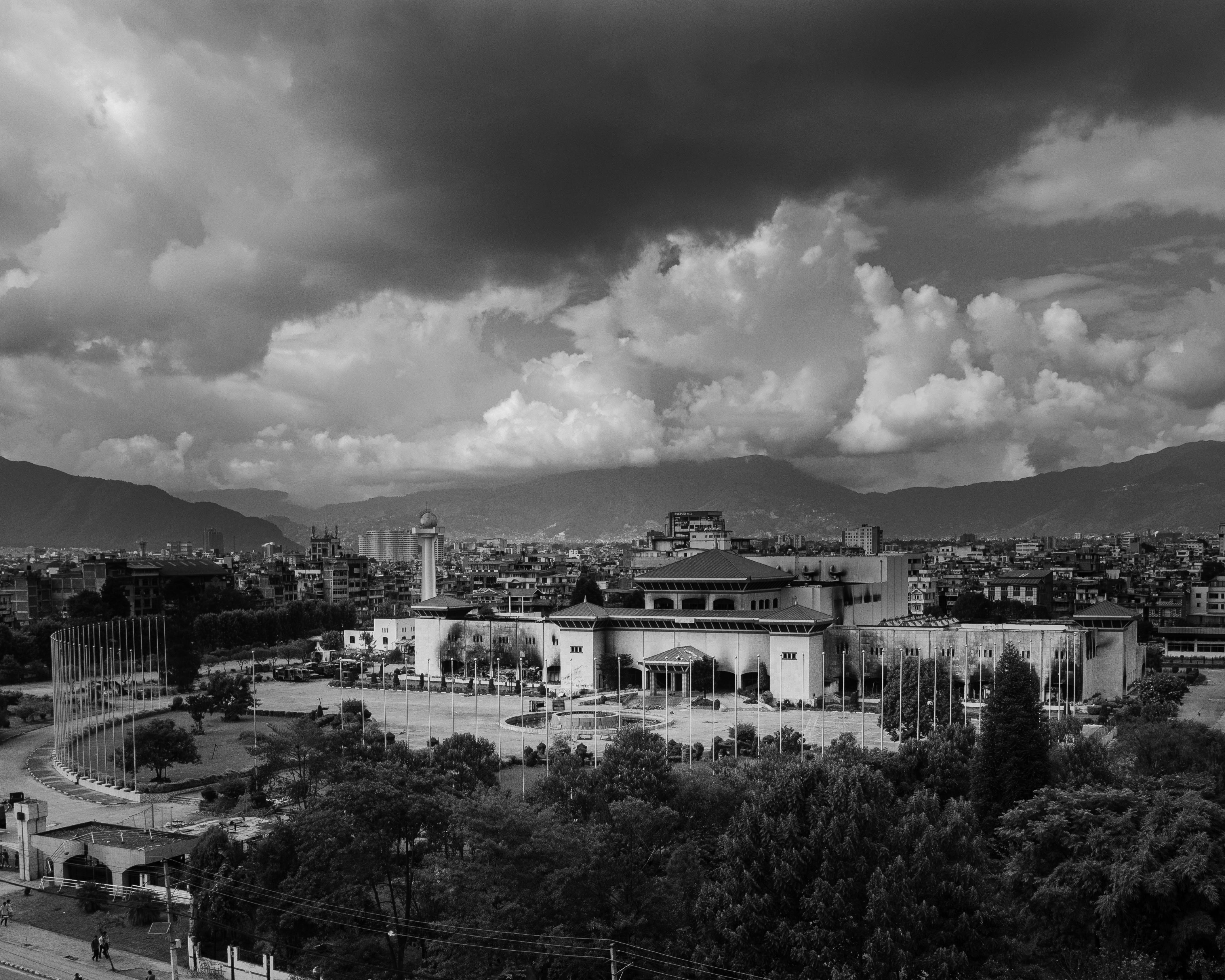
The charred ruins of the International Convention Centre in Baneshwor—the temporary seat of Nepal’s Parliament since 2008—stand as a monument to a fractured status quo. As the 5 March 2026 election approaches, the stakes extend far beyond the 275 seats at risk.
In this Substack, we offer our observations on how the 2026 election—tasked with carrying forward the momentum of the September uprising—is currently taking shape.
Youth are the defining electoral force. Voters under 40 now represent a mobilized bloc demanding governance reform and jobs. Even those living abroad are shaping outcomes from a distance.
Established parties are under pressure. September’s youth protests triggered internal revolts, yet anti-incumbency sentiment continues to favor emerging political actors.
Campaigning has gone digital-first. Targeted social media and short-form video content now overshadow traditional campaign methods.
Identity politics has softened. Ethnic and caste mobilization has declined as a dominant national narrative, though demographic arithmetic still shapes candidate selection.
Polarization persists. While overt religious agendas have lost momentum, media narratives surrounding the September protests remain sharply divided.
Nepal’s 2026 general election is not merely an early poll triggered by instability. It is, more fundamentally, a test of political legitimacy. The September 2025 youth uprising did more than bring down a government; it reflected an accumulation of generational impatience. Now, two years ahead of schedule, 275 seats are up for contest.
Voters under 40 constitute a decisive electoral bloc. They are more connected, more mobile, and less deferential than previous generations. Their demands are direct: employment, institutional accountability, and meaningful participation—not recycled slogans.
The paradox, however, is evident. A significant portion of this generation does not reside in Nepal. Remittances account for roughly one-third of GDP, and migration has become a political constituency. Families across provinces acknowledge being influenced—sometimes pressured—by relatives working abroad.
For decades, a small circle of leaders rotated power through elite negotiation. September unsettled that equilibrium. Major parties have since pledged reform, but voters are questioning whether these institutions can move beyond transactional politics. Younger leaders privately concede that delayed reform has cost credibility. The issue is less whether established parties can secure seats—it is whether they can restore moral authority.
Emerging political actors are positioning themselves as reformist alternatives, emphasizing merit-based governance and transparency. Yet this is not a policy-dense election. Electoral competition has shifted toward projection: short-form videos and symbolic branding dominate. Digital campaigning is no longer supplementary; it defines the terrain.
One noticeable shift in 2026 is the reduced visibility of overt identity-based mobilization. However, caste, religion, and ethnicity continue to influence candidate selection in concentrated constituencies.
Nepal may speak less openly about identity in this election cycle. It does not vote without it.
Despite isolated flare-ups, the broader security environment has remained stable. The deeper polarization lies within the information ecosystem. Media reports offering competing interpretations of the September protests have divided public opinion. This is Nepal’s first major election conducted within a fully digitized political landscape.
Sixty-eight parties and more than 1,100 independents are contesting the polls. This reflects pluralism, but also signals a thinning of institutional trust. Personality-driven politics is ascendant, and symbolism often substitutes for detailed governance roadmaps.
The 2026 election will not resolve structural unemployment or reverse migration overnight. What it will determine is narrower—but significant:
Whether political institutions can adapt to a generation that no longer defers to historical legitimacy.
If established parties persist without reform, frustration may deepen.
If new forces gain ground without consolidation, volatility may follow.
Nepal’s democracy has demonstrated resilience. The more pressing question now is whether it can demonstrate responsiveness.
Comments
Nothing yet. Say the first thing.
Sign in to join the conversation.