
Did someone forward this to you?
Become one of the more than 1000+ valued email subscribers. Find Out More 👈


If you love travel, check out our sister publication “Mencari’s Travel Wire”
The podcast industry keeps telling itself a reassuring story: more video, more platforms, more reach. But the data coming out this year points in a different direction—one that’s harder to sell and even harder to ignore.
YouTube may dominate discovery, but dominance isn’t the same as effectiveness. Video may be growing, but it isn’t outperforming audio where it counts. And while the industry races to scale consumption, it continues to underinvest in understanding what actually drives results.
In this issue, we break down four narratives shaping podcasting right now—and where they fall apart under scrutiny. From gender-split audience behaviour that challenges the “video for everyone” assumption, to measurement data that quietly confirms audio still does the heavy lifting, the pattern is clear: the industry is optimising for visibility, not performance.
If you’re building, buying, or betting on podcasts, the trend is the signal worth paying attention to.
If this is your first time here, welcome. Over 1,000 podcast industry readers already call Podwires home. Join them here.
Independent media only works when communities back it. Subscribe, share, and support the creators in your corner—starting with a Podwires paid subscription that keeps this newsroom running.
We want everyone to know about this initiative, so please spread the word by sharing the email with your friends! (copy URL here)
And, as always, send us feedback at editor@podwires.com
Big week. Let’s get into it.
Today’s reading time is 5 minutes. - Miko Santos (July 19, 2026)
YouGov data shows podcast genres split sharply by gender—and not every genre is going video.
The Uncomfortable Math Behind Podcasting's Video Pivot
Podcast Business: Case Study: Direct Results Agency Shifts Ad Strategy Using Magellan AI Attribution Data
🎧 Listen to the podcast - Podwires 5 Things

Podwires Rundown: Podcast audiences may share a medium, but they don’t share a genre — and new YouGov data suggests the gender gap in listening habits is far wider than the industry’s “video podcasting is universal” narrative would suggest.
Source Note: This piece draws on YouGov’s “More Than Meets The Ear” / “U.S. Podcast Ads Report 2026”, based on a survey of 1,300+ U.S. adults, including 800+ podcast consumers.
Key Points
News and current affairs is the most-consumed podcast genre overall, with 50% of U.S. podcast consumers tuning in regularly — but men lead women, 56% to 44%.
Sports produced the widest gender split in the study: 30% of men regularly consume sports podcasts versus just 6% of women, a five-fold gap.
Technology and science podcasts skew similarly male (28% of men vs. 11% of women).
Women over-index in true crime (35% vs. 27%), education/self-improvement (25% vs. 16%), lifestyle (17% vs. 12%) and health/wellness (18% vs. 14%).
Despite podcasting’s broader shift towards video, sports listeners showed almost no preference between audio and video formats, and education/self-improvement audiences actually favour audio — undercutting the assumption that video adoption is uniform across genres.
Why It Matters
The headline of most 2026 podcast research has been the rise of video. This data complicates that story. Format preference isn’t just generational, as prior research has emphasised — it’s genre-specific and, within genre, audience-specific. Sports listeners don’t care whether they’re watching or listening because, as YouGov VP Dare Schenck put it, they just want access to what’s happening with their team regardless of medium. Meanwhile, education and self-improvement listeners are gravitating towards audio precisely because they’re multitasking — commuting, exercising, doing chores — a use case a video can’t serve. For an industry pouring resources into video production across the board, this suggests a one-size-fits-all video strategy may be misallocating investment in categories where audio remains the functional format.
The Big Picture
For Podcasters: genre should inform format investment, not just audience demographics. A sports or entertainment show may see real ROI from video production; an education or self-improvement show may not need to prioritize it, and might be better served doubling down on audio quality and multitasking-friendly formats (chaptering, audio-first show notes).
For Podcast Producers: These splits argue for genre-specific production planning rather than a blanket video-first workflow. Producers greenlighting video budgets across a full slate should weigh whether the audience for a given genre — education, self-improvement, and, arguably, other “background listening” categories — is actually asking for it.
For the Industry: advertisers and platforms optimising solely around video-podcast growth risk overlooking genres where audio still dominates engagement and where gender-skewed audiences (sports, tech) may respond to different creative and placement strategies than the “average” podcast listener implied by aggregate video-adoption numbers.

Mencari Travel Wire is the go-to travel newsletter for Australia and New Zealand — delivering destination guides, travel intel, and trip-planning essentials curated for readers who move with purpose. Whether you're chasing weekend escapes or planning your next big journey across the Tasman, we've got you covered.
Subscribe Free → TRAVEL WIRE
This section is a paid advertisement. If you are interested in advertising, let’s talk.
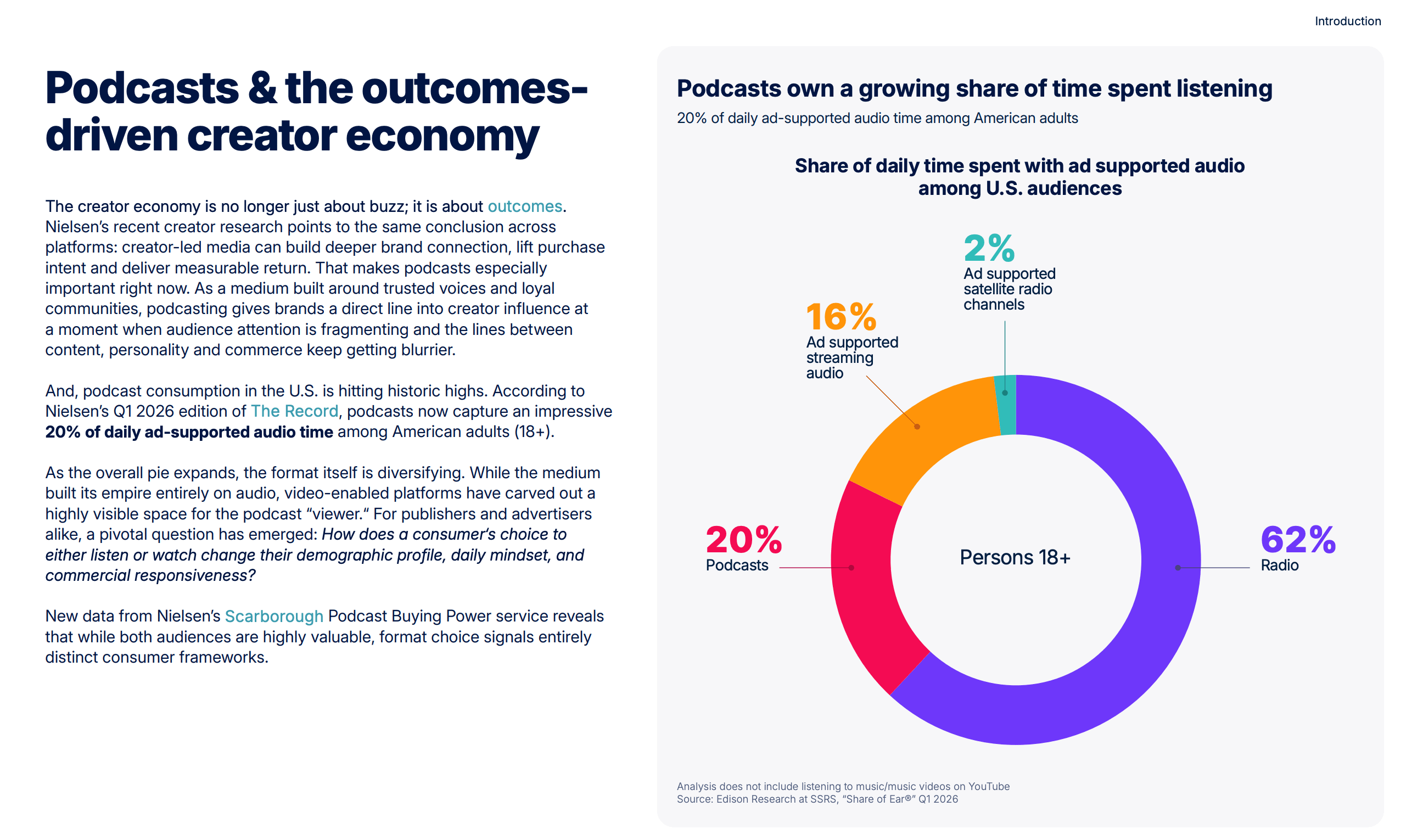
Podwires Rundown: Nielsen wants you to walk away from this report thinking, “Audio and video are equally valuable, just different.” The data underneath tells a less comfortable story: video podcasting, for all the money poured into it, still hasn’t built an audience that exists without audio.
Source Note: This piece is based on Nielsen’s “Lean In vs. Lean Back: Profiling the Podcast Listener and Viewer”, a self-published report drawing on Nielsen’s own Scarborough Podcast Buying Power service, “The Record”, and Fan Insights data. Nielsen sells audience measurement services to the exact publishers and advertisers this report is aimed at, so the framing throughout — “both formats are highly effective” and “the good news is” — should be read as marketing copy attached to real numbers, not neutral analysis. The underlying figures are worth taking seriously; the spin around them less so.
Key Points
90% of monthly podcast consumers choose to listen, while 62% engage by watching — and across the top 10 genres, only 2% watch exclusively, versus 29% who listen only.
Podcasts now capture 20% of daily ad-supported audio time among U.S. adults, per Edison Research’s Share of Ear.
Nielsen’s own persona data shows the “video watcher” skews younger, more male, and disproportionately student — while the “audio listener” profile is more likely married, highly educated, and employed full-time.
Conversion numbers are close, not lopsided: 25% of audio listeners make a direct purchase after an ad versus 29% of video watchers — a 4-point gap Nielsen frames as video’s edge, but one that barely moves the needle.
Sports is the one genre where watching and listening converge — but even there, soccer fans still favour podcasts and radio over video for staying informed.
Why It Matters
Here’s the uncomfortable part. For two years, the industry narrative has been that podcasting is becoming a video medium — YouTube ascendant, cameras mandatory, “audio-only” treated as a legacy format. Nielsen’s own numbers don’t support that. Across the top 10 genres, more than 96% of consumers are still listening, and the share who watch without ever listening is negligible. The report doesn’t hide this — it says audio “remains the absolute foundation of the ecosystem” — but the framing quickly pivots to a friendlier both-formats-win story, because Nielsen sells measurement tools to buyers on both sides of that bet. Let that sink in: the data supports a much more conservative read on video’s actual displacement of audio than most of the trade press coverage this year has implied.
The demographic split matters just as much. Nielsen’s own persona profiles put the “Interactive Watcher” as younger, more likely a student, seeking a “downtime destination.” The “Pragmatic Listener” is married, degreed, employed full-time — the profile advertisers actually want to reach with disposable income and purchase authority. Nielsen frames this as two equally valuable audiences with different creative needs. REALLY? Yes. Really — but only if you’re selling to college students on one side and working professionals on the other. That’s not parity. That’s a portfolio decision.
The Big Picture
For Podcasters: If your show lives in a genre where watching exclusively sits at 0–4% — which is nearly all of them outside sports — a full video production pipeline may be solving a problem your actual audience doesn’t have. Invest in areas where duplication data indicates people are already engaged: prioritise audio-first and use video as a discovery layer rather than the core product.
For Podcast Producers: The conversion numbers (25% audio vs. 29% video) are close enough that “which format converts better” is the wrong question. The better one, based on this data, is the format which reaches the buyer with money — and right now that’s still the audio listener: married, employed, structured schedule, higher education. Build production budgets around that reality, not the louder video-growth narrative.
For the Industry: Measurement vendors have a commercial interest in selling the idea that video and audio are separate, equally monetisable audiences requiring separate ad products. The underlying behaviour data — 69% doing both and 90% listening regardless — suggests that most of the industry is still selling ads to one audience that occasionally also watches, not two audiences. Buyers should ask their measurement partners to show the duplication numbers, not just the persona slides.
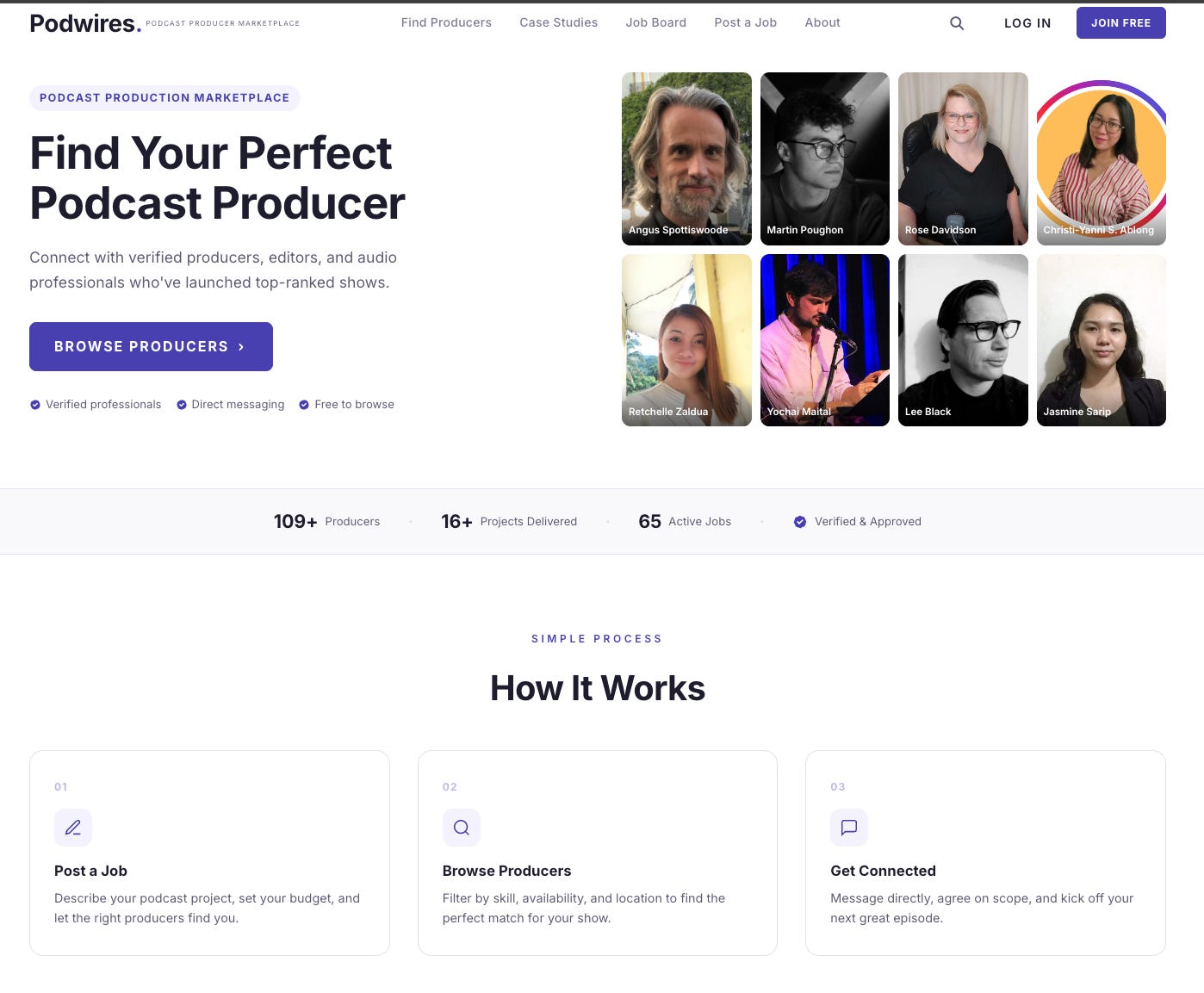
Every great podcast needs the right team behind it. Podwires is a dedicated marketplace where creators can connect with skilled podcast producers, editors, and audio professionals who understand how to shape strong, polished shows.
Built for the podcast industry, Podwires brings together talent, opportunity, and visibility in one clean platform. Whether you are launching a new show or improving an existing one, Podwires helps you find creative partners who can make your production stronger.
Podwires connects clients with top independent podcast producers and freelancers through a dedicated marketplace built for audio work.
Podwires Rundown: A vendor case study from Magellan AI reports measurable gains for direct-response audio agencies. Direct Results — including a significant swing in ad length performance that reshaped how the agency buys audio inventory.
Source Note: This is a case study written and published by Magellan AI, the measurement vendor whose product is the subject of the study, about a client relationship. All performance figures originate from Magellan AI’s own data and reporting, and the piece is designed to promote Magellan AI’s services; no independent verification of the underlying methodology or results is available in the source material. Readers should treat the specific percentage gains as vendor-reported outcomes rather than independently audited findings.
Key Points
Direct Results, a Los Angeles- and New York-based direct-response audio agency, adopted Magellan AI’s measurement tools to address attribution gaps in podcast, streaming audio, broadcast radio, and YouTube campaigns.
In a consumer technology campaign, Magellan AI’s data showed 30-second ads generated 41% more sessions and 43% more purchases than 60-second ads at equal impression levels.
Based on that finding, Direct Results shifted its entire ad-length delivery from 60-second to 30-second spots.
A home improvement advertiser increased its digital audio investment by 45%, which the case study attributes to clearer attribution data.
Magellan AI’s “aircheck” verification tool reduced campaign review time from days to hours, catching live-read and promo-code errors that the agency says helped recover media value through makegoods and credits.
Why It Matters
The case study reflects a broader challenge the podcast advertising industry has grappled with for years: traditional attribution methods — promo codes, vanity URLs, call tracking, post-purchase surveys — capture only part of how listeners actually respond to audio ads, since many convert later, through a different channel, or without using the specific call-to-action in the spot. Vendors across the space, including Magellan AI, Podscribe, and others, have built businesses around closing that measurement gap. This particular case study illustrates one agency’s experience using one vendor’s tools, and its findings — most notably the large swing in favor of shorter ad units — track with a broader industry conversation about optimal ad length, though the finding here comes from a single campaign in one vertical rather than a controlled, published study.
The Big Picture
For Podcasters: Ad-length preferences reported here (30-second spots outperforming 60-second spots) may not generalize across all shows or genres; podcasters negotiating ad inventory with agencies citing this kind of data should ask what format and category the underlying campaign involved before assuming it applies to their own audience.
For Podcast Producers: The aircheck/verification use case — catching live-read and promo-code errors to recover makegoods and credits — points to an operational area producers can control directly, regardless of which measurement vendor a buying agency uses: accurate, timely delivery of host-read ads as scripted reduces disputes over campaign value after the fact.
For the Industry: As attribution and verification tools mature, agencies are using vendor data to justify real budget shifts — both ad-length changes and increased overall spend, as described here. Buyers and sellers alike should note that these tools are increasingly shaping tactical decisions in near-real time, which raises the stakes on vendors’ measurement methodologies being sound and transparent, even when, as in this case, the vendor itself is the one publishing the results.
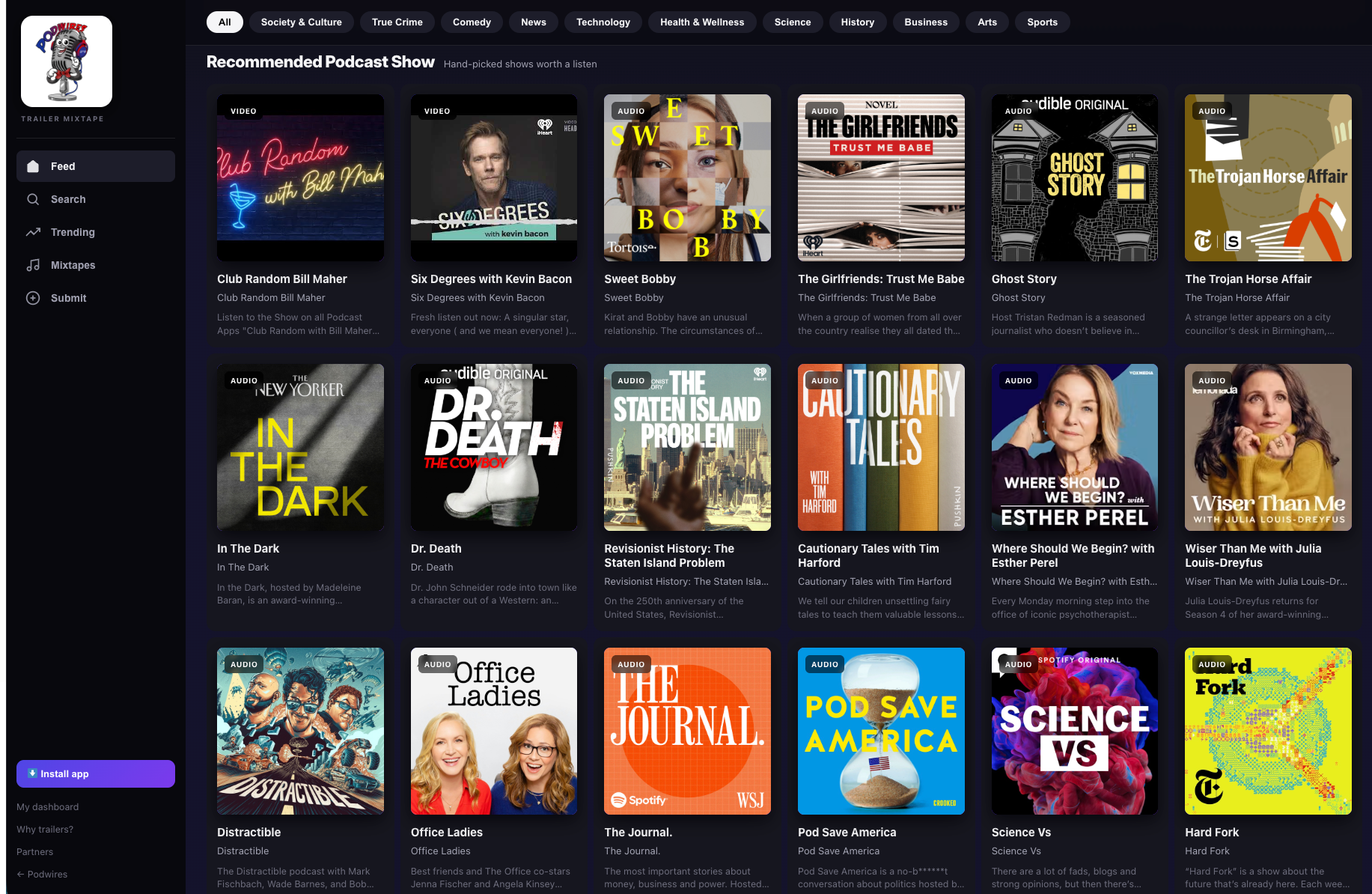
New shows are launching faster than anyone can keep up with — so we built a shortcut.
Trailer Mixtape from Podwires is a hand-picked, human-curated feed of recommended podcasts, trailers, and standout episodes — with a clear reason for why each show was chosen, so listeners can decide what to play next. Think of it as your discovery layer, minus the algorithm guesswork.
Whether you’re a listener hunting for your next obsession or a producer trying to see what the competition’s cooking, Trailer Mixtape gives you the first 60 seconds that matter — curated, not just recommended by a black box.
Add your recommended podcast, trailer, and why it’s worth listening to.
🎧 Press play on what’s next → podwires.com/trailermixtape
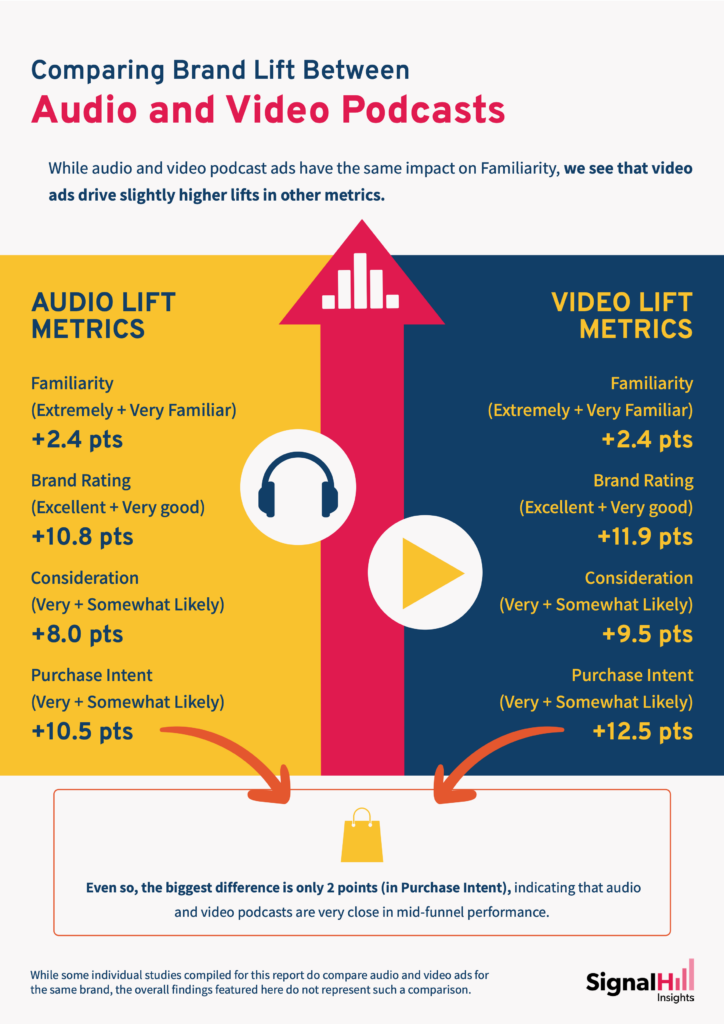
In a recent analysis, Paul Riismandel, President of Signal Hill Insights, released new benchmark data comparing brand lift between audio and video podcast ads for the first time at scale. They surveyed 38,704 listeners and viewers across 2024-2025. The headline: audio and video perform nearly identically. Video shows tiny margins—1 to 2 points of lift advantage—at mid-funnel and purchase intent, but Riismandel’s team explicitly concluded there’s “no notable difference” in actual campaign performance. For an industry that’s been spending the last two years repositioning as a video-first medium, that finding is uncomfortable.
Source Note
Signal Hill Insights is a podcast measurement and research firm that sells brand lift studies to networks and advertisers. In April 2025, they formally launched their “Video Podcast Brand Lift solution”—which means they have a direct commercial interest in demonstrating that video podcast advertising is measurable, trackable, and worth paying for. That business model doesn’t invalidate the data, but it’s worth noting that their incentive is to make video podcast measurement seem valuable, not to suppress findings about video underperformance.
The data itself comes from 38,704 respondents surveyed in 2024-2025, which is a solid sample size. However, Riismandel includes a critical caveat: these results don’t all come from head-to-head comparisons of the same campaign in audio and video formats. Some are audio-only studies; some are video-only studies. That means the “audio vs. video” comparison is somewhat apples-to-oranges—you’re not isolating the format variable as cleanly as a true controlled experiment would. That methodology matters when interpreting the margins.
Key Points
Signal Hill measured video podcast brand lift for 0% of their studies in 2023, 24% in 2024, and 54% in 2026—reflecting both the platform growth and increased advertiser demand for video podcast data.
Standard pre-, mid-, and post-roll ads drive measurable lift across the funnel: 2.6 points for brand familiarity, 11.4 points for brand rating, 8.8 points for consideration, and 11.6 points for purchase intent (the strongest metric).
On audio vs. video head-to-head comparison: both formats perform identically for brand familiarity; video shows small margins of 1.1 points for brand rating, 1.5 for consideration, and 2 points for purchase intent—margins so small that Riismandel cautioned against making format-based decisions based on such differences.
Riismandel’s team explicitly concluded that “on average, right now there is no notable difference in brand lift performance between standard podcast ads on audio or video”—meaning format choice should not be the primary driver of media spend allocation.
The report is limited to standard ad integrations (pre-, mid-, post-roll) which comprise 64% of their sample; host-read and dynamic ads are excluded, which skews the results toward less contextual, more templated integrations.
Why It Matters
For three years, the podcast industry has been telling a consistent story: video is the future. YouTube is the top platform. Producers need to invest in video. Networks need to build video production capabilities. Advertisers need to optimize for video consumption.
Riismandel’s data doesn’t say that story is wrong. It says it’s incomplete. Yes, YouTube is the leading platform. Yes, more audiences are consuming video. Yes, networks should be producing video. But the conversion argument—”video performs better”—doesn’t hold up in his research. Not yet, anyway.
That’s a problem for the networks and platforms that have already made massive bets on video production infrastructure, equipment, and team hiring. If video and audio perform identically on brand lift, then the ROI on those investments is harder to justify. And if audio and video are performance-equivalent, then advertisers have no compelling reason to shift budgets from audio (where CPMs are lower and host-read integrations remain dominant) to video (where production costs are higher and measurement is newer).
The uncomfortable inference Riismandel’s research surfaces: the podcast industry might have been confusing “where audiences are” with “what drives conversions.” YouTube dominates consumption, but consumption volume and advertising effectiveness are not the same thing. An audience that watches video passively (while doing other things) might engage less deeply with advertising messages than an audience that chooses to sit with audio for an hour. Riismandel’s data suggests both audiences convert at similar rates. That changes the calculus.
The Big Picture
For Podcasters
Riismandel’s data gives you permission to deprioritize video investment if you don’t already have a production capability. If your show gets 50,000 downloads per episode on audio and you’re considering investing in video gear, lighting, and post-production just to “keep up,” his research suggests that upgrade might not move the needle on advertiser ROI or audience growth. That doesn’t mean ignore video—YouTube is still the leading platform for discovery. But it means you can make the video investment decision based on audience preference and distribution reach, not on some assumption that video converts better.
The caveat Riismandel flags: his benchmark only measures standard ad integrations (pre-, mid-, post-roll). Host-read ads, which typically command 2-3x higher CPMs and are more integrated into show content, are excluded from this analysis. It’s entirely possible that video host-read ads outperform audio host-read ads significantly. If that’s your primary monetization strategy, those data points matter. But for standard ad load optimization, Riismandel’s research shows audio and video performing equivalently.
For Podcast Producers
This stage is where you need to challenge your own narratives. If you’ve been justifying video production investment to stakeholders based on “video performs better”, Riismandel’s Signal Hill data contradicts that argument. Your real justifications should be: (1) YouTube is the leading discovery platform, so video presence is necessary for audience growth; (2) audiences increasingly expect video access; and (3) video allows you to distribute clips on social media and YouTube Shorts, which drives new listener acquisition. Those are all valid. But Riismandel’s research does not support the claim that “video converts better.”
That said, use his findings as leverage in budget conversations. If video and audio perform identically on brand lift, then you shouldn’t need to produce high-end video. Basic setup (adequate lighting, framing, and consistent audio) should be sufficient. You’re optimising for platform discovery and clip extraction, not for incremental lift above audio. That’s a lower-budget proposition than many networks have been building towards.
For the Industry
Riismandel’s benchmark raises a strategic question the industry has been avoiding: If video and audio perform identically on brand lift, what’s the actual business case for the video-first pivot?
The answer, according to Riismandel’s analysis: platform distribution and audience growth, not direct advertising performance. YouTube is the leading podcast platform because of its recommendation algorithm and integration into consumer devices (smart TVs, mobile), not because video ads are inherently more effective. The business case is reach and discovery, not conversion efficiency.
That distinction matters for how the industry allocates resources:
Platform-agnostic production is more economical than video-first production. If audio and video perform equivalently (as Riismandel’s data suggests), then the efficient strategy is to produce audio content that works equally well as audio and video (clear conversation, minimal reliance on visual elements, and minimal production requirements) and then repurpose it for YouTube with simple video treatments (static speaker shot, transcript overlay, or basic graphics). That’s less expensive than building out full video production workflows from scratch.
Measurement standardisation is now urgent. Signal Hill has 54% of their benchmark data from video podcasts now, but the data set still includes many audio-only campaigns and video-only campaigns. As video consumption grows, there will be more head-to-head comparisons, which will either confirm or refute Riismandel’s “no notable difference” finding. Networks and advertisers need consistent, comparable measurement across formats so they can make informed allocation decisions. Right now, the fragmentation (some campaigns audio-only, some video-only, some both) makes clean format comparisons difficult.
Host-read and dynamic ad performance needs separate analysis. Riismandel’s report excludes host-read and dynamic ads, which are the highest-CPM and most-engaged ad formats in podcasting. Video might outperform audio significantly in these contexts, since a host’s visual presence and on-camera delivery could amplify the authenticity signal that makes host-read ads so effective. That data gap is significant. Any network making format-based production decisions should commission their own host-read ad studies before shifting budgets.
The margin is narrow, and it could flip. Riismandel found 1-2 point advantages for video at mid-funnel and for purchase intent. That’s within the measurement noise for many studies. As video podcast audiences mature and production quality improves, video may gain an advantage. Conversely, as audio podcast audiences become more selective and engaged (filtering for quality over volume), audio could maintain its efficiency advantage. The industry shouldn’t overinvest in video based on Riismandel’s current data, but it should continue measuring and reassessing as the market evolves.
The core insight from Riismandel’s research: the podcast industry’s pivot towards video is justified by distribution (YouTube’s dominance) and audience expectation (consumers want video access), not by advertising performance superiority. That’s actually a more durable strategy, because it’s not dependent on proving that video converts better. It’s dependent on being where audiences want to consume content. But it also means networks should be more strategic about video investment—optimising for reach and clips, not for production quality and visual storytelling that doesn’t move the conversion needle anyway.
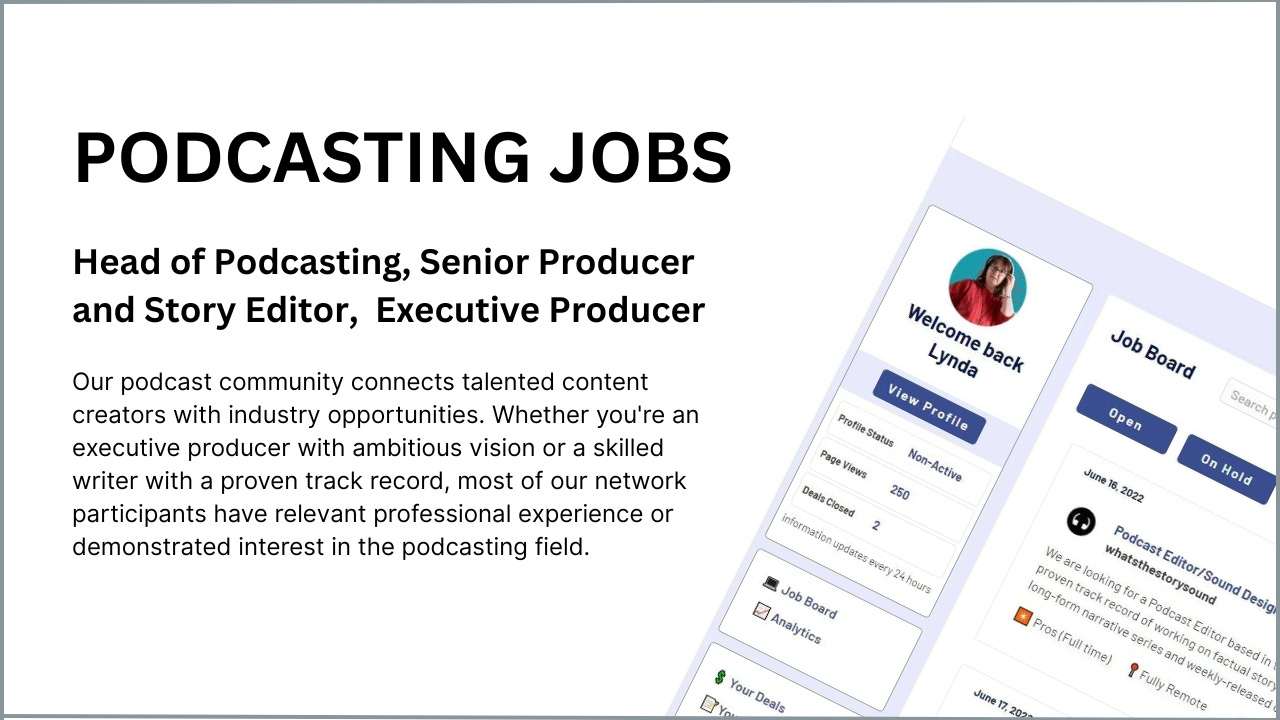
If you’re building a podcast team, join Podwires Marketplace to access monthly curated lists of experienced podcast professionals—producers, audio engineers, scriptwriters, and hosts—actively seeking new opportunities in news, storytelling, and audio journalism.
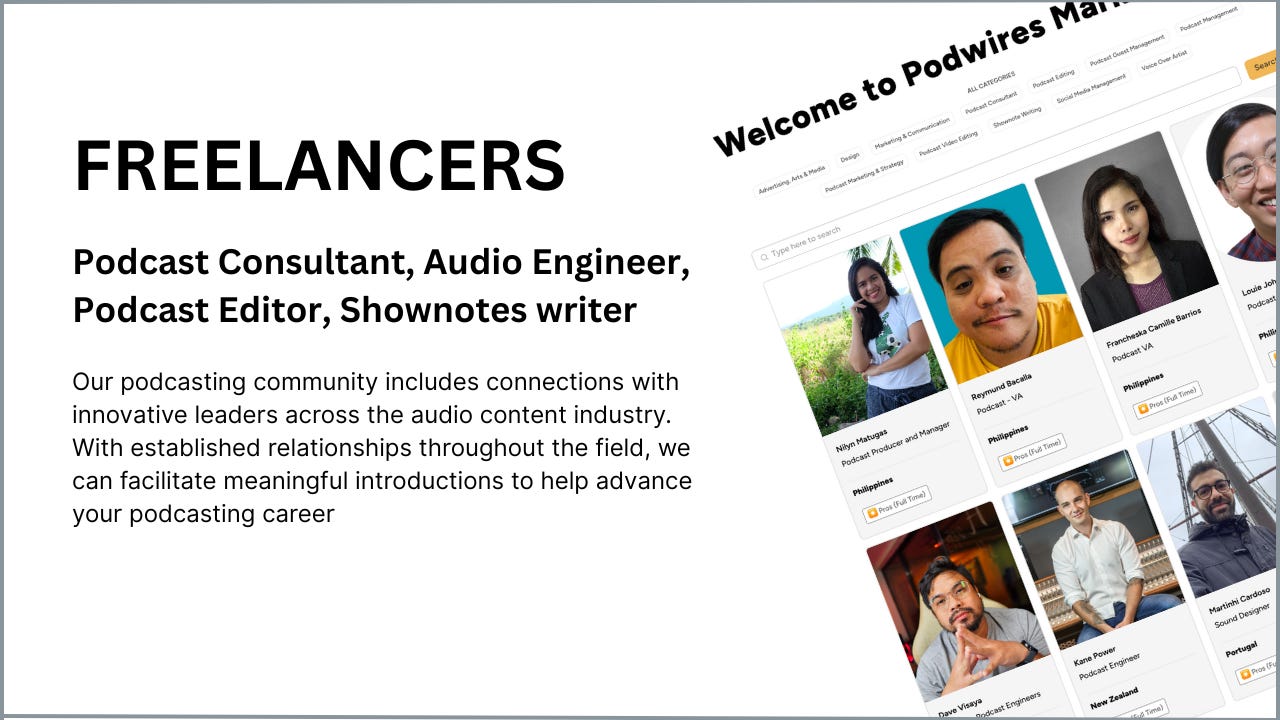
If you’re a podcast professional seeking your next opportunity, join the PodWires talent directory to connect with podcast companies and media organisations.
🚨 Stay on top of your deadlines with our weekly-updated calendar of fellowships, grants, training opportunities and podcasting events. If your organisation has a fellowship, grant or event to share, just 👉 fill out this form or 👉 reply to this message.
Thousands of podcast producers, audio/video editors, podcasters, executives, and business owners worldwide read our newsletter. Contact us now.
📖 I appreciate you taking the time to read! See you in the next issue. Got a question or criticism? Just click on Reply. We can talk while we are here.
Please provide a press release along with a suitable landscape photo. Make sure it’s newsworthy. Send press releases to editor@podwires.com or click here. Editorially, we may rewrite headlines and descriptions.
📬 Sponsor us and get your brand in front of thousands of independent podcast producers and podcasters. Email us at sales@podwires.com for more information or as personal supporters via Patreon, as your contributions help us enhance the experiences of all our users.
🖊️We are delighted to hear from our subscribers! If our newsletter helped you or you have a success story, we would love to publish your testimonial. 👉 Post a Testimonial: Click here
🚀 We are here to help you succeed! We kindly invite you to complete a brief 5-minute survey to share more about your business and yourself. These questions will help us better understand you and promote your business as part of our mission. It’s a win-win!
🚨 Did someone forward the information to you?
Become one of the more than 1000 valued email subscribers. Find Out More 👈


Podwires is here because of our incredible partners’ unwavering support. The Podwires readers receive journalism free of financial and political influence. If you found this valuable, consider Restacking so more people can see it. Get together with them today.
Comments
Nothing yet. Say the first thing.
Sign in to join the conversation.