
This show boasts that it breaks down complex scientific topics into accessible, engaging conversations. Fortunately for its audience, the show lives up to the hype. It’s a strange time in the U.S., where everyone is a scientific expert, each with their pet conspiracy theory, from vaccines to chemtrails and the flat earth to kids’ drinks that turn them gay (Alex Jones).
This Podcast Will Kill You is a popular science and public health show that explores the biology, history, and social impact of different diseases, medical mysteries, and toxins. Hosted by two disease ecologists and epidemiologists, Dr. Erin Welsh and Dr. Erin Allmann Updyke, each episode dives deep into a specific disease (e.g., COVID-19, plague, malaria), poison, or health topic like cancer or burns.

They cover how it works, how it spreads, and its historical significance.
The Erins structure every episode into three main sections: the biology (how it affects the body), the history (how it has impacted humanity), and the prognosis (how scared you realistically need to be).
To keep the heavy topics fun and lighthearted, every episode is paired with a custom-themed alcoholic cocktail called a “quarantini” and a non-alcoholic version called a “placeborita”.
The show is part of the Exactly Right podcast network and serves as a great way to learn about infectious diseases and science without needing a medical degree or a wacky conspiracy theory you heard on Fox News.

As grad students studying disease ecology, Erin and Erin found themselves disenchanted with the insular world of academia. They wanted a way to share their love of epidemics and weird medical mysteries with the world, not just colleagues. Plus, who doesn’t love an excuse to have a cocktail while chatting about pus and poop?
Erin Allmann Updyke, MD, PhD, is an epidemiologist, disease ecologist, and board-certified Family Medicine physician. She loves pink wine and iced lattes, and yes, she’s bringing a cake to your party.
Erin Welsh, PhD, is a disease ecologist and epidemiologist now working full-time as a science communicator through her work on This Podcast Will Kill You. She loves bourbon and sour beers, and yes, she’s probably already read that book.
One of my favorite episodes, although a bit nauseating, was the May 26th show on Motion Sickness. The co-hosts explain: “It comes in waves. It comes on sneakily. You become aware of your stomach. You break out in a cold sweat. Your mouth fills with saliva. And before you know it, you’re leaning over the side of the boat (or out of the car, or into the airplane sick bag), barfing up your breakfast. Motion sickness. We’ve all been there, or at least most of us have. Why? What is it about our physiology that breaks down as soon as we travel via water, vehicle, or air? That’s exactly what we’re going to explore in this episode. From how long humans (and other species) have been coping with these debilitating symptoms to what’s actually going on in your brain to trigger the breakdown, from what’s in the most nauseating historical “cures” for motion sickness to why the drugs we today have some positive effect, we’re covering it all.”

Then the co-hosts double down on grossness and tell us: “In keeping with last week’s theme of bodily excretions that are kinda gross that you don’t really think about but are actually really important, we’re devoting this episode to earwax, aka cerumen. In one hour, we somehow manage to weave together stories of earwax impaction, misadventures in ear candling, glimpses of earwax in art history, and a whale of a tale as revealed by cetacean cerumen. The biology and history of earwax proves to be surprisingly rich and revealing and will have you second-guessing yourself as you reach for that cotton swab. Armed with this week’s episode on earwax and last week’s on boogers, you’ll be ready to take on even the most daunting office icebreaker.”
This Podcast Will Kill You has all the elements of a successful and inviting podcast. The Erins are terrific hosts, who are obviously having fun. The science they espouse is rooted in, well, science, not conspiratorial nonsense developed for political gain. Finally, the show does not take itself too seriously and mixes a non-toxic, all-natural, organic, and gluten-free brew of humor and science class.
********************************************************************************
There is a disquieting trend in the U.S. toward a racial purity ethic and a disdain for other cultures. In the last two years, diversity has become a dirty word, and those screaming about cancel culture four years ago are now employing the same suppression tactics they railed about with such vigor and unfocused anger.

That’s why it is so important that podcasts such as Auntie Please break onto our national consciousness.
The Auntie Please podcast is a cultural and lifestyle show created and hosted by two friends — @the_zphilosophy and @thenycsleepdoctor. The hosts, who identify as being raised by aunties and now stepping into that role themselves, focus on decoding Southeast Asian/Desi culture, midlife experiences, health, and the fear of “log kya kahenge” (what will people say?).
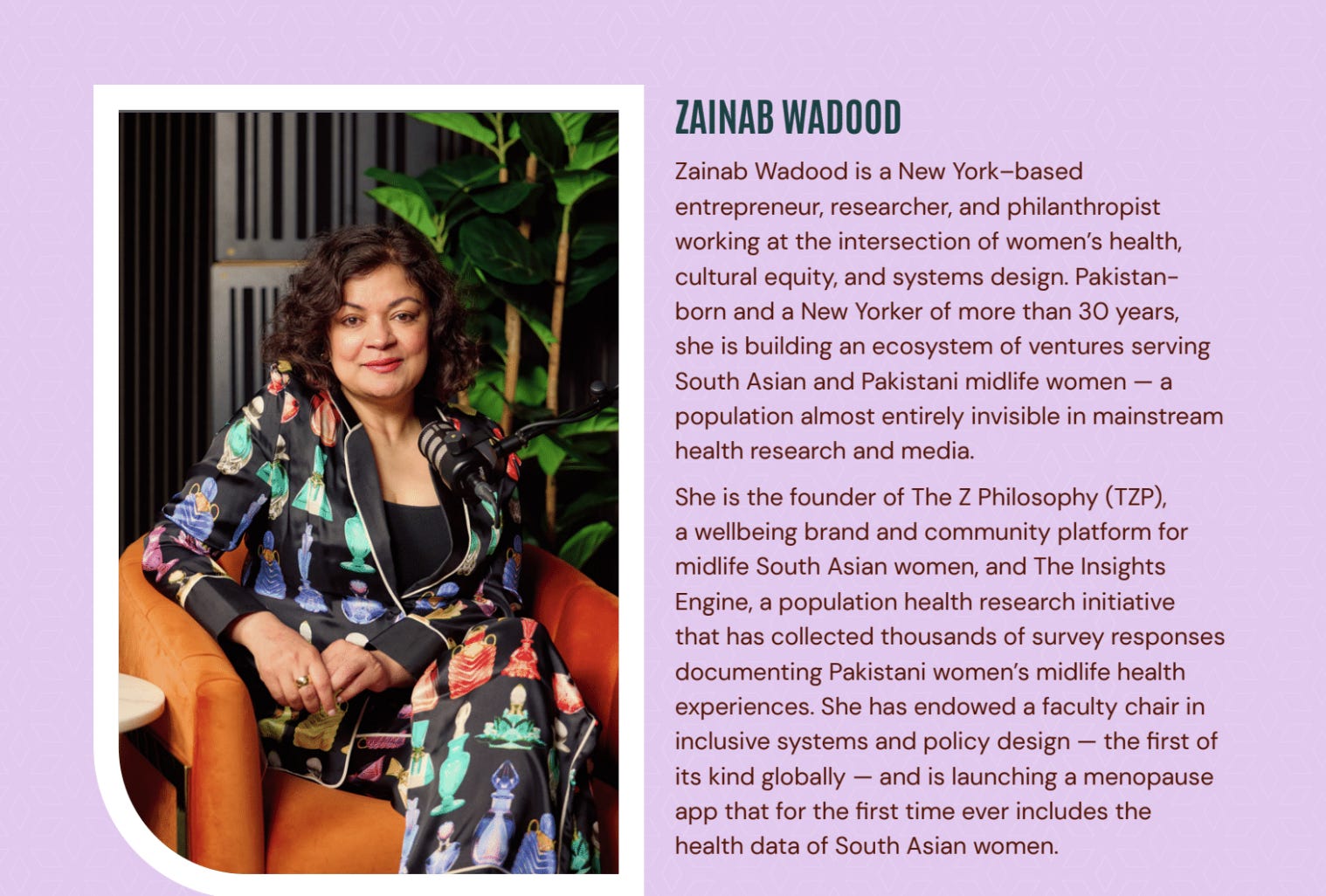
The co-hosts are Zainab Wadood and Saema Tahir.
Dr. Saema Tahir, MD, is a quadruple board-certified physician based in New York City specializing in Internal Medicine, Pulmonary Disease, Critical Care Medicine, and Sleep Medicine. Beyond her clinical practice, she is a sleep health advocate and media contributor.

The core theme of the show is decoding Southeast Asian culture, mental health, relationships, unlearning societal standards, and personal growth.
The show unpacks traditional Desi and South Asian expectations, family dynamics, and breaking generational stigmas. The show also discusses midlife reinvention, body acceptance, colorism, and letting go of external standards. The co-hosts encourage listeners to define themselves rather than letting other people’s ignorance dictate their self-worth.

Episode two exemplifies the structure and key messages of the show. Titled, What Does the Perfect Pakistani Woman Look Like?, the co-hosts ask: “What does it mean to be enough exactly as you are — in a culture that spent decades telling you otherwise?
In this episode, Zainab and Saema tackle two of the most personal pressures facing South Asian women: colorism and body acceptance. Zainab shares the story of walking into a rishta meeting — educated, accomplished, successful — and being turned away because of her skin color. The conversation opens into something bigger: what it means to stop being at war with your body and start wearing it as a life lived. The glow up isn’t lighter skin or a perfect body. It’s deciding neither one defines you.
The co-hosts confess in the episode that “women in our culture are not every honest on what they are going through.”
Zainab Wadood and Saema Tahir are Pakistani-raised women navigating midlife the way no one taught them — out loud and honestly. Raised with the weight of Log Kya Kahenge — the South Asian need to manage what everyone else thinks — they spent decades being good daughters, good wives, good mothers. Now they’re asking: what do we actually want?
Auntie Please is their answer. Each episode, they sit down with therapists and experts — unlearning the old script and figuring out how to show up as their fullest selves.
In an interview, Zainab Wadood and Saema Tahir told us that: “The podcast has challenged them to be more vulnerable and to express themselves in ways they don’t typically in their everyday lives. It has also taught them to step into the role of the learner rather than the expert, allowing them to grow through each other’s perspectives and the insights shared by their guests. Above all, they are proud to be starting conversations that help others and give language to thoughts and experiences that are too often left unspoken.”
If you’re a South Asian woman in midlife wondering if it’s too late to start over — it’s not. Join the conversation now. Check out Auntie Please.
Comments
Nothing yet. Say the first thing.
Sign in to join the conversation.