
Support work — we give it, receive it, take breaks from it, or step in to offer it. It looks different for everyone. There are good times, hard times, fun times, and heartbreaking ones.
It’s only natural to want to live in the good — to focus on the smiles, the laughter, the moments where it feels like we’re making a difference. And right now, that might be the best answer.
What happens when something changes — when a person, a routine, or a piece of support isn’t there anymore?
Will what we’re doing today still work if we’re not there to hold it together?
Will the next person know what to do — or will the participant have to start again?
⸻
Because tomorrow, one thing is guaranteed: the participant will still be there.
Maybe with the same team. Maybe with someone new. Maybe with less support. But they’ll still be there — navigating their day, their needs, and their goals.
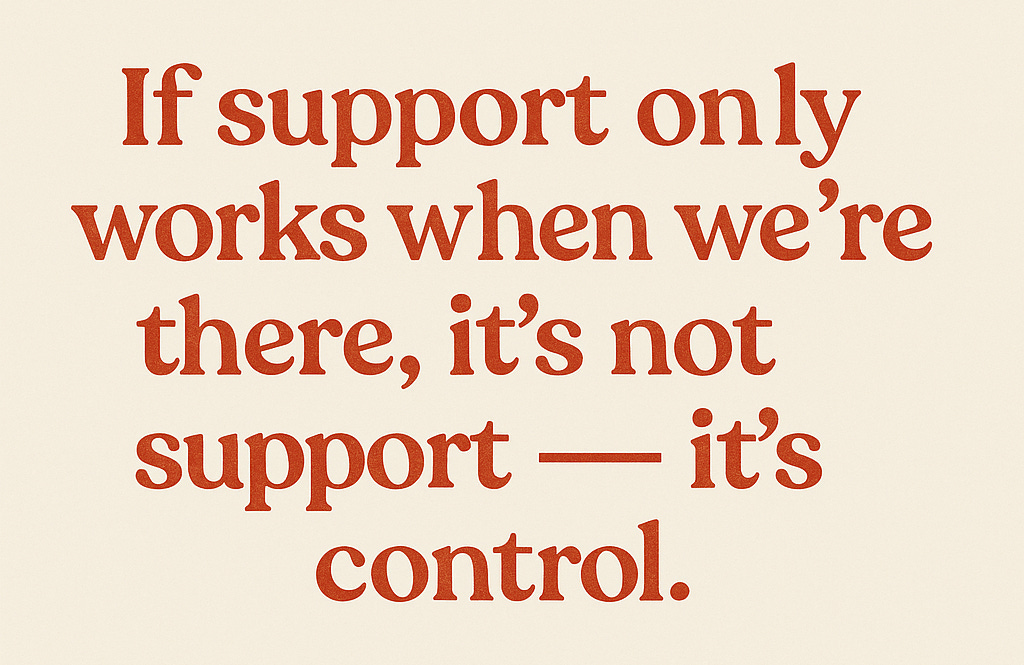
And that’s what makes our job more than just being there today. It’s about setting up supports that can outlast us. That don’t rely on one personality, one approach, or one way of working.
It’s not always about doing more — but doing things in a way that empowers others to keep building, even when we’re gone.
⸻
As the NDIS navigates uncertain ground — making changes, reassessing structures — we’ve seen a natural shift toward self-preservation.
Participants are scrambling to secure support they can trust. Providers are making decisions driven by risk management, policies, and compliance checklists. And in the middle of it, support workers are trying to stay afloat, keep their jobs, and do the best they can.
But in all this survival-mode thinking, we risk forgetting something important:
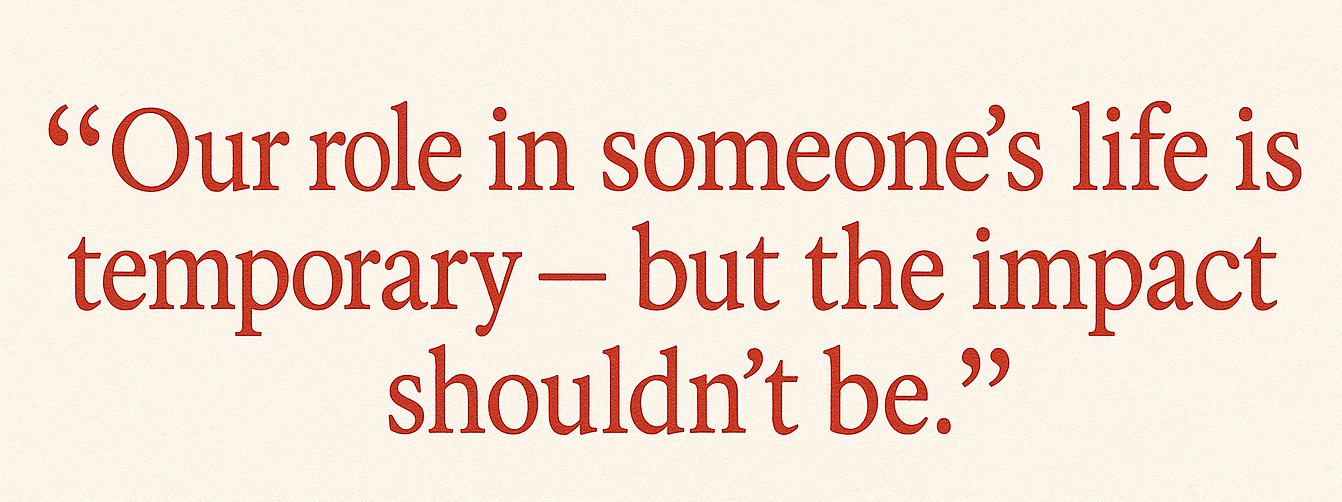
Our role in someone’s life is temporary — but the impact shouldn’t be.
I remember when I first started in the sector. We’d support someone for six months, then rotate. It was built into the model: a safeguard against burnout, a fresh set of eyes, and a reminder that we weren’t meant to become the centre of someone’s life — we were there to support, to build, and eventually to step back.
Now? We often stay in roles indefinitely. And without consistent systems or shared planning, we create support that’s entirely person-dependent, not participant-driven. That’s a risk we can’t afford to keep ignoring.
⸻
If we want to build something sustainable, we have to move beyond compliance as the end goal.
Because while compliance keeps us accountable, it doesn’t always move the participant forward. The real challenge is asking:
How can we meet our responsibilities while also empowering the people we support?
That means:
• Embedding reflection into the everyday
• Encouraging participants to take part in their own planning
• Building supports that are understandable and consistent across teams
• Documenting what works (and what doesn’t) in ways that anyone can pick up
It means seeing ourselves as part of a larger picture, not the sole keeper of someone’s progress.
⸻
One thing I hear all too often is:
“I already do case notes for my company — I don’t want to do more work on Pocket Support.”
And honestly, I get it. Most people aren’t avoiding responsibility — they’re tired, they’re overworked, and they’re doing their best to meet basic requirements.
But this way of thinking misses the point.
Your company’s case notes are for the company.
Pocket Support is for the participant.
It’s not about doubling up — it’s about creating a shared space that supports real, consistent, person-led care. Especially in a world where support workers change, funding shifts, and networks evolve.
The notes, goals, routines, and reflections captured in Pocket Support aren’t “extra.”
They’re what help families, therapists, future workers — and even the participant themselves — stay connected to what actually works.
This isn’t about doing more. It’s about doing things better — together.
⸻
That’s exactly why Pocket Support was created.
To act as a bridge — between good intentions and real outcomes.
Between compliance and empowerment.
Between one worker’s shift and the next.
It’s a platform built to support participants first, not paperwork.
A space where support teams, families, and participants can align.
Where progress isn’t lost, goals aren’t forgotten, and good work doesn’t rely on who’s holding the shift phone.
Pocket Support was never built to replace compliance — it was built to go beyond it.
To create continuity. To make reflection easier. To build something that lasts longer than any of us in the role.
⸻
So next time you’re out supporting someone — pause for a moment.
Ask yourself:
“If I wasn’t here tomorrow, would they still be able to do this?”
“Could someone else pick up where I left off?”
If the answer is no, maybe that’s the place to start building something better.
And we’re here to help with that — every step of the way.
No posts
Comments
Nothing yet. Say the first thing.
Sign in to join the conversation.