
0:00
-7:19
“You can’t be everybody’s cup of tea
Some like it bitter, some like it sweet
Nobody’s everybody’s favorite
So, you might as well just make it how you please”
-Kacey Musgraves
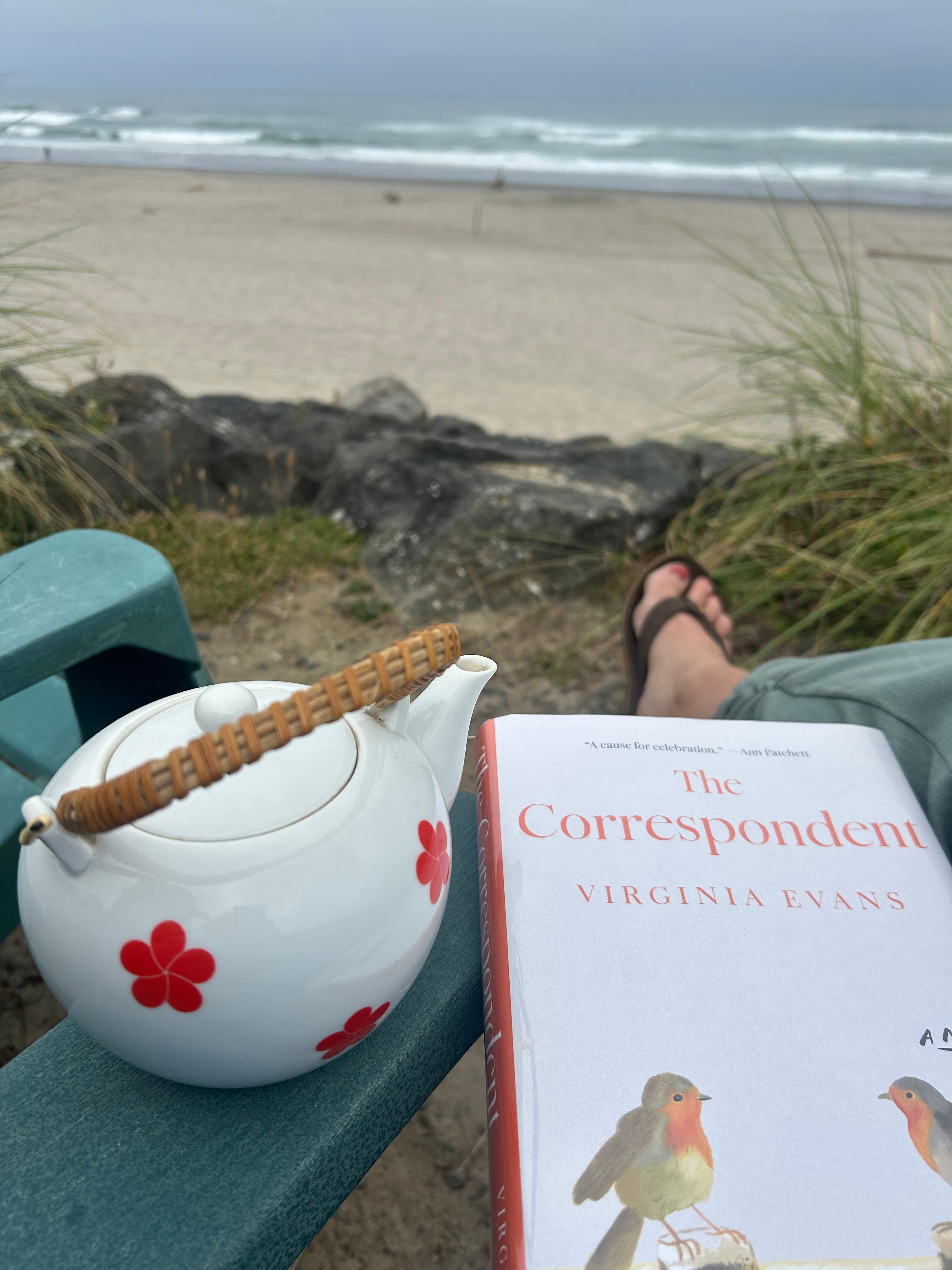
Welcome to Pocketful of Prose, a community for sharing stories. Links are in bold, and there’s an audio of this pocket if that works better for your life. Pocketful of Prose is free for everyone so please share with friends. A big thank you and shout out to my newest paid subscriber, Sharon Straub. Your support of my work means so much.
Without further ado, today’s pocket.
“I’m going to have you do something uncomfortable,” the writing instructor and respected author said as she grinned at me and the other workshop participants. “I want you to walk around the room with no destination in mind. Allow yourself to be completely free. See what happens when you move differently in the world.”
She put on some music, and thirty or so of us, writers and artists, rose up like obedient sheep and started walking in circles around the fluorescent lit space. Some people crawled on the floor. Some climbed on chairs. Some made significant eye contact with strangers exchanging smiles and wary glances.
“There’s so much possibility,” the instructor, let’s call her Denise, said as she attempted a backwards crawl along the floor, the same floor people were walking on in their shoes, the same shoes that were previously walking on the streets of Spokane. Denise beamed at us, emanating enthusiasm. “Do whatever you want,” she shouted. I wanted to leave.
I’m slowly learning to accept that everything does not have to be for me. I often check in with others for validation when I don’t feel like something is working for me rather than trusting my own intuition. A friend of mine attended the same workshop, and the next time I saw her, I asked her what she thought of it, and she said, “Oh, it was amazing.” My face visibly dropped. “Wait which workshop?” she asked. “Did you mean the morning or afternoon?”
“Afternoon,” I said.
“Oh, I walked out of that one.”
I immediately felt better, but I wished I could have trusted myself to walk out too.
As a teacher, I never want my students to walk away empty handed. I give two surveys, one mid-year and one at the end of the year to get student feedback on what worked for them and what didn’t. I use this feedback mid-year to make changes for them in the second semester, and I use their feedback at the end of the year to make changes for the following year. I will be honest and say that it is also a nice opportunity for me to hear what students have gained from the class. What is harder to swallow, though, is when the feedback is less complimentary.
This year, one of my Native American Literature students, who I highly respect, shared how he didn’t feel challenged. It was his senior year and for his book club choice, he chose to reread a book he had already read, which I supported because you can’t really read Pulitzer Prize winning There, There too many times. However, when I saw his comment about being challenged, I wondered if he should have chosen something different. I mostly wondered though what I could have done sooner to help him extend his knowledge. I tend to stray away from direct instruction in general because I want students to generate their own ideas. In my Native American Literature class, this feels even more important because I am a white lady, and my voice should definitely not be the loudest in the room. However, the feedback from this student has me reflecting on whether I might need to be more explicit with some of my instructions and material to help students foster those new ideas.
This student was in a unique situation because he came to the class with significant background knowledge on Native culture. He was also extremely gifted. He shared his gifts with our class by teaching us some Salish, which was one of my favorite experiences in all my years of teaching the course. I think he enjoyed the community we created, but I wish I could go back to day one and ask him what he hoped to gain from the class. I imagine I did that, but I wish I had done more to help him meet those goals. I wish he was more satisfied with his experience.
Another student’s response was polite, but her review of her experience and the course was lukewarm.
The truth is while I tell the students to be honest, and I need them to be honest so I can make changes and adjust, I don’t want anyone to find my cup of tea lukewarm. I want everybody to like me and everything I do. As I write this, I recognize how problematic and unhelpful this is. In the workshop I attended, I didn’t think the instructor did anything wrong. She was offering a delicious drink, albeit one you had to sip while walking around a room on all fours, staring at strangers, but some people lapped it up. They thirstily transformed that workshop into creative fuel.
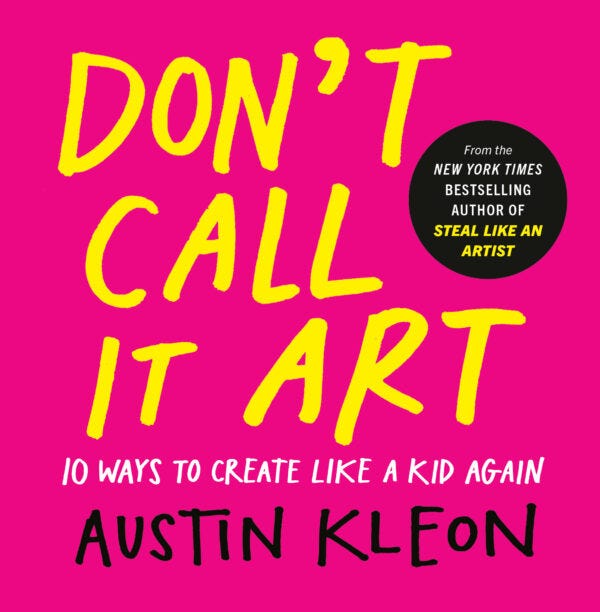
In Austin Kleon’s new book, Don’t Call it Art, one of his rules to create like a kid again focuses on the importance of input, meaning what we feed ourselves as creators matters. We need a daily diet of quality material to produce our own quality material. The good news is that means that we should be seeking out and surrounding ourselves with creative work that we love. The bad news is that this can be challenging in an age where we are constantly fed material regardless of whether we like this material or not. Consciously curating our intake is essential. According to Austin, the first step is knowing what we like. “By the time we grow up, we’ve been told what we’re supposed to like for so long that it’s easy to lose track of what it is we really like… “If you don’t know what you like, how can you expect to make anything you like?”
I’m slowly learning that knowing what you like sometimes begins with acknowledging what you don’t like. As an artist, it also means being okay with the fact that some people are not going to dig your tea leaves. I’m teaching and creating for people who have taste, and if I want to quench people’s palates, my work needs to have flavor. Some people are not going to like that flavor.
Next year, I hope to continue to remind my students and myself to love what we love, to try new things, yes but also when we’ve tried something and we discover it’s not for us, even if that something is my class, it’s okay. It’s more than okay. Each aversion leads us closer to who we are, who we need to be and what we will create in this world.
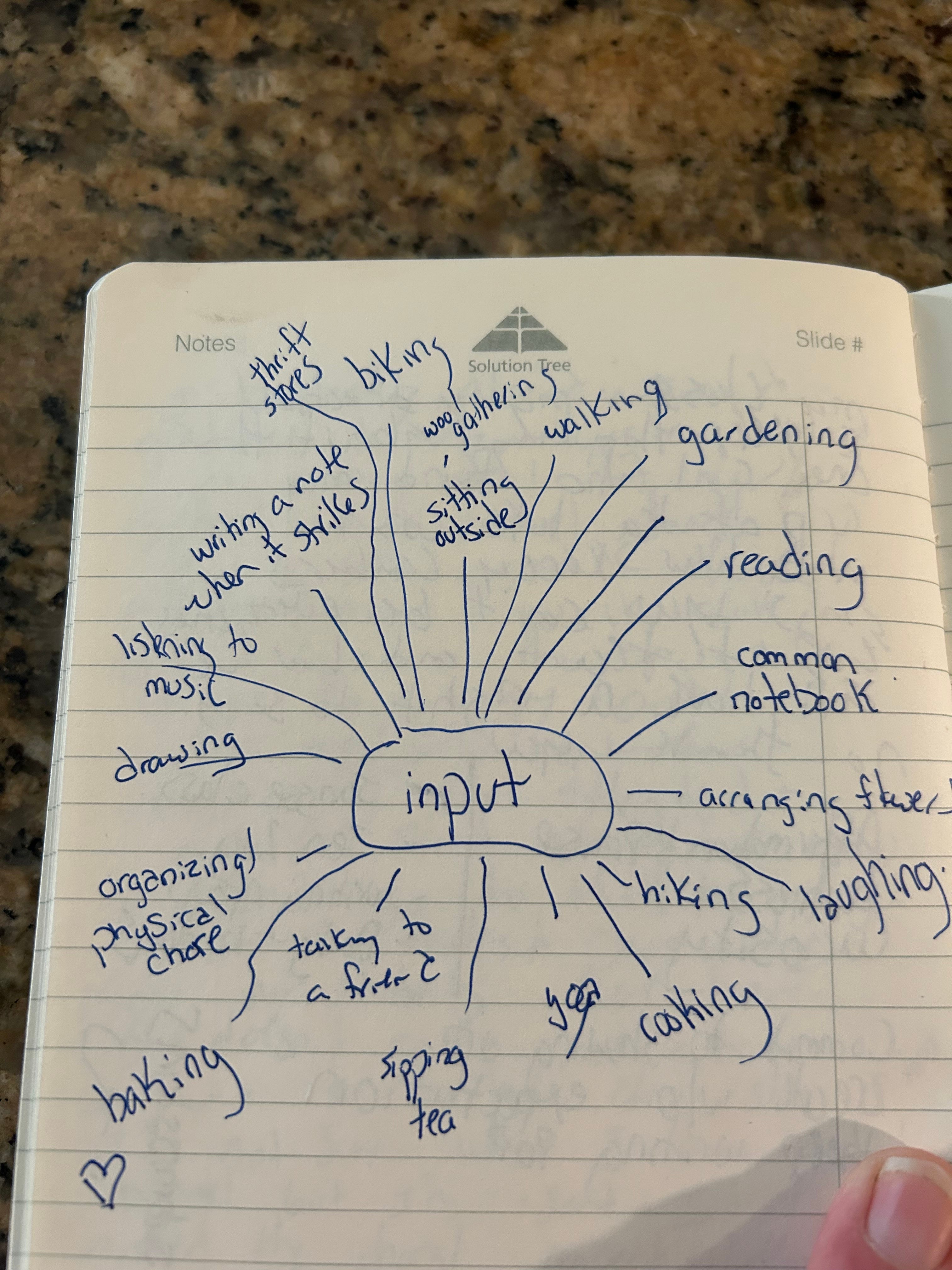
Inspired by Austin, I made a graphic organizer of my input, the things that offer me creative fuel. I would love to continue this conversation in the comments. What resonates with you? How do you like your tea? What are you reading or consuming that’s quenching your thirst?
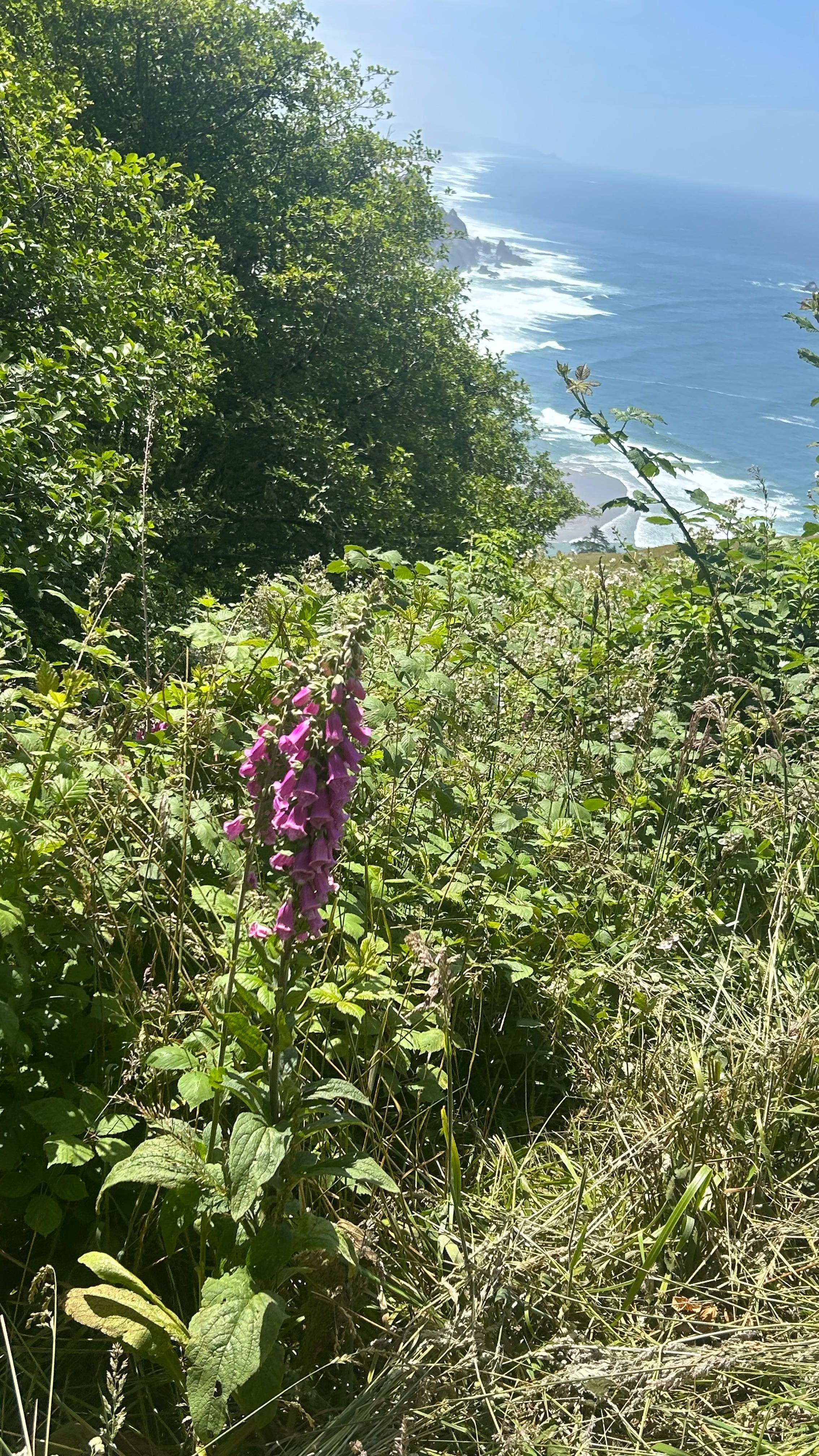
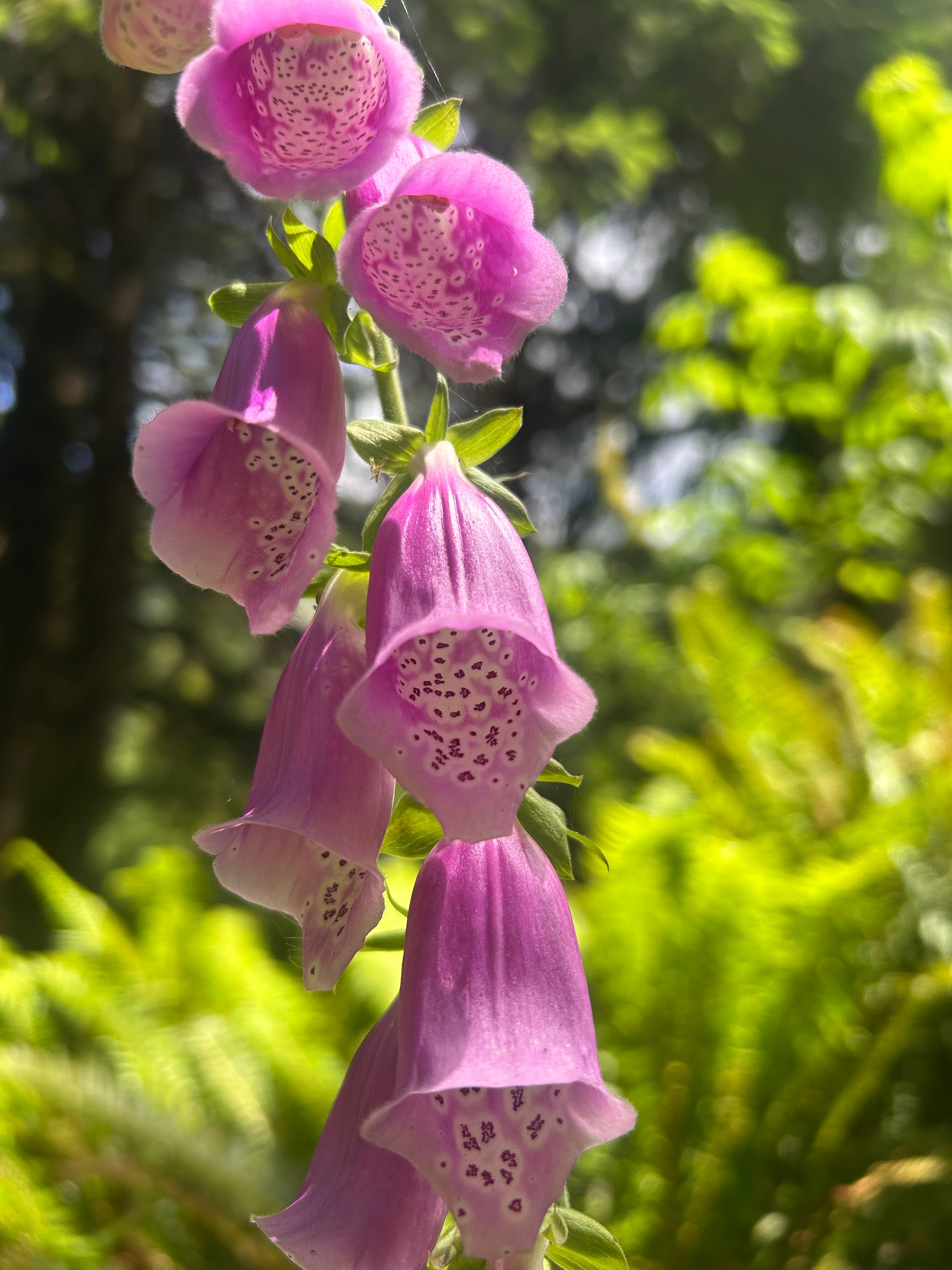
I will have a This Week in the Garden update in next week’s letter. In the meantime, here are some foxgloves I fell in love with on the coast.
No posts
Comments
Nothing yet. Say the first thing.
Sign in to join the conversation.