
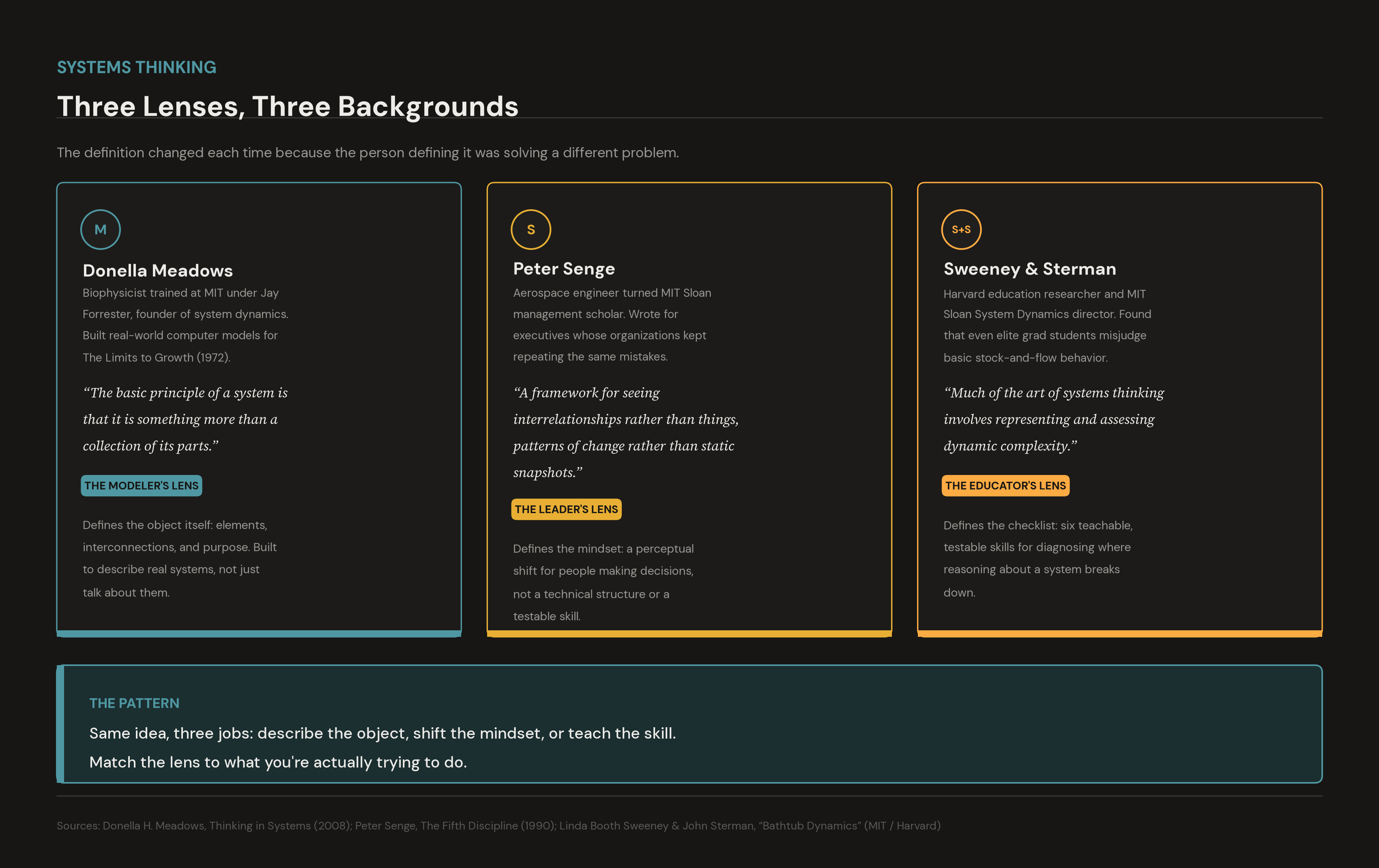
Three well-known thinkers defined systems thinking in three different ways. Each solving for a different problem, for a different audience, and the definition followed from the job at hand.
Some common types of systems include the nervous system (the brain, spinal cord, nerves), technology (smart thermostat: inputs, processes, outputs, feedback), solar system (Sun, planets, moons, asteroids), and ecosystem (plants, animals, bacteria, soil, water, etc.).
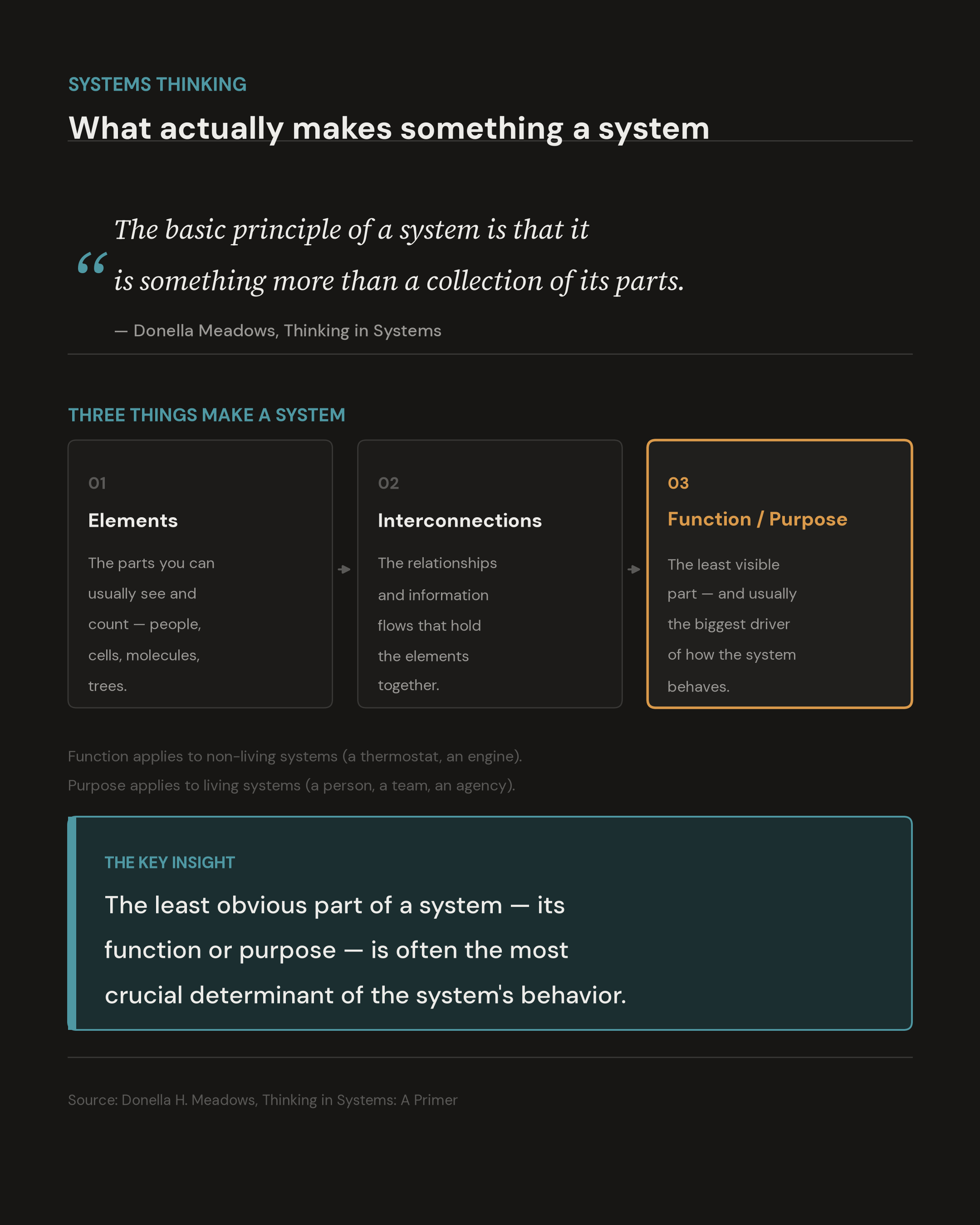
Donella Meadows - the modeler
Structural, with elements, interconnections, and the function or purpose around which the whole thing is organized. This makes sense considering her background in computer modeling.
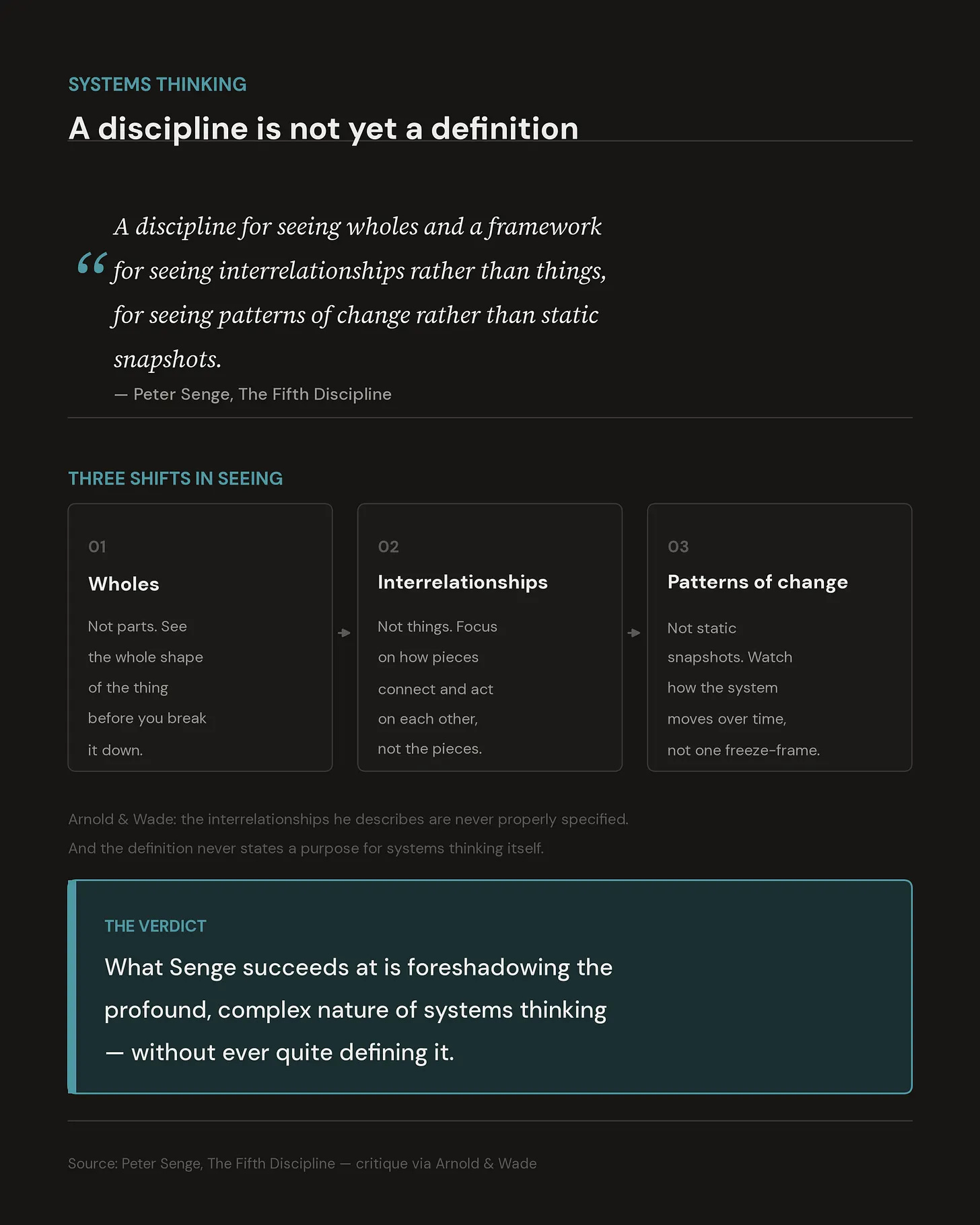
Peter Senge - The leader
An aerospace engineer by training and a management researcher at MIT Sloan. Senge’s definition is based on shifting perspectives and recognizing patterns of change. Training an organization to stop reacting to isolated events and notice the patterns behind them.
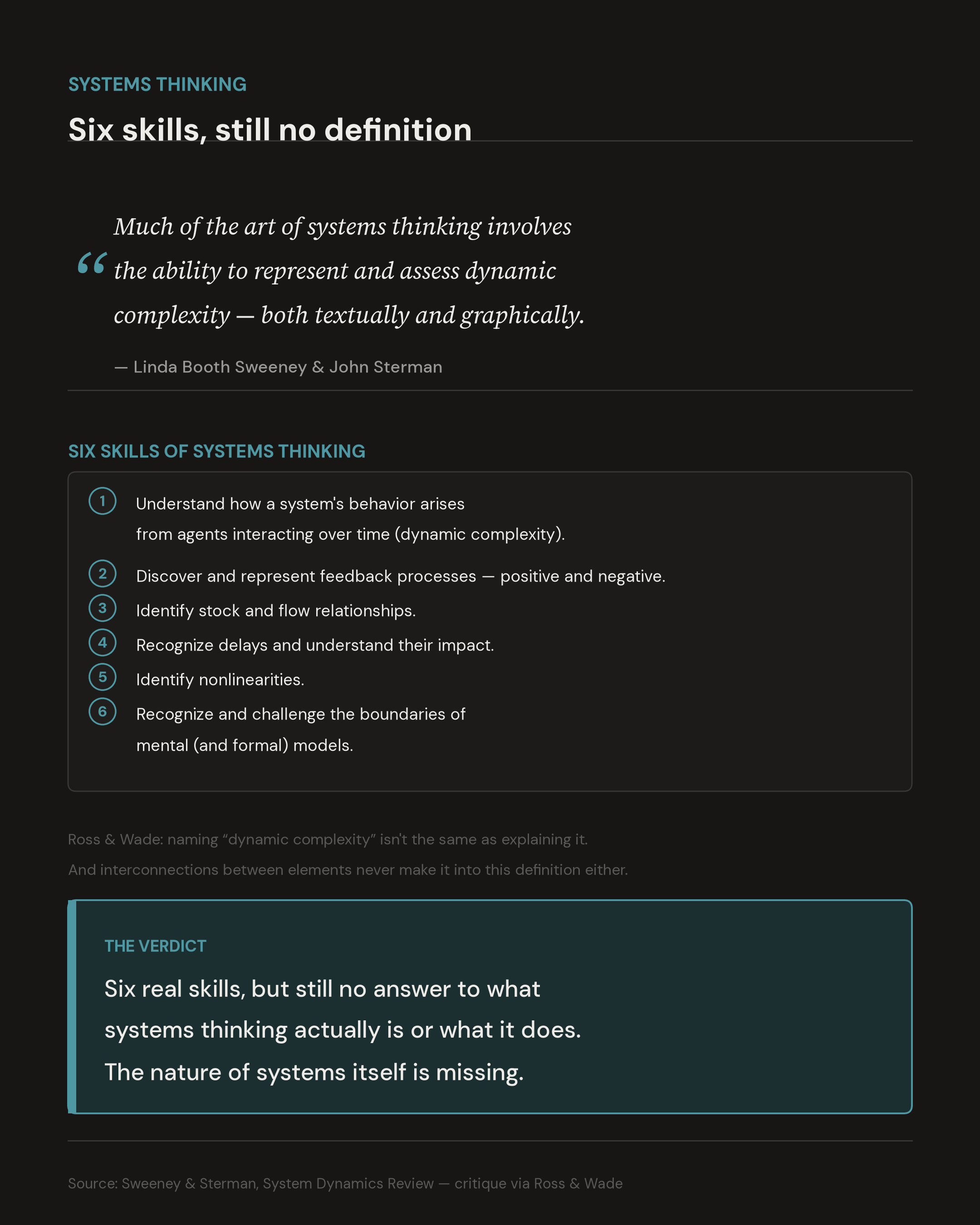
Sweeney and Sterman - The educators
This duo approached this definition through a testing lens rather than modeling or leadership.
Meadows defines the object:
Does it name a purpose?
Does it name the elements?
Does it name the interconnections?
Use it to build or diagnose the structure of a system, an organizational chart, and data pipelines.
Senge defines the mindset, interrelationships, and patterns.
Sweeney and Sterman are strong on learning, behavior, and mechanism. In their view, teaching and assessing whether people understand how delays, feedback, and stocks behave before handing them a complex project to run.
Part 3 of my learning journal.
No posts
Comments
Nothing yet. Say the first thing.
Sign in to join the conversation.