
Readers, I know it’s been a while, but I wanted to relay some good news to you: we have prevailed in defeating Holtec’s appeal of the July 2024 Mass. Dept. of Environmental Protection (MassDEP) Final Determination that the corporation — which is decommissioning Pilgrim Nuclear Power Station in Plymouth — cannot dump its chemically- and radioactively-contaminated wastewater into the protected and productive waters of Cape Cod Bay in violation of Massachusetts law (the Ocean Sanctuaries Act).
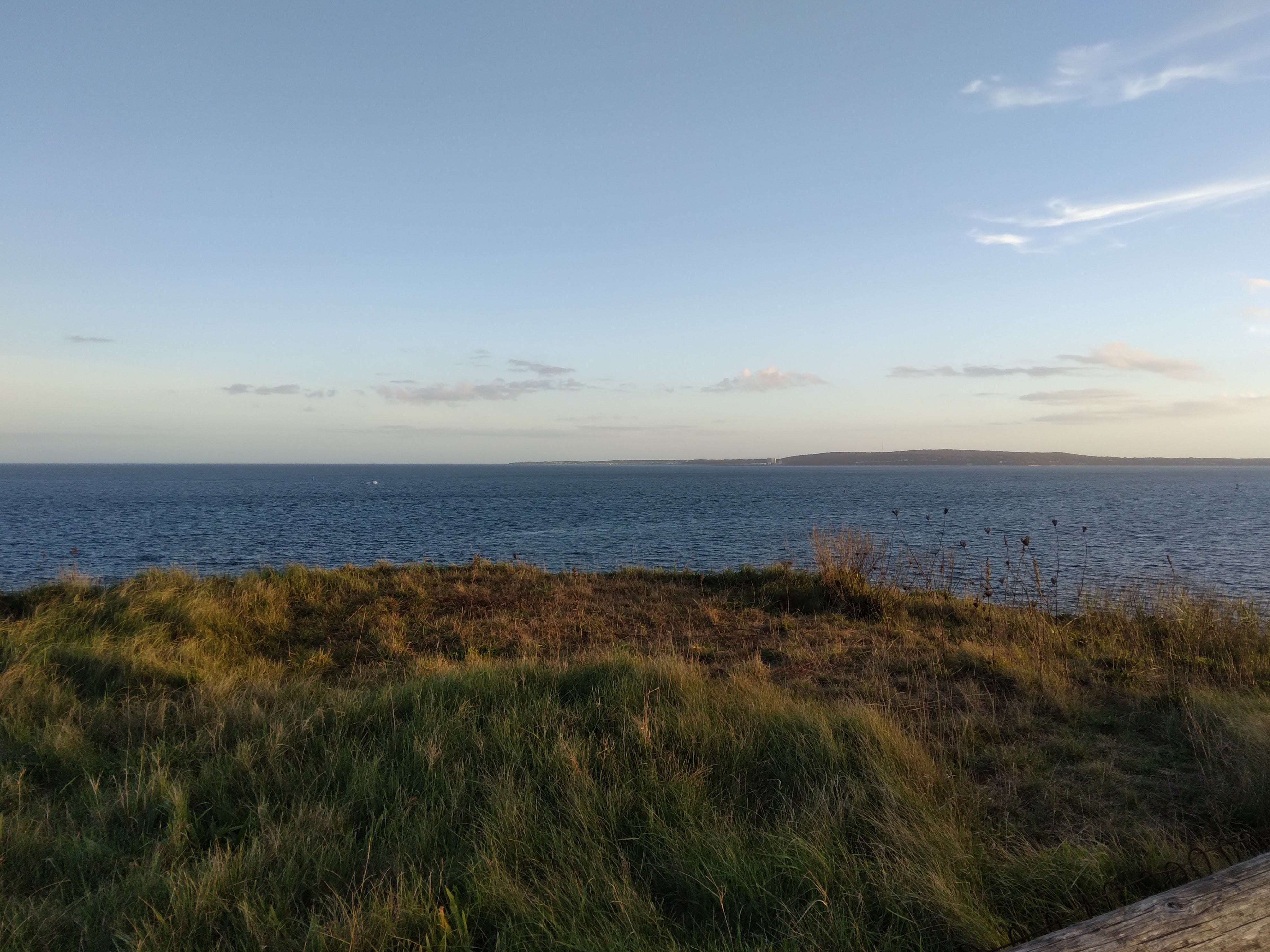
(The view from The Gurnet, November, 2022; credit — Ben Cronin.)
Holtec, represented by Womble Bond Dickinson (with a lead role played by Atty. Jed Nosal), brought this appeal to MassDEP’s Office of Appeals and Dispute Resolution (OADR, an administrative law tribunal) in August 2024, and a number of parties rose in opposition — MassDEP itself; two groups of ten or more citizens (the Association to Preserve Cape Cod Group and The Environmental Group); the Towns of Plymouth and Barnstable; Mary Lampert of Duxbury, Director of Pilgrim Watch; Dr. Jo-Anne Wilson-Keenan and John Keenan of Dennis; and myself.
The firm of Fitch Law Partners LLP (Attys. Lisa Goodheart and Alessandra Wingerter in particular) represented the APCC, and The Environmental Group was represented, pro bono, by James Lampert, Esq., of Duxbury. MassDEP was represented by lawyers from its General Counsel’s office, including Ian Leson, and Barnstable was represented by its First Assistant Town Attorney, Thomas La Rosa. Plymouth was represented by Anderson Krieger LLP (Attys. Mina Makarious, Olivia Bowker, and Marissa Grenon Guttierez). [I should note that several of these individuals are friends and colleagues from the grassroots Save Our Bay coalition and from the Town of Duxbury Nuclear Advisory Committee; I speak here only for myself]. The amount of work that these organizations and individuals put into this litigation is simply immense, and we are all better off for it.
Holtec argued that MassDEP made four errors of law in its July 2024 decision: 1) that the wastewater is not “waste” under the meaning of the Ocean Sanctuaries Act; 2) that the discharge is preexisting and therefore exempted from the Act; 3) that the proposed discharge is associated with the production and distribution of electricity and therefore exempted; and 4) that the Mass. Ocean Sanctuaries Act is preempted by the U.S. Atomic Energy Act of 1954.
After a long process of litigation, including lengthy briefs, a number of motions, an evidentiary hearing in June and final arguments in September, OADR rejected all four of Holtec’s arguments.
OADR’s Chief Presiding Officer Salvatore M. Giorlandino found, first, that “[a] plain reading of the OSA Regulations confirms that the Water qualifies as waste.” (In the Matter of Holtec, Recommended Final Decision, 27). Second, Holtec did not present evidence that the discharge existed prior to the relevant date. Third, the discharge would not be associated, in a real-time fashion, with the production and distribution of electricity. Finally, following relevant case law, Presiding Officer Giorlandino ruled that the Mass. Ocean Sanctuaries Act was not preempted by federal law, because it was not enacted with nuclear safety as its primary purpose and it did not have a direct and substantial effect on the resource allocation of those operating nuclear plants, and therefore did not intrude on a federally preempted field. For all of these reasons, OADR rejected Holtec’s appeal.
This recommended Final Decision from Presiding Officer Giorlandino will go now for review to MassDEP Commissioner Bonnie Heiple. Once Commissioner Heiple reviews the decision and issues it, it would then be subject to further appeal — either to the Massachusetts Superior Court, or, more likely, to the U.S. District Court in Boston (Holtec has publicly stated that they intend to pursue a federal appeal if MassDEP’s decision went against them). In addition, this decision applies to the liquid water being discharged; it does not apply to Holtec’s ongoing evaporation of the contaminated water into the atmosphere (and, ultimately, into Cape Cod Bay). So, we are far from out of the woods on this issue.
Nevertheless, even with these caveats, this remains a remarkable victory. In our time, what Franklin Roosevelt called “the forces of organized money” have attempted to claim a right to run roughshod over the people, the law, and the commons. Here, by contrast, the people of our towns, our region, and our Commonwealth have justly and successfully defended our rights, our common waters, and the law itself. To borrow from US Supreme Court Justice Horace Gray’s gloss of the English jurist and writer on maritime law, Sir Matthew Hale — the sea is not in any private ownership. Rather, the sea is vested in the Commonwealth for the people, its true owners, and their rights are, and must remain, inextinguishable.
Thank you for reading, and all of your collective and individual effort in defense of our waters.
No posts
Comments
Nothing yet. Say the first thing.
Sign in to join the conversation.