
Most of the sexual scripts we inherit are built around assumptions about how bodies, brains, relationships, communication, desire, and intimacy are “supposed” to work. They tend to be neurotypical, cisheteronormative, and highly scripted in their standards, frameworks, expectations, and definitions of what “good sex” looks like.
But what happens when your brain or nervous system doesn’t operate according to those scripts? This is where “neurospicy” sex comes in.
Neurodivergent experiences of sex and intimacy remain understudied and under-discussed. And that matters because people with ADHD, autism, anxiety, CPTSD, and other forms of neurodivergence may encounter sexual challenges that aren’t actually about being “broken,” dysfunctional, or incapable of intimacy.
Sometimes the problem is the framework itself.
We simply haven’t been given enough positive, inclusive, affirming sex education that helps us understand how neurodivergence can shape desire, communication, sensory experiences, arousal, connection, and pleasure.
In fact, BDSM can be an affirming space for many neurodiverse folks because it can provide clear structure, frameworks, explicit consent and negotiation, as well as clear and direct communication. Autistic adults are reported to be 5 times more likely to participate in BDSM than the general population. Because neuronormative dating often relies on nuanced social cues, which can be a source of anxiety for autistic minds, having explicit frameworks can help clear up some of that ambiguity and confusion.
There can also be sensory joy in exploring deep pressure or predictable tactile stimulation for many neurodivergent folks. Certain types of bondage, such as shibari, or forms of impact play may support self and co-regulation, grounding, and calm. Autistic and neurodivergent folks may also channel special interests, or SPINs, into the technical side of BDSM. It may also be a space where folks can fully embrace erotic stimming, which might look like spontaneous shaking or twitching, changing positions abruptly, facial expression freedom, using sensory anchors over flirtation, or ending sex on your own terms.
BDSM can also foster clearly defined roles, whether that is in the realm of dominance, submission, or both. Creating clear roles can create a sense of safety and help neurodivergent folks unmask and let go of the pressure to perform.
That might also mean no longer neglecting discomfort by enduring uncomfortable or awkward positions, or masking through sensory overload by ignoring light touch, tolerating friction or sweat, or dissociating through the experience.
Generally, feeling emotionally safe can help our nervous systems relax. For many neurodivergent folks, tending to sensory needs can also be a great place to start in developing sexual awareness and more pleasure and overall comfort.
Having conversations in advance about sensory preferences and access needs can be a form of intimacy in and of itself.
💡Consider: What makes you feel amazing, underwhelmed, or overwhelmed?
Lighting
Noise level and sound
Fabrics and textures
Scents, smells, and body odors
Temperature
Touch and taste
And connection doesn’t have to be sexual.
💓We can connect, ground, and help relax our nervous systems through:
Parallel play
Deep pressure hugs
Hair play
Deep intellectual conversations
Laughing together
Listening to music
Feeling safe and connected
Neuroaffirming sexuality asks us to move away from self-judgment, self-criticism, and trying to box ourselves into neurotypical models that weren’t built for our brains and bodies in the first place. If you ask me, self-awareness is sexy. Knowing yourself, honoring and affirming your preferences, emotional, intellectual, and physical access needs, and having the courage and transparency to prioritize and practice having the at times difficult and vulnerable conversations can create the pathways to confident, safer, and more pleasurable connection, intimacy and sex.
And we may find that our needs and preferences may not align with someone else’s, And that’s great too. Having the conversations can be a great form of practicing the at times vulnerable experience of personal disclosures. Think of it as an exercise and remember to respect everyone’s uniquely personal needs and preferences, though they may be different from your own.
You deserve sexuality that makes room for your actual brain, your actual nervous system, your actual sensory experiences, and your actual ways of connecting.
That is what neuroaffirming intimacy can begin to look like.
Pleasure Psych™ Sex & Intimacy Training and Certification is an intensive 3-step-system that is 100% online that gets you ready to join the world of sex and relationship coaching. This course focuses on you first. We believe that transforming your life around pleasure and creativity is the best way to transform others’ lives.
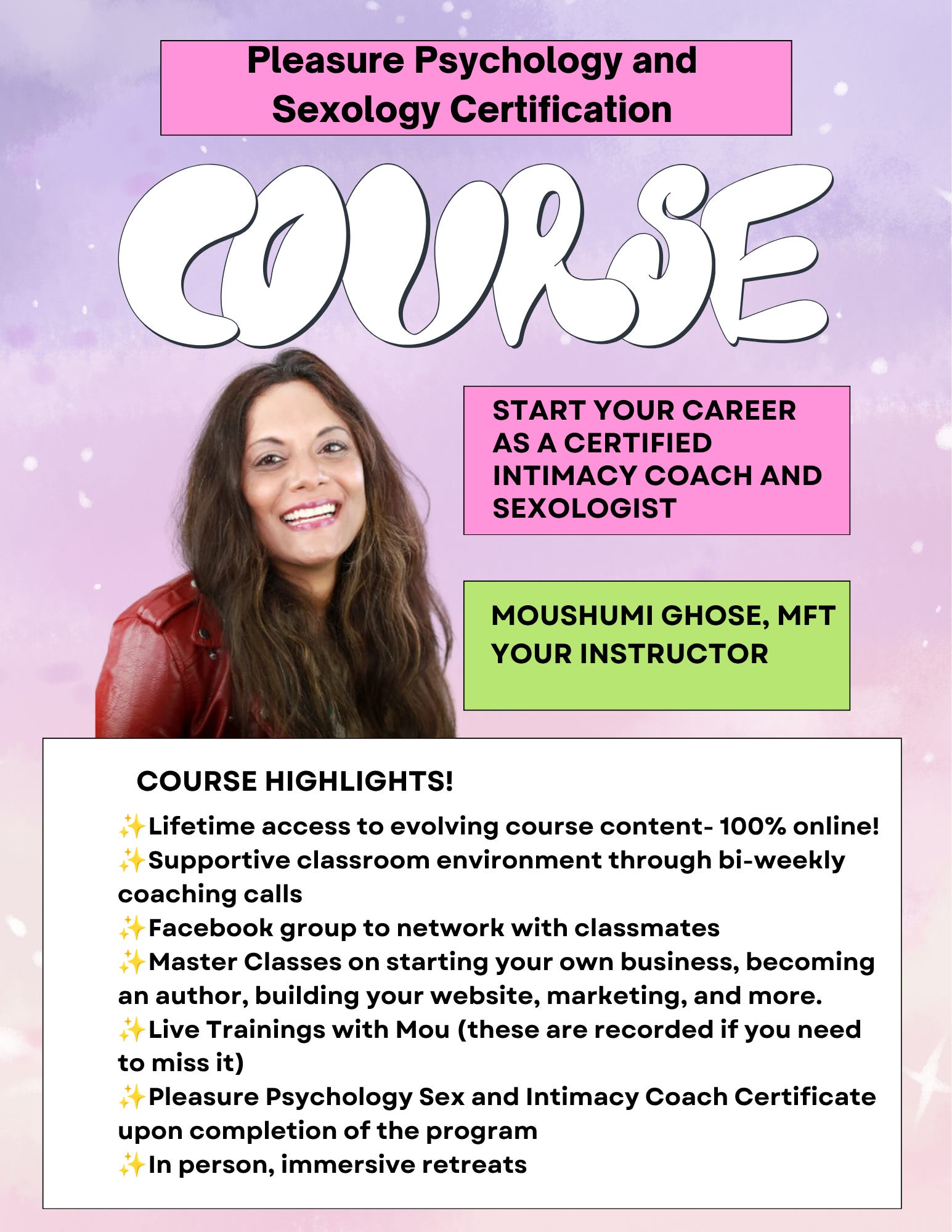
This program is great for:
➡️Entrepreneurial professionals who are looking for a new career path without spending years and years on schools, degrees and letters after your name, and without loads of student debt.
➡️Coaches looking to break out of the traditional ways of coaching and seeking more profound ways of connecting with their clients, transforming their lives, and really defining their niche.
➡️Burnt out wellness and/or mental health professionals looking for an impactful way to make changes in your own lives while transforming the lives of others.
➡️Therapists (licensed or pre-licensed are both welcome) who want to make more money, specialize in relationships, intimacy, sexuality, add coaching to their practice, build a thriving career working for themselves.
➡️Writers, bloggers, authors who want to carve out a niche for themselves specializing in intimacy and sexuality, plus have the added benefit of coaching and educating.
➡️Adult Industry professionals looking to expand their reach helping others and growing their business to include coaching and education.
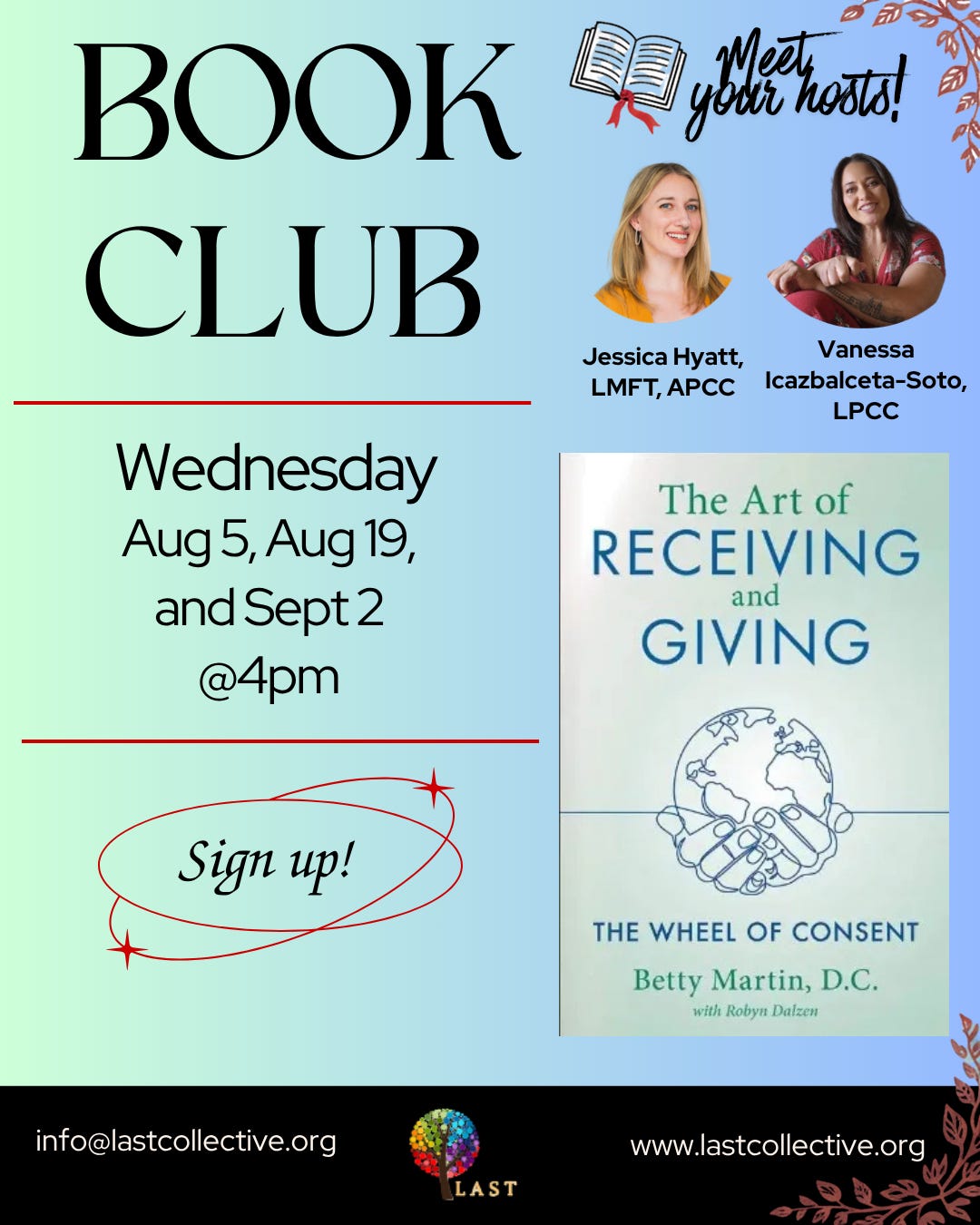
Join us Wednesday, September 2nd at 4pm PT for the next meeting of the LAST Book Club!
Resident therapists Jessica Hyatt, LMFT + Vanessa Icazbalceta- Soto, LPCC will continue discussing “The Art of Receiving and Giving: the Wheel of Consent” by Betty Martin D.C
Sept 2 - Chapters 20-30
This book club is open to practitioners of all sorts - coaches to therapists who want to develop a deeper understanding of boundaries and desire. The implications of this approach to consent education extend beyond touch and intimate relationships.
$25 drop in
Comments
Nothing yet. Say the first thing.
Sign in to join the conversation.