
Welcome to "Donut Break the Internet", Donutz Digital’s weekly newsletter dedicated to digital marketing news. Here, you'll find a roundup of must-know updates, practical tips, and in-depth analyses on marketing.
This week's Donutz:
Coca-Cola turns Uber rides into interactive media 🚗
Consumers now start searches with AI, not Google 🤖
What ads inside LLMs could look like by 2027 🧠
Hi-Chew bets on IRL to win Gen Z 🍬
If you haven’t already, make sure to subscribe! Until then, enjoy your read. 🚀
Coca-Cola is experimenting an “interactive ride” by partnering with Uber Advertising. The campaign transforms Uber trips into branded moments, combining in-app engagement and ride-based storytelling. Riders may encounter branded content during their journey, quizzes, interactive formats, or offers, turning travel time into a brand experience.
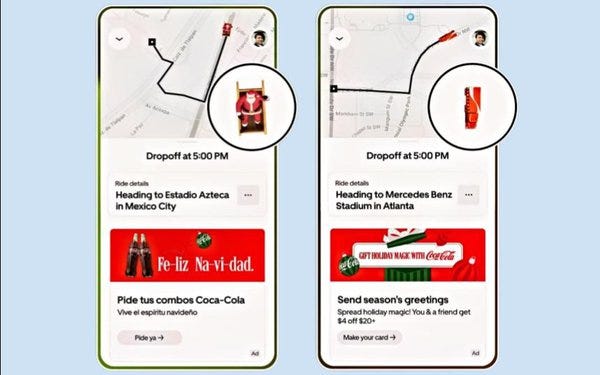
Coca-Cola’s test leans into that mindset by focusing on participation instead of passive exposure, aligning with a broader shift toward experiential digital media. Uber benefits too, positioning its ad platform as premium, measurable, and experience-led rather than just another screen.
This isn’t about direct sales attribution. It’s about modernizing brand presence in everyday moments and learning how far interactive ads can go without crossing into annoyance. The experiment also signals how major advertisers are increasingly willing to treat platforms like Uber as media environments, not just utilities.
Read: Coca-Cola Takes An Interactive Ride With Uber Advertising

A new study shows a behavioral shift that’s been building quietly: a growing share (37%) of consumers now begin their searches with AI tools rather than traditional search engines. While Google remains dominant for navigational and transactional queries, AI assistants are increasingly used for exploration, comparison, and early-stage research.
Users describe AI search as faster, less cluttered, and more conversational, especially when they don’t know exactly what they’re looking for. Instead of scanning ten blue links, they want synthesized answers, options, and context.
Their top search frustrations?
Clicking through too many links (40%)
Too many ads and sponsored results (37%)
Difficulty getting a straight answer (33%)
Repetitive or low-quality information (28%)
AI often pulls from the same sources that rank in Google, but the interface, and therefore brand visibility, is completely different.
Read: 37% of consumers start searches with AI instead of Google: Study
Adweek explores one of the most sensitive, and inevitable, questions in marketing: how advertising will appear inside large language models over the next two years. The consensus among analysts is that LLM ads won’t look like banners or pre-rolls. Instead, they’re likely to be contextual, native, and tightly regulated to preserve user trust.
Potential formats include sponsored recommendations (“brands you might consider”), paid prioritization within answers, or opt-in commercial modules clearly labeled as such. Crucially, relevance will be non-negotiable. An irrelevant or intrusive ad inside an AI assistant risks breaking the entire experience and user confidence.
For platforms, the challenge is monetization without erosion. For advertisers, the opportunity is subtle influence at the moment of decision-making. But it also raises ethical and regulatory questions: transparency, bias, disclosure, and data usage will all be under scrutiny.
Read: What Ads in LLMs Could Look Like by 2027
Candy brand Hi-Chew is doubling down on in-person activations to build awareness with Gen Z, a cohort that increasingly ignores traditional ads but shows up enthusiastically for experiences. The brand is investing in pop-ups, sampling events, and cultural moments where Gen Z already gathers, from festivals to campus environments.
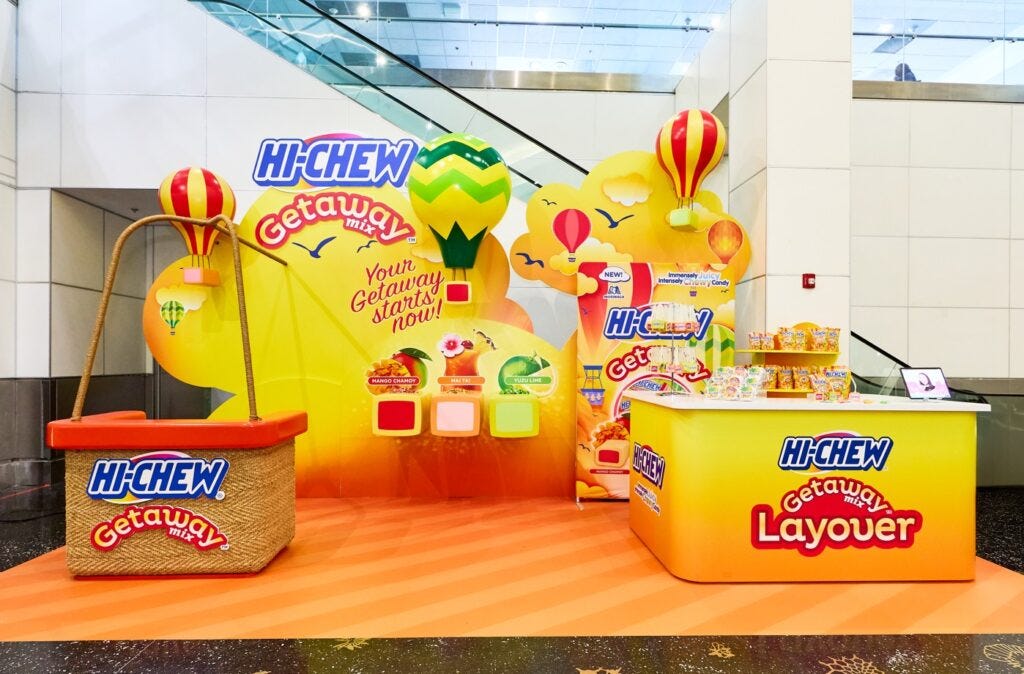
The strategy recognizes a simple truth: Gen Z values discovery through participation. Hi-Chew’s activations are designed to be colorful, playful, and highly shareable, turning physical presence into social amplification. The goal isn’t immediate conversion, but mental availability, making Hi-Chew feel familiar, fun, and culturally embedded.
Content generated on-site is repurposed across social channels, extending reach far beyond the event footprint. It’s a reminder that “offline” marketing, when designed correctly, can be an efficient top-of-funnel levers for digital-native audiences.
Read: How Hi-Chew Targets Gen Z Shoppers with In-Person Activations to Increase Brand Awareness
Thanks for reading! If you enjoyed this newsletter, share it with your network.
Make sure to subscribe to stay updated on our next editions. Have questions, topic suggestions, or insights to share? Reach out, we value your feedback!
Carla from Donutz Digital 🍩
No posts
Comments
Nothing yet. Say the first thing.
Sign in to join the conversation.