
Alright. This is the third time I’m pushing my Chants of Sennaar review. I promise I’m working on it.
Starting today, Telltale (they still exist) began hosting the first Choices Matter Fest on Steam, which you can find here: https://store.steampowered.com/sale/Choices-Matter-Festival#
The broadcast itself is running on a loop of about 7 hours for the next couple days.
Grady Standard (this is a real person’s real name), Executive Producer for The Wolf Among Us Remastered, kicked the fest off this afternoon with some thoughts and selling points for the new remaster. I begin today with my own thoughts because he brought up some fascinating aspects of gaming that many of us take for granted. I’ll send more posts out soon with my thoughts on the sequel and even more games.
Grady offered a few thoughts on his experience working on the remaster and what fans can expect.
This will be the definitive version of the game for new players.
Yeah, this should be expected. I wouldn’t want a remaster that does not, on some level, improve the experience for new players. Standard stuff (pun intended).
Old fans will find new things.
Now this is interesting, and I like it as long as the original remains accessible in some form. I’ve talked before about my penchant for archiving digital media and for our ability to compare different versions of a text. In short: I love an update, especially if it’s an update that people can love despite already having gone through the earlier version. I also love a fandom’s desire to compare every single last detail. This is a best of both worlds type of situation.
Saying that the original game “holds up” has some baggage.
Grady gave that sentiment, and I mostly agree. “Holds up” and “nostalgic” implicitly give power and primacy to more recent media/texts, this case games. Gaming has a recency bias problem—in industry, in fan discussions, in reviews, and even in scholarship. It’s an insult to say that a game is dated, but it’s a compliment to say that a game is dated but worth going through anyway (Morrowind and Loom would be my picks for this). But even that cedes ground to modernity’s requirement for constant improvement and our general assumption that “forward in time” is also “better in quality.”1
I don’t actually think the game feels dated. The mechanics are by no means obtuse; the characters still pop; some of the dialogue is timeless. On that note, the dialogue (by virtue of these being fairy-tale creatures in 1980s-ish New York) doesn’t have the stain of 2010s millennial humor. It’s still a good game, and I don’t want to diminish its current applicability (it does not offer positive opinions about law enforcement or America’s class structure). A remaster can help it feel fresh, but I don’t think most people who’ve played it in the last 5 years (like I have) think of it as a dated game. “Holds up” might have some baggage, but for the original Wolf it’s really a high bar.
Some people are Ichabod Crane stans.
Hilarious. All my former students will riot against those stans.
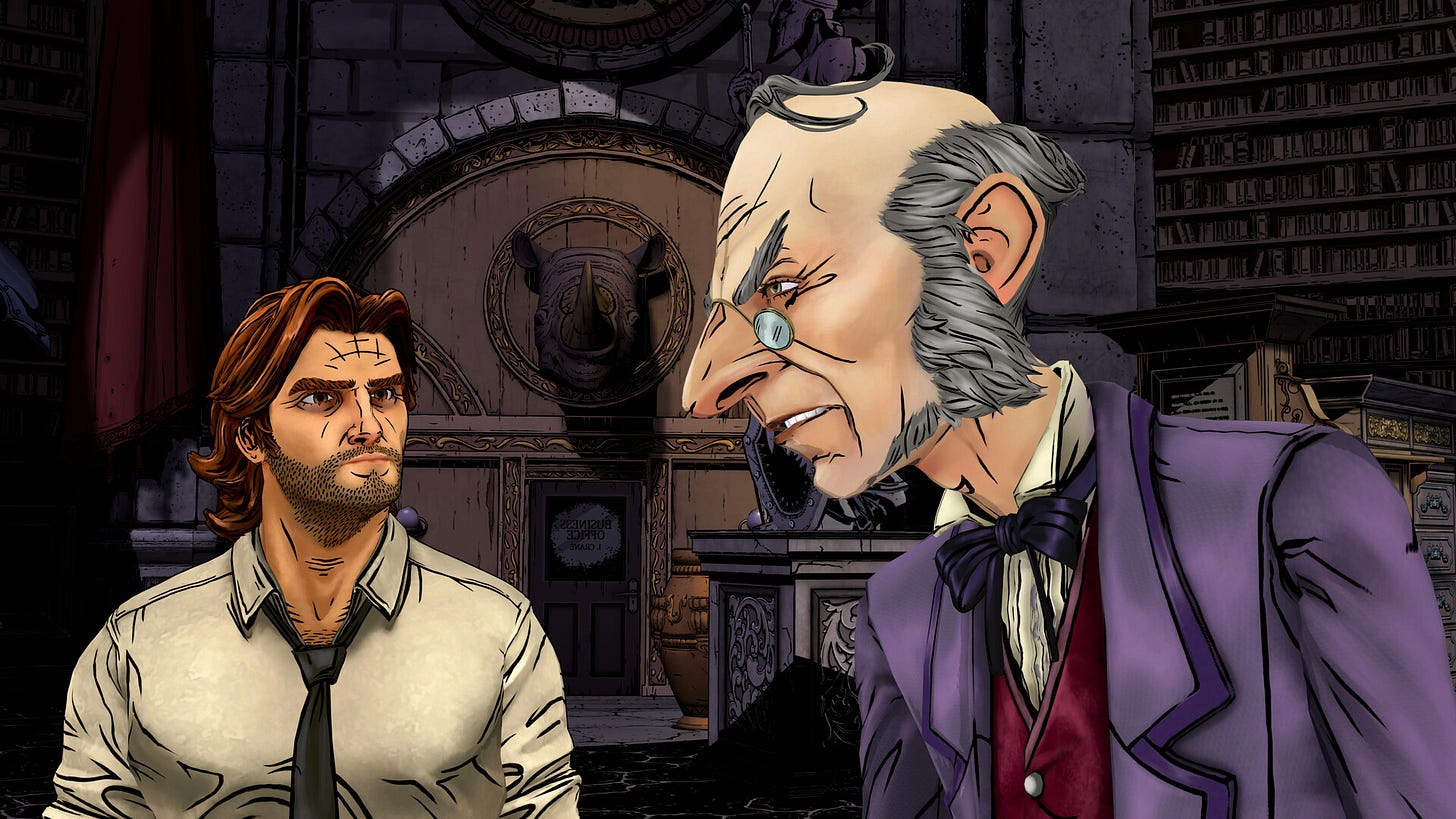
Bigby (left) distrusts Crane (right). Credit: The Wolf Among Us Remastered page on Steam: https://store.steampowered.com/app/3884860/The_Wolf_Among_Us_Remastered/
Now is the perfect time for the remaster.
Wolf 2 (Wolves Among Us?) is around the corner, so this will be good. More people should play the original game, and it sets up the sequel for good press and anticipation, is not outright success. But honestly? Based on how Grady talked about the whole team and the process, this feels like a massive project that the team wanted to do alongside Wolves that improves their own understanding of the gameplay, characters, and major themes and moments.
It deserves a remaster on its own merits. This has to do with the “dated” idea, of course. It can be higher-res. It can look better and feel smoother. Grady says that the need is mostly for bug fixes, some things so integrated into the software that they might as well improve the assets and optimize a bit as well.
All in all, I’m excited to check out the game once it comes out. I’ve loved the game for a few years now, and it’s been a favorite of my adventure students for about as long. I’ll eagerly await the new content.
I’ll send more newsletters later in the week to discuss some other games that are part of the fest. For now, here are a few thoughts on some of the games that received a section of the stream. Not all of these are brand new games; the fest includes some, such as Lake (not recommended) and I Was a Teenage Exocolonist (recommended if you enjoy sci-fi, coming-of-age, and/or existential questions), that have been out for a few years.
Indeed, this is really a celebration of adventure and choice-based games of the last 10 years. Detroit: Become Human, The Quarry, Disco Elysium, Esoteric Ebb, No I’m not a Human, Slay the Princess, and Zero Parades: For Dead Spies are all featured alongside new releases and announcements. I still recommend buying games DRM-free, but grab these on sale if you don’t have them yet. Ken Follett’s Pillars of the Earth, an adventure game based on the novel of the same name, is only $2 right now. Buy it immediately.
Crowns and Pawns: Amber Road is a sequel to Crowns and Pawns: Kingdom of Deceit (2022). Both games use Unity’s blocky and polygonal 3D engine. The games would look better in 2 dimensions. The developers took a while to explain their 3D environment-building technique, and that was cool. It’s unnecessary to achieve their stated goal. It’s 3D for the sake of 3D, I fear. Even so, the character models and facial animations blow others of this style out of the water.
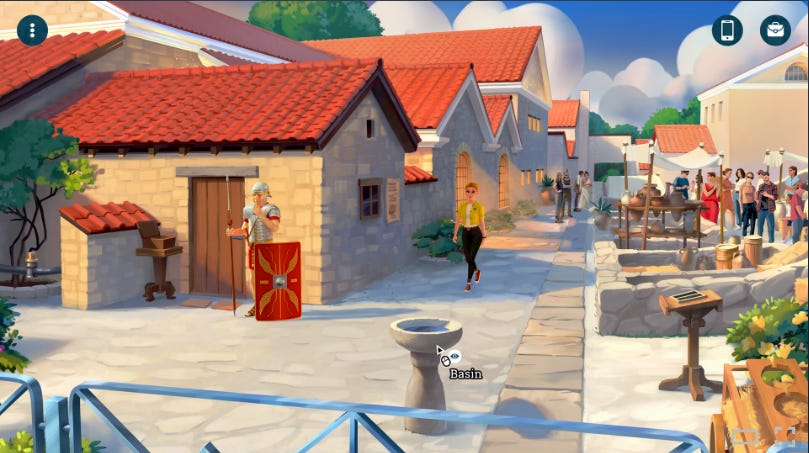
The history, mythology, and mystery of the games intrigue me quite a bit. The Baltics don’t get enough love, so the Lithuanian setting is definitely up my alley. The puzzle-play itself takes care of the most common complaints of point-and-clicks: the logic is consistent and findable, and there is no pixel-hunting.
The biggest plus on C&P:AR is that Erin Yvette (Snow White from TWAU, Alex from Oxenfree, and Blonde Blazer from Dispatch) plays the main character. That’s a win for me; I always enjoy her performances, even if the writing is (relatively) cheesy.
The themes seem solid so far: the games deal with family, legacy, pedigree, and how one might connect with something only through stories and ideas, rather than lived experiences. Each puzzle that I’ve seen (the game doesn’t have a demo, so this is based on let’s plays and the showcase broadcast) connects with some inner discomfort or uncertainty within Milda’s mind. That said, I worry about the possible portrayal/depiction of the “mysterious pagan ritual” that the main ad hints at. Games don’t exactly have the greatest reputation for representing religious traditions (looking at you, Broken Sword).
If I’m going to offer a criticism that a game should have been flatter, then I should highlight the best flat games I’ve seen so far. Two crack the top of my attention for today, originally based only on a couple brief glimpses of their art styles. I’ve played their demos; I recommend both, if they seem up your alley.
The Cosmic Wheel Sisterhood (2023) is pixelated and features a lovely piano-led soundtrack. I’m not usually one for the aesthetics and worldviews often deployed and claimed by the witchy/wooey/Tarot/astrology types, but I do love a universe that’s full of mystery, occult symbolism, and strange creatures beyond physical conception.
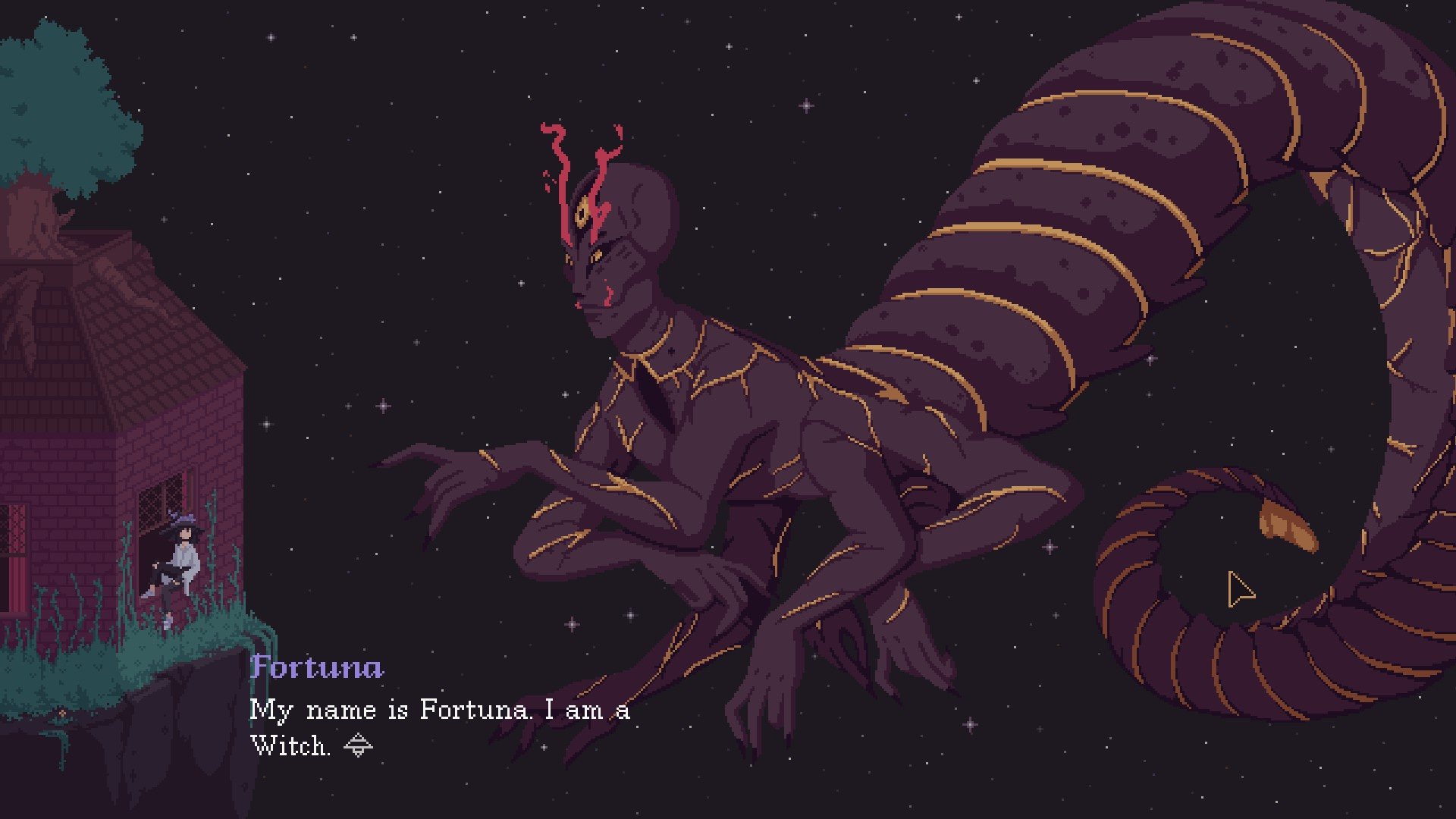
You play as Fortuna, a fortune-telling2 witch who’s been exiled from her coven because one of her Tarot readings prophesied the end of the coven. Now, cast adrift on a solitary asteroid, she summons a Behemoth to help her return to earth 800 years before her banishment is supposed to end.
Fortuna’s power comes from the creation of her own soothsaying card deck, leaving Tarot behind. Her ambitions, goals, cards, and desires are left up to the player. Most interesting to me is that her pact with the Behemoth and her choice to not serve all 1000 years of exile are not up to the player. I expect that the difference between Fortuna’s choices and the player’s choices will become a dichotomy begging for interrogation upon full release.
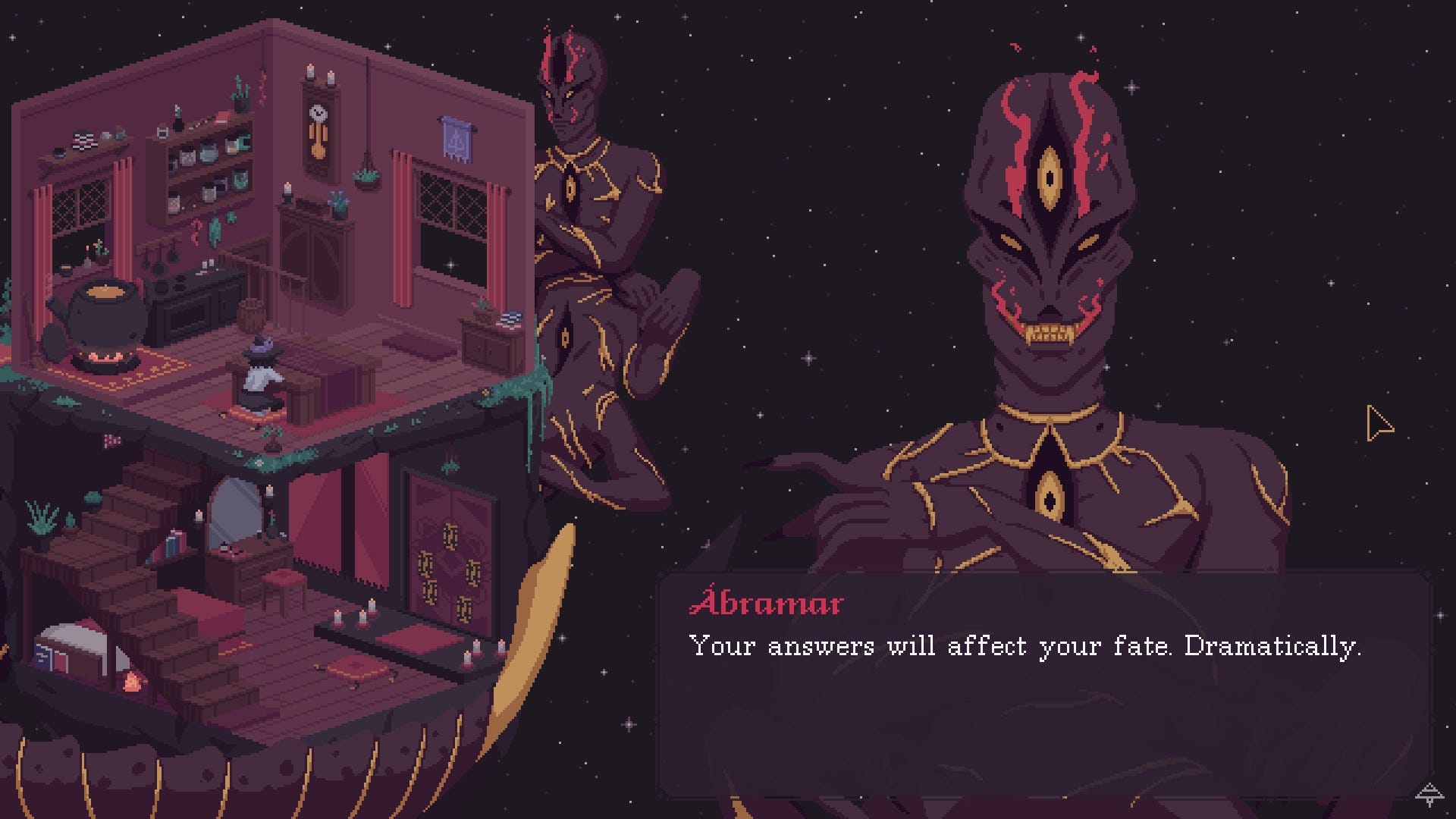
The dialogue is fine so far. It doesn’t really stand out, either artistically or for cringe. It’s definitely modern, and at one point the game pokes fun at fantasy’s habit of crafting inauthentic old-sounding dialogue that doesn’t always work. The lack of voice acting allows the moments of laughter to ring hollow, rather than fully expressing the sinister enjoyment or the mirth that the Behemoth probably feels in those moments. This is a role that voice acting tends to fill, but some varying animations or additional paratext could solve it just as well.
Anyway, it seems cool, and your choices certainly matter.3 It’s essentially a visual novel, so if you venture into this three-year-old game that I can finally give a fair look at, take your time and make decisions carefully.
Vale’s Echo is set to come out next year; the demo does not hold back. This game is dark and ugly, but as beautiful as it is grotesque. It’s almost like Night in the Woods meets Limbo? Kinda. With some Gris and Sally Face for good measure. It’s a sidescroller with some puzzles and dialogue options that allow for different conversations within the same narrative frame. I loved this demo.
Vale is dead, so begins the game.4 Vale is like a valley, so maybe she has depression or has been overshadowed throughout her life. She certainly echoes here, on a train leading to the Realm of the Dead: there are shades here, literal shadows with shape but no form, and this is as appropriate as any other time to say that Vale is an echo of her life. It turns out that Echo is her companion, a floating and flaming skull with some banter and some important answers.
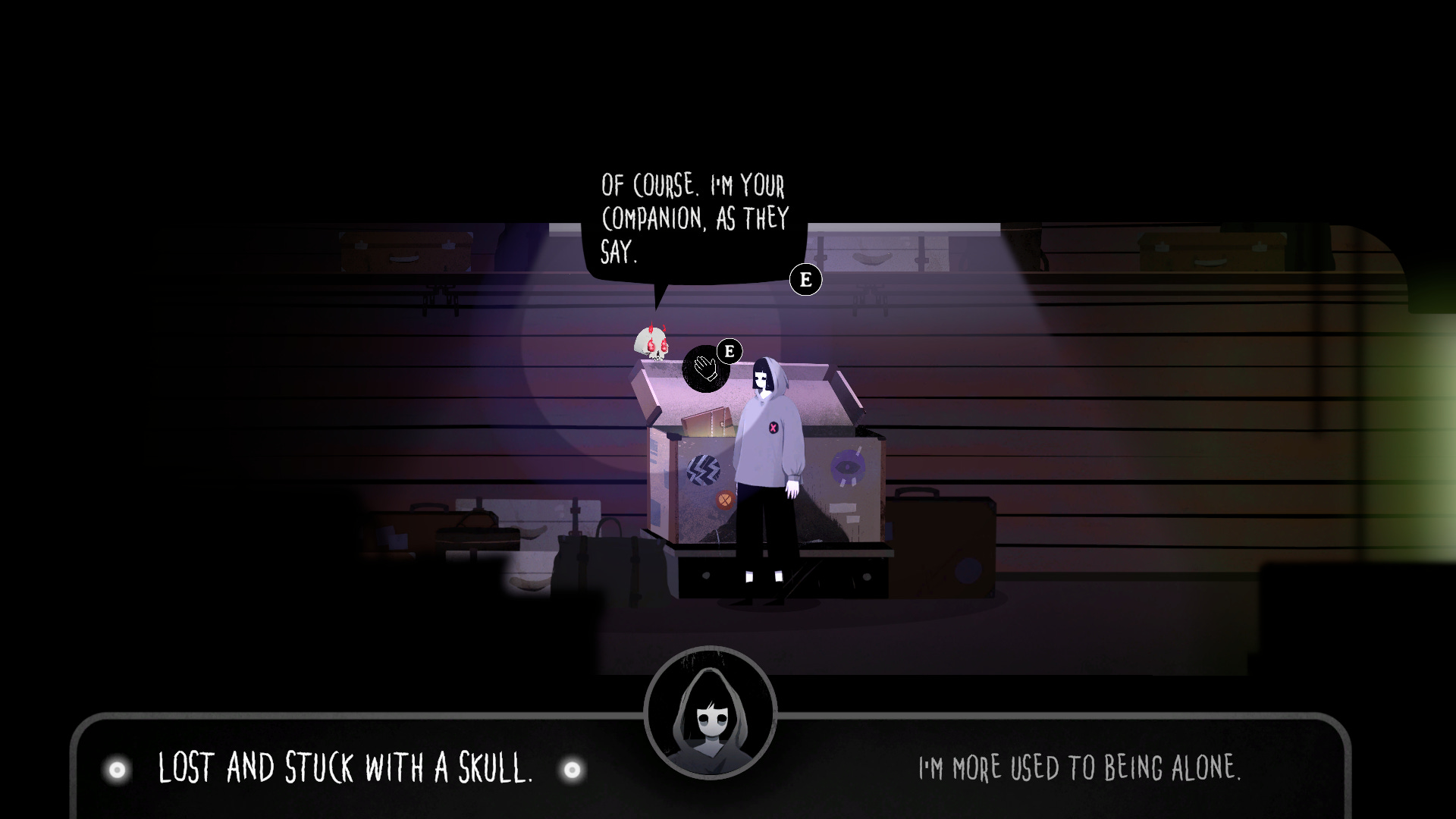
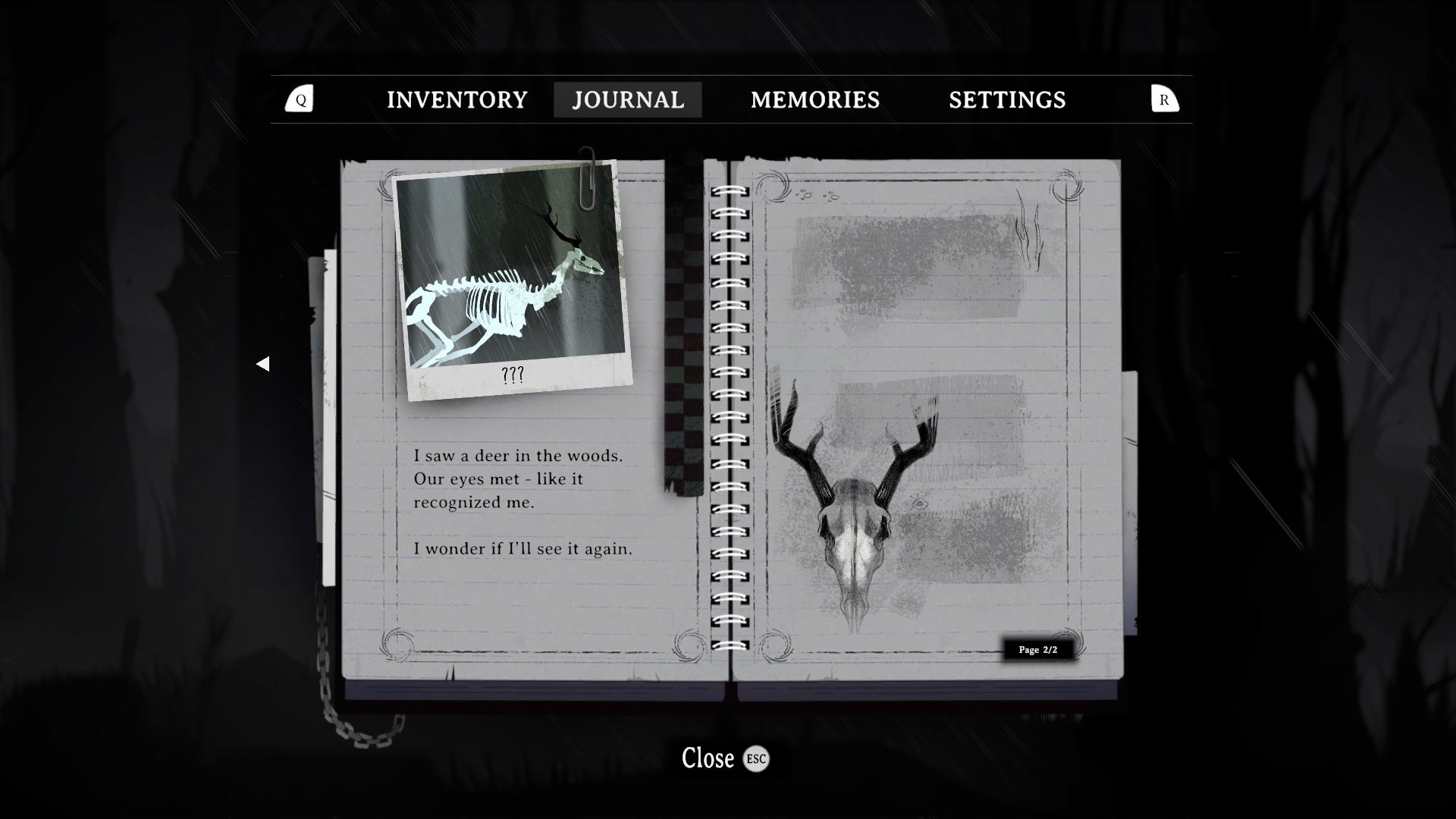
Most importantly, Vale can pet Echo. Vale can pet a few things, actually, and it doesn’t always turn out bad. Excellent feature. One of these pettables is a winter spirit, based on the ungulate skull/deer antlers/jagged body that plague the sinister and darkly pagan places of modern imagination. Here’s Vale’s journal entry about a deer with the same build, but much smaller, as the spirit:
I’m really looking forward to this full game, despite the more disgusting elements (I can stomach Mouthwashing and Nosferatu if I must). Each puzzles tells something new about the world, about Vale, about Echo, and/or about how we should want to be remembered and be assisted. For example, here, Vale encounters a tree with a large face, as though we walk in Dante’s seventh circle (Violence, specifically the Forest of Suicide).
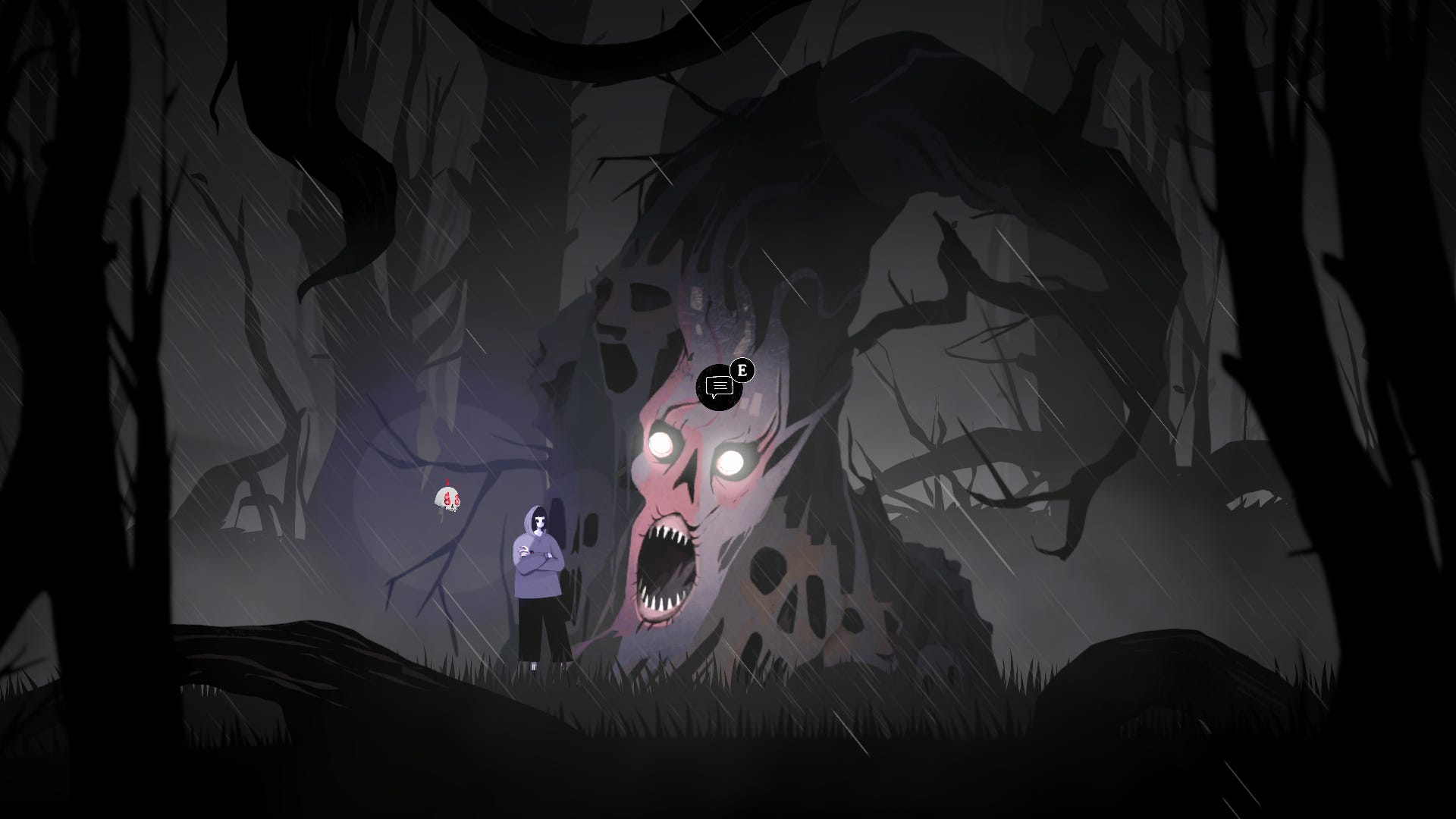
Again with the possible depression. Anyway, this guy’s got a rotten tooth that’s causing him a ton of pain, so Vale eventually finds a way to remove it. The removal is somewhat gory (as gory as it can be with this style of 2D graphics) and requires a quick-time event. Relieving his pain creates the pathway forward, so Vale is forced into a situation in which she must help before she even asks for help (unlike other quest situations, she does not know that the tree can provide the path forward when she pulls the tooth).
That’s all for now! Next time, I’ll take a look at the new The Wolf Among Us 2 trailer and info, and I’ll cover some more games. Tell your friends, and tune in for that! Expect to hear from me a few times this week.
Have you been following the fest? What are your favorite choices matter games? Have you checked out any of these demos yet?
This assumption is a product of the industrial revolution and the quality of life improvements around the world in the 19th and 20th centuries. Well earned, I might argue, for things like fewer people having to be farmers, but we should be careful to place similar attitudes onto art and all technology. Watch more movies made before 1960, and play more games made before 2000.
Yeah, Fortuna the fortune-teller didn’t really land for me, either.
I love when games begin with death, or an end. God of War (2018) and The Drifter share this idea in their own ways.
Comments
Nothing yet. Say the first thing.
Sign in to join the conversation.