
Tell me about a complicated man seed.
— Homer’s Odyssey, translated by Emily Wilson (revised by Aaron Suiter)1
Michigan lily (Lilium michiganense) has two modes of reproduction: sexual (through seeds) and vegetative (through bulb offsets, which are clones of the mother plant). In the nursery setting, it is reportedly faster to propagate Michigan lily with bulb offsets, but I prefer to grow them from seed. Either method will eventually produce a full-sized bulb (see figure 1).
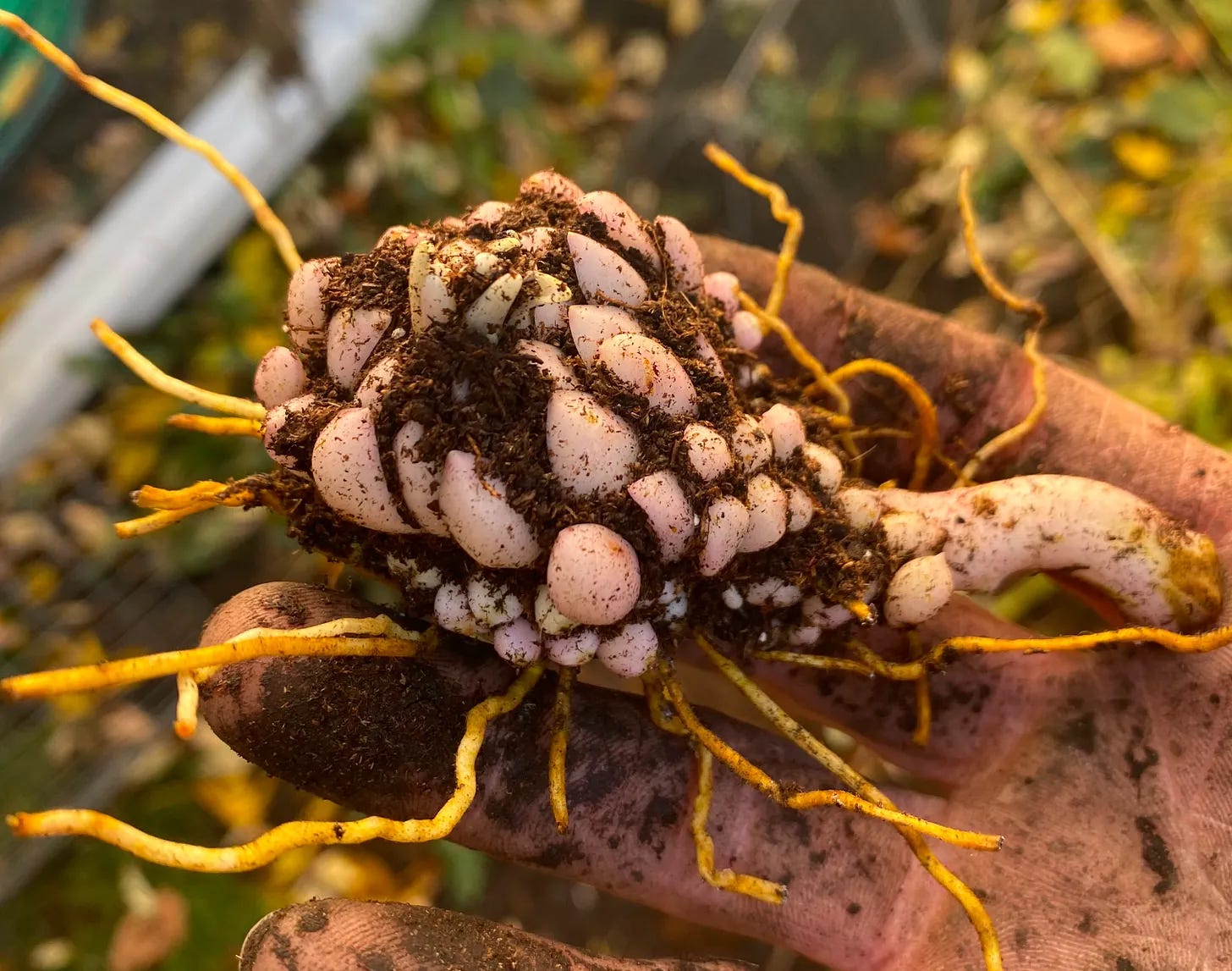
From the plant’s perspective, neither reproductive strategy is inherently better. For an individual Michigan lily that has found itself in an environment favorable to its growth, vegetative reproduction makes sense: it can use the stored carbohydrates in the bulb offset to establish quickly, giving it the edge it needs to grow tall enough to avoid being shaded by neighboring vegetation.
But vegetative reproduction creates genetically identical clones, which could diminish the population’s resilience to stressors. If pest pressure increases, climatic conditions change, or moisture levels rise or fall, genetic diversity could make it more likely that some portion of the population survives and reestablishes. Plus sexual reproduction allows plants to send offspring further away, where conditions might be more conducive to survival.
I’m a seed ecology blogger, so naturally I prefer growing Michigan lily from seed. And I’d rather my plants have as diverse a gene pool as possible, which in theory could help populations survive adverse conditions (e.g., pest/disease pressure, pollution, suboptimal climatic conditions).
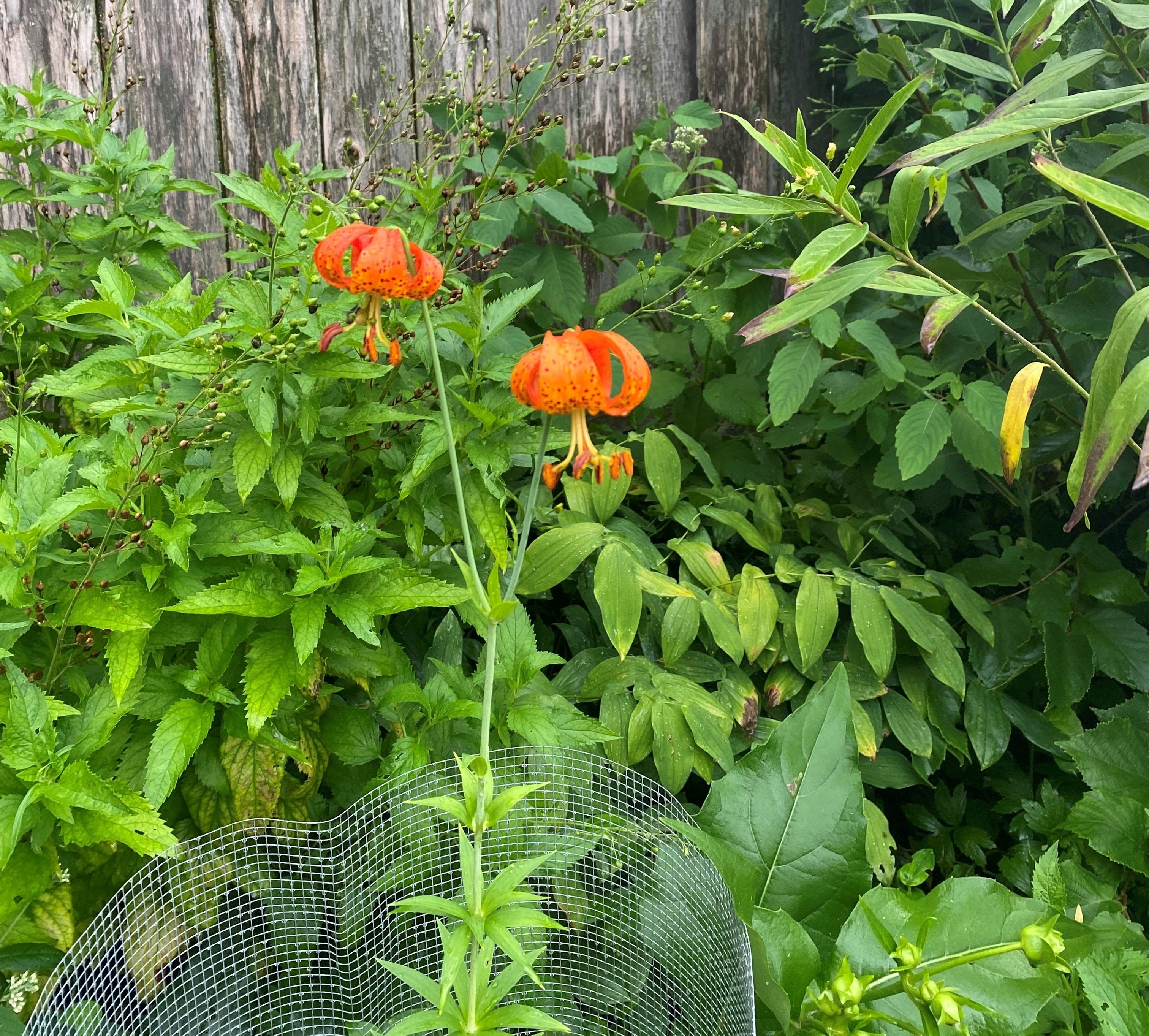
Although very little has been published on propagating Michigan lily, there is a fair amount of information out there on propagating the closely related Canada lily (Lilium canadense), and Peter Heus published a comprehensive protocol for that species in Native Plants Journal.2 Michigan lily and Canada lily are so similar in appearance that, back in the 1950s, Boivin and Cody proposed that L. michiganense be classified as a subspecies of L. canadense.3 Based on my experiments, Michigan lily has deep simple epicotyl morphophysiological dormancy, just like Canada lily.4 So to germinate Michigan lily, you can basically just apply Heus’s protocol. With that being said, I’ve conducted extensive germination experiments on Michigan lily to determine what stratification regime yields the best germination, so the protocol I present below is more optimized for Michigan lily.
I won’t go into the details of deep simple epicotyl morphophysiological dormancy here (that’s the topic of a future post), but there are two key things to know about this dormancy type:
Seeds of this dormancy type need to experience warm–moist conditions followed by cold–moist conditions to germinate.
The shoot (epicotyl) has additional dormancy beyond the root (radicle). So the root will emerge after warm stratification, but the shoot will not emerge until after cold–moist stratification.
In my experiment, Michigan lily seeds achieved the best germination when given this four-stage protocol:
6–12 weeks simulated summer (warm–moist stratification with 30°C days and 15°C nights).
4–10 weeks simulated autumn (warm–moist stratification with 20°C days and 10°C nights). During this period the radicle (root) will emerge from the seed, and a bulblet will form.
8–12 weeks simulated winter (cold–moist stratification). This period releases dormancy of the shoot (epicotyl).
Germination completes when seeds are placed in a warm environment. I’ve only tested simulated spring temperatures (20/10°C), but I’m guessing other warm temperatures would work.
Below I explain all of that in more depth.
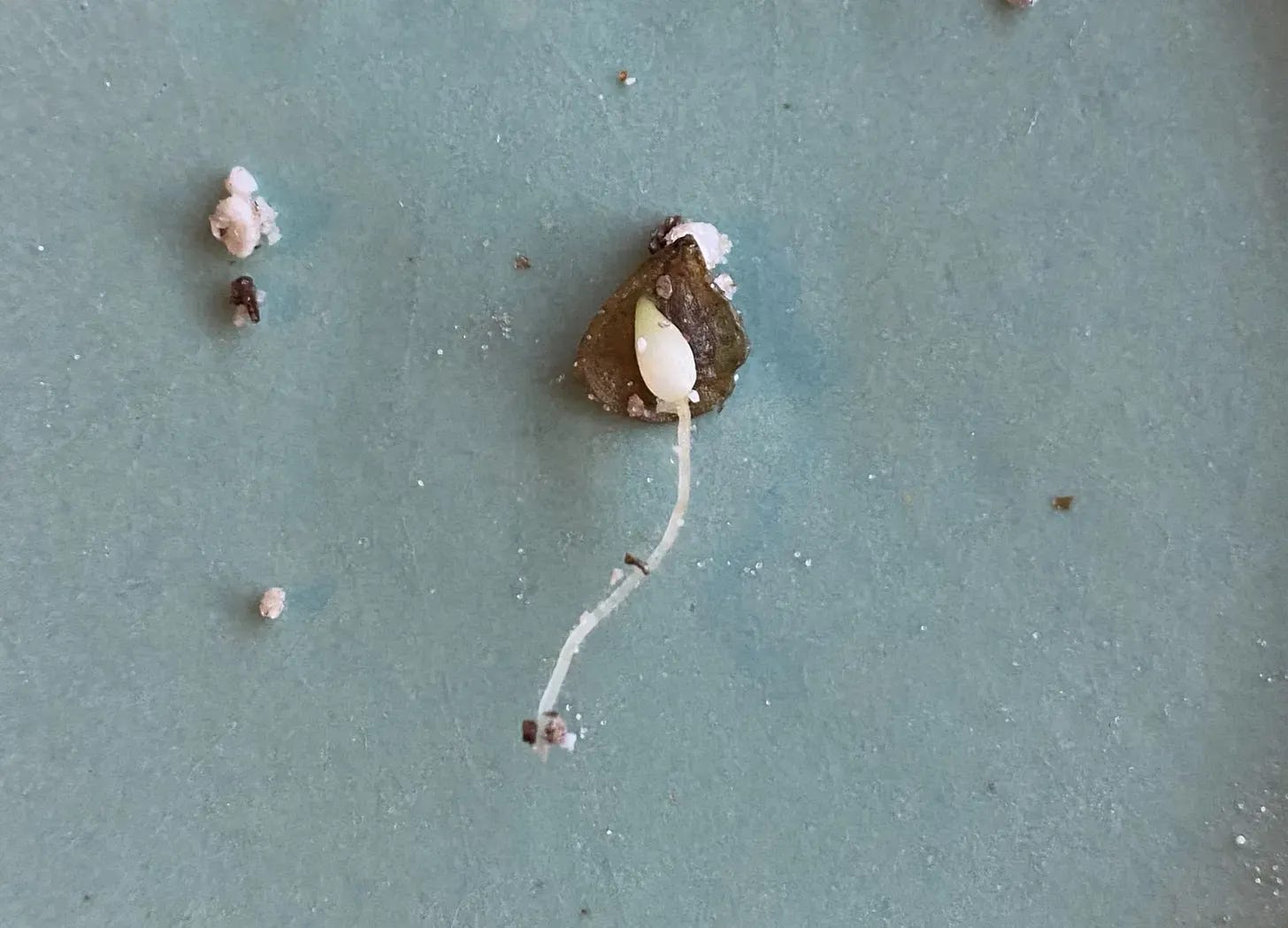
Michigan lily seeds have a multi-part germination process. Warm–moist stratification induces the radicle (root) to emerge (see figure 3), but the epicotyl (shoot) remains dormant and will not emerge until after an additional period of cold stratification. There are two regimes you could use to warm–moist stratify the seeds: one is simpler (but yields lower radicle emergence) and the other is more complicated (but yields higher radicle emergence).
Mix together equal parts of perlite and vermiculite and then moisten it. Just as in cold–moist stratification, you want the substrate damp, but not sopping wet. Then mix in the seeds and let the seeds incubate at 20/10°C for 16 weeks. I like to put the seed/perlite/vermiculite mixture into mason jars or tupperware, with at least a couple inches of substrate to accommodate root growth. In my experiment, this resulted in 37% radicle emergence. Not amazing, but seed is cheap.
I realize not all readers have a setup for incubating at an alternating temperature regime. You have two options: attempt to incubate them at room temperature (which is approximately 20°C), or else incubate them outside in fall. Heus’s protocol for Canada lily is 17 weeks of constant 21–23°C, so I’m guessing that method would yield reasonable germination for Michigan lily. If you opt to stratify outside, just make sure the seeds are in the shade, or else direct sun will heat up your seeds and cook them. I incubate in darkness (I wrap my vessels in aluminum foil), but that may not make a difference. Better yet, if you stratify outside, start them in the summer so that they get both summer temperatures and fall temperatures (more on this below).
Based on my experiments, Michigan lily seeds have highest radicle emergence when they experience summer conditions (30/15°C) followed by fall conditions (20/10°C). I tested 9 different 16-week protocols with varying fractions of summer and fall conditions. Radicle emergence was highest for seeds receiving 6–12 weeks of summer conditions followed by 4–10 weeks of fall conditions (see figure 4). 8 weeks of 30/15°C followed by 8 weeks of 20/10°C had the highest overall radicle emergence, but it did not differ significantly from the 6w / 10w, 10w / 6w, and 12w / 4w treatments.
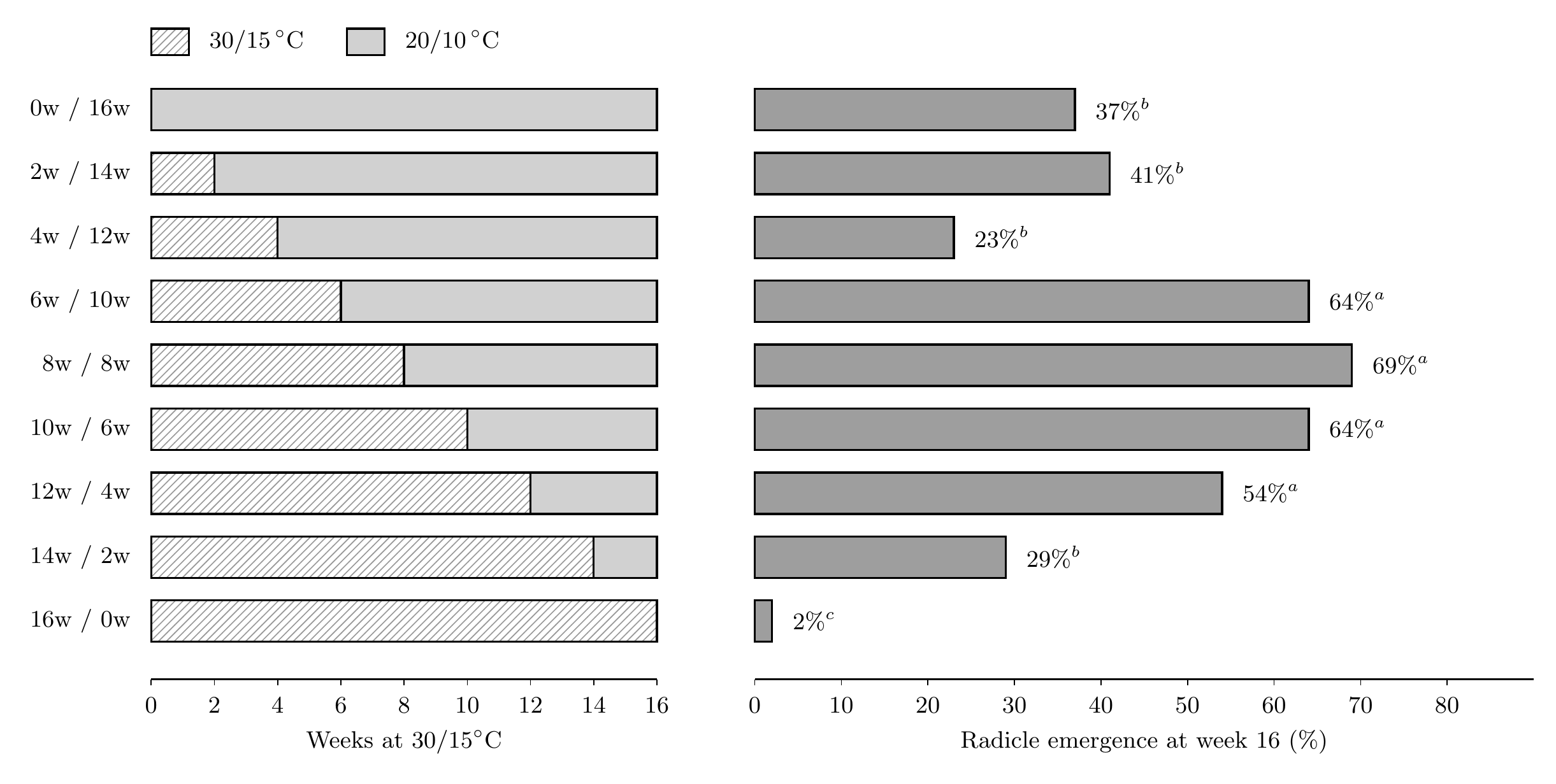
So if you’re trying to maximize radicle emergence (and thus overall germination), my recommendation is to use 8 weeks of summer temperatures followed by 8 weeks of autumn temperatures. As with the simpler method, I use equal parts of perlite and vermiculite as my substrate, and incubate in darkness.
Michigan lily seeds have epicotyl dormancy, meaning that the shoot remains dormant even after the root is produced. Fortunately, breaking the epicotyl dormancy is easy: just put the seeds in the fridge after root emergence. I haven’t yet experimented on the minimum time required to break the shoot dormancy, but 8 to 12 weeks should suffice. If you leave them in too long, the shoots come up in the fridge, but that’s not a big deal.
So when I do this, I just put my mason jars or tupperware (filled with vermiculite/perlite and seeds with roots) into the fridge. After 8 to 12 weeks, I pour out the mixture on top of prepared pots filled with PRO-MIX potting media. A few weeks later, the shoots emerge, and often the seedlings only grow a single leaf in their first year (see figure 5).
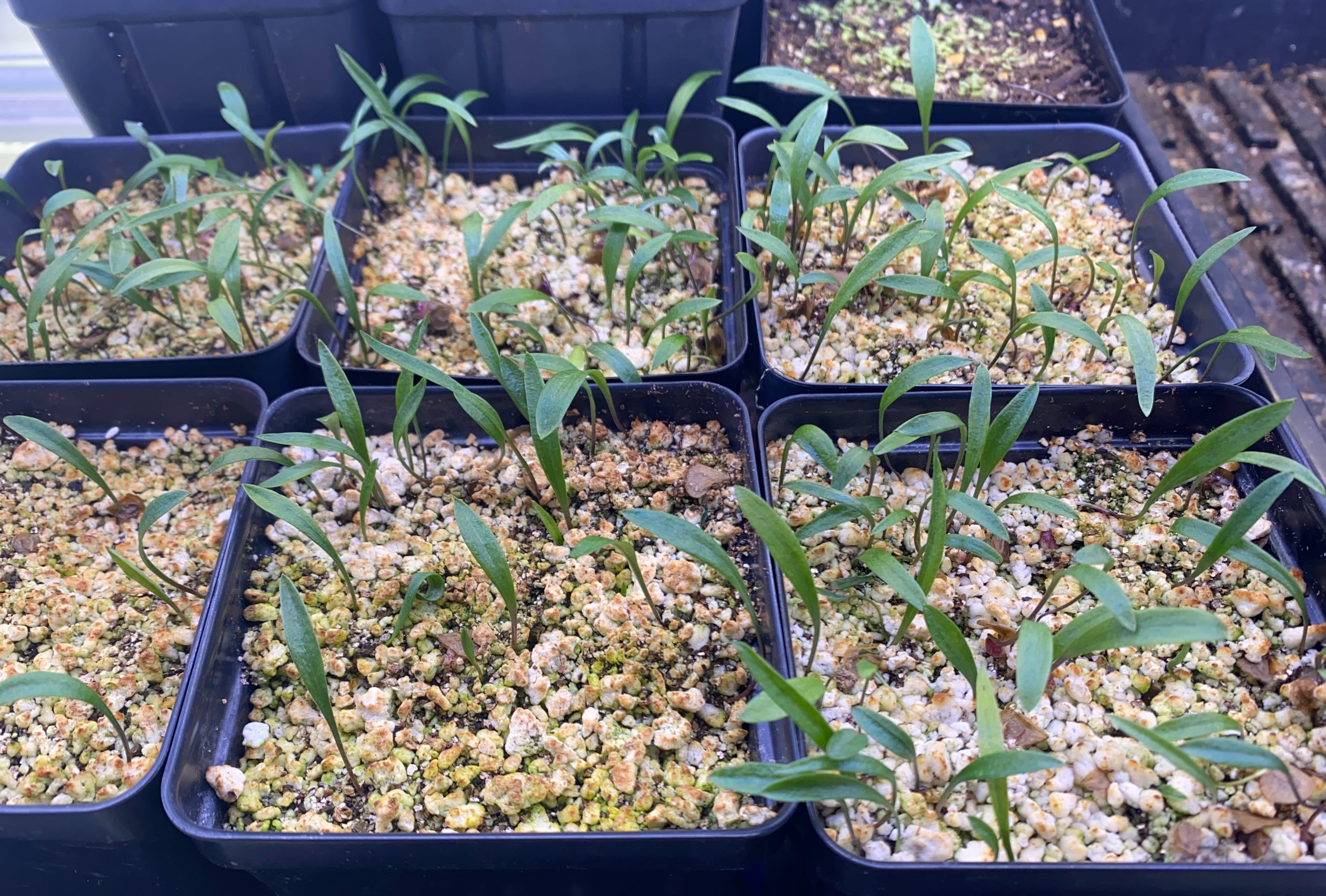
Michigan lilies have what I call “type 2 growth,” meaning that they have a tendency to stop growing and senesce, even when conditions are ideal for growth. In my experience, many seedlings produce nothing more than a single leaf in their first season, and then senesce (see figure 6).
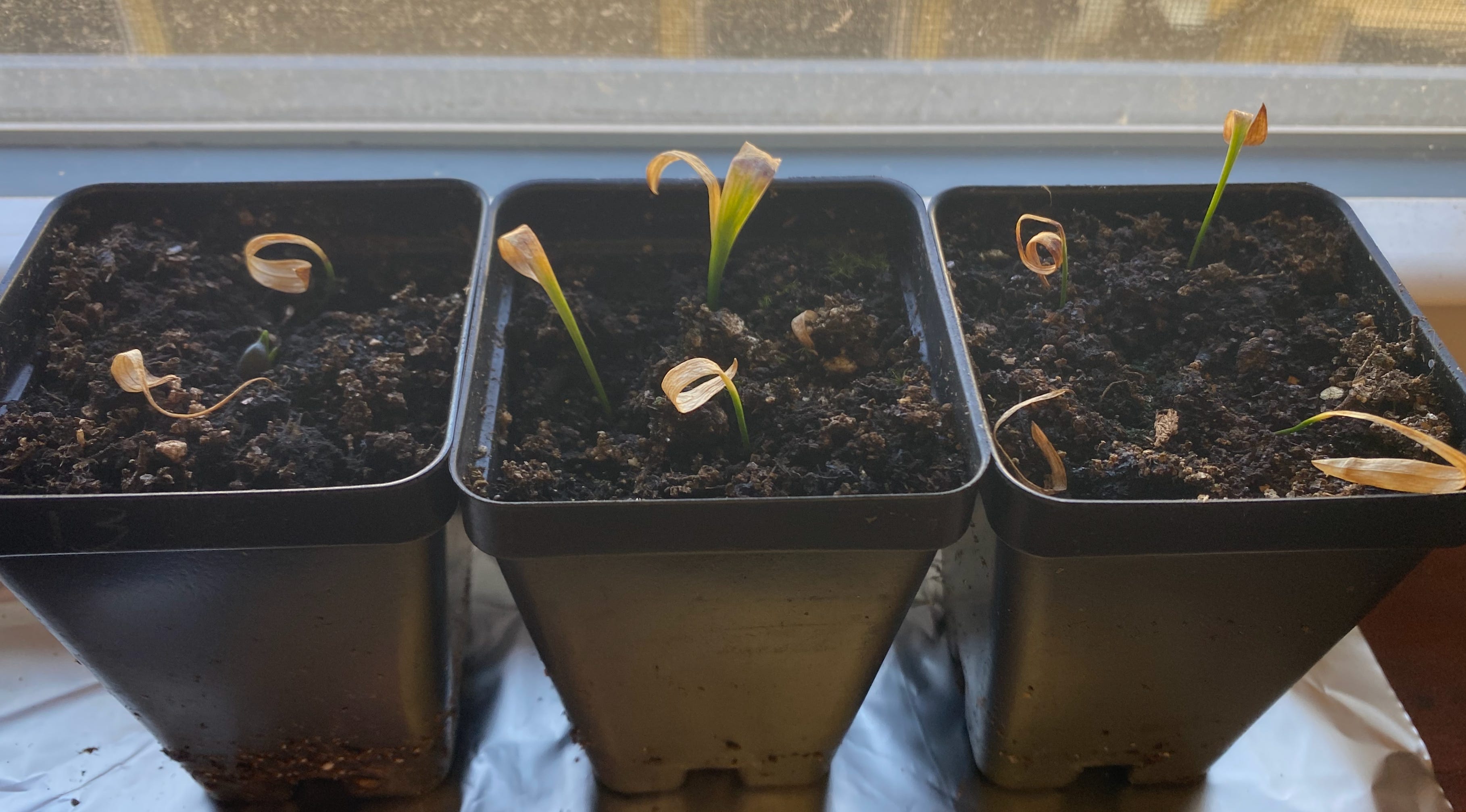
After the seedlings have begun to senesce, I move them to my fridge to release their dormancy, a process I describe in more detail here. I haven’t yet determined the minimum duration of chilling needed to restart growth, but 2–3 months is a safe starting point. By using my fridge to chill them, I can compress a year-long growth cycle into about 7 months, enabling me to grow these faster. After removing the seedlings from the fridge, they emerge as shockingly large seedlings (see figure 7).
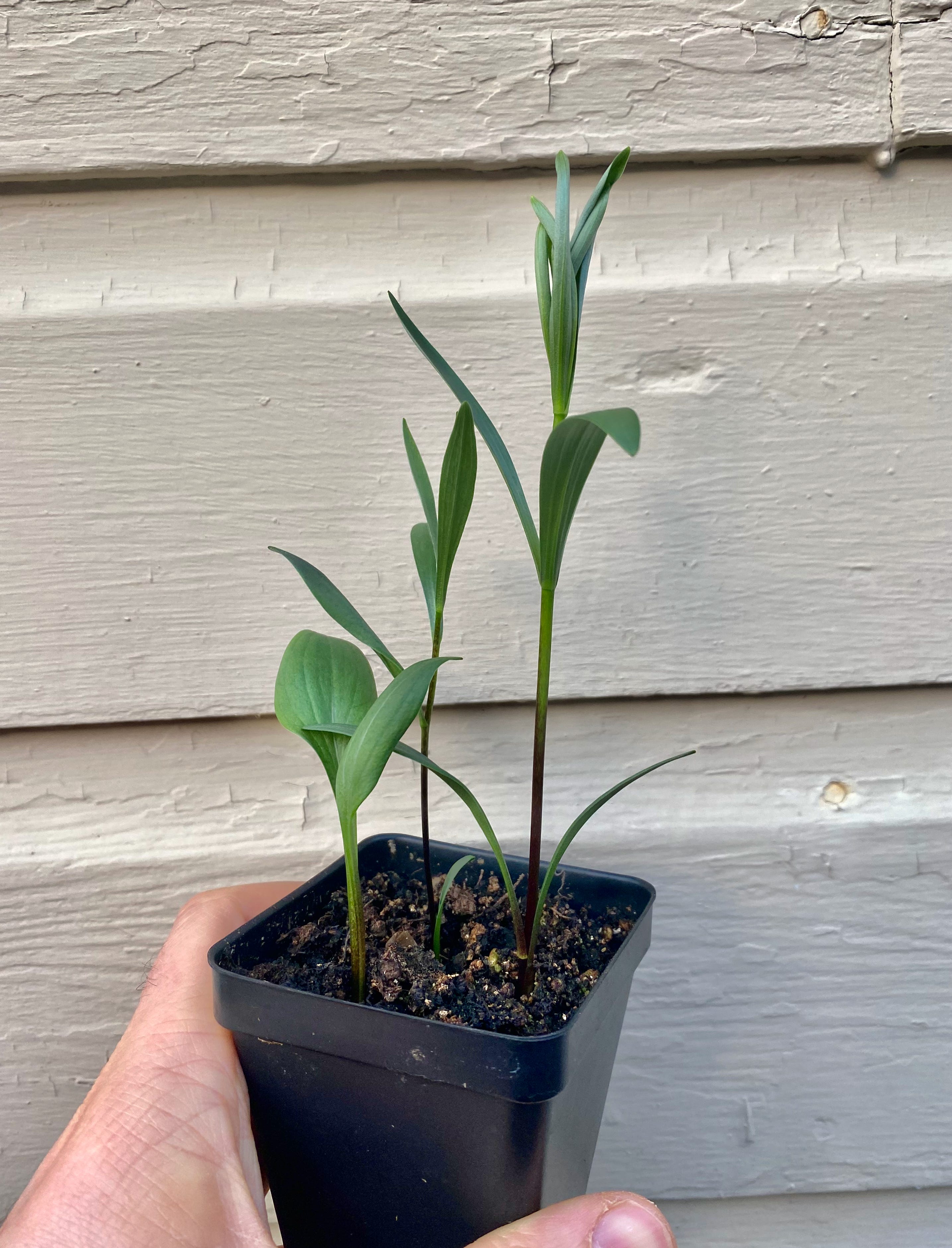
In their second season, the lilies are still too small to flower. You can proceed one of two ways: either plant the second-year seedlings out and let them finish maturing outside, or else continue cycling them through periods of cold until you’re satisfied. Planting them outside is easier, but once they’re in the ground, they’re doing one season of growth per year. If you keep them in pots, you can induce about two seasons of growth per year with the artificial chilling method.■
Have a question? If you have questions about Midwestern native plant propagation that you want answered in a future post, I’d love to hear from you! Shoot me an email at plantpropagationproject@gmail.com
Want to support this work? Buy me a cup of coffee (or a bag of potting medium)!
Want to stay up to date on all my propagation protocols? Subscribe for free to receive new posts and support Plant Propagation Project:
Although it may seem that I’m capitalizing on Nolan-induced Odyssey-mania, I’d like to remind the reader that—long before I was a blogger—I was an aspiring classicist translating Homer (and other ancient authors) for class. In the end I never got a degree in classical languages, but later in life, while in grad school, I did get a job leading discussion sections on Homeric epic, so despite what they may say, classics does in fact pay the bills.
Carol C. Baskin and Jerry M. Baskin, Seeds: Ecology, Biogeography, and Evolution of Dormancy and Germination, 2nd ed. (Academic Press, 2014), 128, table 5.6.
No posts
Comments
Nothing yet. Say the first thing.
Sign in to join the conversation.