
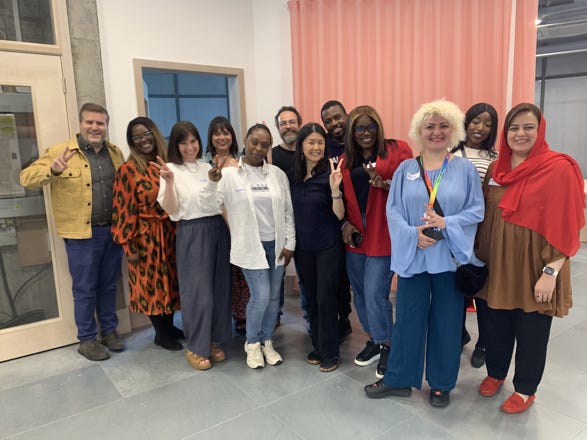
“Our goal is to create more meaningful collaborations across the voluntary sector so that we can see organisations thrive.”
Amelie Tan, BD Collective
In our latest episode of our new podcast, Grounded: Stories about how people work to change places, we spoke to Amelie Tan about her work for BD Collective , an infrastructure organisation which works to strengthen Barking and Dagenham’s voluntary, community, faith and social enterprise (VCFSE) sector, so it’s better connected, better resourced and better able to help local people and organisations thrive. Amelie is moving on from her current role in August, but took the time to chat to us about her work and time in Barking and Dagenham.
Amelie explained some of the contexts to this work in the borough, and why it is so important:
The collective was born out of necessity to better connect organisations. There is a lot of local energy in the area to work for positive change (e.g. through migrant support, foodbanks), but these efforts have historically been quite siloed.
In this part of London, the need for connection is compounded by there being a lot of transitional communities passing through, many of whom may be speaking English as a second language; alongside a lot of development happening locally, making it feel like a lot of change has happened over the last ten years.
It was felt that in this context, more could be done to support new and emerging organisations locally, many of which are run by volunteers, and may not be tapped into wider networks of support.
BD Collective began with bringing local community leaders together to connect organisations around the same issues – for example the Food Network that connected people and organisations around the need to reduce food insecurity Other networks include the Women’s Network, Children and Young People Network, Migrant Network and a Sports network.
The aim was to incentivise community leaders to connect with other organisations so that they could collaborate together and stretch limited resources and knowledge further.
‘We are all struggling together, but we don’t need to struggle as much if we have a strong network’
This allowed them to create a more centralised, resourced effort to convene organisations around opportunities in way that felt transparent and accountable, with values of equity at the heart of what they do
A lot of this work is about building connection and friendship as a first step, and encouraging members to think beyond the boundaries of their own organisations.
There are currently around 30 members in the Collective, which is part- funded by an annual membership fee. The collective is keen that these are active, committed and strong members.
You can read more about the membership here: Membership | BD Collective
What do we know about how work like this drives change?
We have published a taxonomy of place-based change which outlines five typical approaches for intervening in places. In our more recent work exploring the links between these categories we have developed a diagram to map out the different ‘patterns’ of change in each category.
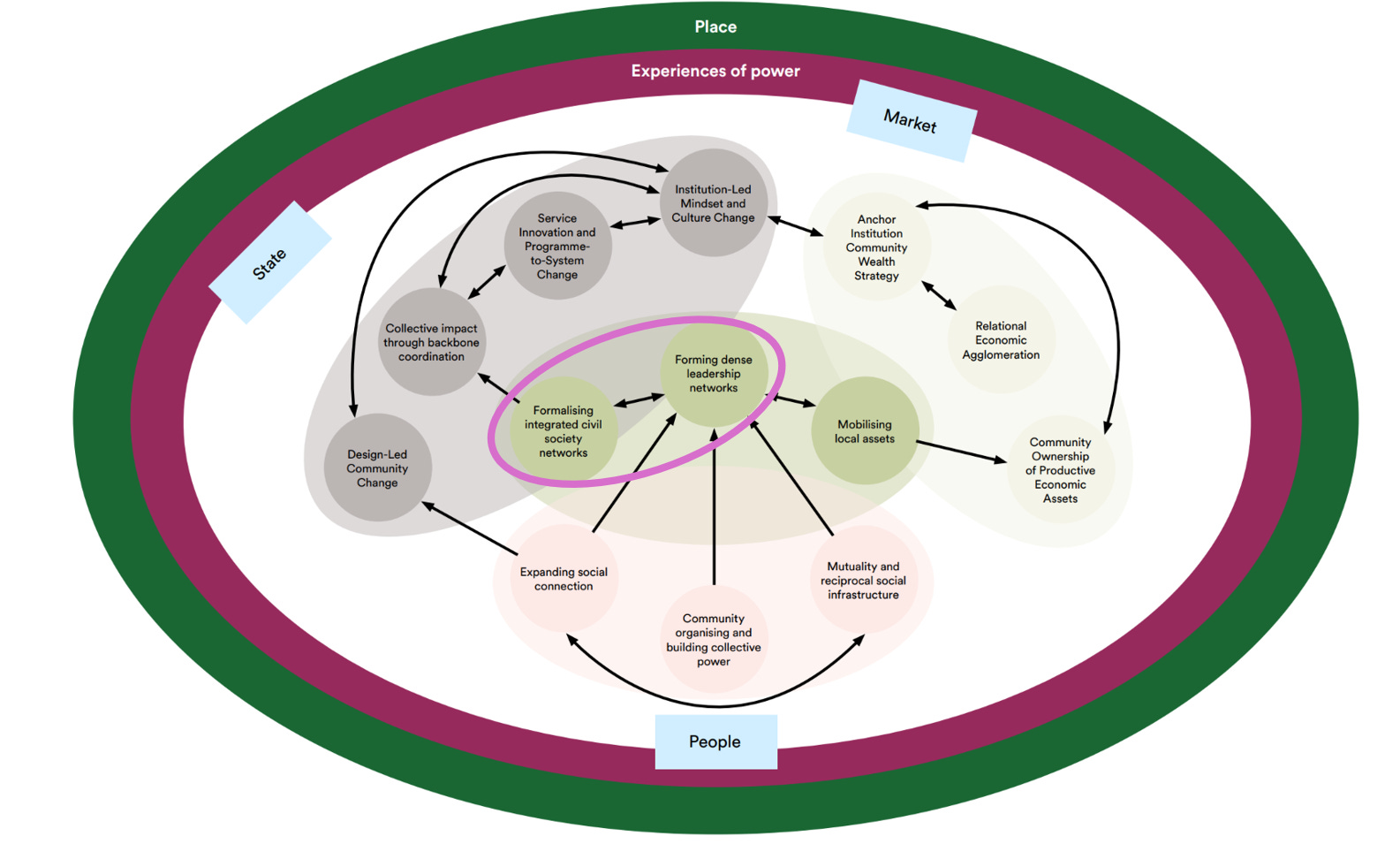
The focus of BD Collective is primarily around two key Category 2 activities:
Formalising integrated civil society networks
Forming dense leadership networks
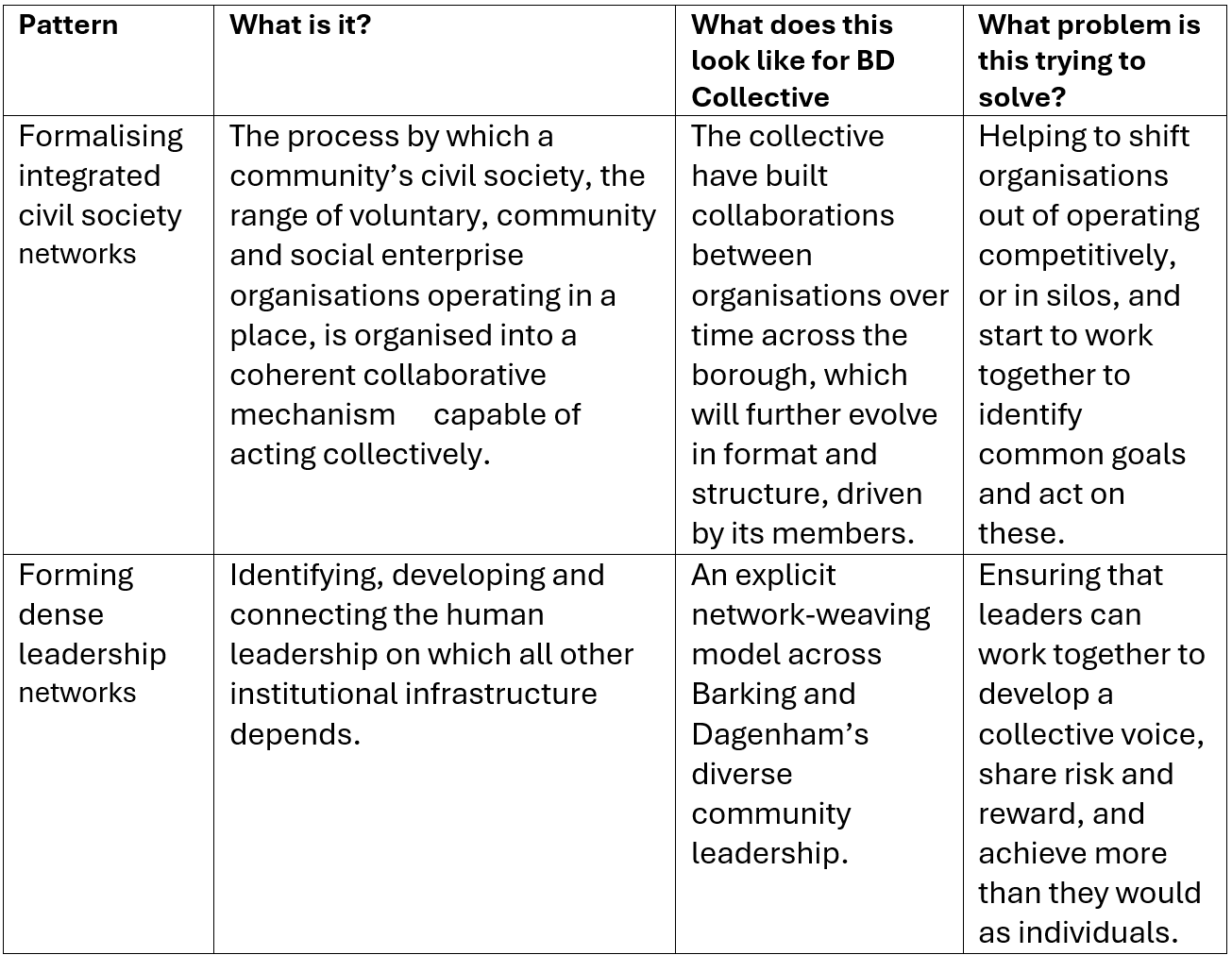
What can we learn from BD Collective?
Some of the things Amelie reflected on included:
Building trust with people who have previously felt taken advantage of
What if we secure funding for people to just experiment and explore new ideas in a way that doesn’t feel extractive, or unfair? Where people will be safe to share their ideas, because they won’t be used against them?’
There were initiatives in the past that were not felt to be transparent or accountable to the local community. Some felt that their ideas were taken without being credited or given opportunities.
It was important to Amelie and her colleagues that they started from a point of mutual trust with the members. This can take time – especially in the context of a borough where new faces and founders are emerging all the time, creating a need to keep up to date with new relationships while keeping up the conversation with legacy organisations.
Taking the time to really listen to and learn about the sector is one of the things Amelie considers a real success of The Collective. It is important to understand why people might be reluctant to put themselves forward, in order to build a culture that is more transparent and supportive.
Some of the specific things the collective have done to build trust include:
Embedding equity at the heart of the membership, e.g. through a one member, one vote model
Demonstrating impact of collective work through some of their commissioned projects, such as for people with long term health conditions
Running programmes like the Disruptive Explorers programme, which supports residents to explore how they would like to see money spent differently in their areas
Facilitating a conversation, ‘Stronger Together’ that aims to develop the relationship between the local authority and local voluntary organisations
Advocating for voluntary sector not to be taken advantage of – e.g. through core funding and compensation for sharing their expertise in meetings
Fostering a culture that prioritises wellbeing and checking in with each other as human beings.
‘ We want to make sure that everyone has a voice to shape how they want to see trust being built.’
Developing a clear value proposition for members
‘We have had a bit of time to ruminate on what kind of organisation we want to be and what kind of principles we want organisations to come around. It doesn’t sound like a big milestone, but actually this work is cumulative.’
Finding the right role for the collective in this context of trust-building has been significant, especially given the churn in organisations and residents described above. The collective have settled on an opt-in membership model that prioritises active engagement and building strong relationships.
“We would rather have a small membership of very active organisations working together than a large pool of organisations that don’t want to miss out.”
We will have more to come! If you’re interested to read more about our work you can find our original report here and our ongoing Substack here.
We’d love to hear from you if you have any comments or questions, or if you’d like to talk to us about your place. You can reach us at anna@storiesofchange.co.uk or john@storiesofchange.co.uk
No posts
Comments
Nothing yet. Say the first thing.
Sign in to join the conversation.