
The funny thing about getting older is realizing that some of the games you spent hours playing as a kid have seemingly vanished from existence.
A few nights ago, my wife and I were talking about games we remembered from the GameCube era. The conversation bounced between all the usual suspects: Wind Waker, Luigi’s Mansion, Pikman, Double-Dash, Paper Mario. Then I casually mentioned Billy Hatcher and the Giant Egg.
The look she gave me immediately told me she had no idea what I was talking about.
At first, I tried explaining it. "You play as a kid in a chicken suit." That got a laugh. Then I added, "You roll giant eggs around while fighting evil crows." Somehow that made it sound even less believable.
What started as a simple conversation quickly turned into an hour-long rabbit hole. I was pulling up gameplay videos, looking for copies on eBay, pulling up old reviews, and eventually reading about how the game was actually made. The deeper I dug, the more I realized how absurd the whole thing sounded. If I hadn't played it myself, I'm not entirely sure I would believe it was real.
But that's what makes Billy Hatcher so fascinating to me.
It's not just that it's a weird game. The GameCube era was full of weird games. It's that Billy Hatcher feels like the kind of game that couldn't exist today. Not because it was controversial or groundbreaking, but because somebody at Sega looked at an idea about a kid in a chicken suit rolling giant eggs around and thought, "Yeah, let's give this a shot."
And somehow, they gave that idea to Sonic Team.
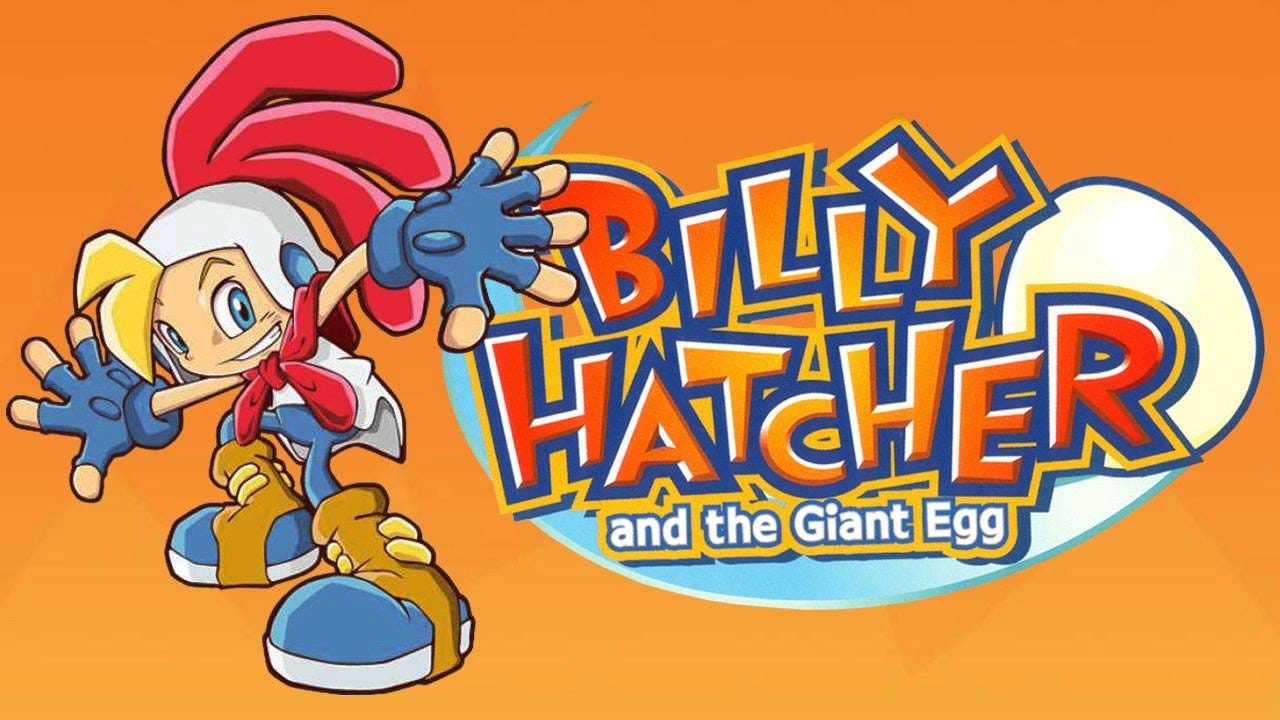
The more I dug into Billy Hatcher, the more I realized that this game wasn't an accident. In hindsight, there may not have been a better team at Sega to make it.
Today, when most people think of Sonic Team, they think of Sonic the Hedgehog. That's fair. The blue blur has been the studio's defining creation for more than three decades. But in the early 2000s, Sonic Team felt different. They weren't just the Sonic studio. They were one of the most experimental teams in the industry.
This was the same group that gave us Nights into Dreams, ChuChu Rocket!, Samba de Amigo, and Phantasy Star Online. Looking back at that lineup, a game about a kid rolling giant eggs around doesn't actually feel that out of place. If anything, it feels perfectly on brand.
What I find most interesting is that Billy Hatcher wasn't built around a character or a story first. It was built around an idea. Sonic Team producer Yuji Naka has talked about how the team became fascinated with the concept of eggs because they naturally create anticipation. Every egg is a mystery. You don't know what's inside, and that uncertainty makes you want to keep going. The more I thought about that, the more it reminded me of what gaming felt like when I was growing up.
Before every game was dissected in trailers or Reddit posts there was a sense of discovery. You didn't always know what was waiting around the next corner. Billy Hatcher somehow captured that feeling and turned it into its core mechanic. Every level was built around finding eggs, protecting them, growing them by feeding them fruit, and eventually discovering what would hatch.
It's a ridiculous concept on paper but that's exactly what I love about it. Billy Hatcher feels like it came from a different era. An era where a talented group of developers had a strange idea, and instead of spending months trying to justify it, they simply started building it and for a moment in 2003, Sega let them.
One of the things I noticed while rewatching gameplay footage is that I had completely forgotten how strange Billy Hatcher actually was. In my memory, it was just a platformer. The kind of game I would spend an afternoon at my grandmas house playing after school without thinking too much about it. But revisiting it as an adult, I was caught off guard by how different it feels from almost everything else I remember from that time.
The eggs weren’t just collectibles. They were the game.
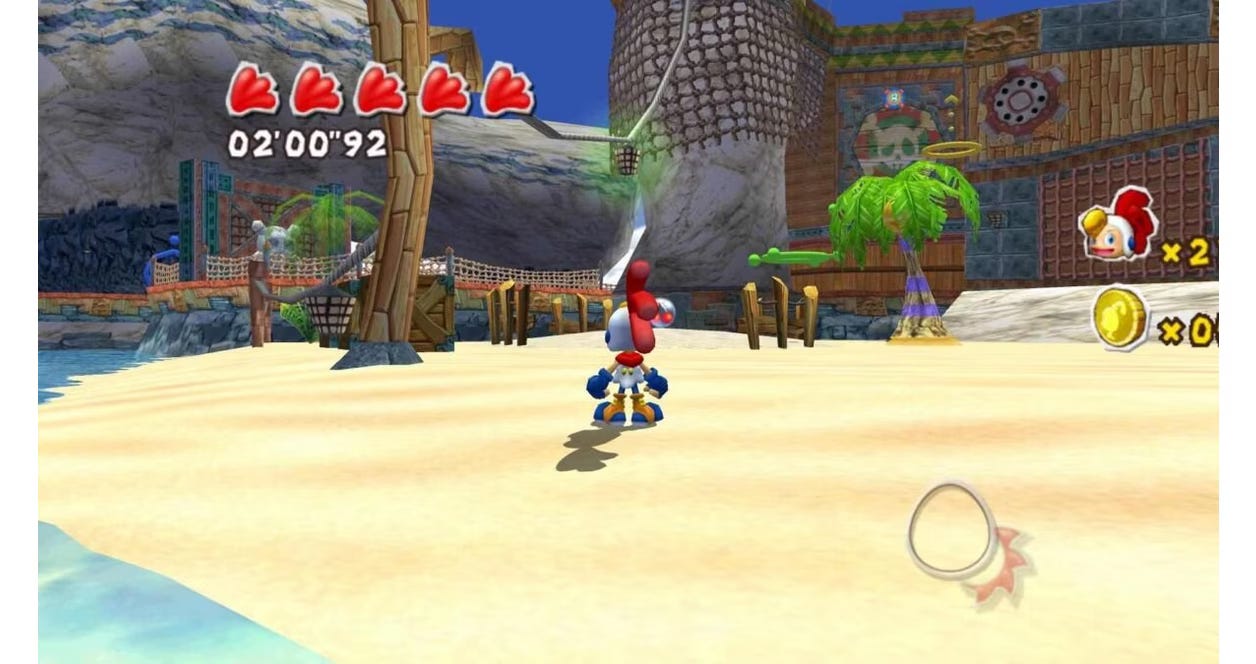
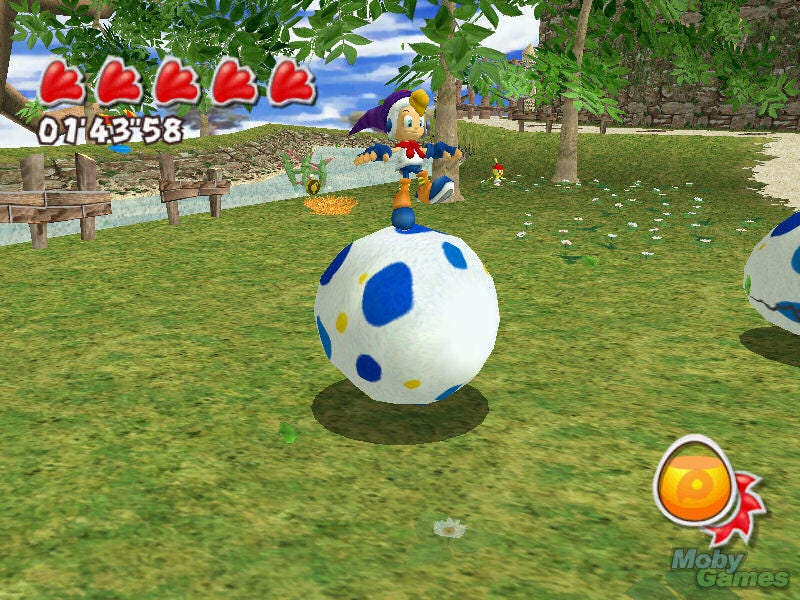
You rolled them through levels, protected them from enemies, fed them fruit to make them stronger, and eventually hatched everything from animals to power-ups. Nearly every mechanic revolved around this one simple idea.
It surprised me how committed the game was to the bit. There was never a moment where Billy Hatcher felt embarrassed by its own premise. It wasn’t trying to be cool. It wasn’t trying to chase trends. It was a game about giant eggs, and it fully believed that giant eggs could carry an entire adventure.
As a kid, I don’t think I appreciated that. I just thought it was fun.
As an adult, I think that’s exactly what makes it memorable.
The reality is that Billy Hatcher wasn’t a massive success. It reviewed fairly well, but it never became Sega’s next big franchise. There was no long-running series, no annual releases, and no major revival. Outside of a few cameo appearances in other Sega games, Billy mostly faded into gaming history.
And yet, people still remember it.
Maybe that’s because Billy Hatcher represents something that feels increasingly rare. It wasn’t built around an established brand. It wasn’t chasing a trend. It was a strange idea that a talented group of developers believed in enough to turn into a full game. For better or worse, it was unapologetically itself.
The funny thing is that I started writing this article because my wife didn’t know what Billy Hatcher was. What began as a simple conversation turned into an evening spent watching gameplay footage, reading old interviews, and trying to understand how a game this unusual ever got made in the first place. By the end of that rabbit hole, I realized the answer was surprisingly simple.
Billy Hatcher exists because there was a moment in gaming history when weird ideas were allowed to be enough.
Not every game has to redefine a genre. Not every game needs to become a billion-dollar franchise. Sometimes a game just needs to leave an impression.
More than twenty years later, I can still picture that kid in a chicken suit rolling a giant egg through a brightly colored world. The fact that I’m still thinking about it all these years later feels like its own kind of success.
And honestly, that’s probably the best legacy Billy Hatcher could have hoped for.

I’d love to hear about the games that have stuck with you over the years. Not the classics everyone remembers, but the weird ones. The forgotten rentals, the strange impulse buys, the games that somehow never left your brain. Drop them in the comments I would love to hear some childhood nostalgia!
No posts
Comments
Nothing yet. Say the first thing.
Sign in to join the conversation.