
As said, I definitely don’t think of myself as a bird photographer. I’ve always been more focused on the significant fauna, like elephants, bears, and big cats. And I’ve never been especially interested in birds. But who knew that it was about to change in the last couple of years?
Most of my forays into bird photography have been at the bear hides in Kuusamo, Finland, where many white-tailed sea eagles make majestic subjects. They are the largest bird of prey in Europe, and I have to admit they have also played a part in sparking my interest in birds over the years.
Nowadays, I even enjoy trying to take, i.e., birds-in-flight photos of eagles, ravens, and other birds, and I’ve already acquired quite a photo collection of these shots, too. Though the successful shots still come out about once in a hundred (or once in a few hundred, sometimes).
And during this bear guiding season 2025, I also became inspired to try some ICM (Intentional camera movement) shots of birds—and bears. And that was even more challenging than the birds-in-flight photos! But maybe I’ll write another post dedicated to that later. Now this one is about more traditional bird photography.
It hasn’t, I’d still say! I still get a lot more unsuccessful shots than successful ones, but I guess that is the norm for most people. But if I get at least one great shot in a session, I feel great joy. Maybe it’s about the challenge and then feeling the excitement of success, even in the face of constant failure sometimes.
But failure is only temporary, and evolving is inevitable when you keep trying!
And birds are actually very fascinating – like the highly intelligent ravens (one of my favorite birds). It’s always a privilege to observe their doings at the bear hides, like how they make elaborate plans to snatch some food from the bears, for example.
Bears and ravens are like the eternal cooperative couple of the northern taiga.
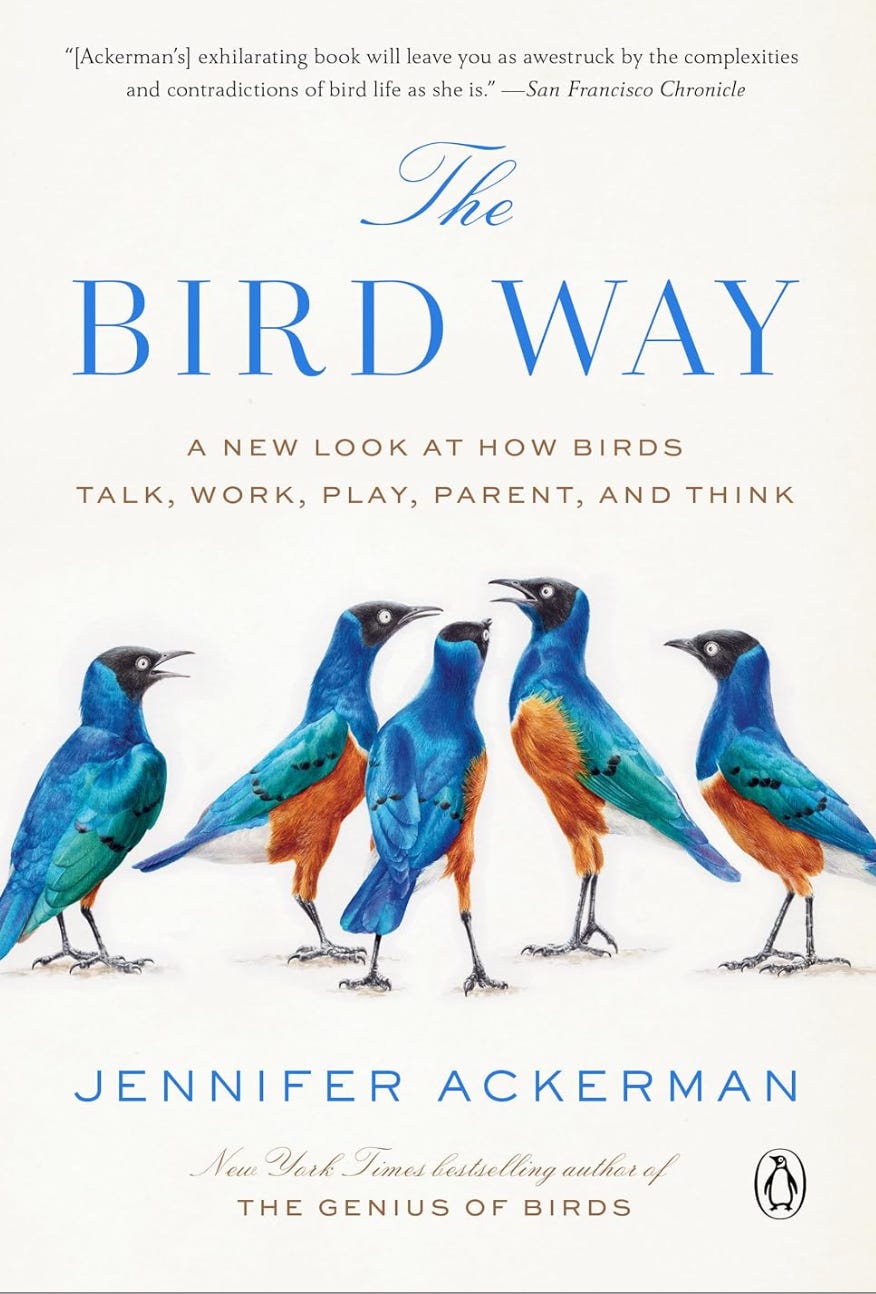
But if you’re like me a few years ago and don’t feel any interest towards birds, I have one absolutely fascinating book for you to read. And if after reading that you’re still not interested in birds at all, I’ll rest my case. ;)
The book is: “The Bird Way: A New Look at How Birds Talk, Work, Play, Parent, and Think” by Jennifer Ackerman. 1 I’ve never read a more interesting book about birds, and after finishing this book, I had a whole new interest in the species. And that is a lot to say from a long-time mammal enthusiast. ;)
Also, knowing as much as you can about your subjects and their behavior will always help in getting better photos.
I'm interested in bear photography tours
At the bear photography hides where I’ve had the privilege of working as a bear guide for many years already, we’ve always had a lot of white-tailed sea eagles around. Some are young, and some are probably quite old already. The years have taught me a lot about them (as well as about the bears).
You may wonder why they are around, as the sea is quite far away from Kuusamo, Finland. Yes, it is, but the white-tailed sea eagles have now long made their nests in the areas of big lakes too. And we certainly have lakes in Finland!
A lot of work and effort was done from the 1970s to the 2000s to revive the population from the brink of extinction through the use of fake nests, protected areas, and extensive study. And that work has paid off, as nowadays we have approximately 350-500+ breeding pairs. We don’t have many wildlife conservation success stories in Finland, but the white-tailed sea eagle is undoubtedly one of them!
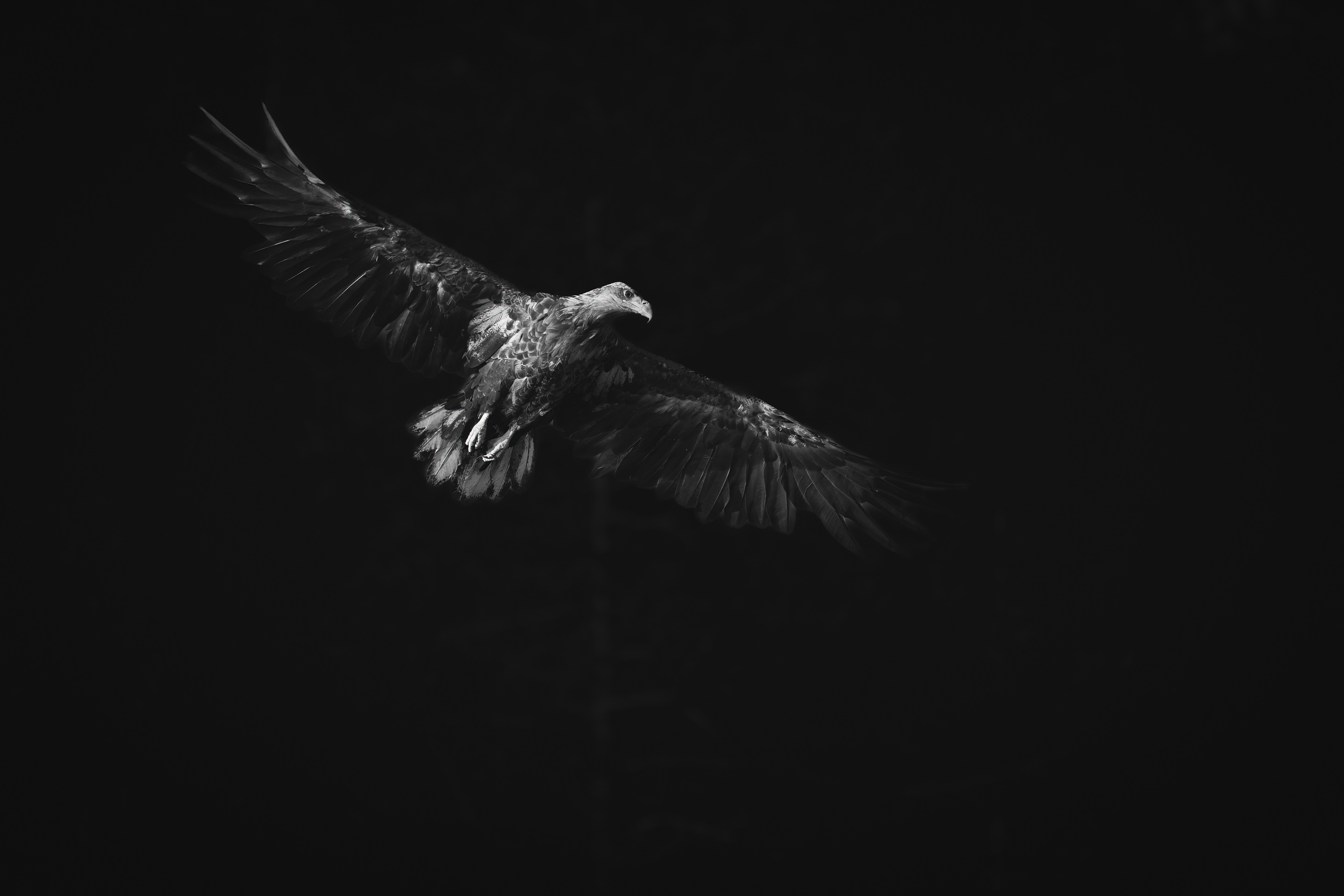
I took the photo below of that old eagle in Kuusamo, and after some experimental editing, I decided it worked best as a low-key black-and-white edition. It shows how big this bird of prey actually is when its wings are spread wide open–their width can reach up to 2.4 metres! You can also get this shot as a Fine Art print in several different sizes.
Suppose you don’t have large birds of prey in your area to photograph, no worries. Don’t overlook any of the common birds you’ll see around you every day, like the crows, which are highly interesting, too. They’ll provide you with endless photo opportunities if you stop to observe them long enough.
The versatile intelligence of the crows can be compared to that of a 7-year-old child. They have advanced cognitive abilities, including problem-solving, tool use and creation, impressive memory, and social learning.
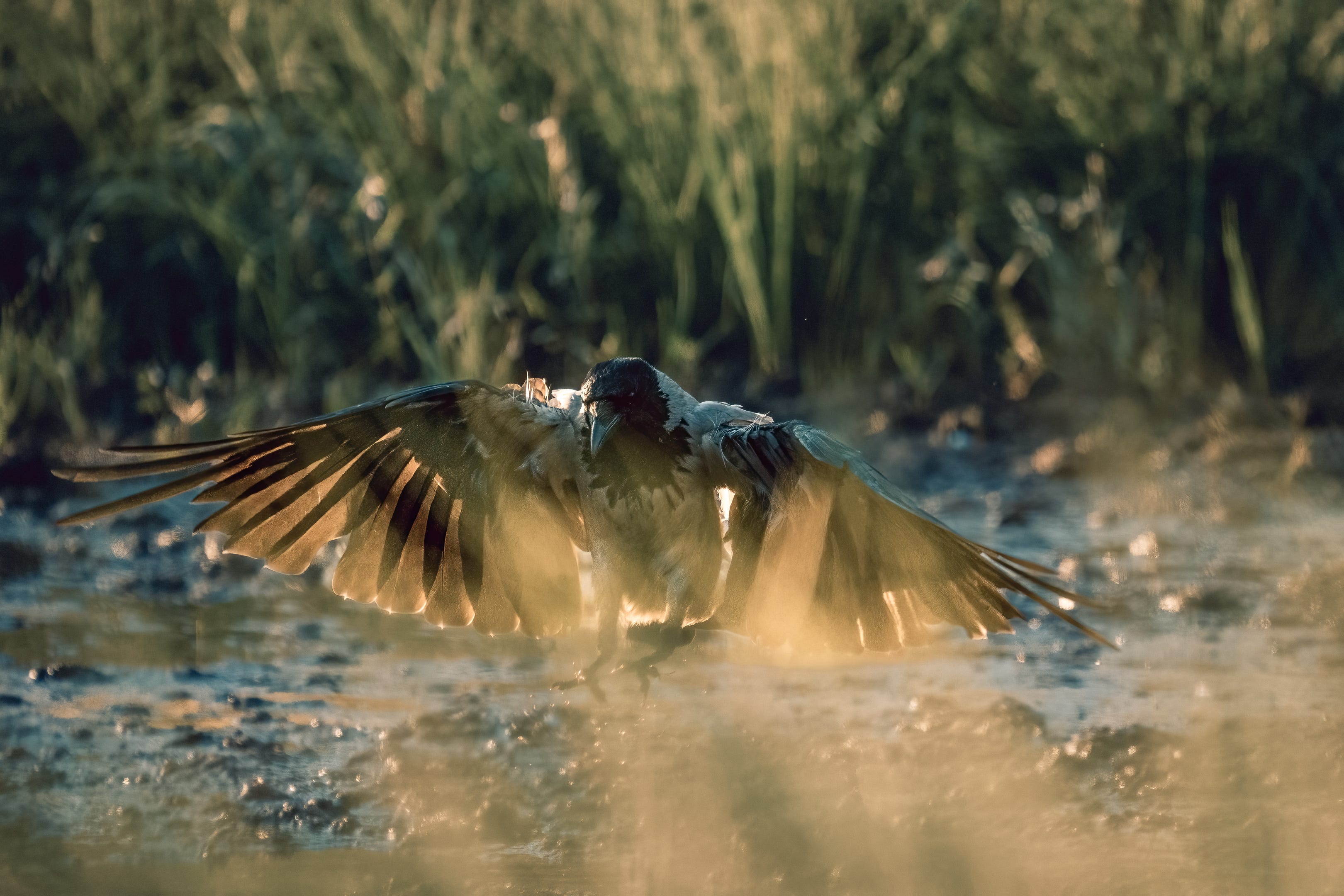
The photo below is also from Kuusamo. I was again practicing taking bird photos, and the light came just from the right angle to shine through the crow’s wings. I really like this shot myself, even though many may think that it’s not much.
The most important thing is a fast enough shutter speed to freeze the wings' movement. You can use a slow shutter speed, as well, to get another kind of effect, but that’s a subject for a whole other post.
And don’t be afraid to crank up your ISO. There are many options to get rid of the noise it creates and end up with superb photos (e.g., Topaz DeNoise AI, the newish denoise option in Lightroom, to name a few).
A few basic tips here to start with:
Use a fast shutter speed of 1/1000 or 1/1250 –at least– and even faster for smaller, faster birds.
Use continuous autofocus (AF-C or Servo) on your camera.
Use the highest continuous shooting mode available in your camera. The number of pictures per second you’ll get depends on your camera model. You’ll have loads of photos to go through, but sometimes getting or not getting the shot depends on a fraction of a second.
Using manual mode with Auto ISO and shutter priority is a good option, for example.
Defining a bracket for the Auto ISO is also handy, i.e., from ISO 100 to ISO 3200 or 6400.
Starting with your lens’s widest aperture to achieve a fast shutter speed and a blurred background is a good place to start. Or you can also stop down slightly if you want more depth of field in your shot, and you are in good light conditions.
Have time and endless patience, like in all wildlife photography. Most of the time is spent waiting. (And this is where I often fail; I get tired of waiting for the bird to take flight, and then in the next second or so, it flies off and I miss the shot. 🤣 But then again, I’m still not a bird photographer.)
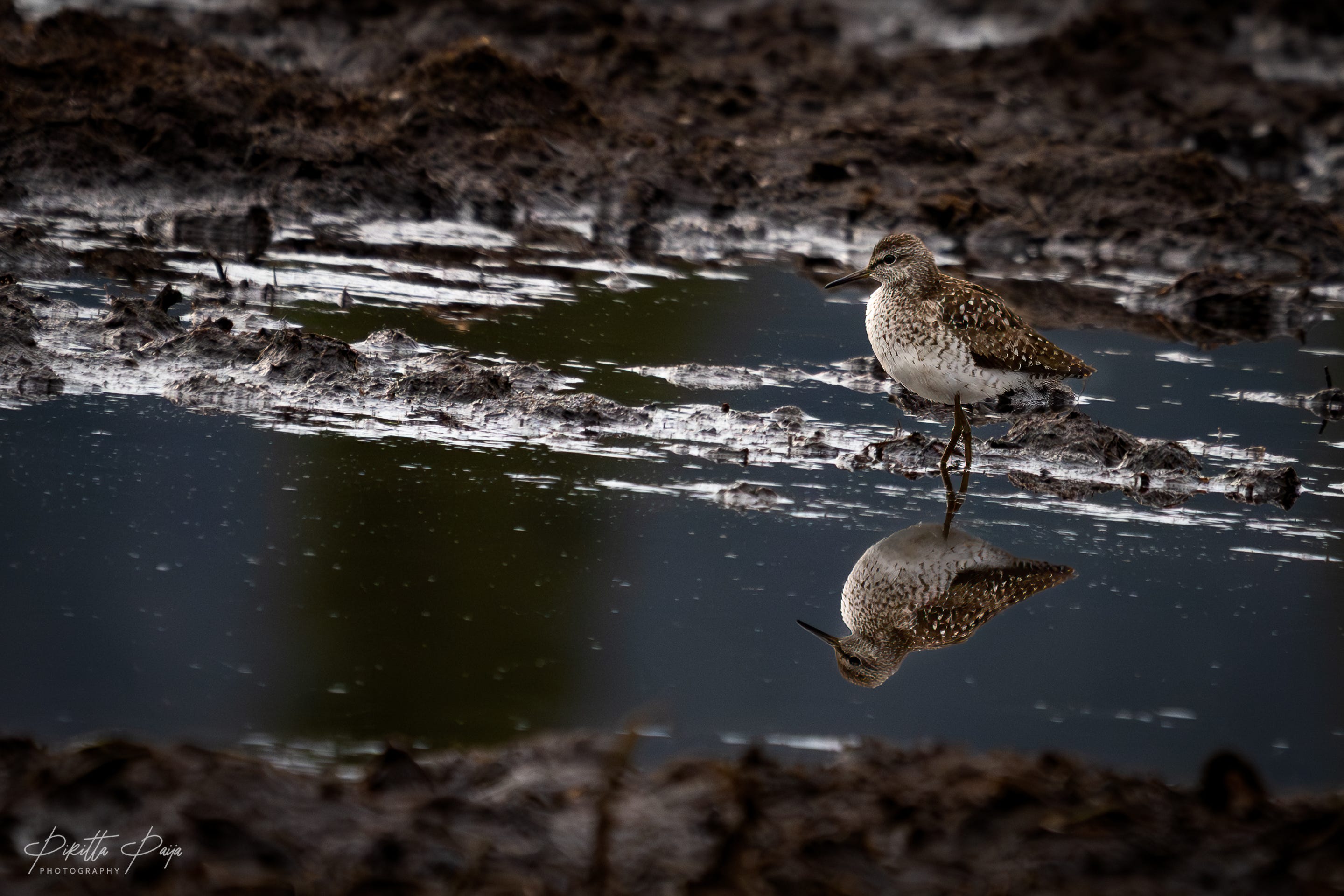
Of course, you can also take all kinds of bird pictures. Below is a little Wood sandpiper walking in the swamp. It had its perfect reflection in the water, so I snapped this shot.
I encourage you to go out and start experimenting with taking bird photos. It’s a great pastime, and maybe you’ll fall in love with it? Or perhaps you won’t, but it’s still fun to try out, and there are always some birds around, wherever you may live.
Look at them with different eyes and you’ll notice so much more!
After spending six years zig-zagging across Southern, Eastern, and Western Africa with our overlanding project Expedition Conservation, we are soon heading to a new continent – South America!
And honestly, I can’t wait to get there! A whole new world of animals is waiting, and I look forward to meeting capybaras, new monkeys, and a plethora of birds, too. And one of the most exciting things awaiting is finally visiting the Pantanal in Brazil to see and photograph the jaguars!
After all the years in Africa, it feels so inspiring and thrilling to spend the next few years in South America. Many years ago, I visited Peru and Colombia, and I still remember one of my favorite animals: the coati. Looking forward to meeting those fellows again and many new species, too!
Life must stay interesting, and I’m so grateful that my life is just that 🙏
I’m also so glad that you are here with me, sharing all these adventures. Thank you for all your support! I’ll be doing my best to provide more valuable tips and tricks in the future, too! And if you have any questions, always feel free to ask. :)
Stay Wild & Take Great Photos–Wherever You Are,

Comments
Nothing yet. Say the first thing.
Sign in to join the conversation.