

Is Donald Trump sabotaging the United States Navy?
There is no evidence he takes orders from a foreign power.
The more alarming possibility is that he takes orders from his own reflection — and that fellow never completed naval architecture school.
The Navy is reviewing whether to move the island on future Ford-class aircraft carriers toward the middle of the ship, reportedly to satisfy Trump’s preference for the silhouette of older warships.
The island is the carrier’s command tower, not a decorative rooftop cabana.
Its placement affects flight-deck operations, navigation, tactical command, aircraft movement, turbulence, weight and buoyancy.
Moving it is less like shifting a sofa and more like relocating the brain because the skull photographs better from port.
The current aft position was chosen for operational reasons.
It gives aircraft more room near the catapults, helps crews launch sorties faster and can reduce turbulence during landings.
In carrier warfare, sortie generation is combat power.
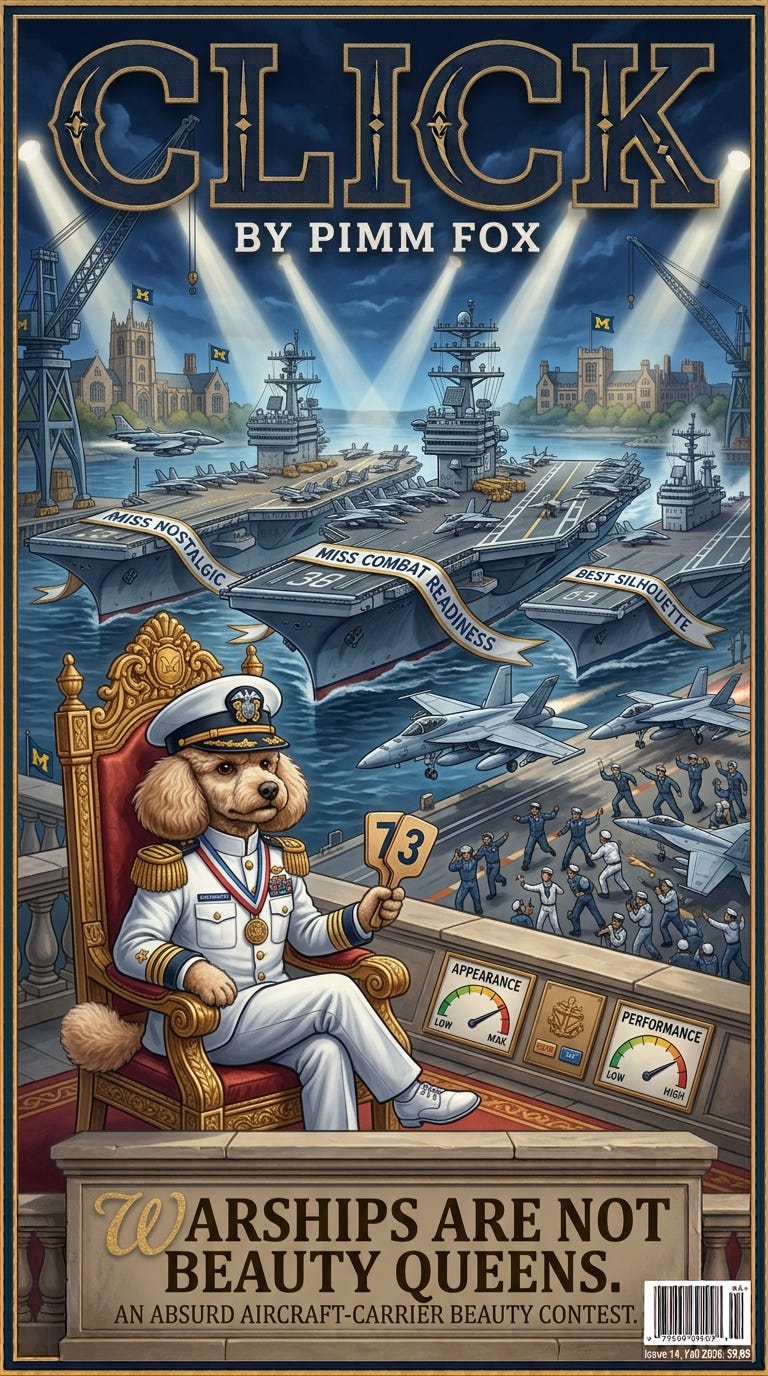
Trump sees the same arrangement and apparently thinks the ship’s profile lacks sufficient old-movie swagger.
Warships are not beauty-pageant contestants.
They do not need flattering angles, gilt faucets or a ballroom named after the owner.
They must launch aircraft, recover them, survive attack and keep thousands of sailors alive.

Yet naval engineers are now spending time studying a redesign that an earlier review reportedly found could cost billions and impose extraordinary delays.
This follows Trump’s order to replace electromagnetic catapults planned for later Ford-class ships with steam equipment, potentially requiring vast redesign work on vessels never built to accommodate the old machinery.
One technological retreat might be eccentricity.
Two begin to resemble a campaign: Make the Fleet 1945 Again, except with worse procurement and a television personality running the Pentagon.
Pete Hegseth served in the military, but his chief qualification for managing America’s defense bureaucracy appeared to be performing military certainty under studio lighting.
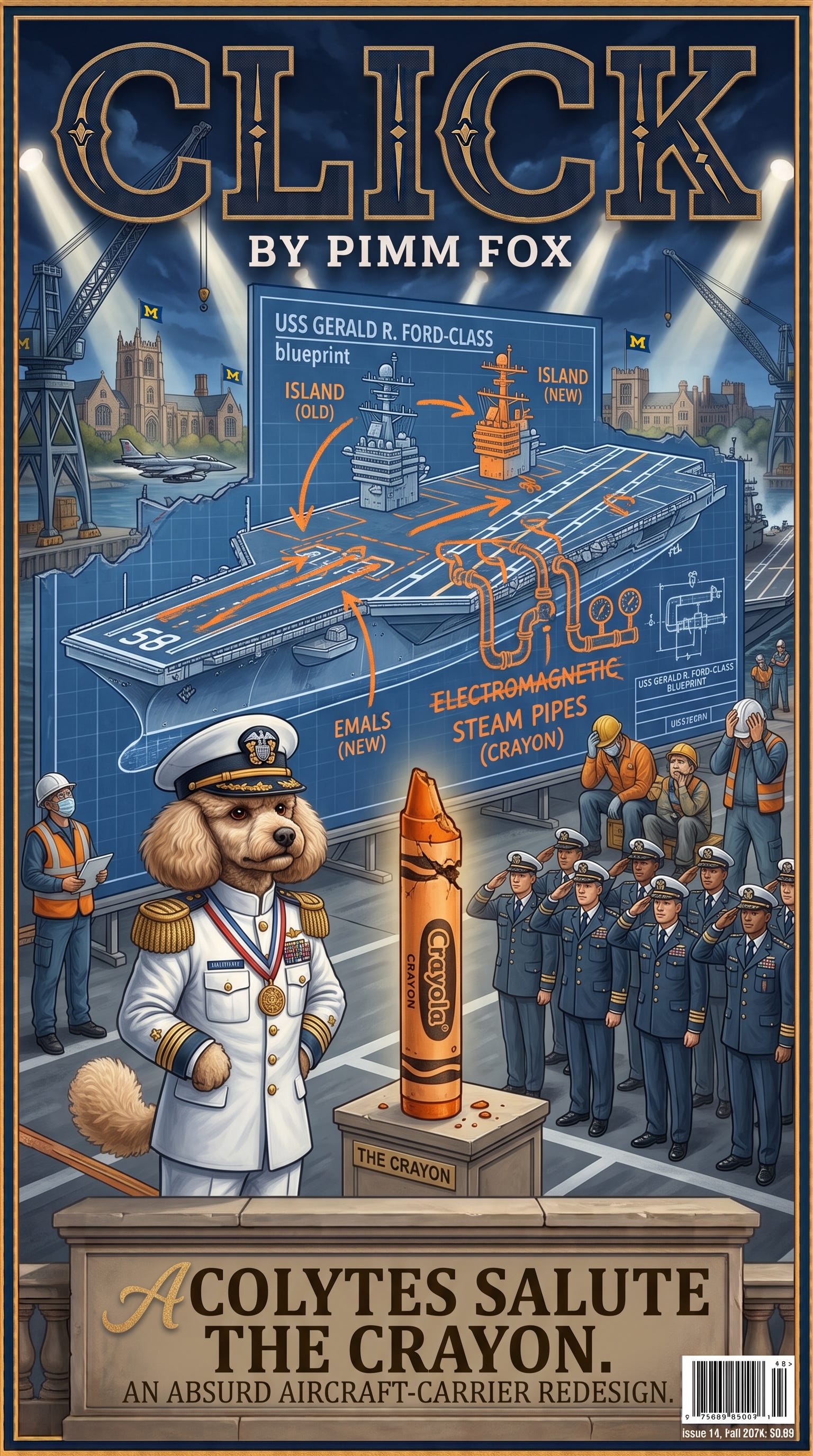
Now the administration behaves like a shipyard committee assembled in a casino steakhouse: one man chooses the exterior, another praises his vision, and everyone else quietly calculates the dry-dock bill.
Franklin Roosevelt had served as assistant secretary of the Navy and possessed an obsessive interest in ships.
Yet imagine Roosevelt interrupting Admiral Nimitz during the Pacific war: “Chester, Midway sounds fine, but have you considered moving the bridge? It would look tremendous in newsreels.”
Imagine him advising Patton to reposition tank turrets because the Shermans seemed visually unbalanced. The reply would have stripped paint from the bulkheads.
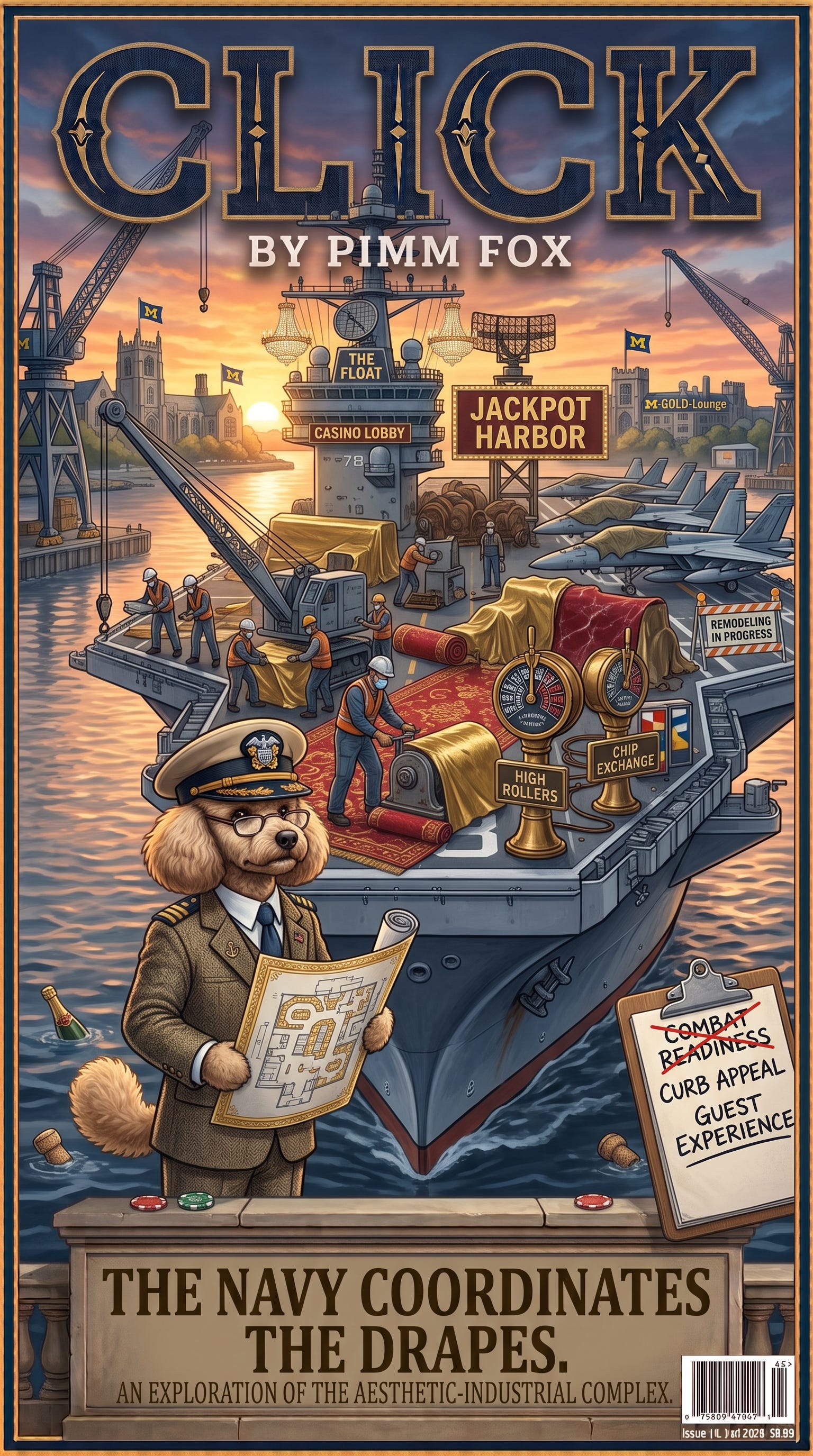
Trump’s meddling is not strategic leadership.
Leadership sets missions, weighs risks, selects capable officers and demands results.
It does not doodle over engineering drawings while acolytes salute the crayon.
Calling this presidency psychotic would misuse a clinical term and insult patients, who generally recognize that aircraft carriers are not mood boards.
The governing pathology is simpler: vanity without expertise, power without restraint and subordinates without enough backbone to say, “Sir, that is an island, not a hairpiece.”

That is command-by-tantrum, with admirals reduced to stagehands rearranging steel scenery for one man’s lonely applause.
Every hour engineers spend indulging presidential aesthetics is an hour not spent improving readiness, survivability or shipbuilding speed.
Every billion burned rearranging a carrier is a billion unavailable for maintenance, munitions, training or sailors.
The Navy’s job is to command the seas.
Under Trump, it is being ordered to coordinate the drapes.
No posts
Comments
Nothing yet. Say the first thing.
Sign in to join the conversation.