
A few months ago the family chat — made up of my five adult siblings, in-laws, and parents — blew up with responses to an online personality quiz: Which Theologian Are You?1 Both my parents received “Luther”, with this succinct explanation for the result:
You carry the fire of Martin Luther — the Augustinian monk whose anguished search for a gracious God sparked the Reformation. Like Luther, you are gripped by the radical freedom of the Gospel: we are justified by grace alone, through faith alone, in Christ alone. Scripture is your supreme authority. You have little patience for religious systems that burden consciences with what God has already accomplished freely. When you stand for something, you stand — and you do not move.
Though my parents were a bit surprised by this result2 we, their children, found it both entertaining and accurate. It’s true: My parents have little patience for religious systems that burden free people. During their child-raising years, this impatience made them outliers in both evangelical church culture3 and homeschool circles4. They didn’t fit well in either group.
While I bucked their choices at the time, their discerning resistance to the latest Christian trends made us stronger Christians in the long run5. Here are some things they did that equipped us for a critical-thinking, long-haul faith.
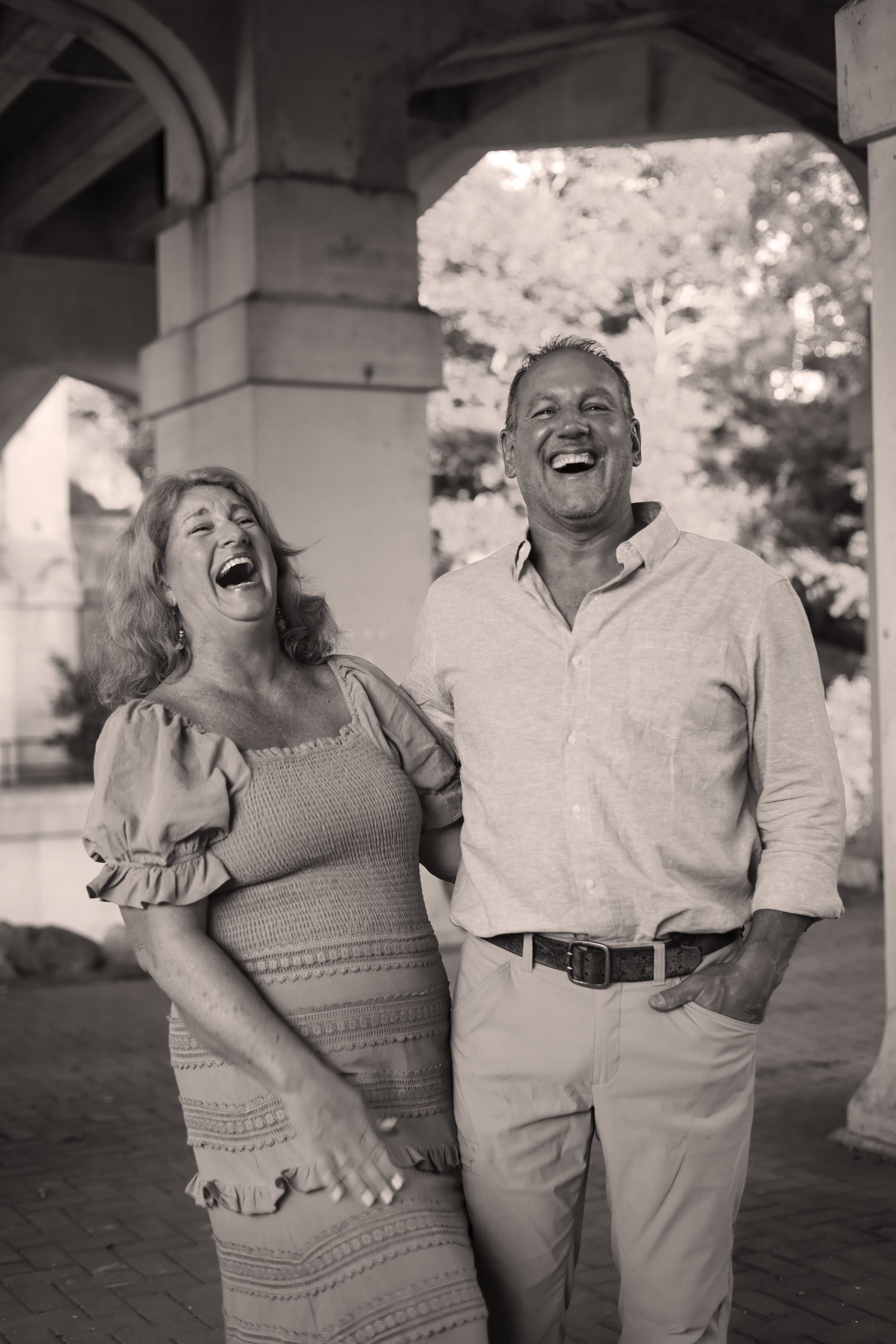
My parents weren’t big on the bandwagon. They were very slow to adopt trending music, activities, youth groups. Not that they didn’t try it; I remember going to part of a lock-in when I was in elementary school. As a general rule, they didn’t accept ideas just because the church sanctioned them. They questioned everything, not in a cynical, “prove yourself” way; just in a “this hasn’t been time-tested” way.
In a time when hand puppets made up the majority of our Sunday School teaching (I’m not kidding), my parents steered the curriculum back to biblical basics. In an era of courtship, betrothal, pledges, and “emotional purity”, my parents encouraged us to be friends with the opposite sex and question the contents of popular books. We read some of them, but with a discerning eye.
Most impactful was their general hopefulness about being Christian. My parents were and still are dispensational — but the idea of a rapture and return of Christ was framed as the best possible news, not the worst. My dad often said, “Isn’t it an exciting time to be a Christian?” Their skepticism was born of discernment, not cynicism and pride.
During my middle school and high school years I was a member of a drama troupe for girls focused on Christian purity. As part of this group we were assigned many of the popular books of that time: Secret Keeper, Emotional Purity, I Kissed Dating Goodbye, Boy Meets Girl.
The books came into our house because of the group’s values, but my parents were not quick to endorse them. I remember my mom sifting through the content, commenting on what was true and what was false. Some books — like I Kissed Dating — we skipped completely.
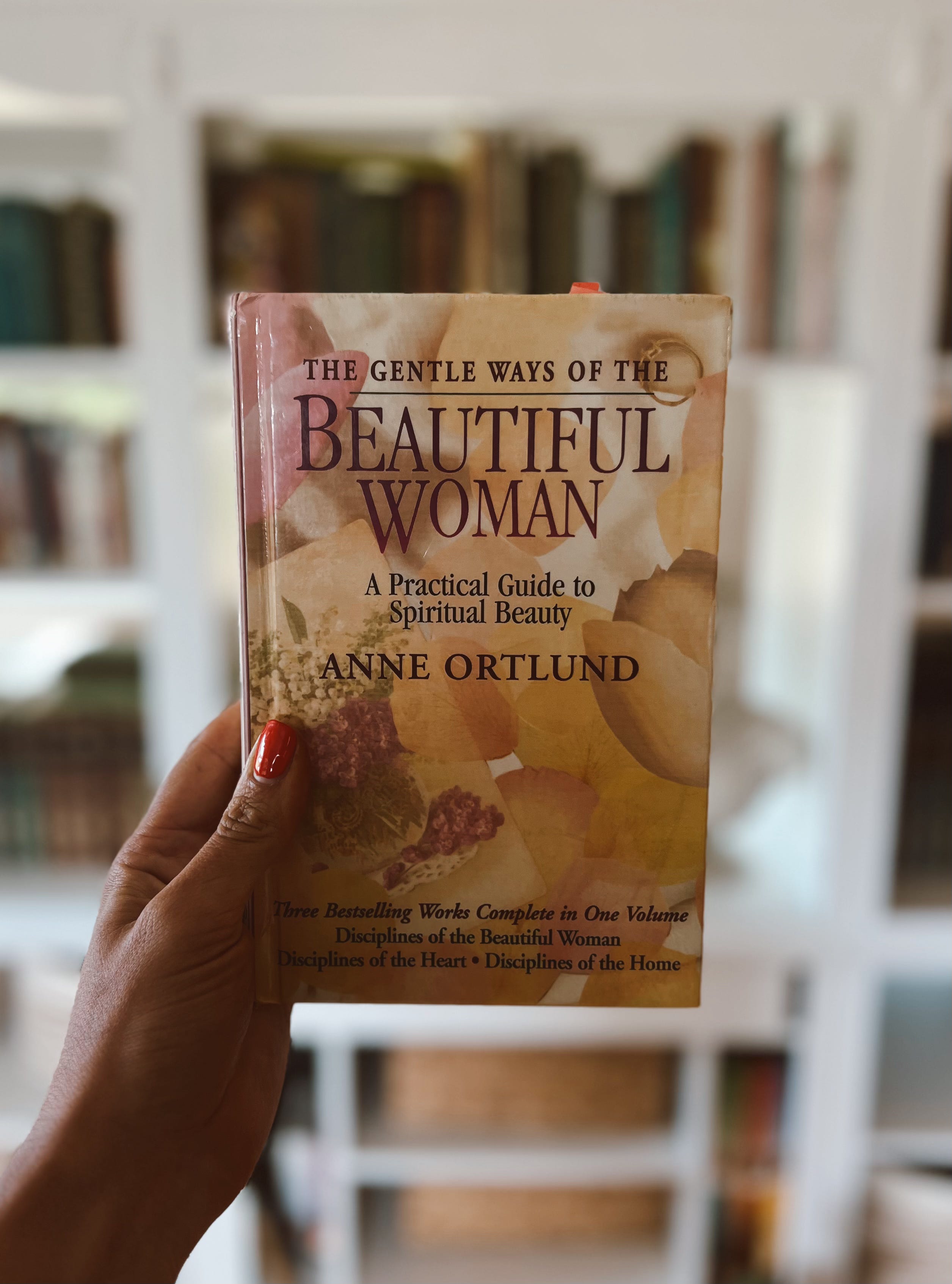
While other girls were reading Josh Harris, my mom gave me The Disciplines of the Beautiful Woman by Anne Ortlund. And while other girls were being told stay-at-home daughterhood was their future, I was learning how to rejoice in my femininity, embrace God’s love for me, study God’s Word and grow in my faith. My young faith was fed not by Left Behind Kids but by A Young Woman After God’s Own Heart. My teenage spiritual mentors were Beth Moore, Priscilla Shirer, Anne Ortlund, and Elizabeth George.
My parents curated our reading lists. They didn’t pre-read everything we consumed, but they DID concentrate on the highest quality books (not just Christian ones — quality classics as well). Most of all, they didn’t expect a book to do discipleship for them. They took ownership of our discipleship.
As annoying as it was at the time, my parents’ refusal to delegate our discipleship to youth pastors, youth groups, books or YWAM trips was beneficial in the long run.
Hear me: These things aren’t all bad. They were very well intended. But in the millennial era, many trending activities and ideas weren’t producing good spiritual fruit. Kids were being entertained, but not educated in the truth.
My parents discipled us. Most mornings before work my dad read Proverbs or Psalms at the breakfast table. We did verse memorization with my mom during our homeschool “morning time” routine. They never required us to do devotions or Bible reading (we came to this naturally by observing their own devotional life) but Scripture was central to our home life and education. They spent hours (and I mean hours) talking us through teenage crushes, friendship anxiety, insecurity, people-pleasing, and early faith formation. Discipleship started at home and was “topped off” at church, not the other way around.
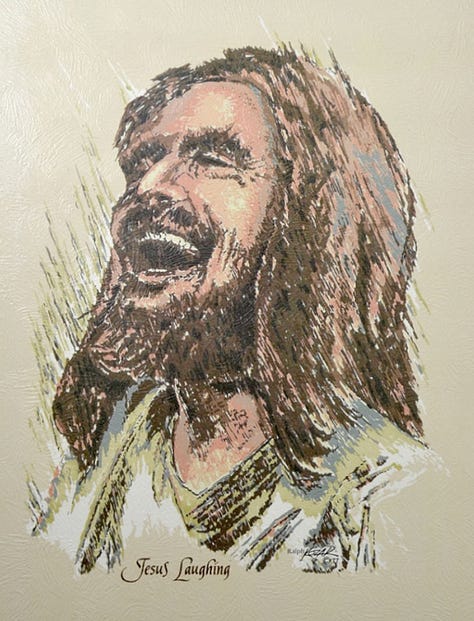
Even the art in our home reflected the values my parents held: the depictions of Jesus were joyful, approachable, and happy. We had a famous painting of a guardian angel on our stairwell. The garden of Eden, full of animals, hung on the living room wall. When we looked for Jesus, the Jesus we saw was smiling.


While this doesn’t seem particularly relevant to discipling children, it was actually a pivotal, protective element in our childhood. With divorce on one side of our extended family and dysfunction on the other, my parents did their level best to defend their marriage and assure us they would never leave. From this place of security and stability we were free to develop a deepening faith in God’s Father heart.
Truthfully, my parents’ dismissiveness toward church trends was annoying when I was a teen. I felt left out and uncool. Twenty years later, as I watch countless millennials deconstruct these books, shows, activities and missions trips, I find myself grateful. Their willingness to be spiritually cautious shaped my view of God toward truth and beauty. When the lights and music faded away, I was left with something substantial; something lasting. I was less manipulated, less traumatized, and less spiritually harmed than many of my peers. Sure, some of the things my parents eschewed wouldn’t have hurt me (I don’t think Adventures in Odyssey was standing in the way of my spiritual development) but their posture of kind discernment taught me the importance of standing apart.
I still question Christian trends. I still find the tribalism of the online Christian world disturbing and weird. And I still love to lift my eyes to the truth and beauty of Christianity, well-taught and well-lived.
Lastly, my dad did not force us to adopt a specific angle or viewpoint beyond the basics of gospel truth. We looked at multiple perspectives on secondary and tertiary issues. It was obvious what dad’s personal opinion was, but he was an advocate for the free exchange of ideas even if those ideas were half-baked.
Because this openness was grounded in a strong understanding of first-tier theological truth (the Trinity, Jesus’ deity, virgin birth, miracles, death, burial and resurrection; Christian holiness, value for life and ongoing sanctification) these discussions could be had without confusion. Sometimes we disagreed. Sometimes we still disagree (I am not dispensational; my dad still is).
This open-handed approach taught me to enjoy the exchange of ideas — even when I strongly disagree with a point of view. And it gave me a vision for faith unthreatened by atheistic doubts, denominational differences, and deconstruction. The faith I was handed was far from fragile; it was eternal. It was joyful. It was real.
Now I’m a parent of four children, from age eleven down to one. And guess what? The church still has trends. We have better resources now. We have better podcasts, books, shows and discipleship opportunities. But we still need discernment, and we still need to take ownership of our children’s discipleship journey. As I walk this road with my own kids, I think back to the difficult choices my parents made.
I think about the painful decision to say “no” to sleepovers and lock-ins, knowing how disappointed we would be.
I think about their angry teenage daughter (aka me), “missing out” on youth group, not knowing she would have been made to drink a pitcher of toothpaste and sardines.
I think about their choice to take away Josh Harris and Left Behind, unknowingly preserving me from both guilt and fear.
I still don’t grasp most Veggie Tales references. I’ve listened to only one episode of Adventures in Odyssey my entire existence. I never did a lock-in after the one in elementary school, I wasn’t part of any emotionally-charged calls to repentance or passionate pleas for YWAM funding. We didn’t celebrate Halloween and I never read the Left Behind series (which, ironically, made me feel “left behind”).
The older I get, the more grateful I am. The older I get, the more I see that my mom handing me Anne Ortlund — when her friends were handing out Redeeming Love — was the first step toward a call to ministry she didn’t know her daughter would have.
Be brave enough to question the things shaping your children, even if they come from inside the church. Set a vision for a faith based on the good, true, beautiful, joyful and holy, and watch what God does with your faithfulness.
My parents are not Reformed.
See: Lock-ins, WWJD bracelets, gross youth group games, I Kissed Dating Goodbye and YWAM trips.
See: Doug Philips Vision Forum, Doug Wilson’s dominion theology, stay-at-home daughter movement, and purity pledges.
All six of us are believers in Christ, active in the church — not perfect, not an easy road, but following the Lord.
Comments
Nothing yet. Say the first thing.
Sign in to join the conversation.