
We continue our series of 📢Voices From the Field: Meeting This Moment in Public Health in which we lift the voices of public health professionals reflecting on the realities we’re facing today - and the lessons learned across the arc of their careers.
With the dismantling of USAID, Rachel Cintron lost the global health career she had been building for nearly three decades. In this deeply personal reflection, she traces the grief, disorientation, and moral injury that followed, while searching for meaning, purpose, and hope beyond the public health sector.
If you’d like to follow Rachel’s lead and share your own perspective on public health in these times, I’d love to hear from you. Please get in touch!
Like all the articles in The Public Health Workforce is Not OK newsletter, this is not intended to be a monologue. This newsletter welcomes discussion, dialogue, disagreement, and amplification.
Please comment, like, share, recommend, subscribe, or get in touch!
Enjoy this newsletter but unable to become a paid subscriber? ☕️Buy me a coffee instead. Cheers! Katie
By Rachel Cintron, MHS, MA
In December 2024, my office at USAID held a large retirement party for one of our colleagues. Everyone came to celebrate her decades of service to global health, the people she had mentored, and the programs she had supported. The table was full of food, and the speeches were full of memories. When it was my turn to speak, I remember saying, “Everyone should have a party like this when they retire.”
I began my career in global public health right out of college, when I joined the Peace Corps to go to West Africa and work on “rural health.” This ignited my moral purpose. Working alongside community health workers, I saw many needlessly malnourished infants, and felt I could not turn my back on them to do anything else, so after graduate school, I joined USAID as an infant feeding advisor, and spent the next 25 years in federal service. My work took me from helping to launch PEPFAR programs in Kenya to supporting the first wartime humanitarian response in Iraq and leading programs in maternal and child health, malaria, avian flu and tuberculosis in Africa and Southeast Asia. I mentored younger professionals, led multidisciplinary teams, and proudly represented the United States overseas for more than two decades.
The end of my service came in June 2025, and I didn’t get a party.
My colleagues and I were notified that we were being cut as part of a “Reduction in Force” (RIF). Meanwhile, we were also being publicly maligned in the media as “leftist radicals.” As our organization was “fed into the woodchipper,” we were compared to “a ball of worms.” Online commentators amplified conspiracy theories about fraud and money laundering. Even now, a year later, those hate-filled narratives persist, even among some politicians who once supported our work.
I’m grateful I had completed enough years of service to qualify for retirement. But with two kids entering college, income cuts were not part of my plan. I initially assumed that I could pivot into domestic public health work. Surely decades of leadership experience, diplomacy, program management and public health expertise would translate into another role.
The reality was different. Despite my experience and stellar record of public service, interviews rarely materialized. Months passed, and the future that had once seemed obvious became increasingly uncertain. Public health had been my professional identity for nearly three decades, but suddenly the door was closed.
As I seriously considered leaving public health behind, my family encouraged me to attend the annual conference of the American Public Health Association (APHA) in Washington DC as one final attempt to reconnect with the field before making any decisions. They convinced me to immerse myself in what was happening, attend the career fair, and see whether there still might be a place for me in public health before I turned my sights away.
So I paid for membership and registration. Wasn’t my career worth another significant withdrawal from my savings?
A few days before the event, APHA made an announcement: the career fair was cancelled because the future of the workforce had become too uncertain for employers to recruit. I went anyway.
Over three days of the conference, I learned that colleagues from the federal health agencies (including NIH, CDC, FDA) had been prohibited from attending. There were virtually no sessions on global health. Many plenary sessions focused on politics and the challenges facing the profession.
For the first time in my career, I found myself wondering where someone like me could fit. My professional identity had always been covered by the words “global public health.” Suddenly that felt like less of an asset and more like a relic of a disappearing world.
I had arrived at the conference hoping to find a pathway back into public health. I left it realizing that I needed to build a different future.
What followed was devastating moral injury.
All I ever wanted was to help improve infant and child survival.
I have seen children die of malnutrition and preventable diseases. I spent my career supporting mothers, clinicians, data managers and policymakers working to improve health outcomes. I witnessed firsthand the extraordinary impacts of decades of American investment in global public health.
That is why it remains difficult to comprehend how quickly so much of this work has disappeared. Even harder to understand is watching work that saved lives become portrayed as wasteful, fraudulent, or harmful.
At times, it gets to you. You start to question not only what happened, but what it was all for.
The world turned upside down.
There is a lot to mourn.
Many people are hurting.
And I am among them.
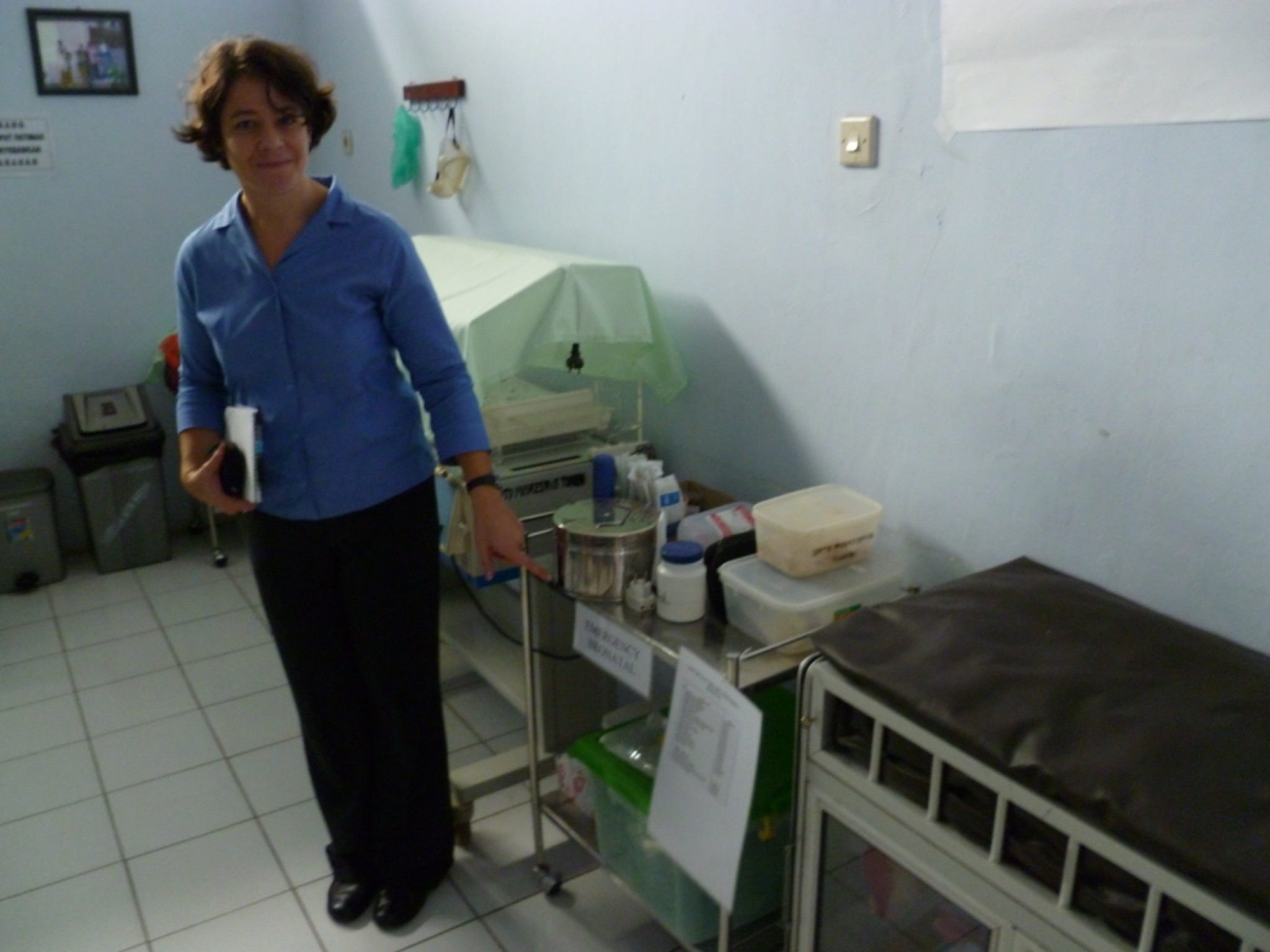
Photo: The author on a monitoring site visit to a maternity hospital in Eastern Indonesia points to an emergency cart filled with supplies funded by the U.S. government. When emergency systems, supplies and personnel are in place, women and their infants have a better chance of survival.
After the APHA conference, I committed fully to a new path. I began preparing for a career in public education.
Public service still calls me.
The future of children still calls me.
My heart,and perhaps also my brain, remain attached to public health. I still stop and admire a well-designed data visualization, but life is offering me the chance to begin again.
It is time to rebuild.
It is time to invest my optimism, experience, and energy into the teaching profession.
Perhaps in ten or fifteen years I will finally have that retirement party. Perhaps I will look around the room and see a second generation of colleagues, students, and friends whose lives have intersected with mine. And perhaps I will know that I have done some good in the world.
Finally, know this, and tell your friends and family and anyone willing to listen:
The world is a better place because of people who work in public health.
People around the globe live longer and healthier lives because of public health investments. More mothers receive skilled care during childbirth. More children survive. Diseases that were once death sentences are now prevented, treated, or managed.
Looking back, I still believe what I said at that retirement party in December 2024. Everyone who dedicates a life to public service deserves to be recognised for what we contributed. Many of us never got that moment. But the work was still valuable.
And when you value that work, you value us.
The views expressed here are those of the author and do not represent the views of any organization, employer, or institution with which they are affiliated.
✨Starting in honour of MLK Day, all newsletter authors are invited to share action steps. We compile all suggestions into the Resistance Action page that we have been building since we started. ✨
If you would like to use your voice to speak up in support of the cause of global health and development, consider taking the following steps:
Put your voice out there. Write letters to your representatives, local papers, or put your thoughts on social media. Counter misinformation, talk about your own experience, knowledge, and expertise, and say how you have seen public health impact lives both abroad and locally. Some organizations and resources that can help you take action are: Aid on the Hill, The Action Network to Save PEPFAR, and CoreGroup.
Contact your elected officials. Use an online tool like 5calls to express what global health is and why this work matters. Speak up for evidence-based approaches, challenge misinformation and politicized narratives, and share accessible insights that show how global and local health are linked.
Mentor and support the next generation of global health professionals, especially those from underrepresented and low-resource settings. Offer honest guidance about the realities of the field, including its uncertainties, challenges, and inequities. Avoid toxic positivity and the pressure to frame difficult experiences as opportunities for growth without acknowledging the very real struggles facing today’s global health workforce. Recognize that people entering the field now are navigating a different landscape than previous generations experienced. Listen to their realities, validate their concerns, and help them navigate the path ahead with honesty, compassion, and practical support.
Protect your own ability to stay in this work by setting boundaries and sustaining your well-being. Stay engaged in global health conversations and action, even while you work elsewhere, recognizing that progress depends on continued collective effort.
Preserve your passion for evidence-based work, and building better, healthier societies, and see where that leads you in any career pivot.
Know you are not alone. Connect with colleagues at OneAid, Aid Transition Alliance, Life After USAID, or your federal workers union. Or bring cookies or a book* to your work bestie to start a conversation.
* Support whistleblowers and value accountability. Learn from the firsthand accounts of those bearing witness to institutional failures, e.g. Into the Wood Chipper by Nicholas Enrich, a powerful and unflinching account of the dismantling of USAID from the person best placed to bear witness.
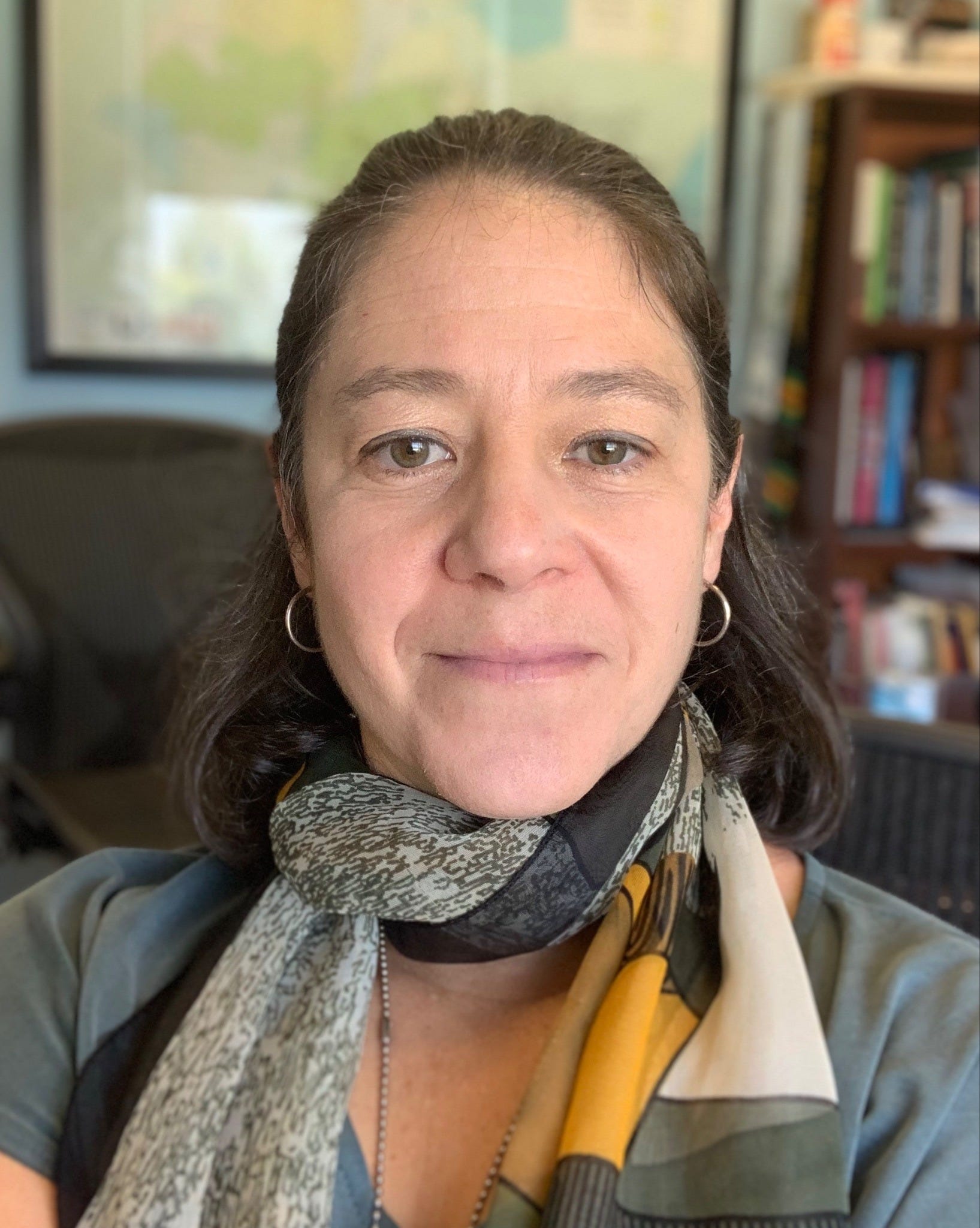
Rachel Cintron MHS MA is an international health and public policy expert with more than 25 years of experience in global public health and economic development. She holds graduate degrees in both International Public Health from Johns Hopkins Bloomberg School of Public Health and International Development from Johns Hopkins School of Advanced International Studies. A Returned Peace Corps Volunteer, Rachel began her international service in Côte d’Ivoire before spending 25 years at the United States Agency for International Development, including serving in the Senior Foreign Service. She is now pursuing a Master’s degree and teaching certification at University of Maryland and will begin her journey as a student teacher this fall.
If you would like to share your perspective on public health right now in this Newsletter written TO and FOR and BY and ABOUT the public health workforce, we are currently running three series:
📢 Voices from the Field: Meeting This Moment in Public Health
Opinion pieces grounded in lived experience💌 Love Letters to Public Health
Poetry, prose, visual art, or other creative formats🚪 Resignation Letters
Real or imagined correspondence documenting what is happening to our people and our institutions in real time
Please get in touch if you would like to submit a draft to any of these series. I will work closely with you to prepare it for publication. Review previous instalments for examples. I will offer you my personal promise of confidentiality if requested.
Lots more information on how to share your story is available here:
I close by emphasising what I said in a previous newsletter:
“At this time of uncertainty for the public health workforce, let’s remember our commitment to science and evidence and data. We know that validating emotions and baggage has a place too, but we need to be able to identify them and distinguish opinion from fact.
Let’s recommit to kindness and mutual support for the public health workforce and beyond. If leaders are trying to sow divisions among us, the best we can do is to respond with empathy, and by strengthening, connecting, and lifting up one another.
Right now, the best I can offer my fellow public health professionals is a place* to gather and reflect and share and vent and organize and ask questions and offer support to one another. We’re going to need that now more than ever.”
*This is a plug for the Public Health Connections Lounge on LinkedIn, where we seek to build community and conversation among public health professionals. Join us.
Public Health Connections Lounge
If you are new around here, Welcome to The Public Health Workforce is Not OK! In this newsletter, I share frank insights and start conversations about the experiences of building a public health career. You can get to know me here and here. Please subscribe, review the action steps and the archive, and join the conversations in the Lounge. I am committed to keeping this newsletter free for job seekers (at least, for as long as I still have a job).
Comments
Nothing yet. Say the first thing.
Sign in to join the conversation.