
As the United States marks the 250th anniversary of the Declaration of Independence, I’ve been reflecting on what independence really means. Working in public health has taught me that our ability to live independently depends on countless people working together.
Every glass of clean drinking water, every restaurant meal, every newborn screening, every disease outbreak detected before it spreads, every emergency response, and every piece of evidence translated into language people can understand reflects the work of people we’ll probably never meet.
Their success is measured by the things that don’t happen: the outbreaks prevented, the injuries avoided, the contaminants removed, and the trust built before it’s needed.
As a naturalized American, I chose this country. I’m now raising a crew of smaller Americans (although some of them are now bigger than me), and that has shaped how I think about the values we celebrate on the Fourth of July and what we pass on to the next generation. (Look, I’m even using American spelling and punctuation in this piece to mark the occasion.)
Independence, for me, has never been about standing apart from others. It has always depended on systems of care, infrastructure, and people investing in one another’s well-being.
Exactly three years ago, on another hot Fourth of July weekend, I took a different kind of step into independence. I launched this Substack newsletter during a period of professional transition, building an independent platform to share my writing and make sense of what I was seeing in the public health workforce. At the time, I had been writing for a year as a contributing columnist for the Journal of Public Health and Management Practice, reflecting on the public health frontline, the workforce, and the realities of the job market. It resonated far beyond my expectations. Clearly, I hit a nerve.
This space was named The Public Health Workforce is Not OK because it captured something we could no longer ignore: a workforce under strain, and a need for honest, collective conversation about it. What began as a move to an independent platform quickly became something else entirely: a community and a shared record where public health professionals could see their own experiences reflected in others.
Public health makes visible something often overlooked: none of us thrives alone. Independence has never meant going it alone. It means people choosing to invest in one another and in the systems that make our lives healthier, safer, and stronger.
Clean water systems, food safety inspections, disease surveillance, emergency preparedness, laboratory testing, and health communication all depend on layers of coordinated work across people, institutions, and communities.
At this moment, I am especially grateful to the countless people working behind the scenes in public health to protect our communities, often without recognition and usually before anyone realizes they needed protecting. If you are in an area currently experiencing extreme heat, please stay cool, stay hydrated, and take care of yourselves and each other.
Since I first launched this Substack on July 4th 2023, it has grown into something far more collective than I ever expected. I recently received a notification that we have reached Number Eight in the rankings of rising Health Politics newsletters on this platform. I’m still trying to make sense of that, especially given the company it places me in. (I welcome thoughts on how to engage thoughtfully with this opportunity.) I am deeply grateful to all of the contributing authors who have trusted me with their accounts of what it is like in the public health workforce right now.
This year also marks the 80th anniversary of the Centers for Disease Control and Prevention, an institution I was proud to serve until earlier this year. It should be a moment to reflect on eight decades of scientific achievement, public service, and prevention work. Instead, it arrives during a period of sustained strain across the public health workforce and the systems it depends on. That tension reinforces what this newsletter has been documenting from the start: institutions do not sustain themselves. They endure only through continued investment, attention, and care.
Looking back at my original welcome post, what stands out to me three years later is the intent: to share openly, to build a space for constructive dialogue, and to make visible the realities of the public health workforce through radical transparency and shared experience. With everything that has happened since then, this work feels even more necessary. The challenges in the public health workforce have not resolved themselves: they have intensified. And yet, our community has grown, persisted, and continued to show up for one another.
If you are a paid subscriber, thank you for sustaining this archive of lived experience, covering burnout, RIFs, caregiving, moral injury, leadership, resilience, and persistence in a system under strain. I welcome you to get more involved.
If you are reading, please know that your subscription helps to keep this space alive and allows me to continue documenting this moment in real time. Your support matters now more than ever. The ways in which you can engage in this work include financial support and other forms of participation.
Our community has grown enormously since I started writing in 2022, and many of you have joined since I first published this article in 2023. I’m delighted to welcome you into the archive, where articles more than a year old (like the one above) are typically available only to paid subscribers.
One of the benefits of a paid subscription here is full access to every edition of The Public Health Workforce is Not OK newsletter. This archive is a living record of what the public health workforce has experienced over the past several years, documenting layoffs, burnout, hiring challenges, leadership, resilience, advocacy, disability, caregiving, career transitions, moral injury, and the countless ways in which public health professionals continue to show up for one another.
Whether you’ve been reading this newsletter for a while or have only recently joined this community, I hope that you’ll consider becoming a paid subscriber. Your subscription unlocks the full archive and helps to sustain this work, allowing me to continue documenting this moment, amplifying the voices of the public health workforce, and creating a space that is FOR, ABOUT, TO, and BY the public health workforce. Especially since I recently lost my job in public health, I appreciate your paid support now more than ever. I’m also making gift subscriptions and group subscriptions available - contact me for more details and discounted rates.
If you’d like to share your own story in public health or a reflection on these complicated times, I’d love to hear from you.
Like all the articles in The Public Health Workforce is Not OK newsletter, this one is not intended to be a monologue. This newsletter welcomes discussion, dialogue, disagreement, and amplification.
Please comment, like, share, recommend, subscribe, or get in touch!
Enjoy this newsletter but unable to become a paid subscriber? ☕️Buy me a coffee instead. And check out all the different ways to get involved.
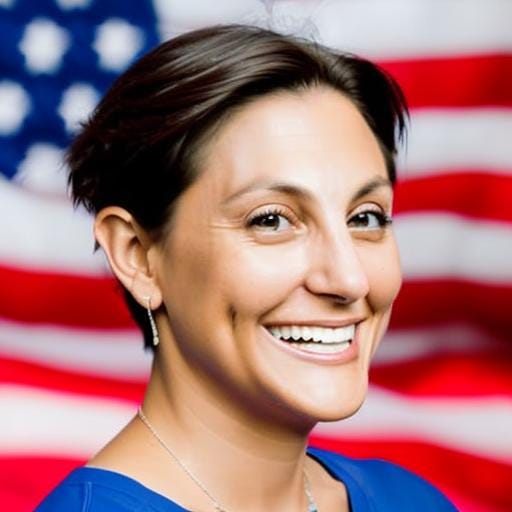
Katie D. Schenk MSc PhD is the Founding Editor of The Public Health Workforce is Not OK newsletter and Founding Director of the Public Health Connections Lounge. She is an epidemiologist and public health informatics specialist with extensive experience in the US and globally, including frontline COVID-19 response, infectious disease surveillance, outbreak investigation, and social and behavioral HIV research in Southern and Eastern Africa. She has worked in the US governmental public health system at local, state, and federal levels, as well as in academia, nonprofits, and the private sector. A passionate advocate for the public health workforce, she uses storytelling, data, and professional networks to elevate public health voices, foster connection, and strengthen the field while promoting workforce wellbeing and career development.
The views expressed here are those of the author and do not represent the views of any organization, employer, or institution with which they are affiliated.
✨Starting in honour of MLK Day, all newsletter authors are invited to share action steps. We compile all suggestions into the Resistance Action page that we have been building since we started. ✨
If you would like to support the public health workforce, including federal workers and former feds, consider taking the following steps:
Share a note of thanks with public health heroes across the nation to recognise their work and commitment.
Get involved in collective advocacy and activism to defend and advance the scientific ecosystem of the United States by supporting Stand Up for Science.
Support NIH staff and alums through the 27 UNIHted network.
Support former CDC colleagues through the CDC Mutual Aid Network.
Stay informed using resources for former and current federal workers from the Partnership for Public Service
Invest in the next generation of public health professionals by participating in APHA Mentor Match as a mentor or mentee.
Advocate to your legislators for a strong public health workforce, including reinstating RIFed positions, lifting hiring freezes, protecting the training pipeline, and restoring the authority and independence that agencies need to do their work. Using this tool connects you straight to your legislators.
Call for sustained investment in health and science by urging elected officials to prioritize public health, research, and prevention.
Vote for leaders who support public health and demonstrate respect for science, evidence, and bipartisan solutions.
Challenge misinformation about federal workers by speaking up when harmful or inaccurate narratives arise and reinforcing the value of public service. Name the reality that federal public health workers are highly skilled, mission-driven professionals who chose public service to improve lives and consistently deliver work that benefits the public.
If you would like to share your perspective on public health right now in this Newsletter written TO and FOR and BY and ABOUT the public health workforce, we are currently running three series:
📢 Voices from the Field: Meeting This Moment in Public Health
Opinion pieces grounded in lived experience💌 Love Letters to Public Health
Poetry, prose, visual art, or other creative formats🚪 Resignation Letters
Real or imagined correspondence documenting what is happening to our people and our institutions in real time
Please get in touch if you would like to submit a draft to any of these series. I will work closely with you to prepare it for publication. Review previous instalments for examples. I will offer you my personal promise of confidentiality if requested.
Lots more information on how to share your story is available here:
I close by emphasising what I said in a previous newsletter:
“At this time of uncertainty for the public health workforce, let’s remember our commitment to science and evidence and data. We know that validating emotions and baggage has a place too, but we need to be able to identify them and distinguish opinion from fact.
Let’s recommit to kindness and mutual support for the public health workforce and beyond. If leaders are trying to sow divisions among us, the best we can do is to respond with empathy, and by strengthening, connecting, and lifting up one another.
Right now, the best I can offer my fellow public health professionals is a place* to gather and reflect and share and vent and organize and ask questions and offer support to one another. We’re going to need that now more than ever.”
*This is a plug for the Public Health Connections Lounge on LinkedIn, where we seek to build community and conversation among public health professionals. Join us.
Public Health Connections Lounge
If you are new around here, Welcome to The Public Health Workforce is Not OK! In this newsletter, I share frank insights and start conversations about the experiences of building a public health career. You can get to know me here and here. Please subscribe, review the action steps and the archive, and join the conversations in the Lounge. I am committed to keeping this newsletter free for job seekers (at least, for as long as I still have a job).
Comments
Nothing yet. Say the first thing.
Sign in to join the conversation.