
This is the second in a two-part series of posts about Madonna. The first, published earlier this summer, features a review of her latest album, Confessions II, and her latest elegiac reinvention.
It can be intimidating to explore the discography of a musician who has been active for over forty years, particularly one who has such an outsized cultural presence as Madonna. I remember, as a preteen in the early 2000s who checked a lot of older books out from the library, reading a young adult book written in the 1980s in which the teenage girl protagonist examines her closet with pride, happy that her yellow shoes match her yellow pocketbook and her red shoes match her red pocketbook—until she goes to her new high school the next day and realizes, with horror, that she looks like a hopeless fuddy-duddy compared to all the girls there copying Madonna’s outfit from her “Lucky Star” video. Such is the power of Madonna—I wasn’t even born when she first became famous (or when that young adult novel was written), but I understand this sentiment of feeling like you’ve got to play catch-up when it comes to her career.
If you’re Madonna-curious but not sure where to start, here are a few of my favorite songs, live performances, remixes, and rarities from her forty-year-plus career, presented in no particular order. It’s a highly idiosyncratic list; I’m a millennial who can appreciate her initial output from the eighties, but for me, the best Madonna is the Madonna of the nineties and early aughts. This Madonna was in her thirties and forties, and had enough clout to push the boundaries of the music industry further than she could have when she was first starting out. She also made growing older as a woman seem cool, attractive, and sexy, something that I appreciate now that I am also in my thirties. It’s her birthday today, so why not celebrate it by a deep dive into the Queen of Pop’s back catalogue?
*
“Let It Will Be,” from Confessions on a Dance Floor and 2006’s Confessions Tour
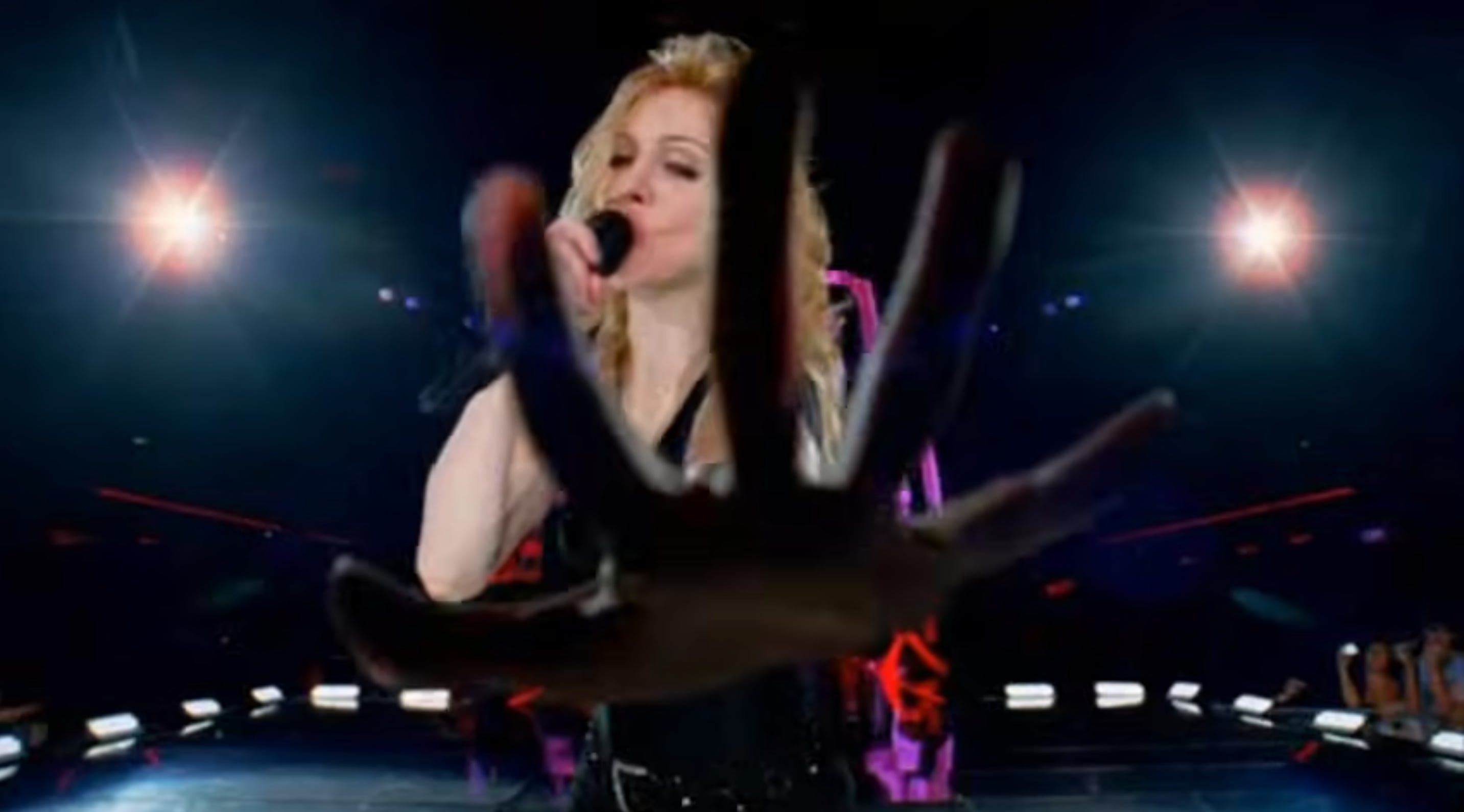
Madonna—a classically-trained dancer who took classes with Martha Graham and played drums and guitar in several New York City punk and new wave bands upon first moving to the city (she in fact lived in the same apartment building as and was friendly, at one point, with members of Sonic Youth and Swans)—has always excelled at putting on a show. This particular performance is an exercise in sheer magnetic stage presence. Dressed in a simple black t-shirt and jeans and without backup dancers, Madonna commands London’s Wembley Arena entirely through her own sense of kinetic verve, twisting, kicking, jumping, and stuffing her hand down her pants in imitation of a louche 70s rock star. The tour version of this uses the Paper Faces remix, but the album version of this song about chance, acceptance, and the weird fate of living is really good, too, and one I often listen to while riding the subway.
*
“Waiting,” from Erotica
This is a deep cut, the seventh song from Madonna’s fifth studio album, 1992’s Erotica. It’s another one of her particularly “New York”-sounding records (she “wanted Erotica to have a raw edge to it,” observed producer Shep Pettibone, “as if it were recorded in an alley at 123rd Street in Harlem”), and draws on house, trip-hop, and jazz in its explorations of the highs and lows of love in all its forms. The scandal surrounding the photo project published in conjunction with the album, the artbook Sex, nearly got Madonna cancelled and the album’s sales were (relatively) low, but today, the album is widely considered to be something of a masterpiece. It’s probably my favorite Madonna album. This song is a downtempo kiss-off about the perils of dating an emotionally-immature partner and sounds pretty different from what people usually associate with Madonna, which is one of the reasons I love it. “It was so easy in the beginning, when you didn’t feel like running from your feelings,” Madonna hisses over a fuzzy-sounding saxophone and scattering of piano, before finally giving her tough-girl goodbye at the end: “And the next time you want pussy? Just look in the mirror, baby.”
*
“American Life,” from 2004’s Re-Invention Tour and 2003’s American Life
This is another album that was widely reviled upon its release—many critics deliberately misinterpreted the extremely camp, sarcastic rap that occurs three-quarters of the way through the title song as a serious attempt to appear cool to young listeners, and, after death threats towards her children, Madonna pulled the original music video for the title track that featured a George W. Bush lookalike sharing a cigar and a kiss with a Saddam Hussein lookalike in protest of the recently-declared Iraq War. Of course, the album—produced in collaboration with the French electronic musician Mirwais, with whom she also worked with on 2000’s Music (and later, 2019’s Madame X)—is now having something of a revival and is being cited as an influence by the likes of Charli XCX.
Like a lot of Madonna’s songs, “American Life” comes to its full fruition when performed live, and in this performance from 2004’s Re-Invention Tour, you really get a sense of her early punk roots from when she was playing drums and singing in bands like Emmy and the Emmys. “Fuck it!” Madonna repeats, at once angry and defiant, as she moves across the stage while garbed in American military costume. Paired with lyrics that question the materialism of early twenty-first century American life (some of which Madonna is fully guilty of embracing, too) and the concerns she heard about her weight (too heavy) and name (too complicated) at the beginning of her career, this is Madonna at her most politically provocative. (I also recommend the Felix da Housecat remix.)
*
“Drowned World / Substitute for Love,” from 1998’s Ray of Light
You cannot discuss Madonna’s career without discussing the juggernaut that was 1998’s Ray of Light album, an absolutely-massive comeback (well, she’s always having comebacks) released when she was forty and inspired by the birth two years earlier of her first child, Lourdes Leon. I love this album, especially this opening song about the claustrophobia of fame named after the British writer J. G. Ballard’s 1962 novel The Drowned World, but I also think the cultural critic Mary Gabriel makes a good point when she observes, in her 2023 biography of Madonna, A Rebel Life, that much of the goodwill that male critics bestowed on this record might have been connected to the fact that it depicts a softer, more maternal Madonna, less politically and sexually threatening than she was during Erotica. That being said, the production of this album is otherworldly: Madonna worked closely with the British electronic artist William Orbit, known prior to this album for releases like his Strange Cargo series and 1995’s classical-electronic fusion Pieces in a Modern Style (an album which drew the ire of the Estonian composer Arvo Pärt). Sadly, Orbit passed away at the end of July after making something of his own comeback in the last few years following struggles with addiction, and Madonna posted this very lovely tribute to him online.
*
“Vogue,” from the 1990 VMAs
This is maybe one of Madonna’s most famous live performances of all time, and with good reason: this tongue-in-cheek fusion of past with present as she and her dancers dress up in the costumes of the pre-revolutionary French court’s ancien regime (borrowed, in fact, from the 1988 movie adaptation of the 1782 French novel Les liaisons dangereuses) all while voguing away feels like it should be the dictionary definition of postmodernism. Upon watching it, I immediately understand why so many academic papers have been written about Madonna.
*
“Erotica / You Thrill Me,” from 2006’s Confessions Tour
Among Madonna fans, this performance is rather infamous, the widely-agreed upon best version of “Erotica,” the title track from the controversial 1992 album, that fuses the song with discarded lyrics from an earlier draft called “You Thrill Me.” I love the original version (I was obsessed with Weimar Berlin as a young teenager, and there’s a lot of Marlene Dietrich in Madonna’s Mistress Dita persona in the song and video) and the William Orbit remix that has some alternate cheeky lyrics, but the addition of “You Thrill Me” deepens the emotional register of the song, turning it into a paean to the myriad of ways in which romantic love and sex can overwhelm you. Lucky me: Madonna brought back this particular reimagining of the song to her Celebration Tour in 2024, and I got to see it live (paired with a great dance routine based around boxing).
*
“Justify My Love” and “I Want You” (with Massive Attack)
These songs aren’t connected to one another anywhere except in my mind. But both have black-and-white videos, were recorded only a few years apart, feature the obsessive elements of love as their subject matter, and both take a slower, lusher, trip-hop inspired sound (“I Want You,” a Marvin Gaye cover, is in fact a collaboration with the British trip-hop collective Massive Attack, some members of which initially wanted Madonna to provide vocals on “Teardrop”). The erotic imagery of “Justify My Love” caused a huge uproar in America upon its 1990 release and was banned from MTV, which prompted Madonna to go on the news and eloquently defend the video as a “celebration of sex” instead of violence. The Beast Within remix, featuring Madonna reading from the Book of Revelations, is also worth a listen. And the video of “I Want You” draws its inspiration from the Dorothy Parker short story “A Telephone Call,” following a woman as she waits by the telephone for her lover to call her. Women and telephones: a fruitful subject! (Earlier this year, I saw the soprano Barbara Hannigan perform Poulenc’s one-woman opera adaption of Cocteau’s play La voix humaine, which also features a woman waiting for a phone call.)
*
“I Don’t Search, I Find,” from Madame X
This is a late career Madonna song, coming from her 2020 album Madame X (the title of which apparently was a nickname that Martha Graham once gave her). There’s a nineties house groove to it that recalls everything she creating in the Erotica era, but “I Don’t Search, I Find” also contains a certain hauteur, born from hard-won experience and age. Madame X is not exactly a fan favorite album, but I like it when Madonna gets a little weird, as she does in “Dark Ballet,” a song about Joan of Arc and fighting the patriarchy that also inexplicably features a sample from Tchaikovsky’s The Nutcracker plopped in halfway through (it works, I promise). Anyway, there is a labyrinthine, sinuous quality to “I Don’t Search, I Find” that makes it another great New York City song (I listened to it a lot while sitting on the A train in the summer of 2024).
*
“Human Nature,” from 2001’s Drowned World Tour
This is just Madonna at her peak: clad in a cowgirl outfit and riding a mechanical bull while defiantly singing the song she released in protest to all the outrage she got over Erotica and Sex. Express yourself, don’t repress yourself! What a delightful mish-mash of reference points, images, and sounds. The video for “Human Nature,” with its BDSM-inspired outfits and dance, is also worth a gander, though the album it’s from, Bedtime Stories, is not my favorite. It was released in an attempt to rehabilitate Madonna’s image after all the controversy, and it succeeded in doing so. The latter half of the album is where it gets a little more interesting to me, once “Human Nature” appears and is then followed a few songs later by “Sanctuary” and “Bedtime Story,” both of which were produced by Nellee Hooper, who produced Björk’s first album, Debut. “Bedtime Story” was itself a collaboration with Björk (she provided the lyrics), whose work I was obsessed with as a teenager; the music video features several references to Surrealist painters including Frida Kahlo and Leonora Carrington and is part of the permanent collection at the Museum of Modern Art.
*
“Music,” as performed at Live 8
This is one of my favorite Madonna singles of all time and this is one of my favorite performances of hers of all time. “Music,” from her first collaboration with the French producer Mirwais, answers the question of what kind of pop music a sophisticated adult might actually want to listen and dance to. This performance, recorded in London in 2005, features several dancers from Madonna’s Confessions tour breakdancing, and Madonna herself—clad in a fabulous white pantsuit, an “M” initial necklace, and some great 2000s hair—does some interesting slow motion breakdance moves, as well. She’s completely commanding that insane crowd, and I like it when she tells the photographers taking photos that she won’t sing again until they clap along, too. I can’t hear this song without wanting to dance. I do, in fact, like to boogie-woogie! In the same way that Virginia Woolf referred to Middlemarch as one of the few novels written for grown-ups, this is pop music for adults.
Further reading
If you’ve gotten this far and need some more Madonna in your life, I recommend picking up the following resources.
Madonna: A Rebel Life, Mary Gabriel
This is an incredible 2023 biography by Mary Gabriel, author of Ninth Street Women (also amazing, about the female Abstract Expressionists) and Love and Capital: Karl and Jenny Marx and the Birth of a Revolution (which was a finalist for the Pulitzer Prize).
Madonna: Like an Icon, Lucy O’Brien
Another fascinating biography by the English music critic Lucy O’Brien, originally published in 2007 and updated in 2018.
Bandsplain, by Yasi Salek
In general, I hate podcasts, but this Ringer-hosted podcast from the music critic Yasi Salek is really great. A few months ago, she did a deep dive into Madonna’s career, featuring four episodes about all of the albums, one episode about her movie career (something I have barely touched in this newsletter), and a fun review of Confessions II, totaling something like fifteen hours of Madonna-related content to listen to. She’s also a fan of the Mary Gabriel biography, and she includes guests like Mel Ottenberg, the editor-in-chief of Interview magazine. It’s a fun listen.
No posts
Comments
Nothing yet. Say the first thing.
Sign in to join the conversation.