
At our last J & J Photo Art Marketing Café, we explored a simple but powerful idea:
An exhibit isn’t just a moment—it’s an asset.
Too often, photographers celebrate the acceptance email, attend the reception, and then move on to the next project. But what if every exhibit could generate new collectors, collaborations, and creative momentum long after the show ends?
Jessica Lempin and the Photo Art Pavilion team shared a three-phase framework to help artists transform a single exhibit into a chain reaction of opportunities.
Before your work ever hangs on the wall or appears in a virtual gallery, take time to clarify what success looks like for you.
Ask yourself:
Are you hoping to meet potential collectors?
Build credibility in the art world?
Form relationships with designers, curators, or fellow artists?
Setting clear goals helps you show up with purpose.
Another important reminder from the session: don’t rely solely on the gallery to promote your work.
Your voice matters in telling the story behind your images.
Consider sharing:
Behind-the-scenes glimpses of your process
The story that inspired the piece
Your thoughts about being selected for the exhibit
And make sure you have connection tools ready—business cards, QR codes linking to your gallery, and an easy way for viewers to stay in touch.
Whether the exhibit is physical or virtual, your presence matters.
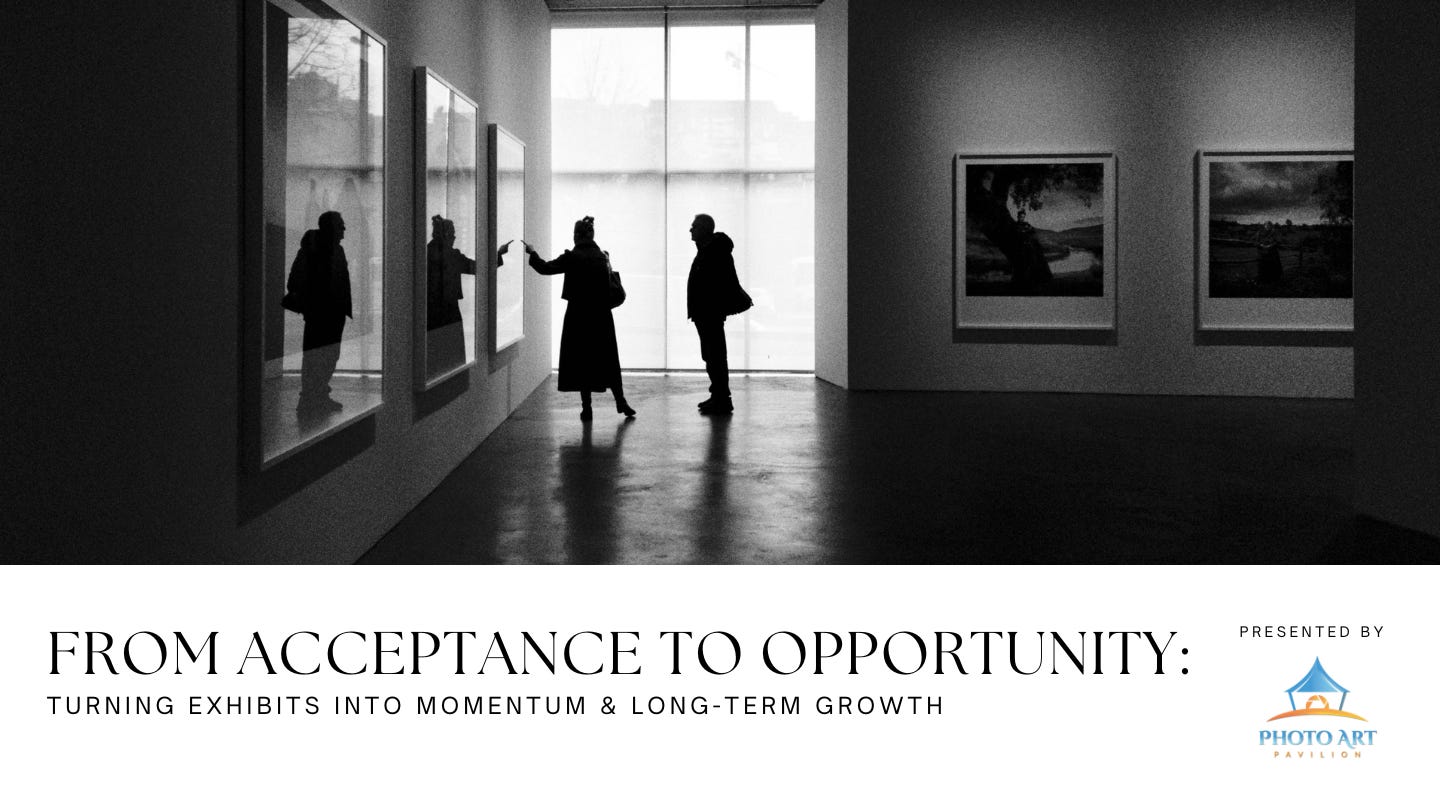
If you’re attending an in-person reception, position yourself near your artwork when possible. It’s not about hovering—it’s about being available for conversation.
A simple question can open the door to meaningful connections:
“What drew you to this piece?”
This approach shifts the focus from selling to sharing. It invites viewers to engage with the work and creates space for authentic dialogue.
For virtual exhibits, the same principle applies.
Participate actively in online receptions or discussions. Comment, ask questions, and interact with attendees.
The goal isn’t an immediate sale—it’s building relationships that may lead to future opportunities.
This is where many artists stop—but it’s where the real opportunity begins.
Within 72 hours, follow up with the people you connected with. A simple email thanking them for the conversation can leave a lasting impression.
Then think about how to extend the life of the exhibit.
One exhibit can easily become 30 days of content:
Share photos from the reception
Post details of the exhibited piece
Reflect on what the experience meant to you
Highlight conversations or feedback you received
You can also update your professional materials:
Add the exhibit to your SM
Include it in your artist bio
Feature the work on your website or portfolio
And most importantly, ask yourself:
How can this exhibit lead to three new opportunities?
Maybe it’s reaching out to a designer who attended.
Submitting the series to another exhibition.
Or pitching the story behind the work to a publication.
Jessica summed it up beautifully during the Café:
Treat exhibits as assets, not just moments.
When you approach each opportunity with intention, community, and consistency, the impact grows far beyond the gallery walls.
One exhibit becomes:
New relationships
New visibility
New confidence
New opportunities
And that’s how creative careers grow—one thoughtful step at a time.
If you’d like to watch the full discussion and hear the stories, examples, and audience questions we covered, head over to the Photo Art Pavilion YouTube channel for the recording.
And if you haven’t joined us yet, consider attending the next J & J Photo Art Marketing Café—where photographers gather to learn, share, and build momentum together.
Here’s to turning acceptance into opportunity.
Comments
Nothing yet. Say the first thing.
Sign in to join the conversation.