
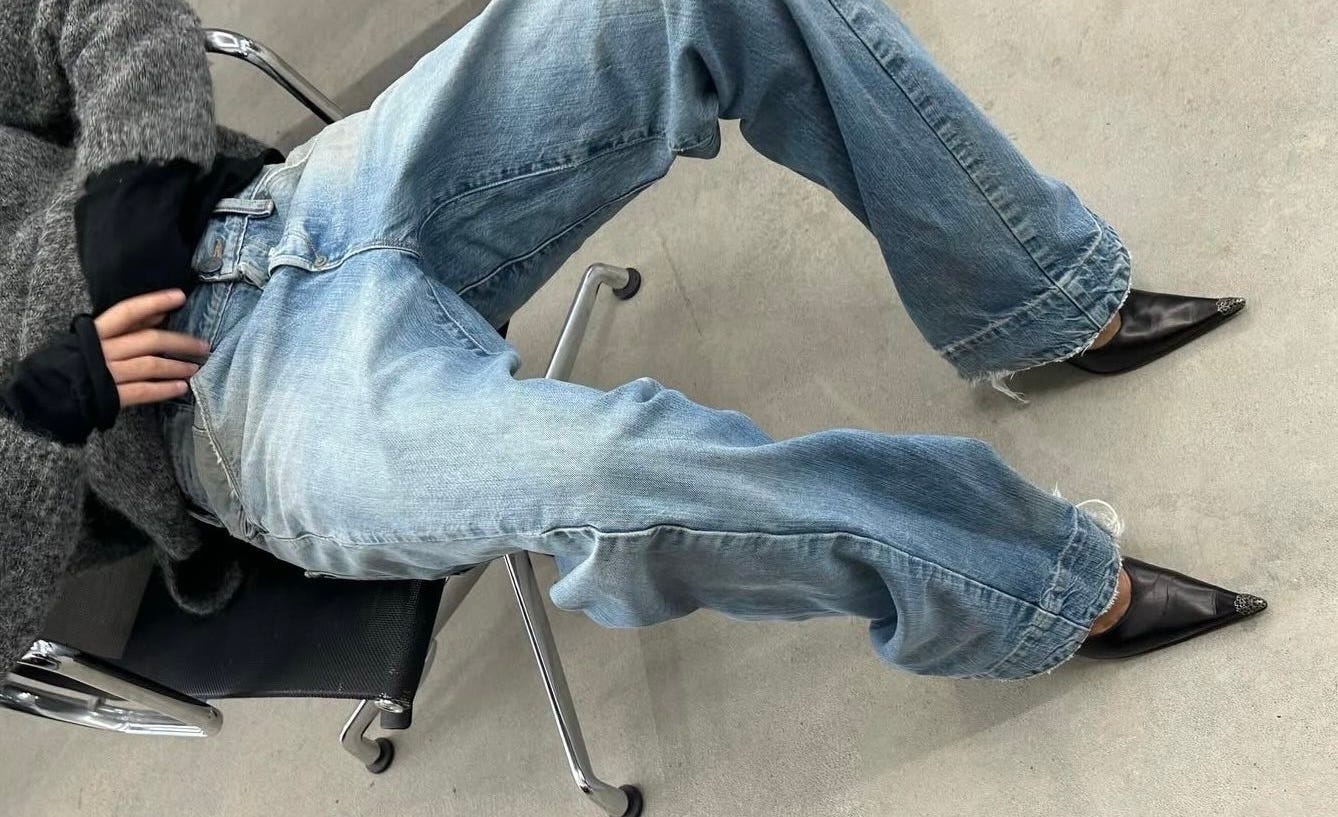
The more money you spend on an outfit, the more important it becomes that nobody can tell. And there is perhaps no faster way to make an outfit less impressive online than to reveal that someone got paid to wear it.
Fashion influencers are expected to look good for a living, but somehow they’re not supposed to look like they got paid for it. The clothes can be beautiful, the styling can be impeccable, and the outfit can be completely in line with everything we’ve previously admired about their taste—but once we learn that the clothes were gifted, or that the person was paid to wear them, something about our perception can change.
Of course she looks good. She’s getting paid to.
It’s a strange response. We don’t generally consider someone’s taste less legitimate because they had access to better tools or resources. But with fashion, there seems to be an expectation that good taste should exist somewhat independently of money.
We want you to have taste. We just don’t want to see the money behind it.
This is why a $20 thrifted jacket can be evidence of excellent style, while a $2,000 designer jacket can be evidence that you have too much money.
And yet, if that $2,000 jacket is obscure enough, well-made enough, and logo-free enough, it can suddenly become evidence of excellent taste again.
The difference isn’t necessarily how much the person spent. It’s what we think the money says about them.
We seem to have developed an entire aesthetic system for determining which kinds of wealth are tasteful.
You can spend a lot of money. Just don’t look like you spent a lot of money.


A beautifully cut wool coat with no visible logo is sophisticated. A giant logo across the chest is tacky. A $1,500 leather bag that looks like an unremarkable leather bag is an investment. A $1,500 bag covered in recognizable branding can be a status symbol.
The more expensive something is, the more impressive it can become if you can make the price invisible.
This is part of the appeal of “quiet luxury,” but I think it goes beyond that trend. There is something deeply satisfying, at least within online fashion culture, about finding the expensive thing that doesn’t announce itself as expensive. It becomes a kind of secret knowledge.
I know this is good. I know this is expensive. And I know you can’t immediately tell.
That seems much more fashionable than simply wanting other people to know that you can afford it. Which makes me wonder: are we actually opposed to wealth in fashion, or are we opposed to visible wealth?
Because if that’s the case, the hierarchy gets strange.
The person who spends $5,000 on a coat that looks like it could have cost $200 can be praised for their taste.
The person who spends $200 on a coat that looks like it cost $5,000 can be criticized for trying too hard.
And the person who spends $20 on a vintage coat that looks like it cost $2,000 can be treated like they’ve won the fashion lottery.
We don’t just admire the result. We admire the relationship to money that we imagine produced the result.
This is where thrifting becomes especially interesting.
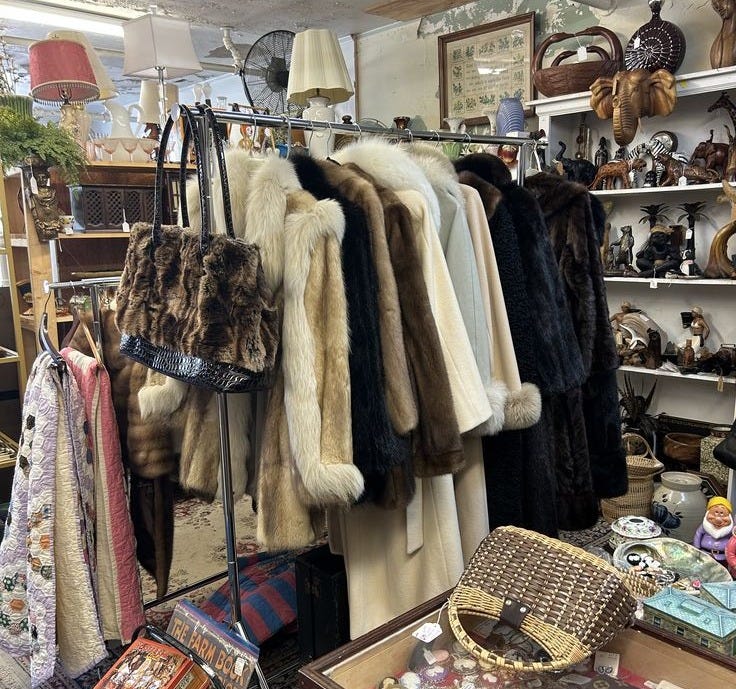
Thrifting has become one of the most fashionable ways to spend very little money. And for good reason: vintage clothing can be more distinctive, better made, more sustainable, and less tied to whatever trend the algorithm is currently pushing.
But there is also a particular cultural prestige attached to being good at thrifting.
Finding the perfect leather jacket for $15 isn’t just owning a cool leather jacket. It’s evidence that you know where to look. You have patience. You have an eye. You can recognize value where other people couldn’t.
The low price becomes part of the story. And that’s what makes it so different from buying a $15 shirt from a fast-fashion website.
Both are inexpensive. But one suggests resourcefulness, while the other can suggest convenience. One suggests individuality, while the other can suggest trend-chasing. One suggests that you found something the rest of us overlooked, while the other suggests that you bought something because thousands of other people were buying it too.
The price is the same. The meaning isn’t.
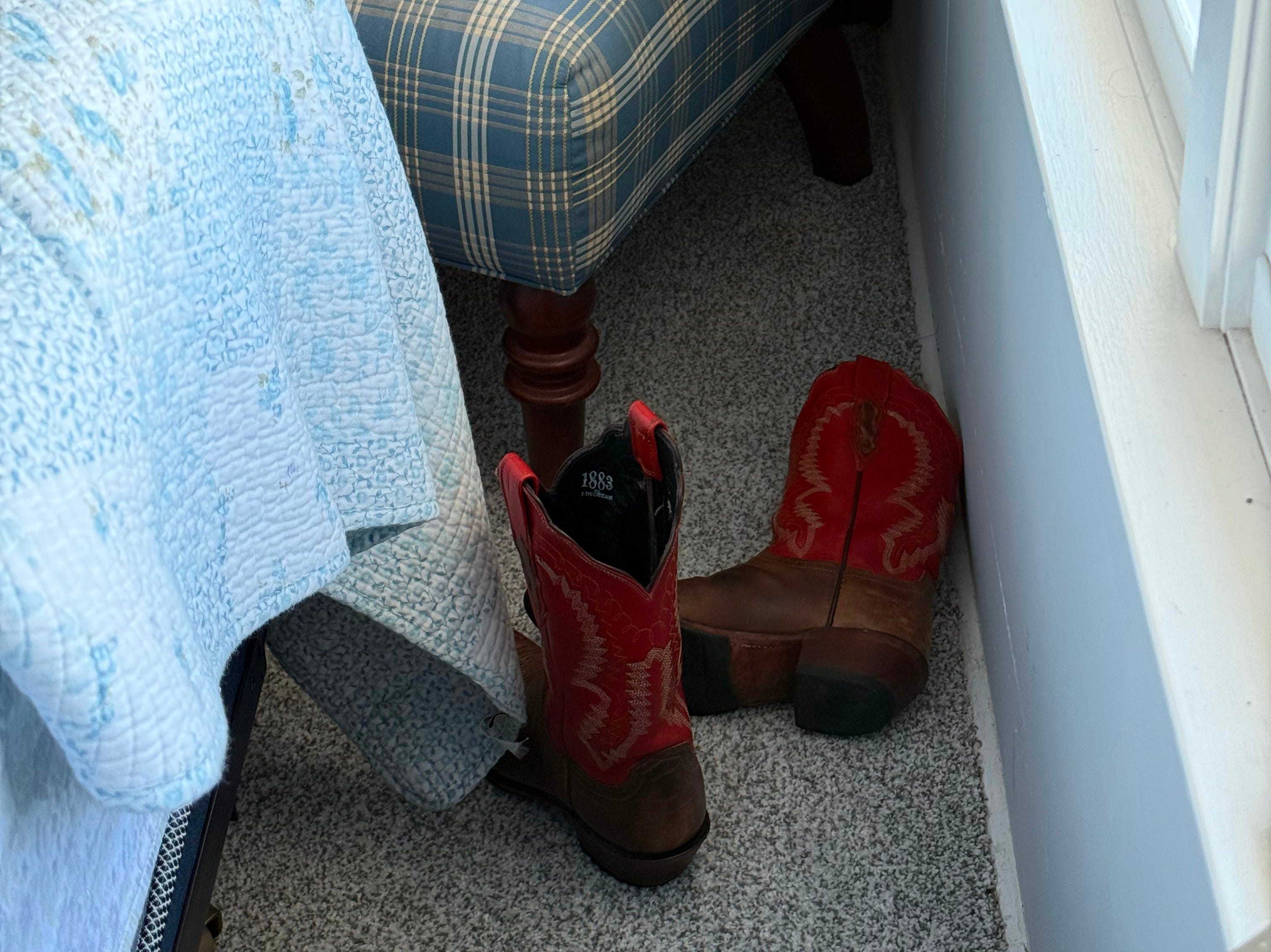
I have a pair of vintage red and brown leather cowgirl boots that I wear almost every day. Whether they’re part of an actual styled outfit or just thrown on over my sweatpants and sleep top, they find a way to my feet at least 300 days out of the year.
One day I popped into an independently owned little shoe store that’s been here in Pittsburgh for decades. The man working there looked at my boots, asked me how much I paid for them, and stared at them, puzzled, when I answered, “$180.”
I thought he was judging me for paying so much for an old, worn pair of essentially work boots. But he looked back up and said, “Those are like an $800–900 pair of boots.” He’d been in the industry for over forty years.
This only intensified my obsession with them.
They were the only pair in the consignment shop. They were in my size. I found them, and I had good enough intuition to trust that they were well worth 180 of my precious dollars.
The man in the shoe store knew something I didn’t—and now I feel like I know something that everyone else doesn’t. I’m in on it.
I’m in on how much these vintage boots are worth, how rare it was for me to find them, and how good my taste must be to have chosen to buy them.
These boots mean so much more to me than another $180 pair of boots I bought new from a popular brand.
The price is the same. The meaning isn’t.
And then there are designer dupes, which create another strange contradiction.
For years, one of the biggest criticisms of designer fashion was that it was inaccessible. If you loved the shape of a designer bag but couldn’t afford it, the existence of a cheaper version was supposed to be a good thing. But now even that has become complicated.
We can criticize someone for following designers because “money doesn’t equal style.” But we can also criticize someone for buying the cheaper imitation because they’re participating in the same status system—profiting from and reproducing designs whose original value comes partly from their exclusivity.
We want fashion to be accessible. But we also want it to be original.
We want people to reject status symbols. But we also want them to recognize quality.
We want people to spend less. But we don’t want them to buy cheaply made things.
We want people to look expensive. But we don’t want them to look like they’re trying to look expensive.
At some point, it starts to feel less like a question of money and more like a complicated moral code for how money should appear on the body.
Maybe that’s why the relationship between class and fashion is so difficult to untangle.
We tend to imagine that fashion works in an obvious class hierarchy: expensive is good, cheap is bad; rich people have access to better clothes, and therefore look better.
But online fashion culture seems to have inverted that hierarchy.
The person with less money can actually receive more fashion credit for looking good.
There is something especially impressive about someone who manages to dress beautifully without spending much. The less they appear to have had to work with, the more talented they seem.
Meanwhile, someone with unlimited resources can almost be robbed of the opportunity to impress us. If they look good, perhaps they just had access to good clothes.
It’s almost as though we want to see evidence that someone’s taste exists independently of their purchasing power.
And honestly, I understand that impulse.
It’s genuinely satisfying to discover that style doesn’t require a huge budget. Fashion can be creative, resourceful, and personal. You can have incredible taste without being wealthy. You can find beauty in secondhand clothing, alter things yourself, wear something for twenty years, or make an outfit out of things other people overlooked.
Those are good things to value.
But I wonder if we’ve taken the idea a little too far. Because sometimes it feels as though we’re no longer just evaluating what someone is wearing.
We’re evaluating whether they have earned the right to look good in it.
A person with very little money wearing fast fashion may be judged differently from a person with plenty of money doing the exact same thing.
A wealthy person buying something cheaply can be criticized for being unsustainable when they have the resources to be more selective. A less wealthy person buying something cheaply might be given more grace, because we don’t like to pretend that everyone has the same choices available to them.
And a wealthy person buying something expensive can be praised if the expense is hidden behind quality, while criticized if the expense is visible through branding or status.
So where exactly does the fashionability come from?
Maybe it’s somewhere on a sliding scale between money, quality, and sustainability.
Less money + more sustainability + higher quality = exceptional taste.
More money + less sustainability + lower quality = terrible style.
But money by itself doesn’t seem to determine where something lands.
It’s the relationship between those things.
And perhaps that’s because we aren’t actually trying to eliminate class from fashion. We couldn’t, even if we wanted to. Fashion is an industry built around production, consumption, labor, scarcity, craftsmanship, branding, and status. Money is embedded in almost every decision we make about clothing.
We just prefer not to see it.
And I’m absolutely a cog in this machine, too.
I don’t think I would be as obsessed with my red and brown boots if I had nonchalantly paid full price for them. The surprise frugality of the purchase made them feel more impressive to me, and therefore, more fashionable.
They’re worth money. They don’t look much like it. And I didn’t spend much to get them.
Ah, exceptional taste.
Maybe the real contradiction is that we don’t want to believe that money has anything to do with taste, but we constantly use our assumptions about money to decide how much taste someone has.
We admire the person who can make $50 look like $500.
We admire the person who can make $500 look like $50.
And maybe, above all, we admire the person who makes us forget there was money involved at all.
I’m not sure that’s necessarily a bad thing.
There are plenty of good reasons to value sustainability, craftsmanship, individuality, and resourcefulness. There are plenty of good reasons to question conspicuous consumption and an industry that constantly encourages us to buy more.
But I do think it’s worth noticing when those values start becoming aesthetic judgments.
Because maybe the most fashionable thing isn’t actually having less money.
Maybe it’s looking as though you could have had more money, but chose not to make that the point.
And maybe that’s why, in fashion, wealth is only chic when you can’t see it.
Comments
Nothing yet. Say the first thing.
Sign in to join the conversation.