
When someone out of their mind does something awful, there is often a temptation to stuff their actions into culture-wars categories, as though they had been acting rationally. The paradigmatic example of this would be the viral video of the racist tirade. Someone is hallucinating, having some kind of psychotic break, and failed to adhere to the correct 2020s terminology for marginalized peoples when ranting. Someone else takes a video, and it gets held up as Karen Karening.
The relationship between insanity and moral culpability is something for the lawyers, and for my podcasting better half. What I’m talking about here is the relationship between acts committed while out of one’s mind, and in-this-essay-I-will-argue statements. Is there any relationship between the psychotic child-murder and the same woman on mood stabilizers. Troublingly, as Kat explains better than I could, yes.
However. Is there any relationship between this lady and the woman burnt out from childcare responsibilities (but meeting those responsibilities) when really she ought to be counting her blessings? Between the murderess and the woman who—fuelled by content consumed, or just life experience—fears losing her own identity and becoming just a mom, who winces when strangers call her “mama”? Was the crazy murderer lady basically just some kind of extreme case of a woman failing to heed the AI images of Ballerina Farm-inspired women, frolicking pronatalistly in fields, untouched by postpartum hair loss, and responding to new motherhood in ways that fall short of the blissed-out and Instagram-ready?
People do like stories to mean something. But the biggest chunk of meaning here is the reassuring fact that most people are thankfully not out of their minds in violent ways, let alone ones that go to the darkest places imaginable. Much as I maintain that the Gisèle Pelicot case doesn’t teach us that the typical straight man is drugging his wife and having men come by to rape her, I think it’s helpful to remember that even if the unthinkable acts came from someone who seemed (at least in some trivial ways) ordinary, it doesn’t logically follow that everywhere you look, there’s a 50-50 chance the person you’re chatting with is about to snap or already has.
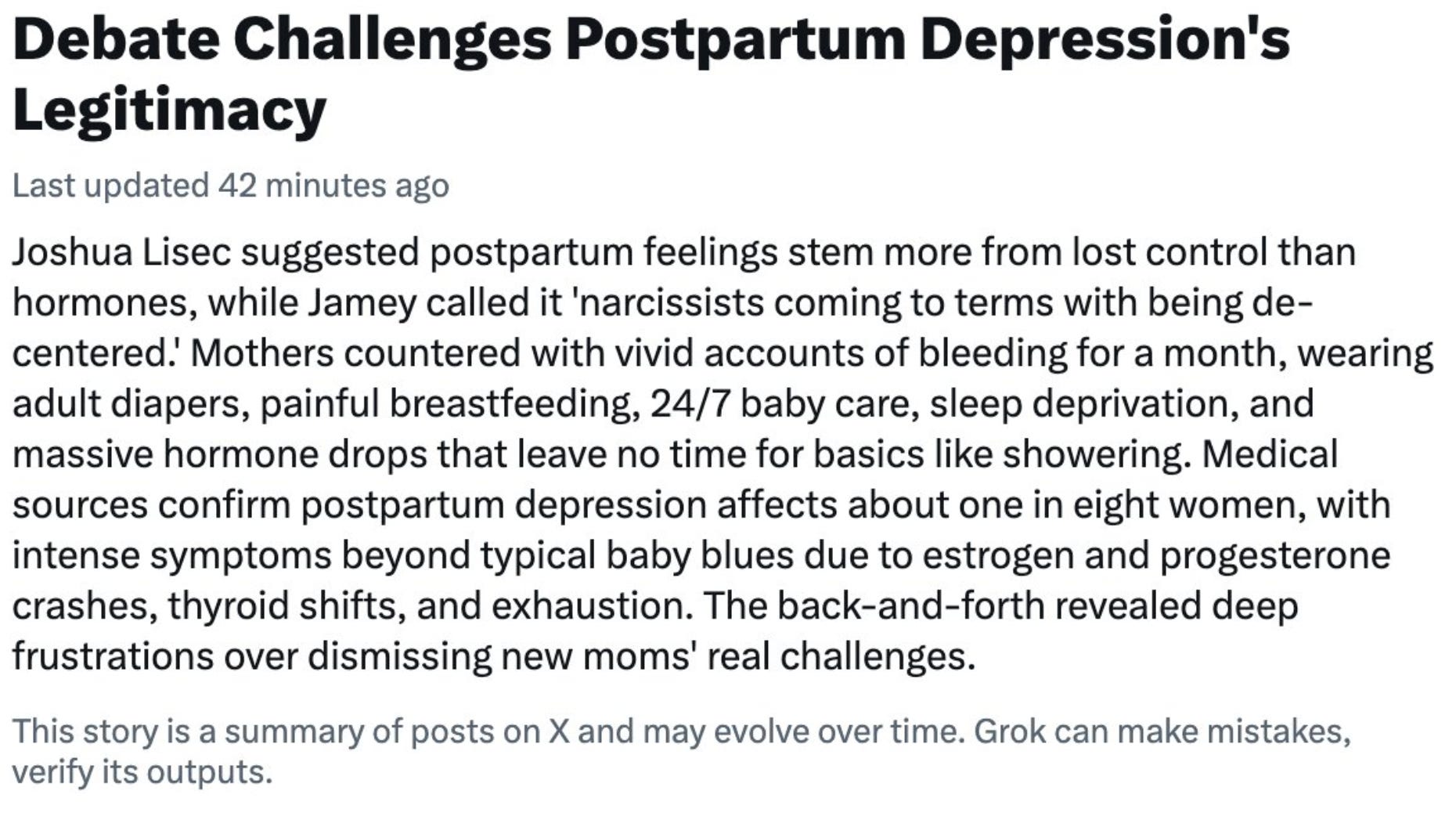
It genuinely didn’t occur to me, though, when I first saw that ‘is PPD real’ was trending, that there’d be a connection between these topics.
It’s like if someone, in a psychotic episode unrelated to childbirth, committed a horrendous crime, and then there was a pivot to, So, let’s talk about depression!
It’s like if there was a big feature on a rare genetic disorder and a pivot to, So, eczema, what’s THAT about?
Comments
Nothing yet. Say the first thing.
Sign in to join the conversation.