
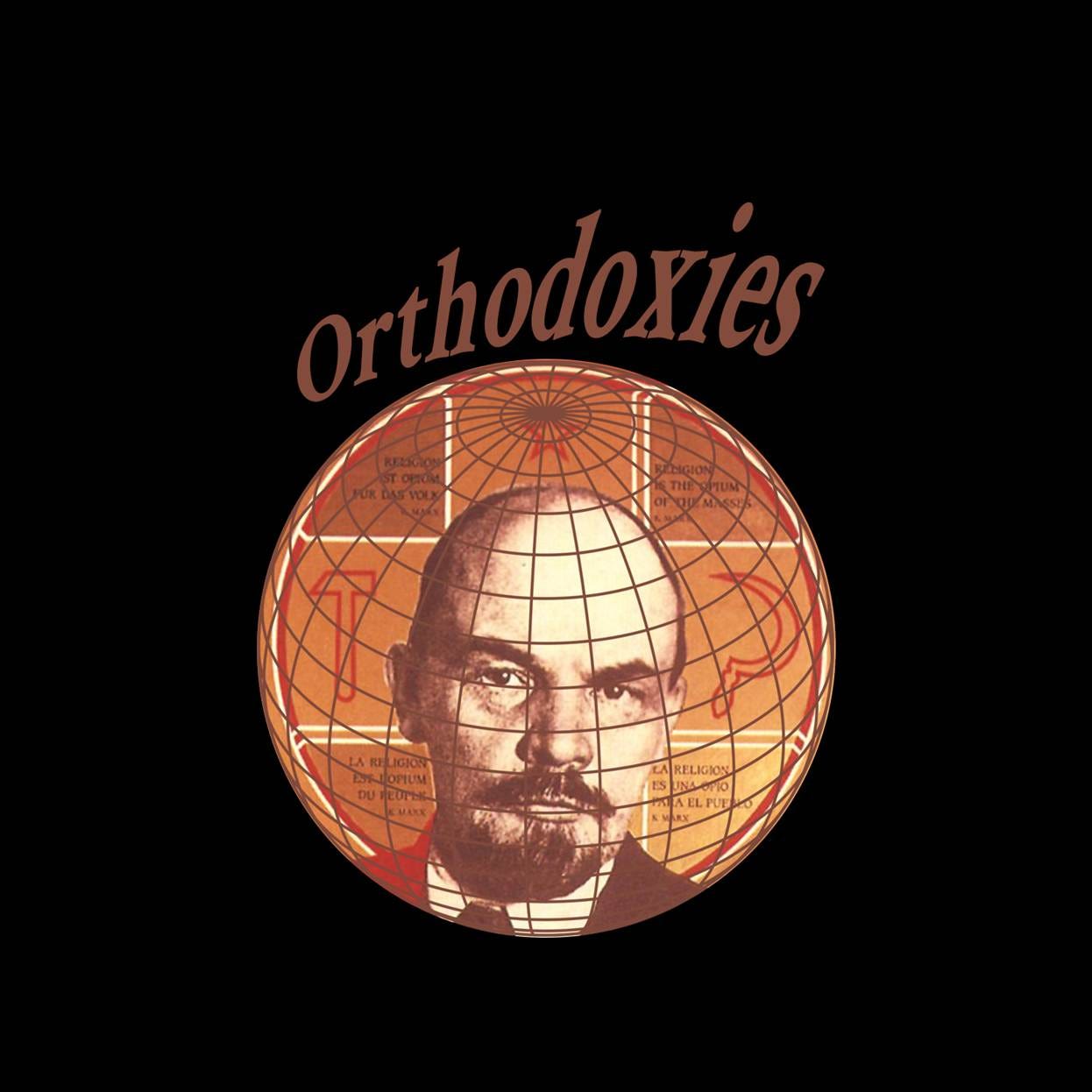
This is the sixth entry in the “Reading Hellworld” series, where I review and expand on various ideas addressed in the book. I recently had the opportunity to appear on the Party Girls podcast where I discussed some questions around my more recent texts on political organization (namely a forthcoming piece in Issue 3 of Heatwave) and the theory of party, which elaborate on the political philosophy presented in Hellworld. There were a number of points I mentioned briefly but wasn’t able to explore in any detail in the interview, and I figured that it might be helpful to expand on some of them here. In particular, I wanted to address questions of how to situate the production of theory within its historical context and how this then raises ongoing conflicts over the nature of orthodoxy within the communist tradition: what makes particular thinkers or theories authoritative, in some sense, and others less so? What is the divide between “vulgar” forms of Marxism, communism, etc. and “true” communist thought? Why does this divide so often sort into two sides: from one perspective appearing as a problem of over-academicism that fails to engage with questions of organization, and, from the other, as over-parochialism that fails to engage with theoretical questions in any depth. And why does this divide then get transposed onto the international division of labor, expressed alternately as scorn toward “Western Marxism” (and even mass uprisings in the wealthy countries) or toward the “vulgar Marxism” of living revolutionary traditions in poorer countries? Finally, I discuss how this tension informed the approach used in Hellworld, which, though heavily informed by Marxological debates, does not primarily seek authority through strict quotation of Marx or his interpreters.
The inherently schismatic tradition of communism bequeaths each new generation of communists an embarrassment of taxonomies. Though these taxa were once living, breathing traditions materially divided from one another by differences of strategy concretized in key moments of tactical divergence – whether to endorse or condemn the war, whether to take up arms (and when), whether to ally with the nationalists/social democrats/popular front, etc. – the long eclipse of the global communist movement then progressively unmoors these positions from any grounding reality. They are thereby reduced first to something more like brands mobilized to align certain ideological currents in the abstract and, as these currents die out in practice, each of these brands becomes its own bargain bin into which antique ideas can be piled according to their vintage, to be sifted through by hobbyists on the internet. What we inherit are therefore bleached ruins and fossilized remnants: antiquities, rather than strategies. We then emulate these artifacts as they immediately appear to us, entirely stripped of their context, much as the Victorians produced their own artworks based on the pale statuary of Greece and Rome, not knowing that they were once vibrantly painted, or how the early paleontologists wrapped thin veneers of flesh over frames of fossilized bone, leaving out layers of fat and feather.
In other words, we conceive of these positions as purely formal abstractions. These are strategies bleached by time and pared down to their skeletons. They are memories etched in stone. The process of political awakening therefore seems to simply be a matter of reading through these various positions and their sanitized historical documents, deciding which one resonates the best with you, and then seeking out existing organizations aligned with that position. These organizations, meanwhile, emulate the skeletal structures they are modelled on by paring themselves down to an irreducible sectarian residue: the “cadre organization” or “democratic centralist” party which, ultimately, does nothing more than reproduce itself as a sect. The process is, in other words, understood as a mostly discursive ritual practice, conducted largely online or, at most, in study sessions, with any on-the-ground organizing efforts following from this discursive sorting process.
What we inherit are therefore bleached ruins and fossilized remnants: antiquities, rather than strategies. We then emulate these artifacts as they immediately appear to us, entirely stripped of their context, much as the Victorians produced their own artworks based on the pale statuary of Greece and Rome, not knowing that they were once vibrantly painted, or how the early paleontologists wrapped thin veneers of flesh over frames of fossilized bone, leaving out layers of fat and feather.
Meanwhile, the documents being studied are themselves taken entirely out of context. Political polemics issued in momentary debates in a particular socialist confederation in a particular decade of the 20th century are read as if they were general manifestos on the topic of communist organization in any place and time. Pressing tactical decisions forced by singular confluences of history are treated as universal prescriptions. Ideal descriptions of revolutionary life derived from purely propagandistic texts responding to imperialist aggression are confused with actual documentation of how socialism was constructed.[1] The Communist Manifesto is treated as a general schema laying out the universal principes of communism when it was, in fact, a polemical text issued in the context of the 1848 revolutions, proposing a minimal, immediate program designed to interface with the mainstream radical republicanism of the era. More broadly, Marx and Engels’ early drafts are placed on par with their finished works and explicit consistencies are sought throughout the entire corpus in order to recast Marxism as a systematic and all-encompassing worldview. Texts recomposed out of these drafts and edited by political committees at later dates to serve this purpose are thereby treated as scripture, laying out the ontological order of historical materialism.[2]
At the same time, revolutionary history provides its own, much messier, inheritance. But the real history of revolution is something quite different than the simplified morality tales encoded in the hadiths of any given socialist sect. Learning our own history therefore requires first recognizing and unlearning the mythic histories that served as our own initiation into revolutionary politics. Take, for example, the canonical debates between Lenin, Luxemburg, and Kautsky at the turn of the 20th century. These were debates shaped by a very concrete historic moment, driven by tactical questions unique to that moment and non-existent today: the presence of a mass social-democratic party in Germany rooted in expansive working-class social clubs and trade union networks built up over previous decades, with smaller offshoots elsewhere; the brutal repression of these offshoots in Poland and Germany, posing quite different tactical dilemmas; the outbreak of an imperialist war involving mass conscription, in which many of these social democratic parties took conservative positions; the gradual formation of mass strikes and the mass democratic institutions that would become the soviets and workers’ councils, etc. Each position put forward by any of these thinkers was subsequently appraised, revised, and reappraised in light of these rapidly changing historic conditions, which then seemed to vindicate certain strategies over others – and yet even these “victorious” strategies later fell to their own counterrevolutions. See, for example, Paul Mattick’s later appraisal of the debate, written in the interwar years after the failure of the German Revolution, the rise of Fascism, and the progressive closure of the revolutionary project in Russia.[3]
This sort of situated reading of theory-in-history was once fundamental to the educational infrastructure of mass revolutionary organizations, and it was this precise approach that gave these organizations their vitality. Luxemburg is, again, a shining example, in her role as a leading teacher at the Social Democratic Party School in Germany. An account of her teaching method is worth quoting in full, from Rosi Wolftsein, a student of hers in 1912:
How did she bring us to critically reflect and independently interrogate issues of political economy? By means of questions! By means of questions and more questions, she managed to extract from the class whatever knowledge there may have existed on a given issue. By means of questions, she tapped along the walls of our knowledge and thus enabled us to hear for ourselves where and how it sounded hollow. She explored the arguments and made us see for ourselves if they were sound, and by encouraging us to acknowledge our own errors, she led us to develop an airtight solution.
…
From time to time there were classes which felt to us like a baptism of sorts. This happened whenever the particular subject matter touched upon other areas. Whenever the students themselves were unable to come up with a solution on their own, Rosa Luxemburg gave coherent expositions from sociology, history or even physics. It was how she isolated the essentials and spoke in a succinct and accomplished way that did not rely on rhetoric which rendered her such a magnificent speaker and made one tremble in awe of this woman’s universal intellect.
In an overview of Luxemburg’s role in the party school, Julia Damphouse details Luxemburg’s approach, which focused less on rote memorization of key texts and rhetorical interventions and more on building theoretical knowledge out of critical thought through an appraisal of actual history:
It might be difficult to imagine how something as specific and distant from practical life as a lecture on slavery in the ancient world was supposed to help future trade union functionaries do their job better. But looking at her writings in combination with firsthand accounts of her role in the party school, we appreciate how Luxemburg mastered the skill of teaching not what to think but how.
As Peter Hudis puts it in the introduction to her party school texts, published in the first volume of her economic writings, “Luxemburg does not bring in history as a way of providing examples of theoretical concepts; instead, the complexity and importance of the concepts are elucidated by analyzing history in their light.” Luxemburg sought to teach workers not just what Marxism is, but how to be Marxists in their own right.
Similar practices were common across different revolutionary periods. But these educational institutions were also situated in their own political moments. Many criticized the SPD Party School, for example, on the grounds that teachers like Luxemburg could use it as a weapon in factional politics within the party. These problems were even more pronounced for texts intended to serve broad educational functions in particular historical moments. Thus, Bukharin and Preobrazhensky’s The ABC of Communism, written in the midst of the civil war to convince the populace of the Bolshevik cause – many parts of which remain some of the best straightforward explanations of basic communist principles today, despite certain simplifications – would become a textbook translated and transposed to very different historical circumstances, with no mention of the authors’ practical and intentional elisions or of the nature of subsequent revisions. Ironically, even as the text spread widely in English and Chinese in the 1920s, it was then banned under Stalin for its alleged utopianism. See Lars Lih’s “The Mystery of the ABC” for a history of the text and its curious reinterpretation and memory-holing by subsequent generations of communists and historians.[4]
At the same time, there are certainly a set of invariant principles to which communist theory must hold and simply stating these will always sound utopian, in and of itself: the goal being a society premised on non-domination and the mobilization of the productive forces by society as a whole to serve social need, the abolition of classes and the state, the annihilation of markets and money, the need for this social transformation to be enacted by the proletariat in a process of revolutionary confrontation with the old society, and all of these points being rooted in a systematic critique of capitalism as a social system. This invariant program itself continually reappears through the conflictual upsurges of the historical party, which then formalize, in part, through theoretical inquiry and, in part, through concrete forms of revolutionary organization – with the two always intertwined and in tension, this tension itself shaping theory, tactics, and the strategy that bridges them. Thus, different elements of this invariant program can be sought in different texts from different periods of revolutionary history and in different moments of organization within that history, all of which can be traced out to form a “red thread” of communism passing through various cycles of ascent and eclipse.
Even the most obscure points of Marxology are always ultimately forms of political proxy warfare, advocating for particular tactical orientations over others – and this is especially true of those that deny their own political context.
Nonetheless, the process of forming different canonical interpretations and orthodoxies takes place in the present and is always attuned to present political conflicts. Even the most obscure points of Marxology are always ultimately forms of political proxy warfare, advocating for particular tactical orientations over others – and this is especially true of those that deny their own political context. Theoretical proof nonetheless has its own logic, as certain claims can be quite clearly demonstrated to be inconsistent with the invariant principles of communism, to diverge from fundamental aspects of the Marxian method that illuminates the social logic of capitalism, or simply to be empirical errors that do not accurately describe the world around us or our history. Theories take on authority through their ability to make sense of this world, to make sense of history and, in so doing, to guide revolutionary strategy. Theories become “vulgarized” not only when various practical sacrifices or distortions degrade and simplify them such that they fail these tests but, more specifically, when these changes slowly transform such theories into their opposites: the dynamic Marxian project appraising real historic dynamics and making use of a critical dialectical method becomes a rigid “Marxist” worldview founded on a mechanistic theory of history an uncritical and even mystical form of “dialectics,” treated as a form of cosmology.
And yet theoretical and practical proofs are also fundamentally different, endowed with qualitatively distinct forms of authority. Since communism is fundamentally about social transformation rather than mere interpretation (per Marx: “The philosophers have only interpreted the world, in various ways; the point is to change it”), theory is itself the ancillary necessity of the larger ethical project. As a result, the practical proof ultimately trumps the theoretical one. For this reason, even when operating with theories that are, in key respects, “wrong,” successful revolutions (even if momentarily so) or organizational drives take on an aura of authority such that future generations have no choice but to engage with these practical examples and the bodies of theory that they produced and grew out of. Similarly, this places different thinkers at different levels of authority, insofar as their strategies seemed to be proven or disproven by subsequent historical events. Thus, by convention, Luxemburg is elevated above Kautsky and Lenin above Luxemburg for no reason other than the respective fates of their factions in the social democratic movement of early 20th century Europe.
Today, this also means that, regardless of political predilection, recent examples of revolutionary struggle carry with them this aura of authority and must be studied rather than easily dismissed offhand as examples of “US intervention,” on the one hand, or “authoritarianism,” on the other. Moreover, these examples gain purchase precisely when they prove to be longer-lived, if not yet “successful,” such that the Zapatistas, the Kurdish Movement, or communist organization in the Philippines carry a certain authority. Similarly, recent failures also carry with them an authoritative dimension and are, in many ways, perhaps more important to understanding present tactical limits and strategic dangers: thus we see the lesson of strict “nonviolence” adopted by the revolutionaries in Sudan (itself a grim repetition of a similar lesson learned in Indonesia last century), and we see the practical difficulties of waging civil war from the countryside in the modern world illustrated by the case of the Naxalites. Often, more expansive limits are revealed by “success,” as was the result of the long-fought people’s war in Ethiopia and the shorter sequence in Nepal, both of which have resulted in nothing more than half-measure attempts at developmental states which, in their failures, have succeeded in stoking new rounds of popular unrest. However, even in cases where a given revolutionary movement seems to be moving from success to success and at least attempting to implement genuinely socialistic programs, there is perhaps an even greater risk, since the aura of mystique that surrounds a “successful” revolution can become a fog that disguises the vulgarization that attends all forms of “internal” counterrevolution. The key point is simply that all communists must stay grounded in their own situation, attuned to the tactical nexus in which they themselves are operating and the invariant project of communism, refusing the eternal “grass is greener” illusion of glowing revolutions reported from afar.
Thus, we are left with two seemingly separate sources of orthodoxy: the theoretical and the practical, each of which tends toward very different forms of behavior. Since this question of orthodoxy is ultimately linked to a large, collective ethical project, it derives from and shares a certain degree of logic with familiar disputes around orthodoxy and heresy in the religious sphere. For this reason, a religious metaphor might be useful here. Among communists, we find two major schools of thought: a “Theravada” school, which stresses monastic theoretical practice and strict study of the canon, with continual debate and splits over the historiographical status of each sutra, as triangulated around the figure of the Buddha (the original teacher – in this case Marx and, perhaps, Engels); and a “Mahayana” school, which stresses popular folk practice embodied through acts of hands-on engagement with the world, focusing more on the functional aspect of sutras (regardless of their potentially apocryphal status) placed alongside other forms of worship and learning, as embodied in the living figures of the Boddhisatvas (the exemplar practitioners – always myriad, but here beginning with figures like Luxemburg, Lenin, Durrutti, Mao, Ho Chi Minh, Che Guevera, etc.). Both schools coexist within the same loose cosmological sphere, retain many of the same liturgical practices, and adhere to broadly similar core principles, all while they have built up largely separate institutions geared toward qualitatively different strategies toward Enlightenment. And to this we can of course add the lesser, “esoteric” schools or subcategories, as Vajrayana or Zen variants committed to transmitting technologies of truth through their own complex initiation ceremonies rooted in distinctive canons (the Bordigist, the councilist, the insurrectionary anarchist).
None of the schools is entirely correct in and of itself and, though each might consider itself “orthodox” in the sense of “in line with” (orthos) the “true belief” (doxa), genuine orthodoxy actually emerges through the prismatic interplay of schismatic splits, reunifications, reinventions, and ecumenical pursuits, all conducted in the spirit of the original revelation. Notably, the modern term for “orthodoxy” inherited an additional meaning via the Greek translation of Hebrew scriptures, which used the Greek term doxa to translate the Hebrew kavod, meaning “glory.” Thus, orthodoxy no longer simply held a sense of seeking consistency with “doxa” as something like “opinion,” embedded in its particular language community (or the narrow church, as an ethnolinguistic unit), but instead with “doxa” as a more fundamental form of expression and practice in collective worship (i.e. within the broad church, as a community of belief) striving toward contact with the universal glory revealed in the original religious rupture with the status quo. But this also means that each current has its own blind spots, revealed in its practical or theoretical shortcomings and almost always amplified when its engagement with the other currents tends toward the evangelical – i.e., when the bulk of its critique focuses not on capitalism but instead on the various betrayals or shortfalls of the other schools, the general failure of “the left,” the sins of “Western Marxism,” the “authoritarian” character of revolutionary parties, etc.
This then creates a taxonomy of deviations. By stressing the importance of theory and imposing strict exegetical standards on its interpretation, Theravada communists and make for very good Marxists, keeping consistency with the original canon, but also very bad revolutionaries. They are prone to (and often criticized for) their academicism, over-obsession with the finer points of Marxology, and often struggle to even apply these theoretical insights into sober appraisals of the world as it currently exists – though, we might add, there are Theravada-like schools of Marxian (or perhaps “Marxish”) thinkers equally obsessed with producing new bodies of predictive “political economy” inspired by Marx and rooted in complex Sraffian calculus (see: Anwar Shaikh). These characteristics make for concrete tactical missteps that do, in fact, exert a conservative influence.[5] Moreover, the obsession with theory as such also opens the door to a highbrow vulgarization, as fashionable philosophies are used to read deeper into the canon and, in so doing, progressively degrade it down to a slurry of senseless jargon. Nonetheless, some of these figures also make absolutely essential contributions to communist thought and provide rigorous accounts of the historical context in which theoretical texts are produced. This is no small matter, as Marx himself can be seen as largely a Theravada figure whose most important work was essentially monastic, performed in marathon bouts of sitting in the British Museum Reading Room.
The issue with Mahayana communism is the symmetrical opposite. By stressing the importance of practice and appraising everything according to its functional role in revolutionary organizing, Mahayana communists can make very good revolutionaries, in the right conditions, but often lack a deep understanding of communist theory or even a clear awareness of what, exactly, capitalism is and what would be necessary to destroy it. For this reason, they are prone to (and often criticized for) various forms of opportunism, overconfidence, and counterrevolutionary compromise. As with Mahayana Buddhism, the inherently syncretic nature of the approach also means that the Mahayana communists are always threatened with extreme vulgarization of the core practice, which quickly devolves at the local level into folk religion and can thereby have its universalist dimensions reduced down to the narrow confines of a given ethno-linguistic community. At its worst, this tendency simply elevates the most practically capable and charismatic figures into folk heroes, regardless of their partisan commitments or theoretical acumen. This tendency is expressed by the backslide into nationalism, populism, simple developmentalism or, in extreme cases, forms of fascism or Bonapartism clothed in socialist language. Nonetheless, Mahayana figures also make absolutely essential contributions to the history of revolution and provide many of the experimental cases in which the difficulties of constructing communism come to light.
Ultimately, and despite the fact that there has never yet been a truly “successful” communist revolution that was not subsequently defeated, the most advanced revolutionary examples are those that have balanced the Theravada commitment to theory with the Mahayana commitment to practice, creating disciplined but expansive partisan organizations that used this opposition as a propulsive tension. Orthodoxy is neither internal monastic nor external compassionate practice, but both. Any partisan organization that has made any impact in history has served as the synthesis of many strands of theory and action placed in productive opposition to one another via ecumenical platforms that then progressively distinguish different tactical paths. It is not any singular organizational form that makes this possible but instead the cultivation of the ecumenical social field in which organizations can gestate, develop, and die out, providing an evolutionary history of partisanship driving forward later generations. This field is what allows for decoherences and recoherences around communist orthodoxy through the periodic pruning produced by practical experiments, which then further clarify the core practical and theoretical orientation of the party as it splits into various strategic strands. Often, this process is needlessly sectarian and thereby proves to be excessively destructive – for this reason, it is often a key faultline used by counterrevolutionaries seeking to destroy the party – but it is also absolutely necessary that this process of pruning and weeding take place, cutting off dead, misguided, or invasive growth (Bernstein-and-Kautsky-style social democracy, to draw from the example above) and thereby preserving the communist character of the larger partisan ecosystem.
Ecumenicism is the key word here, since every existing conclave of communists currently subsists at relatively low levels of organization with poorly defined theories and almost completely untested practices, scrambling to make sense of a fossilized inheritance. This inheritance is certainly ours and must be learned from. But it is not something that should be emulated based on its superficial appearance. Otherwise, we will be doing little more than reconstructing skeletal frameworks of organization, inflexible for lack of joints, inanimate for lack of flesh, and non-functional for lack of any organs.
And yet we are at a moment where this ecosystem is just beginning to bud. It is not yet clear which species of organization will prove most successful, in the practical sense, nor which are invasive intrusions with little communist character, in the theoretical sense, set to choke out the life of the others. What is required now, as I emphasize in the Party Girls interview and in my forthcoming piece for Heatwave, is not a proliferation of sects with strict programmatic lines mandating particular positions on every theoretical question or geopolitical conflict, but instead the cultivation of the very soil structure from which more elaborate forms of organization can emerge. Ecumenicism is the key word here, since every existing conclave of communists currently subsists at relatively low levels of organization with poorly defined theories and almost completely untested practices, scrambling to make sense of a fossilized inheritance. This inheritance is certainly ours and must be learned from. But it is not something that should be emulated based on its superficial appearance. Otherwise, we will be doing little more than reconstructing skeletal frameworks of organization, inflexible for lack of joints, inanimate for lack of flesh, and non-functional for lack of any organs. This is, nonetheless, the state of most sects calling themselves socialist, communist, anarchist, etc.
This also means that the key dividing lines in our own era of the communist movement will not be identical to those of the past but will instead be shaped by present-day tactical differences that then lead to strategic divergence. Perhaps my most controversial claim, made here and elsewhere, is this: there are today no socialists, no communists, no anarchists, in the sense that there is no consistency to the use of these terms, which have become entirely unmoored from the real stakes that define a living politics and therefore fail to be defined by clear differences of tactics, strategy, or even theory. There are certainly people who use all these terms to describe themselves. And yet, inquire into their activity or theoretical disposition, and you will find both a broad similarity across all three and completely different and mutually incommensurate divides that do not accurately map onto which term is used. For similar reasons, normal aesthetic markers that once signaled these differences have become floating signifiers that can be mobilized by basically anyone, all while new signifiers begin to emerge beneath the surface, slowly distinguishing positions in new ways more salient to the present environment.
The Heatwave piece poses a few key distinctions, drawing in part from historical language as reoriented around contemporary political questions – but recognizing also that the exact names will subsequently change, as practical experience forces wider recognition of these currents – and all classed, in that piece, according to their relationship to subsistence struggles (I’ll leave that part out here, since it is elaborated more fully there). First, there are those I call socialist liberals, whose vision of “socialism” is itself just a better-regulated capitalism in which the seemingly universalist state refuses to be “captured” by “the billionaire class” and instead operates as a genuine universal representative managing the interests of different demographic groups and overseeing a market which is, at root, a mechanism for efficiently allocating scarce resources. For socialist liberals, capital (misunderstood as wealth), wages (…as remuneration), money (…as means of exchange and store of wealth), markets (… as allocation mechanisms), states (… as administrative mechanisms), etc. are all universal features of all human societies and can therefore be treated as ahistorical, meaning that they will all also exist under “socialism.”
There are a wide variety of socialist liberals, ranging from the majority of Chinese political economists and policymakers to the non-Chinese cheerleaders of Chinese statecraft (who often describe themselves as “Marxist-Leninists” but are more accurately “Marcyist-Losurdists”) to Sanders-style democratic socialists as well as left-populist figures like Mexican president Claudia Sheinbaum or Burkina Faso President Ibrahim Traoré. This category also increasingly includes many left-liberals who might not necessarily describe their politics as “socialist,” but who nonetheless adhere to many of the same principles, such as Adam Tooze. Of all the positions I describe, this is the only one with any mass purchase, since the communist movement remains in eclipse. Nonetheless, this is a sort of “socialism” that has absolutely nothing to do with communism and is only marginally “left,” in the true sense of the word, though it often borrows some aesthetic heritage and can perhaps trace a certain lineage to the communist movements of last century.
The second are social democrats, who are often confused with socialist liberals because they also tend to focus on electoralism and operate with a diminished theory of the state. Unlike socialist liberals, however, social democrats retain the goal of achieving genuine social transformation but argue that, in the moment, socialist forces must first gain a certain degree of state and market power within capitalism itself. In other words, social democrats can be distinguished from socialist liberals by their critique of political economy, which at least loosely grasps the basic social logic of capitalism, refusing to treat political economic categories in ahistorical terms. But they often share a broadly similar theory of the state and a commitment (at least initially) to gradual change focused primarily on the electoral and institutional realm. Social democratic thinkers can likely further be broken down according to the nature of their gradualism (i.e. along the lines of the old division between Bernstein and Kautsky) but, since these distinctions are not particularly salient in the moment, this divide is presently ill-defined.
Nonetheless, we can see the contours of social democracy in the Marxist factions of the DSA and similar left-wing parties in Europe, among a small minority of “true believer” political economists and policymakers in “socialist market economies” like China and Vietnam, among certain factions of the Latin American “Pink Tide” left, and, intellectually, among “radical political economists” and “critical theorists” of various types, who envision a slow process of institutional and cultural transition not necessarily requiring the seemingly outdated method of violent insurrection and revolutionary civil war – or perhaps acting as a prelude to such a break, similar to the position put forward by Kautsky in his debate with Luxemburg. Though hardly a mass position, the ability of social democracy to subsist within many of the organizations of socialist liberalism means that it benefits from the inertia of the latter and often proves capable of recruiting from the pool of disaffected liberals. Much of its strategy is therefore a parasitic one, scheming within the confines of socialist liberal mass parties and gaining a factional following.
The third is simply communists, broadly defined according to the criteria laid out above, which we might here reduce to: the necessity of genuine social transformation (in the direction of non-domination) and the necessity of revolution in achieving this. Currently communists are a small and poorly defined group. They organize within socialist liberal parties (see the Communist Caucus of the DSA, for example) but mostly operate outside of it, alongside the various strands of community-level organizing inherited from the collapse of the “new anarchism” popular in the anti-globalization years. Many will similarly join existing sects, only to be disappointed by the socialist liberal or social democratic character of these sects or simply their cult-like nature. Like the social democrats, communists can be distinguished from the socialist liberals by their critique of political economy and their grasp of the fundamental social logic of capitalism. Meanwhile, they can be distinguished from both social democrats and socialist liberals by their critical theory of the state (which rejects its illusory appearance as a universal institution that can simply be “captured” by one faction or another, recognizing the state as inherently an emanation of class power) and their emphasis on the need for a revolutionary break with the existing society.
In the moment, these theoretical differences largely manifest as a concrete question of how much effort (if any) to put into electoral and institutional trade union efforts and conventional “community organizing,” alongside these socialist liberal organizations. Currently, further distinctions are difficult to pin down since communists are so few and far between, and able to muster such minimal power, that they have not been faced with many key practical puzzles through which salient subdivisions might emerge. Nonetheless, I have previously pointed to a few key points of distinction among communists that arise mostly in theory, but which are conditioned by certain features of productive subjectivity under capitalism. This is the distinction between what I call “vitalist” strains of communism and “immortalist” strains, among which I would place myself firmly within the immoralist camp. While it is tempting to characterize the former as “anarchist” and the latter as “communist,” this is simply not the case, as these divides cut across the groups who might self-identify using either (or neither) term. Both are, in a certain sense, orthodox forms of communism and can be fully theorized up from their respective starting points into full-fledged strategies. I’ll have to save a fuller elaboration for a later date but, for now, we can outline a couple key points.
Tactically, the two remain more or less indistinguishable in the moment (though vitalists are perhaps more enamored with things like land projects, mesh networks, and mutual aid) and, for this reason, their differences are only dimly visible in certain philosophical predispositions and in their general approach to theory and their basic understanding of the nature of capitalism. Immortalism is, perhaps, just beginning to develop as a coherent current of communist thought and practice. The names I use are therefore taken from philosophy and are rarely self-appellations. Vitalism is by far the most popular of the two and, in fact, more or less sets the standards of practice today among “true” communists, as well as aesthetic and cultural dispositions. I would, however, maintain that vitalism is simply a case of premature (perhaps even “infantile”) communism that remains encased in what we might think of as an ideological afterbirth: enamored by philosophically primitive forms of heresy against capitalist society that simply invert its terms and thereby remain trapped within the dyadic frame of existing ideology (i.e. the local vs. the global, the concrete vs. the abstract, the life of humanity vs. the death of capital). Immortalism is simply communism that matures beyond into full-fledged apostasy.
Thanks for reading The Planetary Factory! This post is public so feel free to share it.
[1] See Chuang’s “Sorghum & Steel” for numerous examples of Western leftists taking tours of model factories at face value, presuming that they represented the social average across post-revolutionary China at the time.
[2] For example, see the editorial saga of incomplete drafts later compiled into The German Ideology, as documented by: Terrell Carver and Daniel Blank, A Political History of the Editions of Marx and Engels’s “German Ideology Manuscripts”, New York: Palgrave Macmillan, 2014.
[3] In other cases, even more laser-focused polemics serving immediate practical needs would later be elevated to canonical status, as when Mao’s “Combat Liberalism,” written to enforce discipline in the wartime Yan’an Soviet and largely focusing on interpersonal behaviors, would be treated as a general set of universal moral principles in organizing cadre formations in all times and places or even as a theoretical critique of liberalism as a political philosophy (which is absolutely is not).
[4] For a more extensive historicization of the text, see: David Hayter, “‘Unite the Left’: Contextualizing Bukharin’s ABC of Communism and Berkman’s ABC of Anarchism,” Master’s Thesis, Virginia Commwealth Unviersity, 26 April 2021; and for the broader historical context of Bolshevism in Russia, see Lars Lih’s What Was Bolshevism (Brill 2023) and Lenin Rediscovered: What is to be Done? in Context (Brill 2006).
[5] Despite all the justified furor over the hamfisted critiques of “Western Marxism” by contemporary Marcyiststs, for example, we absolutely have to acknowledge that figures like Adorno and Horkheimer were, in fact, cowards who had failed to join in with the German Revolution in their youth and were unable or unwilling to organize any meaningful communist current in the Weimar Republic or to effectively pose any resistance to the rise of Fascism – and, if anything, sought to actively strip their theoretical activities of any political dimension. Contra the Marcyist critique, however, this had absolutely nothing to do with their commitment to “Western Marxism” or high theory. Other figures from the exact same milieu took opposite paths. Frankfurt School member Henryk Grossman, for example, was an extremely active organizer within the Jewish and Polish communist communities, learning Yiddish to agitate in working-class neighborhoods in Kraków and founding the Jewish Social Democratic Party of Galicia. After pursuing an academic career and being conscripted to fight in WWI, he then used his academic training for organizational purposes, founding the communist People’s University in Warsaw. Similarly, Frankfurt School member Herbert Marcuse had joined a soldier’s council after being conscripted in WWI and jointed in the Spartacist Uprising. Though he had had a close relationship with Heidegger prior to the rise of Nazism and worked for the OWI and OSS in WWII (alongside Franz Neumann, Paul Sweezy, Otto Kircheimer, and a number of other US-based leftwing social scientists seeking to contribute to the defeat of the Nazis), this work was focused on anti-fascist activity, documenting the rise of Nazism and detailing its ideological character for use in the war effort. Throughout this entire period, Adorno was a pianist moving in art and philosophy circles and Horkheimer was first managing his father’s factory and then working to make the Institute of Social Research into a purely academic enterprise, stripping it of its earlier political goals. Neither made any substantive contribution to any communist organizing effort. And this is precisely why the work of Grossman and Marcuse carried greater authority and played a much larger role in practical postwar politics, influencing a range of young communists across the New Left, while Adorno and Horkheimer’s work was largely confined to academic settings and, insofar as it entered into political struggle, did so largely via conservative currents such as the use of their theory in the formation of a new European left-liberalism rooted in later Frankfurt thinkers like Habermas. Contemporary attempts to rehabilitate and politicize the work of Adorno and Horkheimer have largely fallen flat for much the same reason.
No posts
Comments
Nothing yet. Say the first thing.
Sign in to join the conversation.