
Personal note: Even the Supermarket Guru needs a week off the shelves. The Lempert Report is taking a break the week of August 24th—vacation time! We'll be back to our regular Tuesday/Friday schedule starting September 1st. If anything big breaks while I'm out, don't worry—I'll write it up and get it to you that week regardless.
New Omnisend data shows shoppers have stopped believing your inflation excuses, and Carrefour proved there’s a better way to play it.
Every time I’m in a supermarket, which is about 10+ times a week, I watch shoppers do the math in the aisle. And I can tell you this: nobody’s pulling out photo to check if that bag of chips is actually smaller than it was six months ago. That’s exactly why shrinkflation works, and exactly why it’s about to become a much bigger problem for the brands still playing that game.
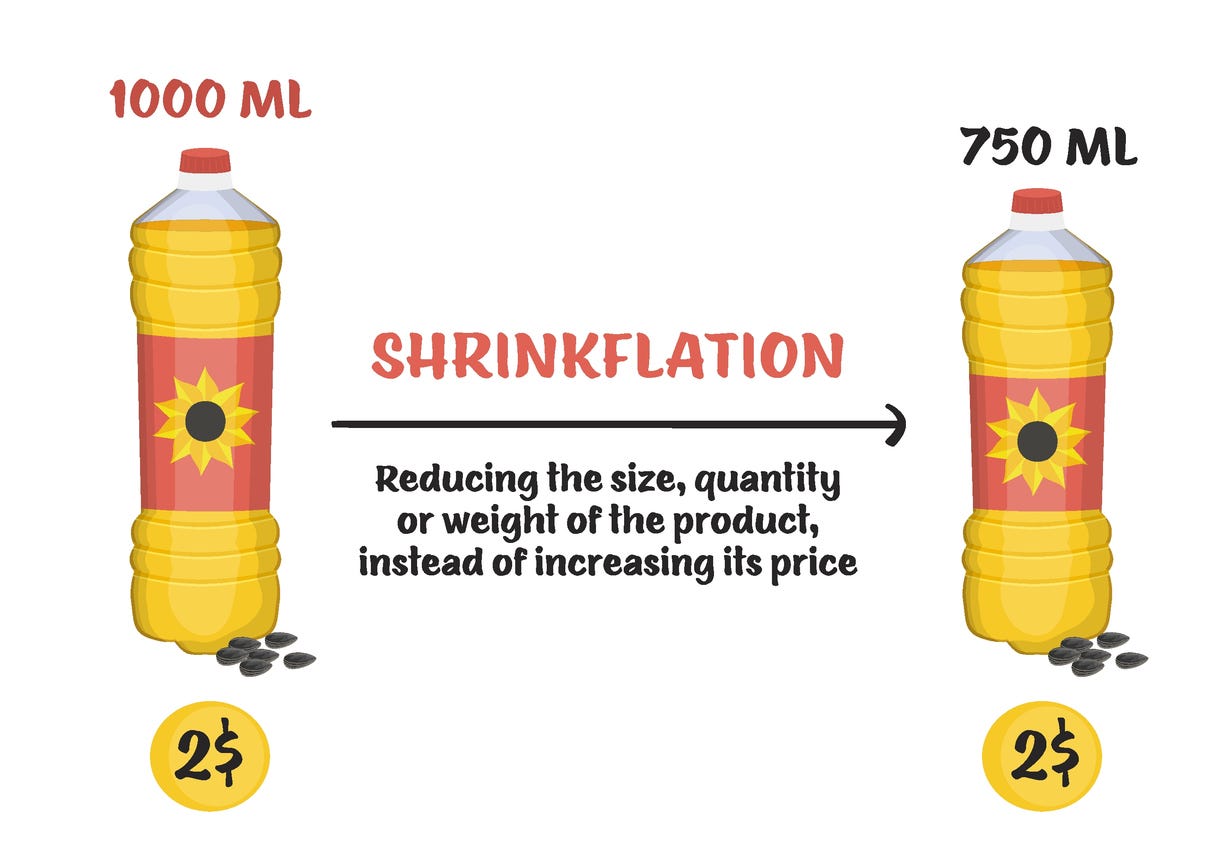
Today shoppers are suspicious. They may not know the exact number of ounces that used to be in a bag of coffee, a box of cereal, or sheets in a package of paper towels but they know something is different - even though the package may look the same.
A new study out yesterday from Omnisend, the email and SMS marketing platform, puts hard numbers on something I’ve been saying in speeches and columns for a while now: shoppers don’t trust the pricing story they’re being told. Retailers and CPG brands may not want to hear it but 85% of US consumers believe that both are using inflation as an excuse to raise prices. And that is having an effect on customer loyalty and trust. Omnisend surveyed more than 4,000 consumers across the U.S., UK, Canada, and Australia, and while the US number is shocking enough that number climbs even higher in the UK (86%), Canada (87%), and Australia (89%).
Sixty-seven percent of Americans say higher prices have changed how they feel about brands they used to like, and 56% of that group have simply stopped buying those brands. Another 22% say they trust them less. This is not a marketing problem its a relationship problem.
No surprise the most cited examples ere in the grocery aisle. Thirty percent of Americans name groceries as the everyday expense that feels most “out of control,” ahead of gas and everything else. 65% of the US shoppers said groceries are where shrinkflation is most obvious to them, and 59% say they notice it happening regularly.
Consumers aren’t anti-price-increase zealots, they understand that costs rise due to a war, climate change, labor increases and packaging. 19% said they accept a higher price for better quality, for fair worker wages (16%), even for higher ingredient costs (15%). What they won’t accept is being lied to or being mislead. It’s makes a shopper wonder “what else aren’t they telling me?”
Here’s where my psychology 101 course helps me think about this. Shrinkflation is just plain wrong because it’s designed to exploit a memory gap - a human behavior. Shrinkflation lets a company avoid ever having to put a higher price on the ESL, brand managers understand that would trigger sticker shock and force a shopper a second look at another brand or the private label next to it. This undermines actually having to raise prices due to higher input costs and being able to defend that decision transparently when a price increase is legitimate. It depends on shoppers not noticing, and in my opinion, that’s just not fair. T
I’ve shared this before in The Lempert Report and it is an important lesson that is worth repeating. If you want to see what happens when a retailer refuses to play along with shrinkflation, take a look at what Carrefour did in France in September 2023. Rather than stocking the shrunk packages in the place of their old-size bretheren, Carrefour started slapping bright labels directly onto the shelf next to affected products, calling out household names like Lipton, PepsiCo, Nestlé, and Lindt by name, with language telling shoppers plainly that the product’s weight or volume had dropped while the effective price had gone up. CEO Alexandre Bompard was blunt about the goal: force suppliers to rethink their pricing before Carrefour would even sit down at the negotiating table with them. It worked as leverage precisely because it was transparent and public.
I’ve long believed that the retailers willing to be the shopper’s advocate, even when it means an uncomfortable conversation with a major supplier, are the ones who come out of a trust crisis like this one with stronger loyalty and a better shopper trust. The Omnisend survey suggests that is exactly what shoppers are asking for right now.
Put unit pricing front and center on shelf tags, not buried in fine print. Shoppers can’t distrust math they can actually see.
If a package size changes, say so on the shelf. Trying to hide the increase is what’s driving the 85% number, not the price change.
Train store associates to be straightford and have an honest answer ready when a shopper asks “didn’t this used to be bigger?” Deflection erodes trust.
Understand your shoppers’ realities. 30% of Americans have used credit for essentials in the past three months, and 18% have turned to Buy Now, Pay Later. That’s a shopper base under economic pressure with less patience for being mislead or pricing games
Put value back at the center of the conversation with better price points, strong promotions, more affordable prepared foods, and private-label alternatives.
Shrinkflation was always based on the hope that shoppers wouldn’t notice. When 85% of your customers assume you’re using inflation as cover to overcharge them, you are in trouble. The brands and retailers who get ahead of this, who explain their pricing instead of hiding it, are going to be the ones who win. The ones who keep hoping nobody notices are not.
*Survey data and findings in this column courtesy of Omnisend and is based on their August 2026 study of more than 4,000 consumers across the U.S., UK, Canada, and Australia, conducted by Cint.
American shelves are shrinking by design, and the story of what fills the gap says more about grocery retail’s future
Somewhere in the last two years, the shelf that used to hold twelve SKUs of the same cracker brand quietly started holding eight. Shoppers may feel like your store “just doesn’t carry that anymore,” and they might even ask about it, but the reality is that we are witnessing one of the more consequential shifts in American retail in decades.
In today’s first column I talked about shrinkflation where brands ‘quietly’ giving shoppers less product for the same price. Now its time to talk about its less-discussed cousin: brands and retailers giving shoppers fewer choices altogether. It’s called SKU rationalization, and it’s reshaping what’s available on American supermarket shelves.
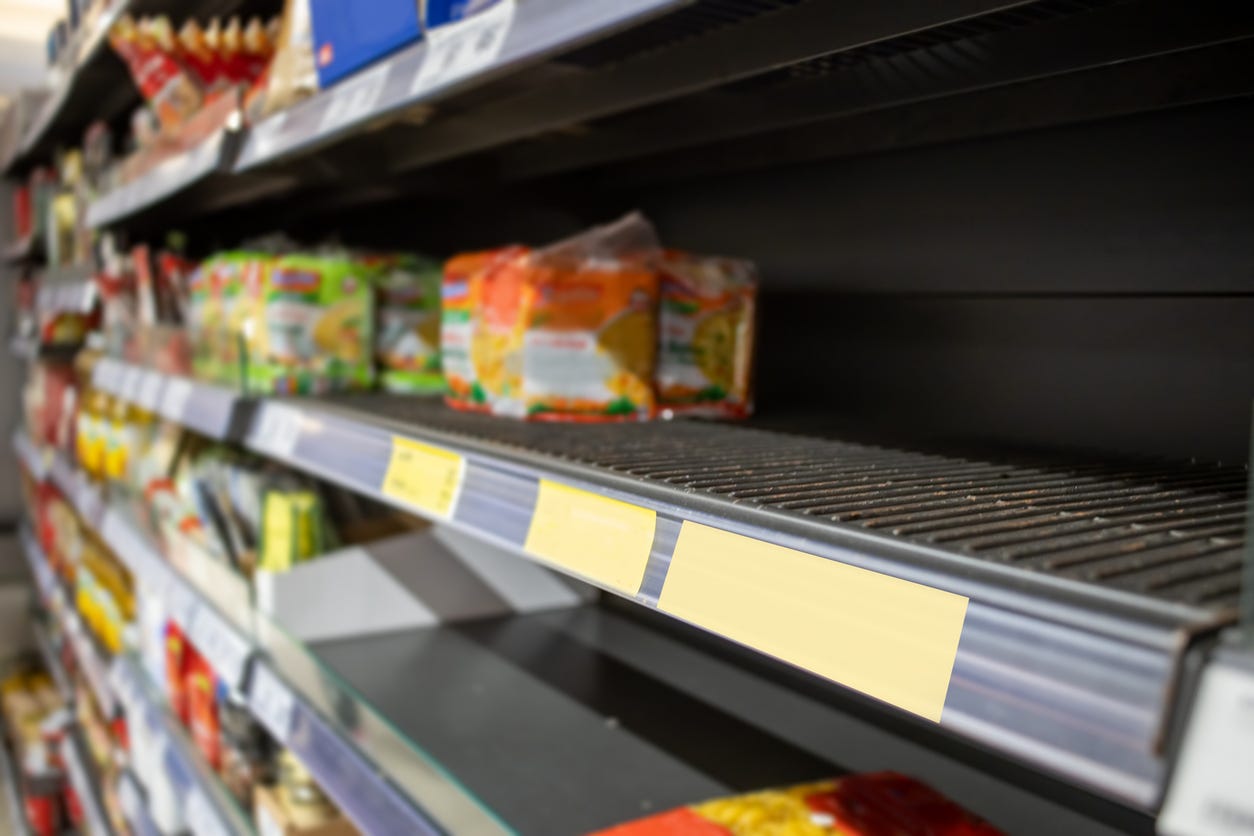
According to FMI data, the average U.S. supermarket carried roughly 7,000 SKUs back in 1970. That number ballooned to nearly 51,000 by 2008, the high-water mark of “more is more” retailing. It’s since come back down to around 31,800 items as of 2024, and the contraction hasn’t stopped. PwC’s Strategy& research puts a number on the waste behind that peak: roughly 35% of SKUs at a typical CPG company drive zero incremental profitability with the bottom tier actively destroying gross margin.
Strategy&’s more recent 2026 CPG Outlook sharpens that argument. The firm’s take now is that the old CPG playbook, that was built around controlling as much shelf space as possible, is losing relevance altogether, and that price increases and package downsizing alone today doesn’t work and won’t produce sustainable growth in the future. The winners, in their view, will be the companies that rebuild their food and beverage products around actual consumer needs and wants, not brand managers who are focused on adding line extensions to get promoted to a bigger brand. That’s a smarter approach than “more SKUs equals more power,” and that’s exactly what I’m hearing from supermarket buyers in all categories who want to curate their offerings.
The food industry has been on a non-stop cycle between proliferation and discipline for years. What’s different in 2026 is that the pressure is coming from every direction at once: tariff-driven input costs, packaging material volatility, climate change affecting supply and quality, and labor costs. Retailers are telling me they are done subsidizing shelf clutter with their own margins. Even category leaders are cutting popular variety counts within categories that are otherwise healthy, something Steve Flynn SVP of consumer brands at the research firm Magid, has observed and says marks a real change from the “old normal” of only cutting the obvious losers.
Here’s where it gets interesting. When a national brand pulls three SKUs off the shelf, that space doesn’t stay empty. Retailers are filling it. Private label, which just posted a record $330 billion in U.S. sales according to Circana, with store brands hitting a record 23.8%-unit market share in the first half of 2026. Private label isn’t playing the old “cheap knockoff” role anymore, either. Much in that reclaimed shelf space is premium-tier store brand, built to win on quality and wellness positioning, not just price.
Now this is the part I find exciting for our industry and consumers: emerging and regional brands are getting a real shot at on-shelf they’d never have gotten during the 51,000-SKU era, when a handful of giant CPGs owned most of the real estate. Buyers now say plainly that they’re prioritizing curation over sheer breadth (or the lure of slotting fees) and a focused, well-positioned smaller brand can outsell a legacy brand that it wouldn’t have stood a chance against a few years ago.
We are a nation that has always equated choice with freedom and abundance with quality. Walk into any American supermarket built in the last forty years and the cereal aisle alone said: look how much we have. That instinct isn’t just marketing mythology either. When Boris Yeltsin made an unscheduled stop at a Randalls supermarket outside Houston in 1989, a Houston Chronicle reporter on the scene wrote that he roamed the aisles “nodding his head in amazement” at the shelves of cheese, fresh fish, and freezers full of pudding pops. He later wrote in his autobiography that seeing “shelves crammed with hundreds, thousands of cans, cartons and goods of every possible sort” left him “sick with despair for the Soviet people.” Even the Politburo, he reportedly said, didn’t have that kind of choice. For decades, that variety was the American retail story we told ourselves and the rest of the world. It’s genuinely strange to watch that same industry now quietly deciding it was an overshoot.
The truth is the behavioral research on this has never actually supported the assumption that more options make for happier or more confident shoppers. The classic finding, going back to psychologist Sheena Iyengar’s jam-tasting studies, showed shoppers were far more likely to buy when presented with a handful of options than when facing two dozen. Choice overload is a real thing – just look up and down the aisles of a supermarket and see how shoppers are trying to decide what to buy!
I think what we’re watching now is American retail quietly testing the theory at scale, driven by cost pressure rather than psychology research. A tighter, more curated assortment can genuinely make the shopping trip faster and less exhausting for customers. The risk, and it’s a real one, is that SKU rationalization done carelessly doesn’t feel curated. When a shopper’s specific favorite, the one gluten-free cracker or the one regional barbecue sauce, disappears without explanation, “the store has less” is exactly the story that plays into the same trust erosion I talked about with shrinkflation above.
Don’t let rationalization and shrinkflation collide in the same shopper’s mind in the same month. Cutting a SKU while shrinking the ones that remain is a trust double-hit.
Use the reclaimed space deliberately, when you fill empty space mindlessly where a familiar product used to be reads as a loss; a thoughtfully merchandised emerging brand or premium private label reads as curation.
Communicate discontinuations where you can, especially for loyalty-card shoppers with a clear purchase history in that item.
For eighty years, American retail ran on the assumption that more SKUs meant more sales, more shelf presence meant more power, and choice itself was the value proposition. That math finally broke under its own weight, and 2026 is the year the industry is openly admitting it. Done right, this is good news for shoppers: less time hunting through nine nearly identical options, more room for the smaller brands that couldn’t buy their way onto crowded shelves before. After all do we really need to walk past 40,000+ SKUs to fill a shopping list of 20 items?
Comments
Nothing yet. Say the first thing.
Sign in to join the conversation.