
Good morning (afternoon, evening), this is the 44th edition of Critical Points, our roundup of key links and stories designed to help you navigate the current economic, political, technological, and social landscape.
If you find our content valuable, consider liking, restacking, or sharing our posts. It really helps support our work. We’d also love to hear from you: leave a comment to help us understand what topics matter most to you and how we can cover them better.
This week we talk about:
We are always looking for emerging trends, local developments, research, industrial shifts, and overlooked dynamics.
If you work on these issues, or track them closely, get in touch.
Reach out by email or direct message.
✍ Following the signing of the US-Iran ceasefire memorandum on 17 June, Iran secured the continuation of its civilian nuclear programme, the suspension of sanctions, and a $300 billion reconstruction fund in exchange for reopening traffic through the Strait of Hormuz and committing not to develop nuclear weapons.
🧐 However, Iran used the ambiguous wording of Point 5 on “safe passage through the Strait” to direct shipping into its territorial waters and maintain de facto control over the waterway.
💥 From 25 June onwards, Iran and the IRGC began a series of attacks on commercial vessels, oil tankers, and LNG carriers that did not follow the route approved by Tehran. At least seven ships were struck or targeted before 6 July, disrupting navigation.
📊 Maritime traffic remained at around 30–50 vessels per day, higher than the 6-15 daily transits recorded during the conflict, but still far below the 125-140 vessels per day seen before it began.
🇺🇸 The United States interpreted these actions as a violation of the ceasefire and launched two waves of strikes against Iranian military, logistical, and port/airport facilities on 7-8 July, officially resuming hostilities on 13 July and carrying out since then daily waves of attacks on Iranian military facilities and transport infrastructure.
🛂 Initially, Trump had also announced a 20% transit fee as reimbursement for protection of commercial vessels, but he backed away from it the next day as the fee would have added $16 per barrel passing through the Strait.
🚀 On 18 July, Iran announced that it was withdrawing from all commitments made under the June memorandum and launched strikes on US bases in the Gulf, causing at least two casualties.
The US and Iran’s differing interpretations regarding freedom of passage through the Strait of Hormuz leave the truce structurally unstable and make the full reopening of the strait unlikely. Iran claims control over the Strait and is coordinating with Oman to manage transit, an arrangement openly acknowledged in the memorandum establishing the truce. The United States, however, secured a clause requiring Iran to clear the strait of mines and remove all obstacles to free navigation, demonstrating its intention to preserve passage through international waters beyond Iranian sovereignty. The truce had therefore left this fundamental divergence unresolved, with little prospect of bridging it. Remarkably, oil prices remain relatively low, pointing either to weaker demand or to an assumption among oil traders that the disruption will be short-lived – an assumption that may prove increasingly difficult to sustain if the Strait remains closed. The longer the Strait remains fully or partially closed, the greater the political cost for Trump is likely to become, particularly with the midterm election campaign already underway. Similarly, Iran’s economic situation continues to deteriorate, and the country remains in dire need of relief. Trump’s announcement of a 20% transit fee, although quickly withdrawn, points to a broader US retreat from the multilateral order it helped underpin until recently. Pressures that had long remained at the system’s margins are now beginning to reach its institutional core. The United Nations accordingly criticised the proposal as incompatible with the principles governing passage through international straits.
📌 In the full text of the memorandum between the US and Iran, point 5 reads as follows: “Upon the signing of this MoU, the Islamic Republic of Iran will make arrangements using its best efforts for the safe passage of commercial vessels with no charge for 60 days only, from the Persian Gulf to the Sea of Oman and vice versa. The traffic of commercial vessels will immediately start and, considering the need for removing the technical and military obstacles and de-mining by the Islamic Republic of Iran, will be instated within 30 days. The Islamic Republic of Iran will conduct dialogue with the Sultanate of Oman to define the future administration and maritime services in the Strait of Hormuz, in discussion with other Persian Gulf littoral states in line with the applicable international law and the sovereign rights of coastal states of the Strait of Hormuz.”
📌 Attacks on commercial vessels: the Singapore-flagged Ever Lovely was attacked on 25 June; another vessel was attacked on 27 June; on 1 July, another vessel ran aground outside the route authorised by Iran. Iran used the incident to reiterate the need to pass through Iranian territorial waters under Iranian supervision and with Iranian permission.
📌 On 7 July, Iran attacked a Saudi oil tanker, a Qatari LNG carrier and another oil tanker flying the Liberian flag. The LNG tanker sustained extensive damage and was forced to suspend its voyage.
📌 The US responded with attacks on Iranian ports in Baluchistan.
📌 Donald Trump floated the imposition of a 20% toll on all cargo transiting through the Strait of Hormuz. The International Maritime Organization, the UN agency responsible for maritime transport, promptly responded by firmly opposing the imposition of transit charges through any strait used for international shipping, stressing that there is no legal basis for compulsory tolls in a transit passage strait. The idea was then reversed, only to be replaced by a threat to “bomb all power plants and all bridges”, which implies deliberate attacks against civilians and civilian infrastructure, condemned as a war crime by the United Nations.
Grasp the material reality behind the news cycle.
Subscribe to phase:shift to see the signal behind the noise.
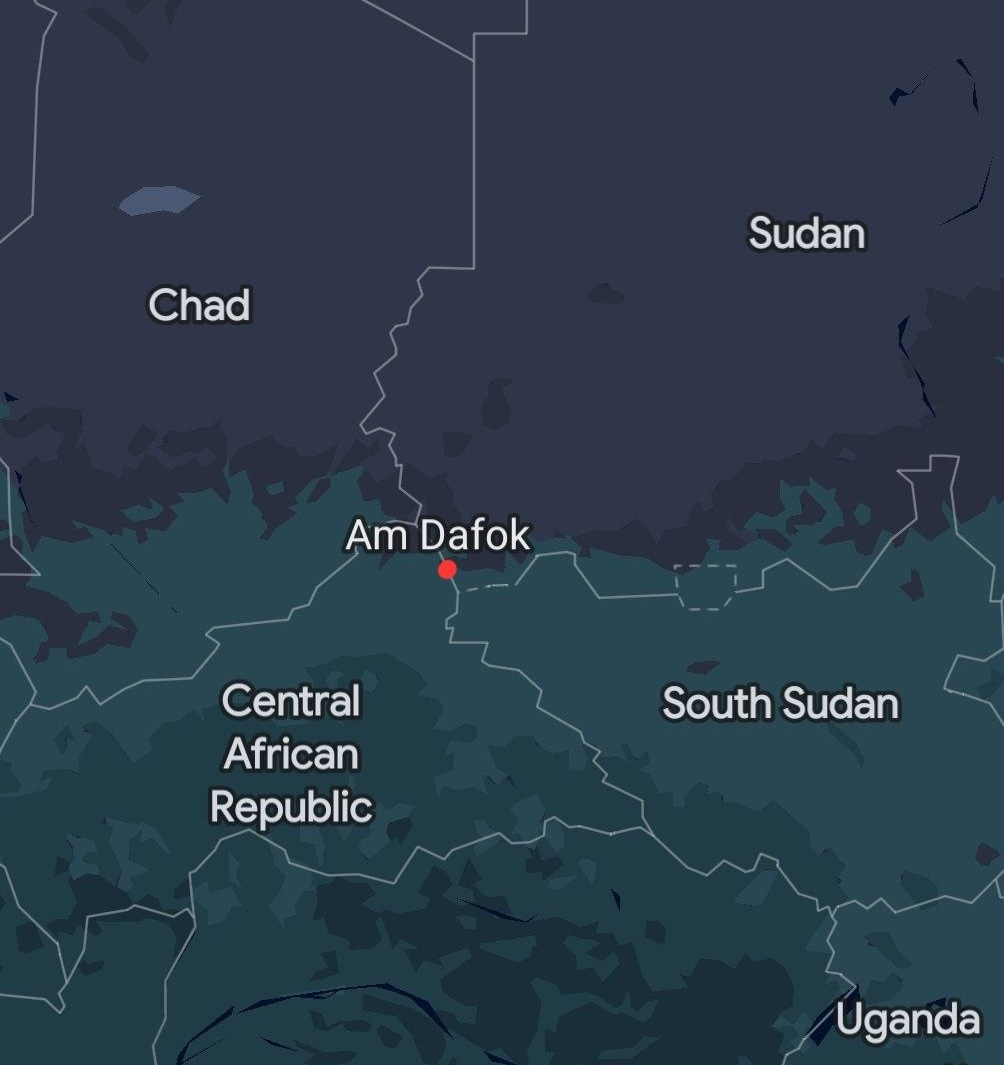
🇨🇫 On 30 June, a coalition of rebel groups from the Central African Republic (CAR) attacked a government base supported by the Wagner Group and a nearby UN contingent.
💥 The attack took place in Am Dafok, on the border with Sudan, from where the incursion was launched, exploiting the security vacuum created by the ongoing conflict in Sudan.
🇺🇳 Part of the local population sought refuge inside the UN base. Wagner subsequently responded with air strikes against the armed groups, which withdrew across the border into Sudan, beyond the jurisdiction of UN forces.
⚠️ Due to the highly porous nature of the border, Am Dafok has long been a strategic area for armed groups and cross-border activities. CAR authorities have framed the attack as a challenge to national sovereignty and have accused the rebels of maintaining links with Sudan’s Rapid Support Forces (RSF).
👀 These alleged links have not been independently confirmed. If verified, they would represent a further regionalisation of the Sudan war, adding to the wider regional instability.
Regardless of whether the RSF were involved in the attack on Central African territory or supported the groups that carried it out, the government’s decision to portray the incident as external interference rather than the activity of domestic armed groups shows how regional conflicts can be used to recast internal security threats as foreign aggression. The CAR–Sudan border is particularly sensitive because the dynamics there also affect Chad. Fighters and weapons have moved in the opposite direction, from the CAR into Sudan, after being recruited by both sides in Sudan’s civil war, but increasingly by the RSF since 2025. As the group has expanded, asserted sovereign ambitions and sought international recognition, it has also become more willing to extend its operations beyond Sudan. The Sudanese Armed Forces have meanwhile sought recruits in the CAR to support anti-government forces in Chad, in response to N’Djamena’s diplomatic and logistical backing for the RSF. This leaves the Chadian government caught in a bind: any move towards one side risks destabilisation by the other.
📌 According to The Africa Report, one of the leaders of the newly formed Alliance for Patriotic Rebirth is Noureddine Adam, a former deputy commander of the Seleka, who is reportedly linked to Mohamed Hamdan Hemeti Dagalo, commander of the RSF.
📌 According to a statement from MINUSCA reported by RFI, the UN mission in the CAR, the Popular Front for the Rebirth of the Central African Republic (FPRC), the Democratic Movement for the Union of the Central African People (MDRPC) and other unidentified groups took part in the attack.
📌 MINUSCA reports that, according to the regional prefect, the attack jeopardises the local agreements signed last year, which had significantly reduced inter-ethnic and inter-tribal violence.
📌 According to ASA, a Swedish think tank focusing on African issues, although the link between armed groups in the CAR and the Sudanese RSF militia has not been proven, the authorities’ mention of it reflects the government’s view that the conflict in Sudan is a potential destabilising factor in the CAR. Furthermore, the attack has exposed the technical inadequacy of the armed forces and their structural dependence on Russian allies.
📌 According to Africa Intelligence, the authorities fear that similar attacks could spread to other regions.
📌 Here is an analysis by the Crisis Group on the security situation in the Central African Republic. The report also includes a specific section on the effects of the conflict in Sudan on the activities of armed groups in the country (arms trafficking, recruitment of fighters) and on relations between Sudan, Chad and the CAR.
📌 In recent months, the conflict in Sudan has increasingly involved Chad and Ethiopia, as well as two militias from Eritrea
📌 The Sudan war is also destabilising South Sudan
If you know someone in research, policy, academia, or industry who could use our work, share phase:shift with them.
Be part of the early network.
🚀 Ukrainian strikes against Russian refineries have caused severe fuel shortages across a number of Russian regions.
🚰 According to different sources, 17 or 18 of Russia’s 83 regions have imposed restrictions on the sale of diesel and petrol at the end of June, while at least a further 38 regions lack sufficient supplies to guarantee normal service to the public. Notably, Russian output currently covers only 65% of the seasonal petrol demand.
❌ In Crimea, the Ukrainian region annexed and occupied by Russia, all petrol deliveries have been suspended. In the last weeks, Ukraine claims to have struck 117 vessels in the Sea of Azov, including 85 tankers, in an effort to isolate Russian forces in the occupied region.
🚨 Fuel is also being rationed in the occupied region of Luhansk, with direct impact on the war effort.
🏭 The Ukrainian General Staff claims to have brought offline 42,7% of Russia’s oil refining capacity, while Reuters estimates a close 35%. A strike targeted the largest refinery in the Moscow region, which supplies 40% of the region’s fuel demand. The attack disrupted aviation fuel deliveries to the capital’s airports.
🧑🔬 Ukraine has also begun systematically targeting military sites, including both production and communications facilities, such as the Federal Research and Production Centre Titan‑Barrikady near Volgograd, which manufactures launch systems for long‑range missiles.
📡 Another strike hit the Vladimir Space Communications Centre, one of the five main centres operated by the Russian government. It manages communications from 20° West to 103° East longitude, as well as space communications.
Russia’s vast territory has become a vulnerability, making it virtually impossible to defend the entire country from air attacks, particularly now that Ukrainian forces have shown they can penetrate even heavily protected areas such as Moscow. Ukraine’s long-range campaign against Russian energy production and logistics is creating serious problems for both the economy and the country’s daily life. To contain the effects of the shortages, the government has banned exports of petrol and jet fuel, but at the cost of significant loss of revenue. Fuel rationing has also led to queues at petrol stations, sometimes lasting for hours. Alongside the plumes of smoke clearly visible over many of Russia’s largest cities, including Moscow, this is making it increasingly difficult for Putin to project an image of imminent victory in Ukraine, weakening both his position among the elite and his standing with the wider population. Moreover, this unfolds against the backdrop of a growing isolation of Crimea, creating serious issues for the Russian armed forces, which must continue to support troops in a region that is generating ever greater losses without delivering any clear military benefit.
📌 The fuel shortage reported by Radio Free Europe (and confirmed by dozens of OSINT investigations as well as Russian sources), as well as by Mediazona.
📌 The attack on the Moscow refinery, reported by The New Voice of Ukraine.
📌 Attack on Titan-Barrikady reported by The Kyiv Independent.
📌 Reuters on the fuel shortage in July 2026.
📌 Ukraine hits tankers in the Sea of Azov.
📌 About the attack on the Vladimir Space Communications Centre.
📌 A beautiful summary of the situation in Crimea by Lawrence Freedman:
📌 And another one about fuel shortages:
Comments
Nothing yet. Say the first thing.
Sign in to join the conversation.