
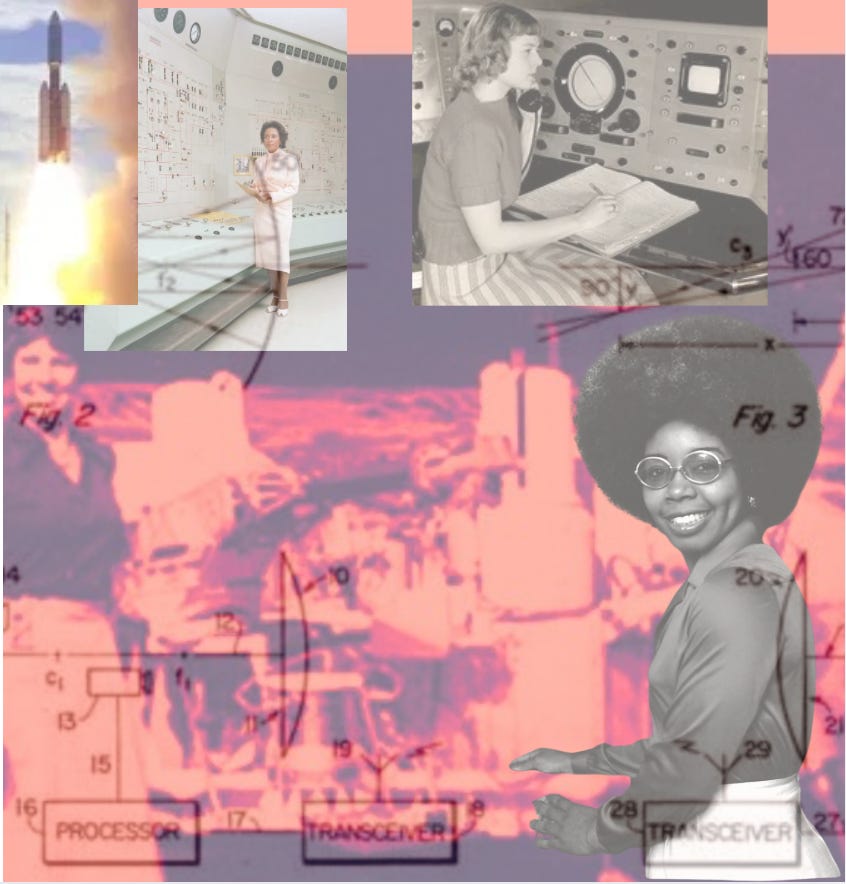
It was 50 years ago this week that the world finally got a look at Mars.
So let’s look at some of the hidden persisters who helped get us there.
The world heard “Touchdown. We have touchdown!” on July 20, 1976 when a mission controller at JPL in Pasadena reported that Viking 1 landed on the red planet and a room full of guys in peak ‘70s hair – or Viking helmets covering that hair – cheered and hugged. It was like a nerdy football game.
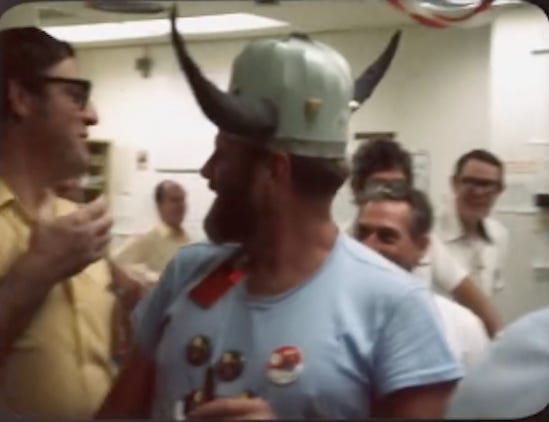
(The videos showed some women in the room. But you heard little about them. We’re going to try and fix that.)
Viking was supposed to land on July 4 for an extraordinary celebration of the nation’s bicentennial, but mission control took its time to find the best landing site – thanks to technology one of our persisters helped enable – and pushed it to July 20, which was possibly a more auspicious date for NASA.
President Gerald Ford pointed that out coincidence when he called Mission Control and had a totally normal, presidential phone call with them:
“Today's landing, like that one, represents the realization of a dream that is many, many centuries old. In a sense it is even more significant, for today we are touching another planet, one that has long excited mankind's imagination. And this mission offers the possibility of a momentous discovery in the history of mankind--the existence of life elsewhere in the universe.”
Just seven years earlier “One small step for man, one giant leap for mankind,” launched America’s dominance in space exploration on the same date – July 20, in 1969, when we landed on the moon.
But it wasn’t until 2016 that the nation learned about the remarkable Black women who overcame jaw-dropping racism and sexism to work behind the scenes and do the math that helped get those men into space.
Margot Lee Shetterly’s groundbreaking book that became a movie, Hidden Figures, detailed the persistence and quiet triumph of Katherine Johnson, Dorothy Vaughan, and Mary Jackson, “computers who wore skirts,” Johnson often said.
When the Mars mission touched down seven years later, “computer” went from being a job description to an inventory item and the pool of mathematicians who did the computing – a surprising amount of whom were Black women – were not longer the driving force behind the rocket launches.
Well, not really. One of them literally fueled in the launch.
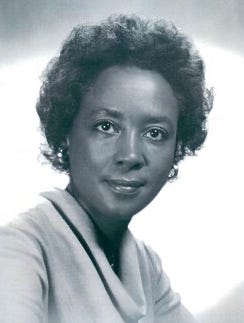
Born in deeply segregated Birmingham, Alabama and raised by a single mother, Annie Easley nevertheless forged her path to college, studying pharmacy at Xavier University in New Orleans, but leaving after two years to follow her husband to Cleveland.
She had a hard time getting the funding to finish her degree, but turned that roadblock into a benefit for human space exploration, applying for a job as one of those computers at NASA (then called NACA, the National Advisory Committee for Aeronautics) in 1955. But her interdisciplinary skills and problem-solving acumen made her quickly stand out. She became fluent in FORTRAN and other coding languages and her calculations became integral to energy-conversion systems for the earliest hybrid vehicles and rockets, according to NASA
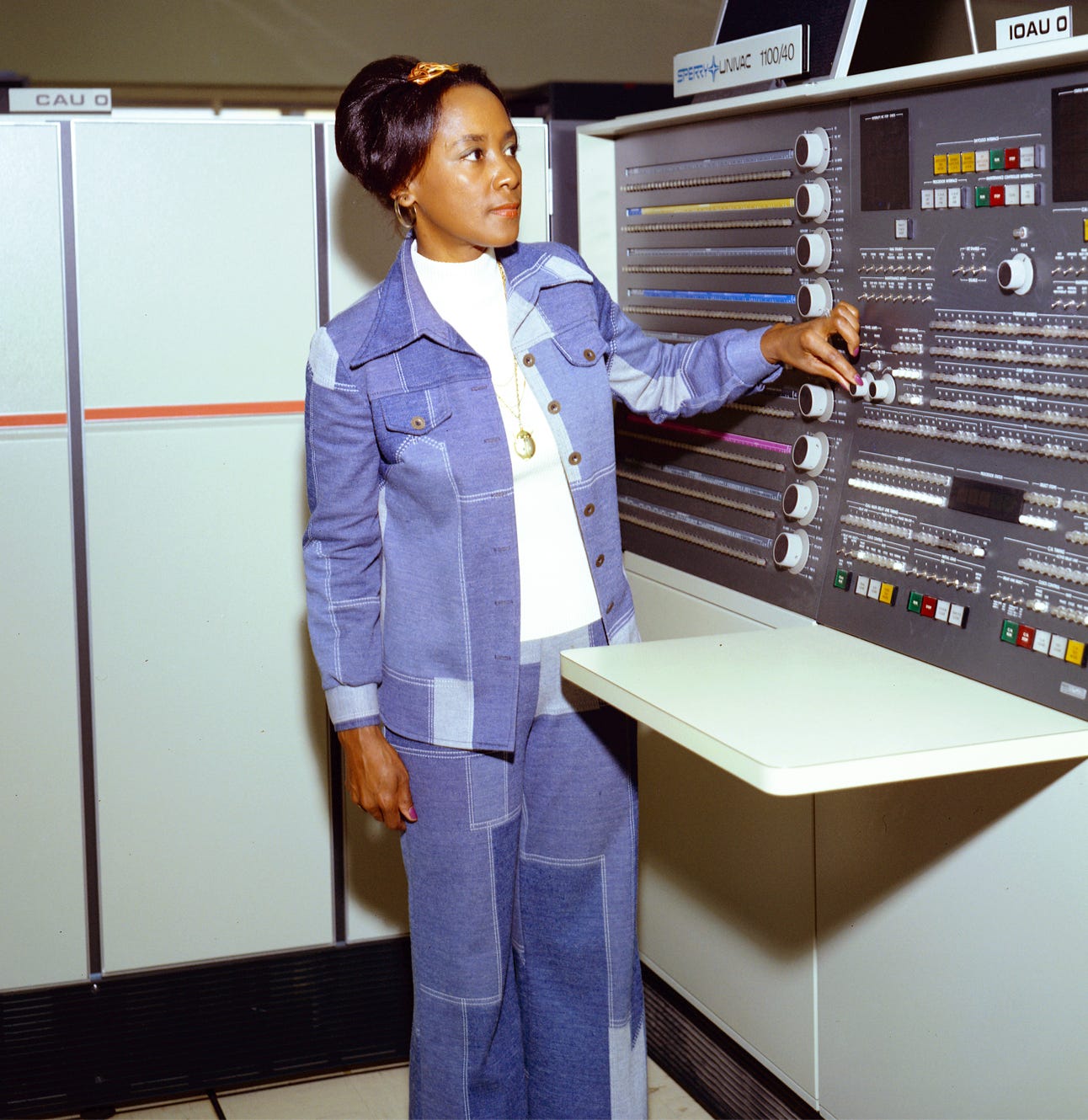
She was one of the main forces behind one of NASA’s most powerful tools in the space program – the Centaur rocket. It exploded in a 1962 launch, and Easley was key in the team that figured out how to safely harness the rocket’s volatile and unique fuel mix of liquid hydrogen and oxygen (yay pharmacy classes!) Since then, Centaur has been the foundational force behind the launches, including the Mars mission.
Throughout her 34-year career, Easley was fighting and persisting – for her the correct pay grade, promotions and respect. When NASA made a promotional poster of her pioneering six-member team, her face had been intentionally cut out of it, she said in a 2021 interview.
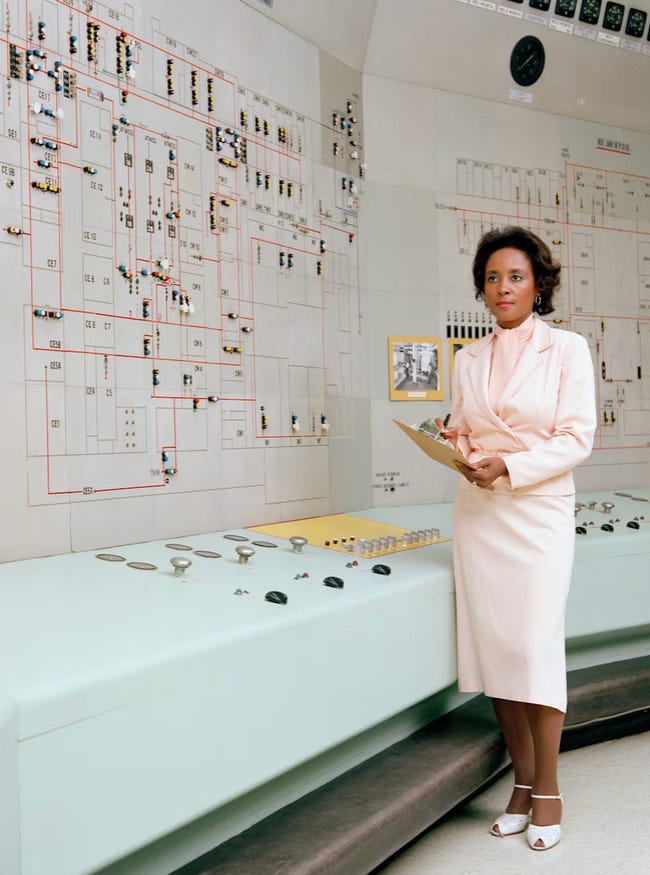
“There are people who have authority, and I think sometimes they abuse it. It makes them think, ‘I’m in charge if I say no,’” she said. “...you live with that kind of thing, but you don’t let it stop you.”
Outside of the lab, she played tennis and started a ski club. She retired in 1989 and was active and influential for young women in STEM in the years after. She died in 2011 at 78.
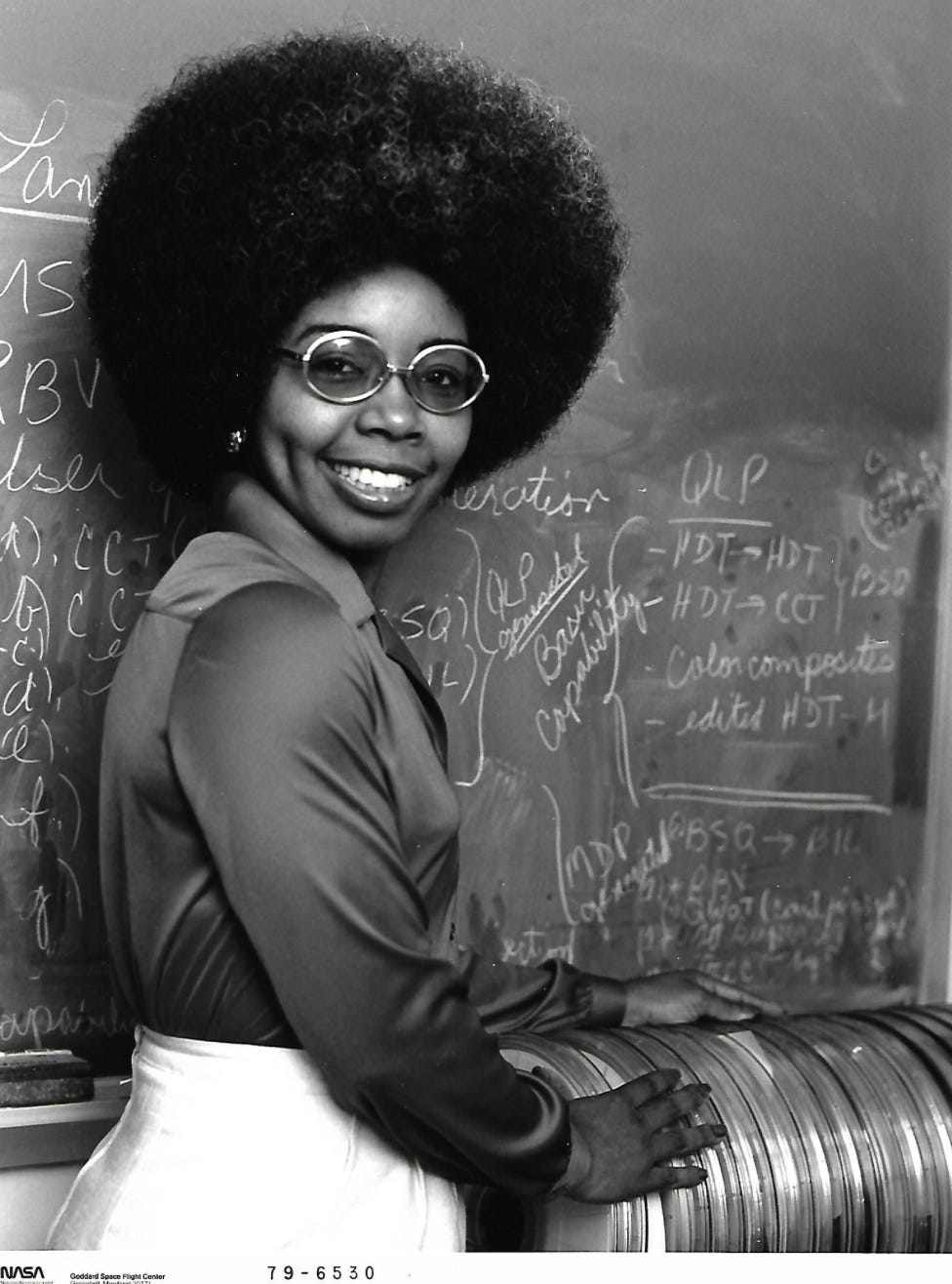
Landing on Mars was going to be tricky — they had to read terrain that’s 249 million miles away. But Thomas and Norwood did some of the groundbreaking work that helped make that possible
Thomas was born in Baltimore in 1943, she was one of only two women to major in physics at Morgan State University.
Norwood, a military kid, moved all over the world and the United States. In one of her five high schools, a guidance counselor told her she should be a librarian. She went to MIT and graduated In 1947 with a degree in mathematical physics instead.
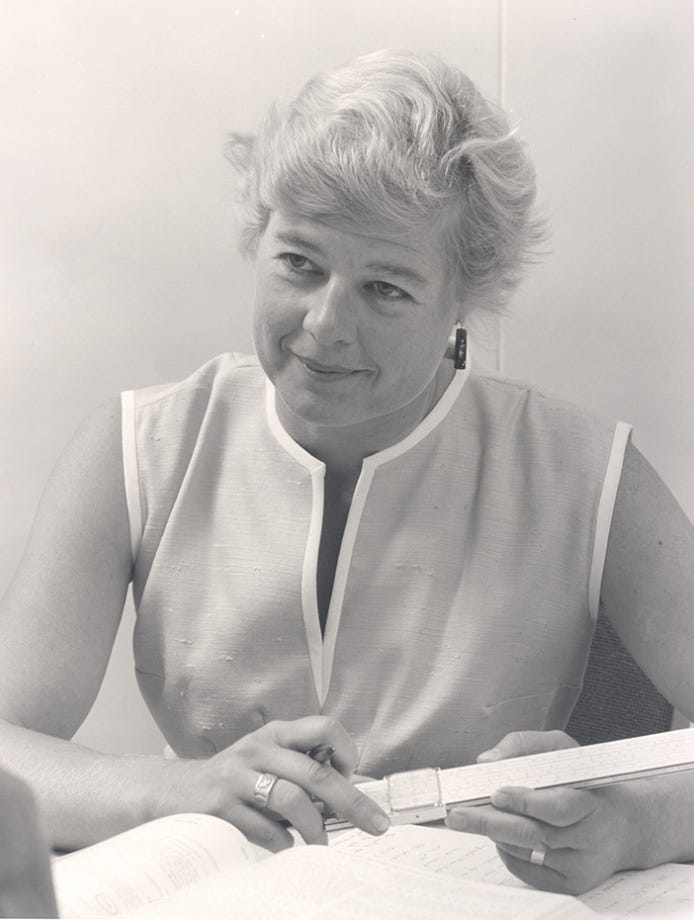
Norwood became the first woman on the technical staff at Hughes Aircraft in California and joined the NASA project to map the earth – and eventually the moon and then Mars – from space. The men on the team were going to use television-like cameras to take the images. Norwood said it should be a multispectral scanner. And that’s what it became, a series of Earth-observing satellite missions launched in 1972 called Landsat. And NASA calls Norwood the “Mother of Landsat.”
Meanwhile, back on the East Coast, Thomas began working at NASA as a data analyst in 1964.
At NASA’s Goddard Space Flight Center, “she managed the development of early Landsat image processing software systems and became the resident expert on the Computer Compatible Tapes, or CCTs, that were used to store early Landsat imagery,” according to a NASA profile that called her a “Face Behind the Images.”
Thomas went on to become one of the image processing specialists creating the ambitious project to monitor global crops, the Large Area Crop Inventory Experiment, known as LACIE.
The combined work of Thomas and Norwood was foundational in the monitoring systems used to get the lay of the land on Mars for Viking 1 to land 50 years ago. They have three patents between them.
Let’s be real – what’s the thing we all really want to ask first when it comes to Mars?
Is there life? Can we meet Marvin?
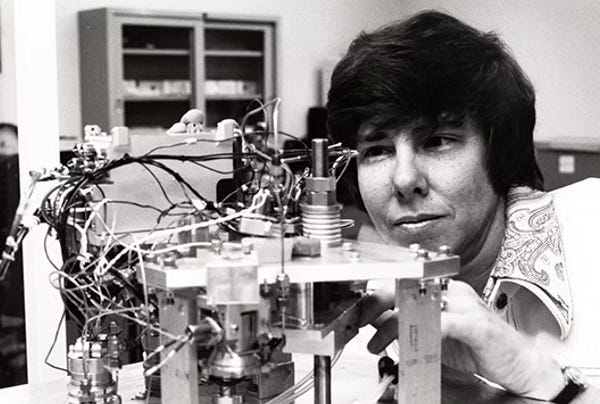
Once all the engineers and mathematicians got us to Mars, all eyes were on Pat Straat’s team. She was the astrobiologist who would try to answer that question.
Straat was born in Rochester and went to school in Oberlin College, where she specialized in biochemistry. She worked at Johns Hopkins University in molecular biology and enzymes, but the moon landing in 1969 lit a fire under her, reminding her how much she loved the night sky and dreaming about outer space as a kid, according to Scientific American.
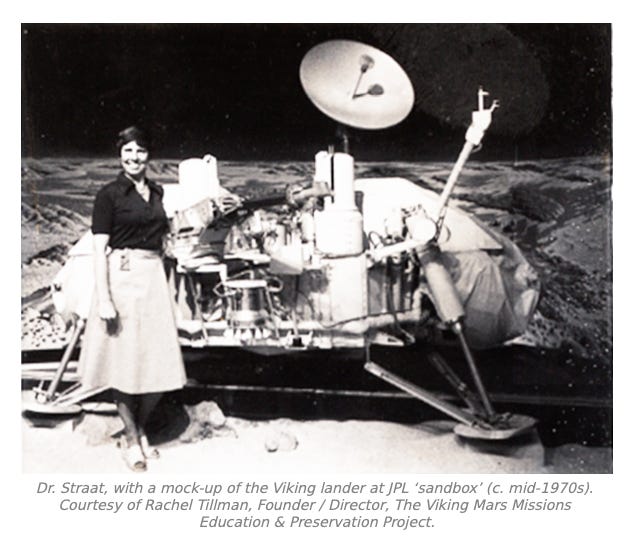
She persisted in chasing that childhood dream and joined NASA’s Viking mission with Gil Levin’s company, Biospherics, becoming the co-researcher America tasked with finding an answer to the all-important question.
They created a nine-foot arm that extended scooped Martian soil into a container and did the experiment right there, mixing the soil sample with drops of water tainted with radioactive carbon nutrients. Monitors in a chamber would be able to detect whether the reaction released radioactive gas, which would be proof of microorganisms with metabolism.
“Gil, that’s life,” she said, as soon as that gas was detected.
Other experiments with Viking 1 and Viking 2 in different parts of the planet used different testing methods and couldn’t replicate the findings. Which gives us no real answer.
Their experiment caused an uproar in the scientific world. Straat and Levin stood behind the research. Straat went on to work at NIH in National Institutes of Health (NIH) in the Molecular and Cellular Biophysics Study Section. After retiring, she settled down with her partner of 40 years in Maryland, where they raised horses and King Charles Spaniels.
Straat died from lung cancer in 2020. The Washington Post wrote an obituary for Levin when he died a year later, but never wrote one for her.
If this post was interesting — if you repeated any of this to the person you’re sitting next to — please share it for free so more people know about Persisters like these!
Comments
Nothing yet. Say the first thing.
Sign in to join the conversation.