
This is the newsletter for the New Kind of Monster project - an ambitious and twisted project whose goal is to invent an entirely new kind of monster. In our annual Food & Drink issue, we’re going to take a look at dishes and cuisines that are a little … different.
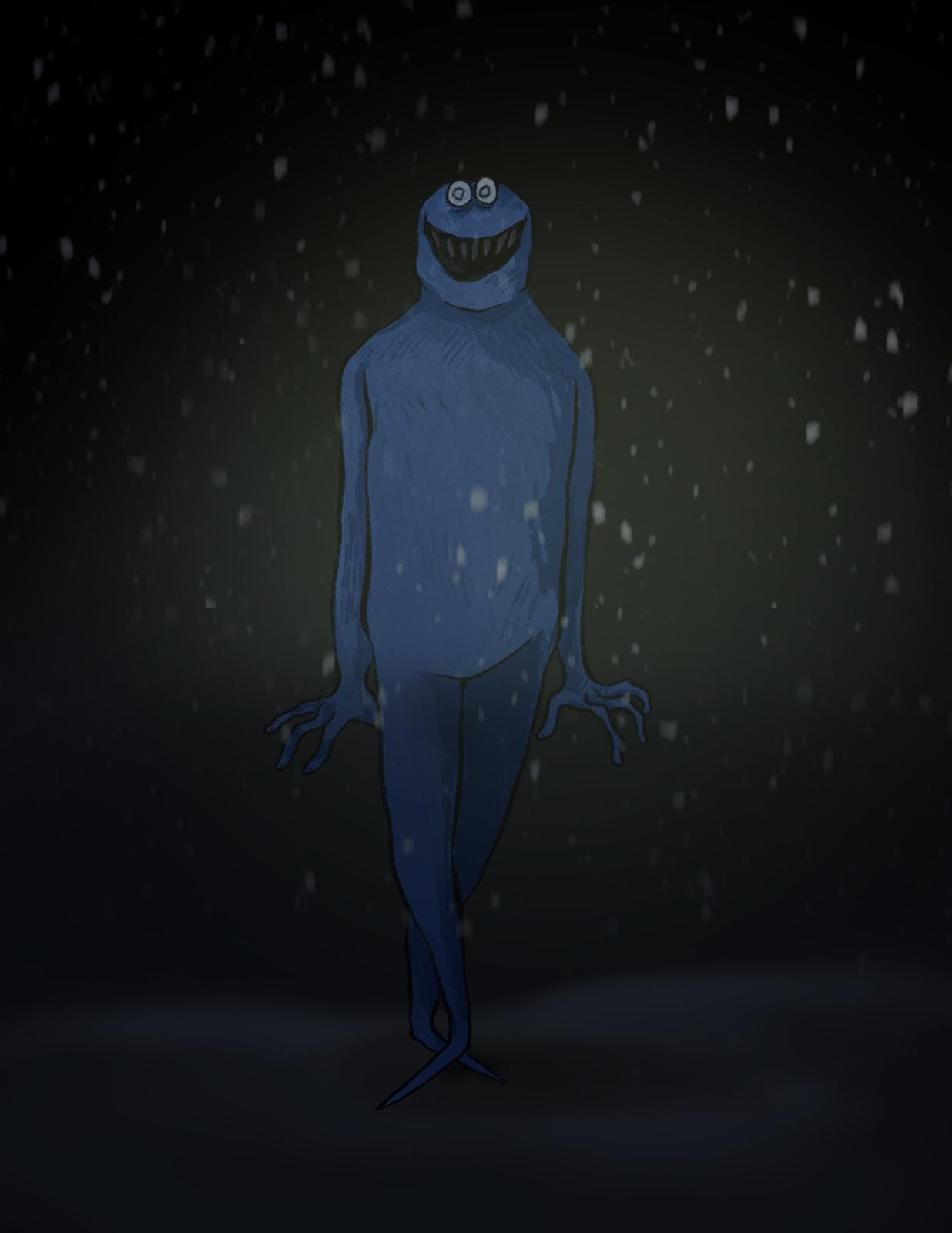
The New Kind of Monster project recently celebrated a major milestone: a citation in TV Tropes. What is TV Tropes? TV Tropes is the Internet’s de-facto chronicle of storytelling mechanics.
Say you’re watching a movie, or reading book, or playing a video game. Suddenly you realize that you know what’s going to happen next.
Maybe you shout: “This is where the big guy says You go on, I’ll hold them here!”
Or maybe you say: “He’s going to be the chosen one because of that birthmark.”
Or you think: “That character has extremely messy, out-of-control hair. I bet he’s the Mad Scientist.”
And you’re right nearly every time. That’s because you have consumed enough media to know the tropes.
The good people at TV Tropes have dedicated themselves to documenting the tropes that we find in literature, movies, and games. They have lovingly curated this list and found examples of stories that use these tropes.
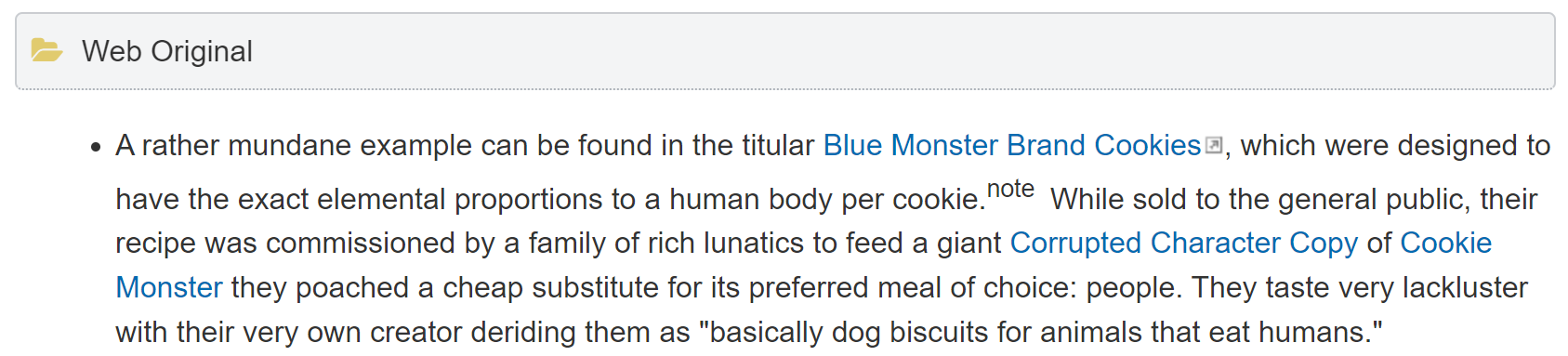
When I wrote Blue Monster Brand Cookies, I didn’t even realize I was creating an example of the the Long Pork Pies trope. But thanks to the alert readers who contribute to TV Tropes, my story is now enshrined as a Web Original example of the Long Pork Pies trope:
One of the goals of our annual Food & Drink issue is to shine a white-hot spotlight on some of the more unusual restaurants. In this issue, we review the breakfast-only restaurant Metabolicious.
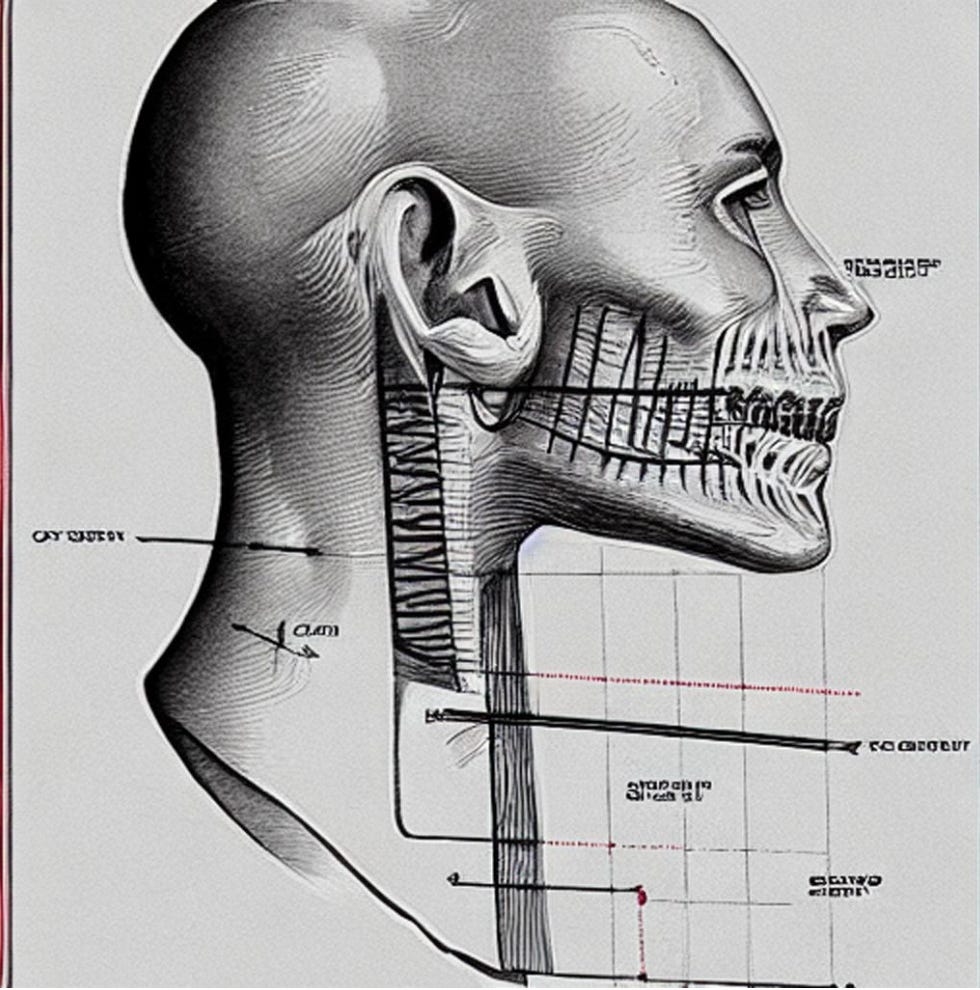
You don’t just visit Metabolicious for a meal. Twenty-four hours before your reservation, you must visit the restaurant for a blood draw and oral physiognomic analysis. Read the rest of the Metabolicious review here…
In my story If you’re Armed and at the Glenmont Metro, Please Shoot Me, a man has a terrible reaction to an experimental medication designed to slightly speed up brain activity. , Test Subject S-47’s brain starts running millions of times faster.
Instead of experiencing mild improvements in cognition, he experiences an endless hell as time, from his perspective, slows down to the point where seconds seem like millennia. The story ends with S-47 lying under a subway station bench, praying for death.
Many readers want to know what happened next. Every week I receive DMs asking “what happened to the bench guy?” Here is the answer (it’s not pleasant):
The brain-death of test subject S-47
Test subject S-47 went through a few phases of mental agony before he finally became a non-conscious entity, and each torturous phase had its own unique thought patterns. For a few hours, in his subjective timeframe (so, like, a nanosecond in real time) he experienced ordinary panic and terror.
After the panic phase, he experienced 20 or 30 hours (subjective time) of increasing boredom. This would be the same type of boredom you or I would feel if locked in a featureless room for a day. In other words, even after 30 subjective hours, he’s still within the range of normal human experience.
After 30ish hours, though, he leaves the realm of what most of us will ever experience. The total absence of stimulus causes his brain to amplify its own random electrochemical noise, interpreting the disordered neural fluctuations as sensory input. He starts hallucinating: Shapes, colors, sounds, and voices float through his conscious experience.
Things get very confusing for him. Even at this point in his journey, though, his experience is not unique. Throughout human history, there have been a handful of people who have gone through something similar. For example, people trapped in the absolute darkness of caves, mines, and oubliettes have had similar experiences.
After a week in his subjective time frame, still just half a millisecond to us, the hallucinations become more coherent. The random noise from different parts of his brain starts to feed back into itself. Patterns emerge. The visual noise informs the audio noise which informs the noise in his proprioception system.
Patient S-47 experiences these patterns as new universes: New places with their own laws of physics. He wanders over landscapes made out of pain and joy and lust and terror for days and weeks. For nine months of his subjective experience, he walks along the shore of an ocean of pure loneliness, letting the cold, sad waves wash over his bare feet.
Mentally, he is now somewhere no other human has been. He has now been under the bench for two seconds of real-time. His eyes slowly open - he had been blinking when the time-dilation effect hit the hardest - and he sees the ankles of the commuters and the advertisements on the far wall of the station.
The dream worlds and the reality of the metro station collide. He had forgotten the real, physical world and he struggles to recall what happened to him, and where he is. In a feat of mental effort none of us can comprehend the difficulty of, he spends a decade retrieving his phone from his pocket and centuries typing the message that we have all read on nosleep. He presses the “Post” button to put his plea for merciful death out into the world, and drops the phone. Then things get really strange.
With his eyes open, the never-changing scene from under the metro bench blends with the noise of his mental feedback. The commuters and advertisements on the far platform become recurring themes in the hundreds of different lives he hallucinates himself living. They speak to him in his imagination, in languages and songs and geometric patterns and smells.
He has lived a million years under the bench. He forgets what they told him. Again, they tell him the secrets of the universe. They sing him the song of the rise and fall of empires and civilizations and species. He is two million years old. He speaks back to them with his own song, in his own language. He dreams of planets circling moons circling planets sailing above an ocean of time. He is three million years old.
Suddenly it stops. The imagined worlds and hallucinated planets dissolve away. The endless lifetimes of swirling noise on which meaning has been forced comes to an abrupt end. There is only the metro platform. The dirty floor and the escalator and the ankles of the commuters and the advertisements on the far wall. And a man.
A man stands on the far platform. He is naked. His dark skin is covered in thick body hair. His face is primitive - sunken eye sockets and an exaggerated brow. He has a flattened nose with enormous nostrils. A nose built to haul in oxygen and pump out carbon dioxide in quantities only needed by men who make a living from persistence hunting. His eyes are alert and clever. There is humor in them. And understanding.
The man moves. He jumps from the far platform with the dexterity of an acrobat, and vaults onto the near side without a thought. He approaches and kneels, placing his face directly in front of S-47’s. He speaks. His language is pure and true - it is the first language spoken by any modern human.
The words are formed from the most natural, most beautiful sounds a voice can make. This is not a language made for telling lies or for speaking of money or describing plans for war. It is a language used solely for humanity communicating with itself on the savannah. It is a language for telling each other about prey and predator and water and weather.
S-47 understands it.
“I will see you again. After you forget. After you die.” The man walks away.
S-47’s mind has thought its last thought as a single system. The energy required to hold it together is gone, and the unstoppable metabolism of forgetting takes over. Connections are torn down. Components of cells and the neurotransmitters they threw back and forth at each other are slowly gathered by S-47’s lymphatic system.
For a while, a few parts of his brain, each the size of cherries, exist completely separately from each other. Each piece is its own confused, lonely individual, thinking its confused thoughts with part of a failing organ.
A piece of his left frontal lobe struggles to find the word for fear, but it cannot bring itself to remember the simple word. A piece of his mind in the right cerebellum tries over and over again to move its arms. But the signals go nowhere. These lonely islands of thought are soon broken down. The connections that once defined an entity are stuffed into the lymphatic system and slowly drained into the blood.
His kidneys and liver perform the final act of disposal of himself. Eight million years have passed.
If you’re in the mood to be told a story, instead of reading one, I highly recommend Lighthouse Horror’s version of Blue Monster Brand Cookies. The characters come alive (and then die - ha!) with Lighthouse Horror’s brilliant narration:
The song says "You gotta know when to hold em, know when to fold em.” I like to think I’m pretty good at knowing when to “fold em” when it comes to stories that just aren’t going to work out. My hard drive is littered with unfinished works whose outlines and drafts we not destined to become winning hands.
In the Back From the Dead section of this newsletter, we descend into the dark corners of my laptop’s hard disk to find the rare hidden gems that can occasionally be found in the otherwise grey sedimentary rock formed by a few decades of abandoned works.
In this issue, we take a look at a novella that has been stuck in the 4th draft phase for over a year. This is the story of supervillain who recently had major career setback.
Last time this project was actively in-work: 4:27 pm, August 27, 2022
Scene: Our protagonist, an international criminal mastermind, is lying low in the rural Virginia town of Harlan’s Creek. Unexpectedly, he has fallen in love with a local schoolteacher named Sandra. He has convinced her to come to his place for dinner, and he wants to make a good impression.
Forty-eight hours later, I welcomed Sandra into my command center. I didn’t refer to my dwelling as my command center when I greeted her, for that would raise all sorts of awkward questions. Who was I commanding? And to what end? I avoided starting off the evening on such an awkward note by instead opening the door and inviting her into “my modest facility.”
I had continued to make improvements to my command center in my off-hours from Stan’s shop. The breakfast counter that I had relocated to my planning chamber (formerly the living room) received the most attention. I had removed the top portion of the counter and replaced it with the large flat-screen television set that was originally mounted to the wall. Now the screen acted as a tabletop. One day it would display maps, engineering drawings, and other information crucial to my plan – whatever that plan would eventually be. But on the night of Sandra’s visit, the tabletop screen glowed a uniform bright blue. I had draped a tablecloth over it to tame the intense blue glare, and set an orchid on top to impart a sense of romance.
Sandra was clearly impressed with the changes I had made to my trailer. “Wow,” she said over and over. “That’s really…Wow.”
After the brief tour of the formerly ordinary living room that I converted into my primary command chamber, I led her to my kitchen. I poured each of us a glass of Pinot and checked on the Beef Wellington in the oven. One of the keys to preparing Beef Wellington, I have learned, is to ensure that the meat is heated evenly. Using simple bilinear interpolation of the darkening pattern on a three-dimensional grid of bread slices I toasted in the oven, I learned that my crude electric oven failed to provide even heating. To remedy this problem, I disassembled the toaster and formed its heating elements into a cage around the cooking meat. I bolted the toaster’s electronics to the outside of the oven door and ran wires to the heating elements inside. Sandra drank half her glass of wine in one gulp when I showed her my ad-hoc oven modification.
The Beef Wellington was not quite ready, so I made the salad – a simple combination of shaved vegetables and Romano cheese. Unsurprisingly, Yuri did not possess the foresight to stock my safehouse with a vegetable spiralizer so I improvised a rudimentary solution using a power drill I stole from Stan’s shop and a can-opener. I thoughtfully bought an extra pair of safety glasses so Sandra would not be concerned about sustaining eye damage if the asparagus slipped out of the drill chuck while it was at top speed.
Sandra was obviously overwhelmed by the magnitude of my culinary skills. She said my disassembled toaster was “very innovative.” And she was “simply speechless” as she watched me use the drill and can opener to prepare the salad.
I led Sandra back to my glowing-blue television table and served the salad. I inserted a suitably long pause into our conversation to indicate that I was about to say something important. “Sandra, I have something I would like to ask you.”
“Oh God. Can we take the safety glasses off first?”
“Yes, we won’t need them again until dessert.”
She drank the remaining half her glass of wine in one swallow. I was pleased to see that she liked the vintage.
No posts
Comments
Nothing yet. Say the first thing.
Sign in to join the conversation.