
[nearly done with making parts of things & starting to actually make some furniture. This post about a box for sale and the period work that it’s derived from.]
THE BOX IS SOLD - BUT I’M STARTING MORE. IF YOU’D LIKE TO BE NOTIFIED AS THEY BECOME AVAILABLE, LEAVE A COMMENT/SEND AN EMAIL. THANKS, PF]
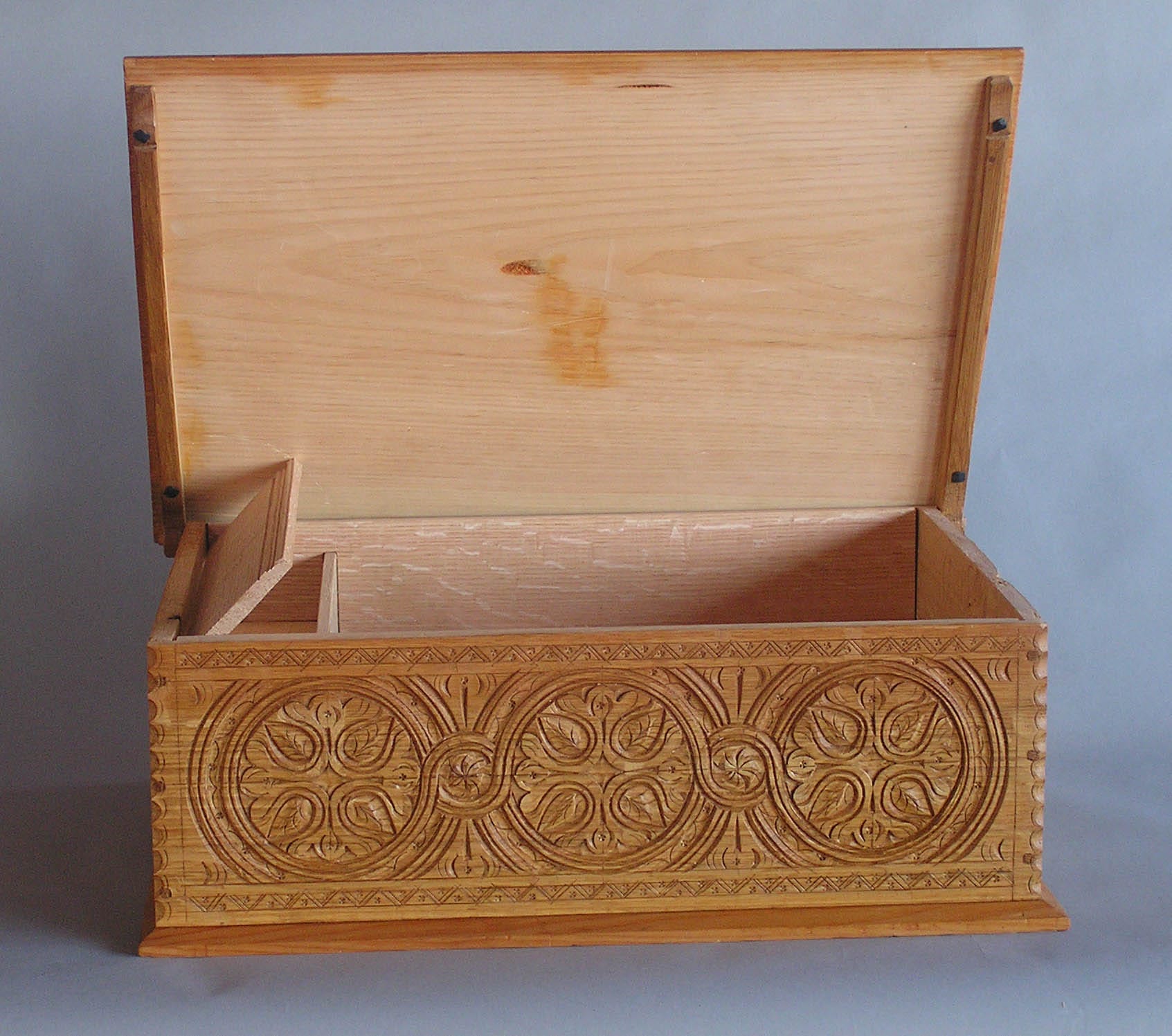
I showed this box underway a while back. It came about because I was cleaning the shop and ran across some nice, but short, oak boards. Once I decided to make a box, then came - which one? What pattern will fit? I ended up adapting a familiar pattern:
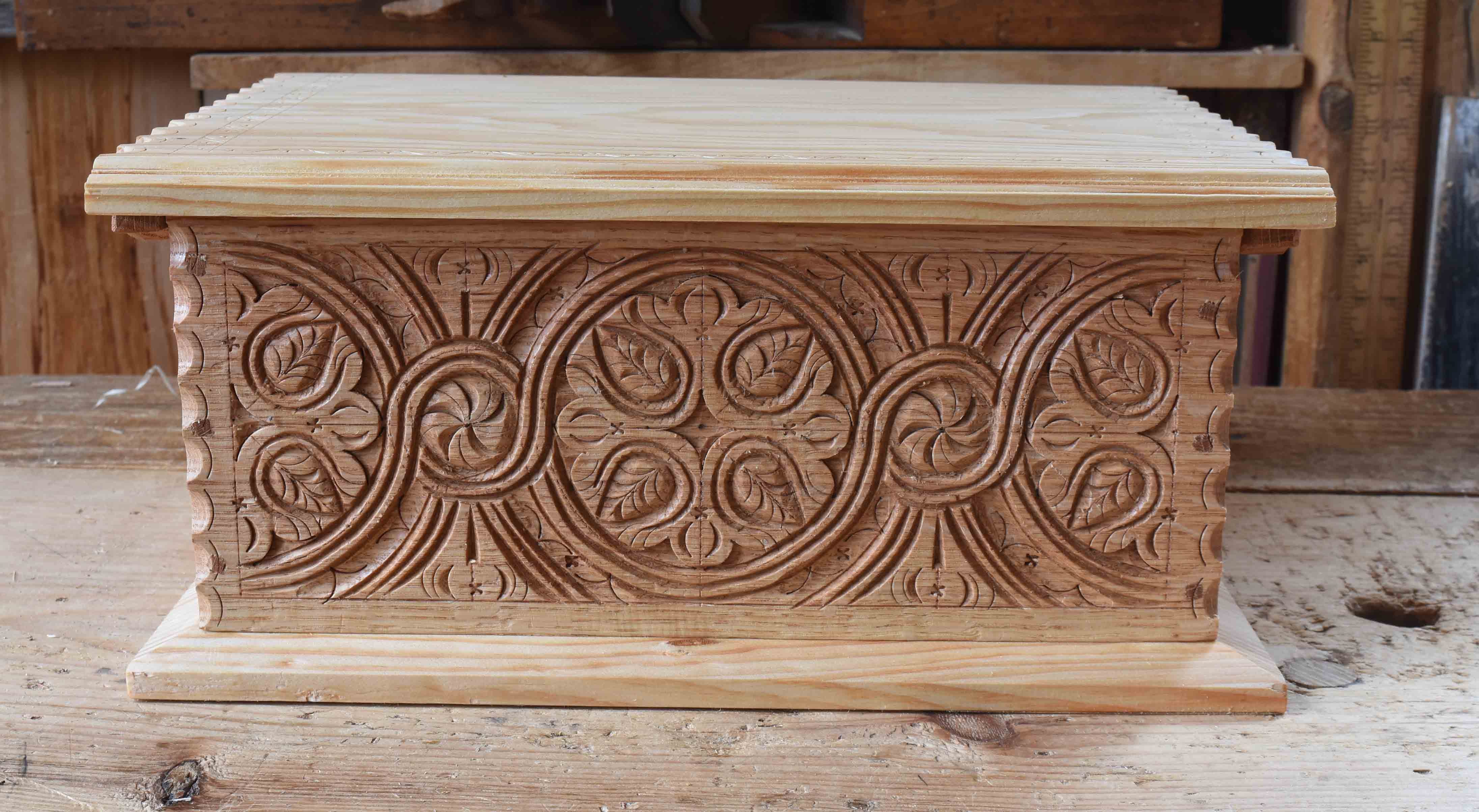
These linked “rosettes” form what art historians call a guilloche - discussed late last year: https://peterfollansbeejoinerswork.substack.com/p/another-look-at-period-carvings-the
I know this particular version quite well - the joined chests with drawers from the Savell shop in Braintree use this across the drawer fronts. In that application, it’s always on drawer fronts 6” high. In this case, my board was only a little smaller, just 5 3/4” high. So I set about seeing how I could adjust it to fit this particular space. The length was really the limiting factor - I ended up with just one full rosette, flanked by two halfsies. And it then worked perfectly.
Here’s a detail from a period drawer front:
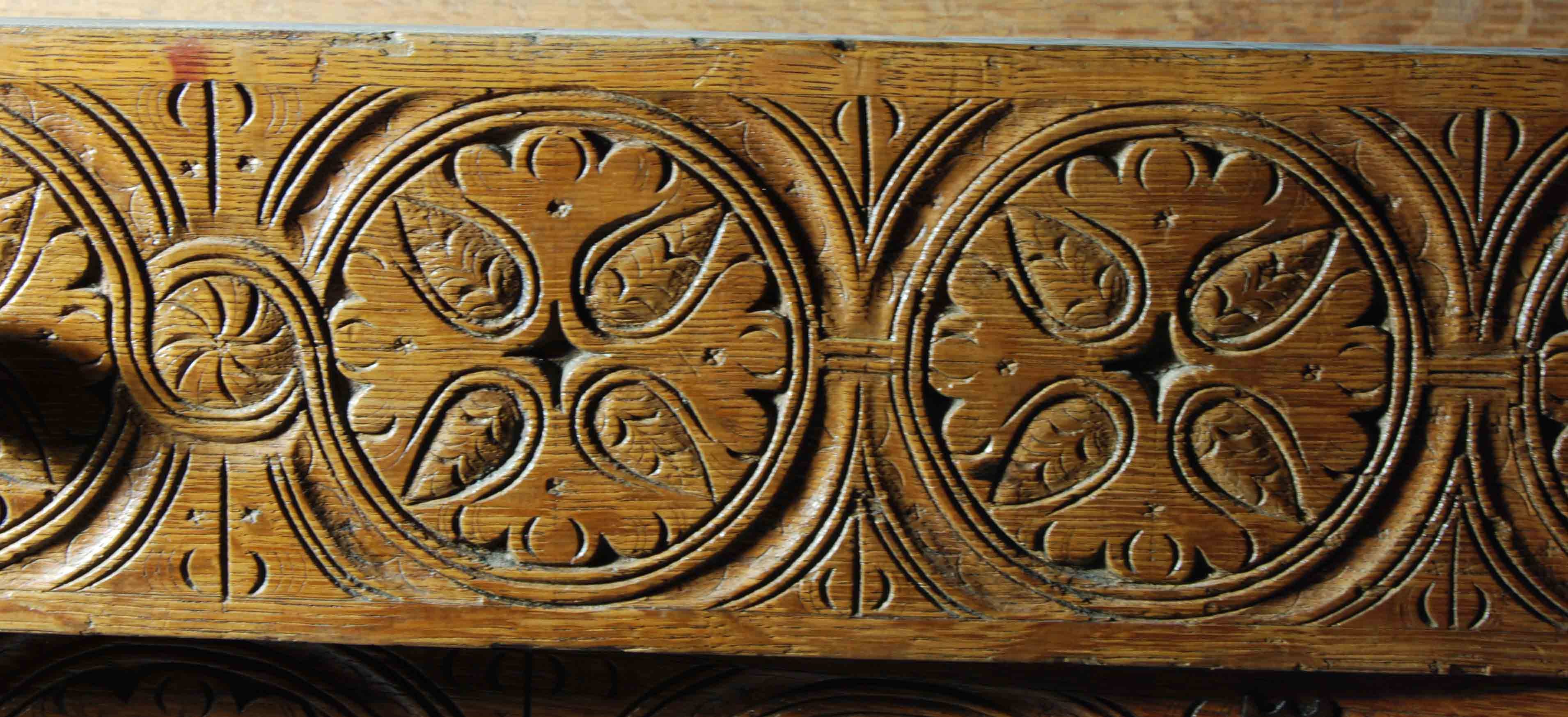
I’ve done it as a full-sized box before - but it was, like this instance, “made-up.” By that I mean I’ve not seen a 17th-century box, by this shop or another, with this pattern. With one exception. There are only a few boxes surviving that we’ve been able to connect to the known works from Braintree. Here’s the one at the Metropolitan Museum of Art in New York, their photo:
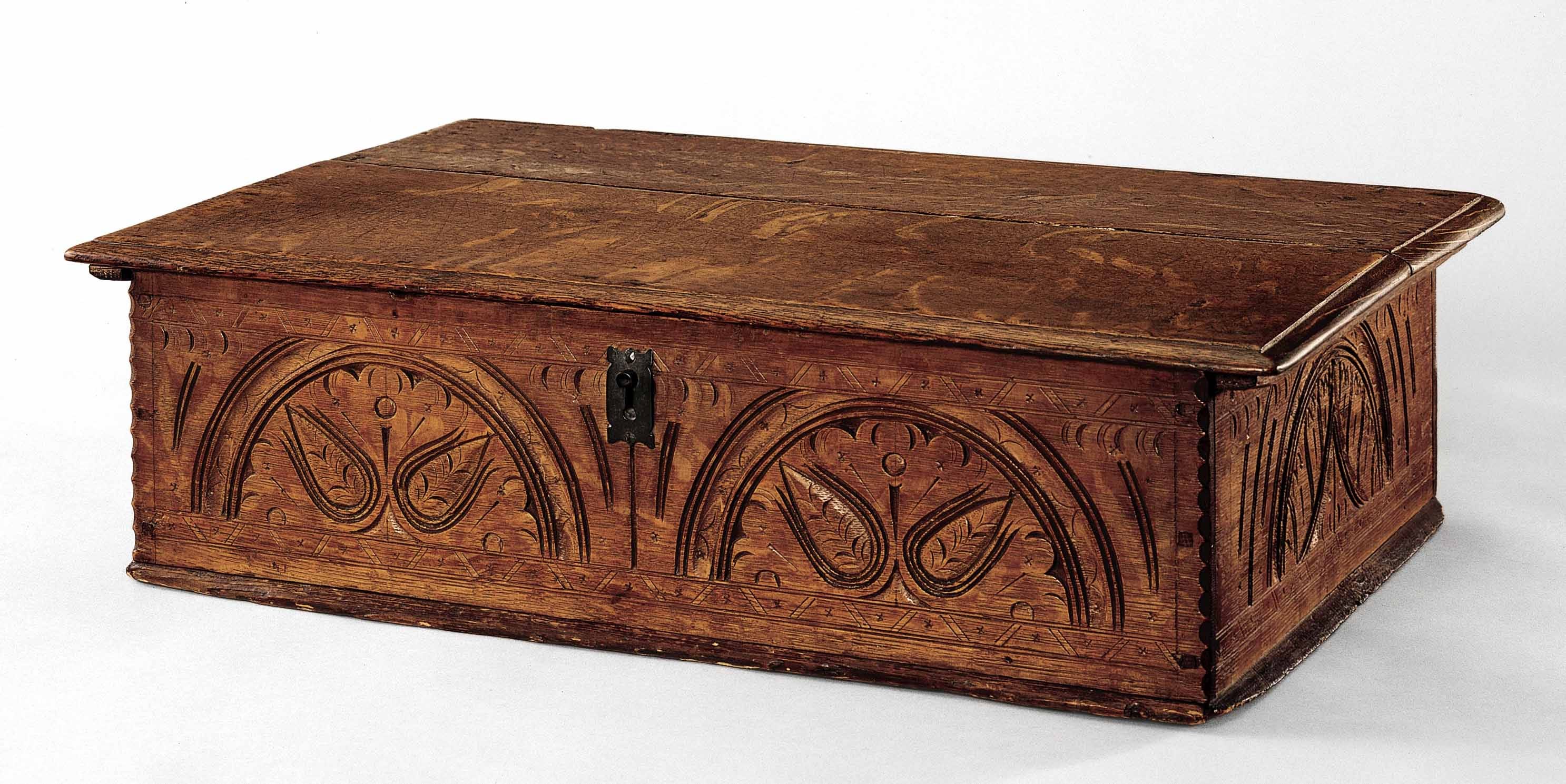
That front board is about 6” x 24.” A near-mate is at the Museum of Fine Arts in Boston and a third, a desk box, in a collection in Hartford, Connecticut:
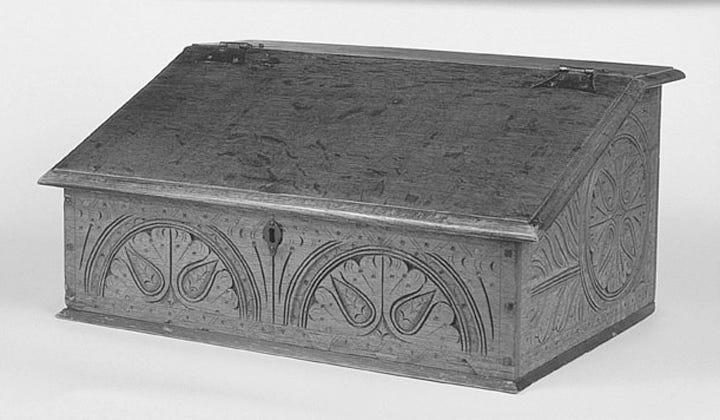
The front board of the desk box is just a bit smaller than the others. Not enough to matter really. One thing I wondered about - why didn’t they carve the drawer front guilloche on any box fronts? You can make it fit - here’s one of mine from 2004:
To ask why did they not do this or that - is about as dumb a question as it gets. So I’ll move on to another long-running question about the Savell shop that I got a partial answer to after nearly 30 years. Their chests are extremely consistent - the variations from one to another are so slight that you have to get obsessive to notice them. So I often wondered and long searched - where are the English antecedents for their work? William Savell, Sr didn’t get his obsessive traits on the boat over here…so there must be English works we can tie to the Braintree stuff. Never found a chest like the New England ones. Eventually did find one tantalizing image of a related carved box - not like the New England Savell boxes - its front is carved with the drawer front guilloche!
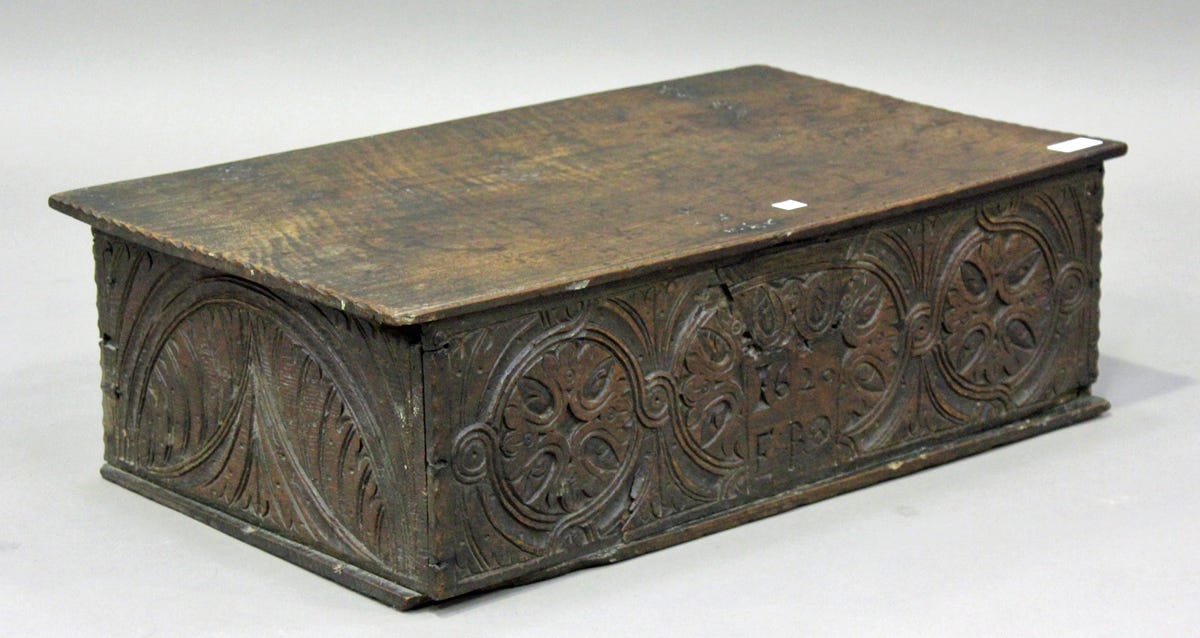
They also had a detail - with an awful patch where the lock had been:
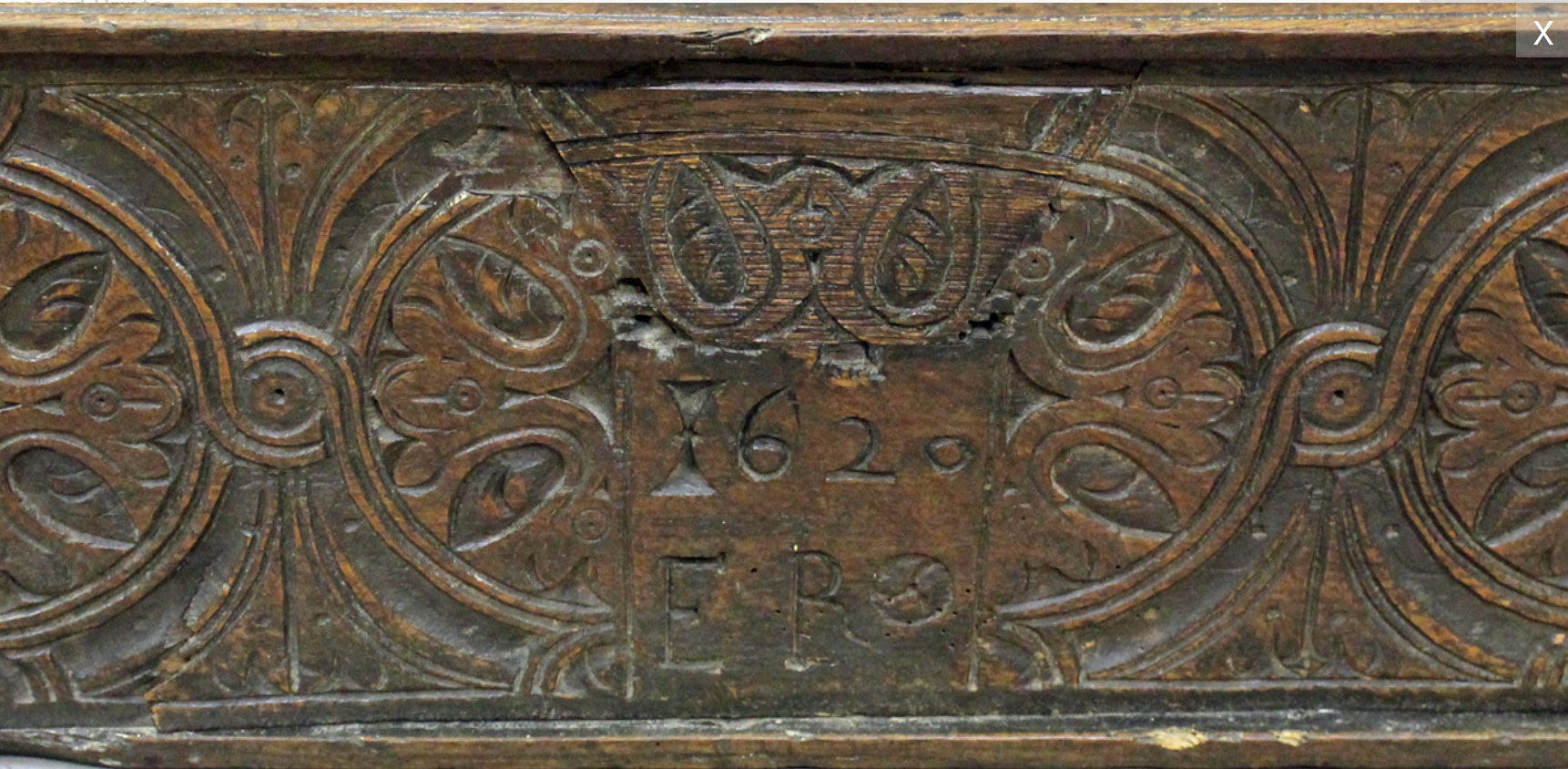
So there you have it - someone carved that pattern on a box front before me. Makes sense. Somewhere there must be more..
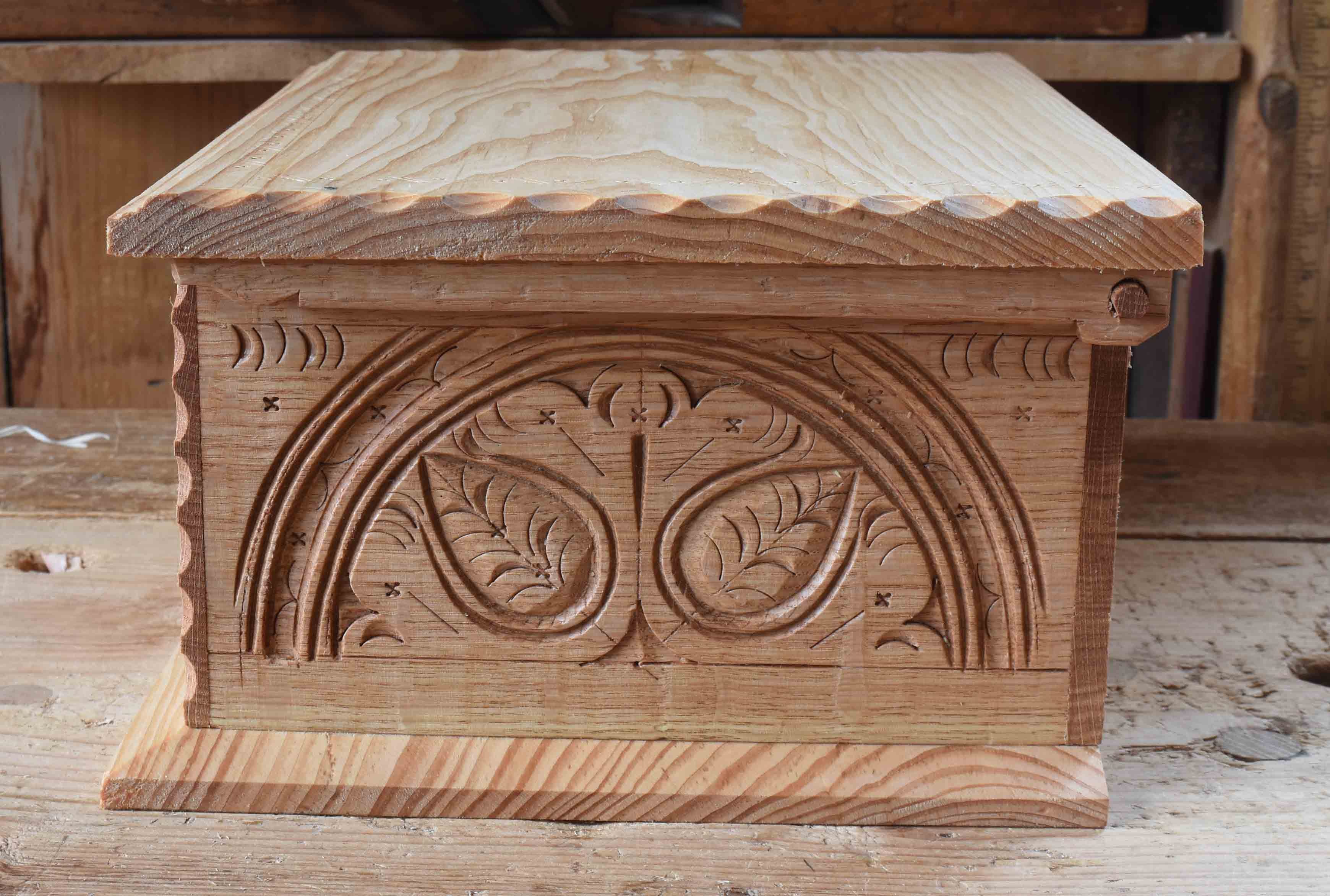
Meanwhile, here’s some shots of this week’s version. Red oak box, white pine lid & bottom. Wooden pintle hinge. Till inside.
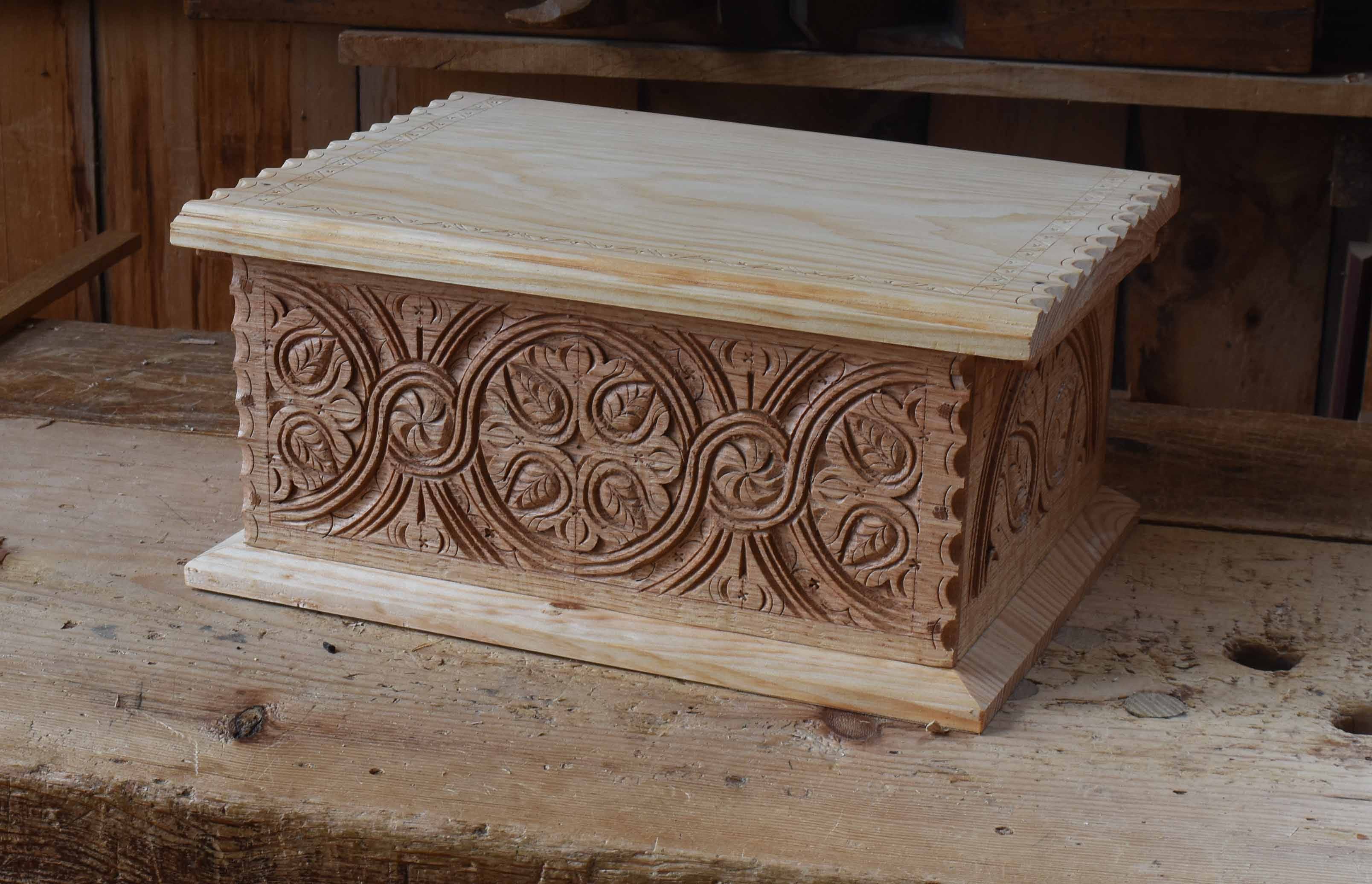
The end carving - and the wooden pintle hinge
And the till inside, a leftover molding for the till lid
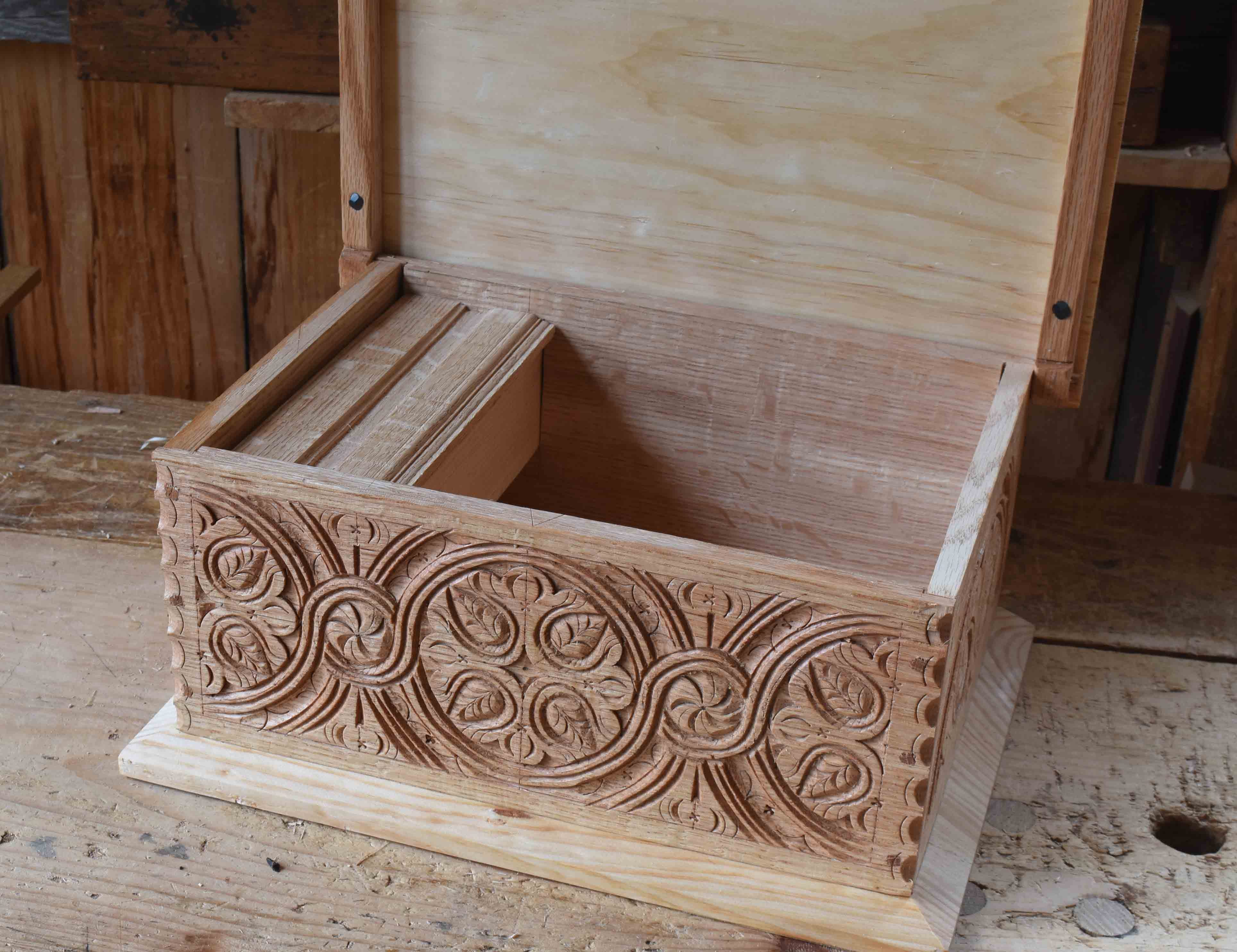
Dimensions are H: 7” W: 15 3/4” D: 11 1/2”
$1,100 includes shipping in US. If you’re interested, send me an email at PeterFollansbee7@gmail.com and we can sort out payment details…if we use paypal a slight additional fee.
A few years ago I made a how-to video about carving this pattern as part of the series on making the whole joined chest. The trailer about that carving is here:
and the links to the series- the “chapters” are also available separately.
No posts
Comments
Nothing yet. Say the first thing.
Sign in to join the conversation.