
Photographer Gavan Goulder chose January, the month of the blues, to walk the length of Sri Lanka. His End to End trek raised money for charities, while helping him confront pain, test resilience and rediscover photography.
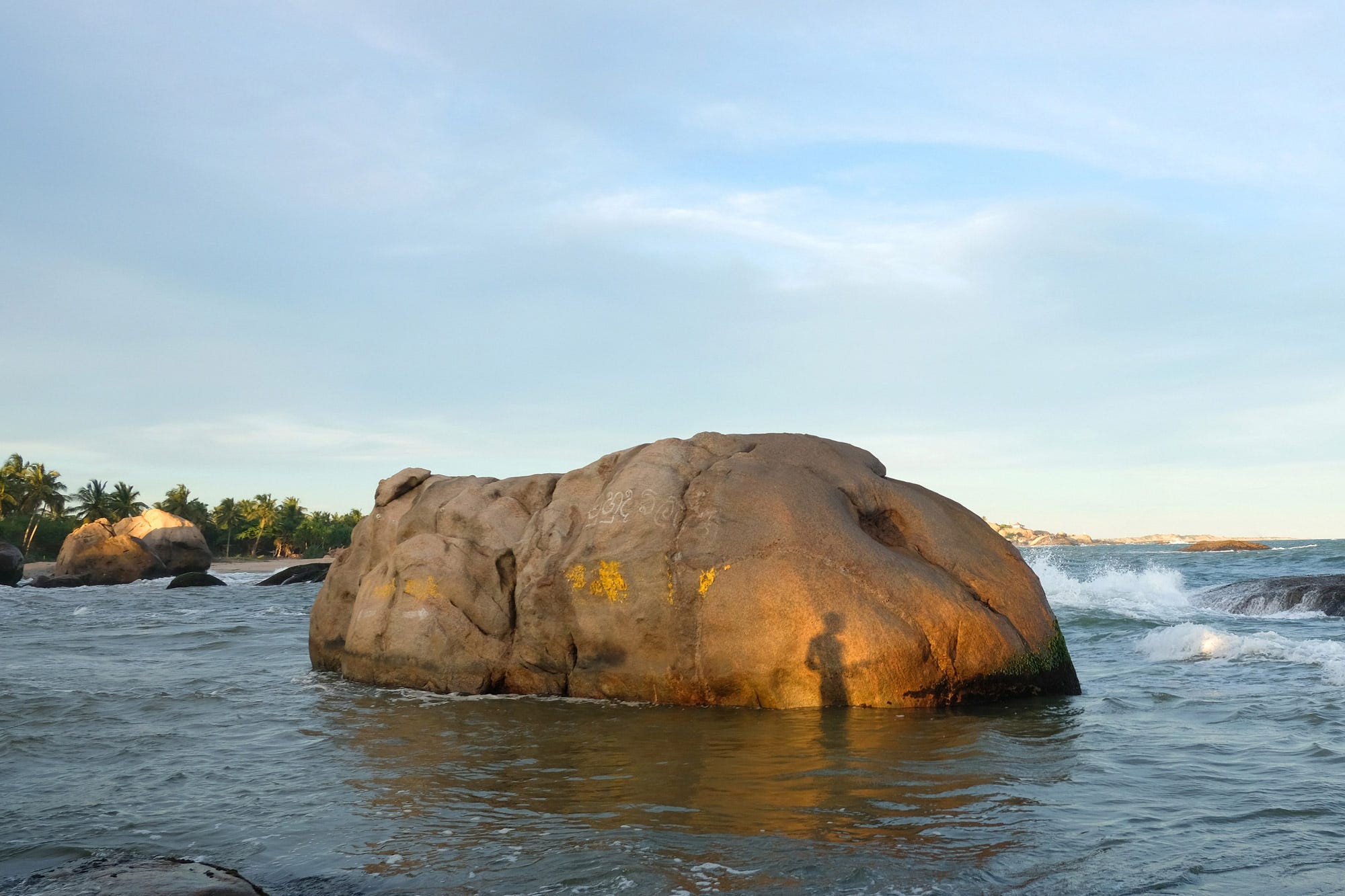
When photographer Gavan Goulder set out to walk the length of Sri Lanka, he knew it would test him in every possible way. What he didn’t know was how much the journey would reshape his relationship with photography and his body.
Goulder is no stranger to confronting mental health through photography. His 2019 project Black Dog: A Photographic Reaction to Depression emerged from what he calls his “blue period” after a transient ischaemic attack in 2017 left him shaken, isolated and unable to work. Black Dog, honest, at times brutal, was both a personal act of survival and a public statement that creativity can be a tool against despair.
By the time he landed in Sri Lanka, the question had shifted. Could walking itself become the therapy? ‘One of the main reasons for doing it was to test myself,’ he says. ‘I had a big birthday coming up, I’d had a couple of physical issues, and obviously mental health struggles as well. I’m not really a walker, so it was to see if I could do something like this.’
The route from the far north of the island to the southern tip covered more than 500 miles and took 30 days. Goulder had visited Sri Lanka three times before. This time, he wanted to cross it on foot, end to end.
Survival, not photography
He timed the trek for January, often called the month of the blues, and used it to raise funds for UK mental health charity Pegasus - Men’s Wellbeing Centre and the Tea Leaf Trust in Sri Lanka.
His initial plan was to document the walk with a camera slung around his neck. But almost immediately, reality intervened. ‘The walk became about survival, he recalls. ‘It was boiling hot, the strap rubbed, and I was carrying enough weight already. The camera stayed in my rucksack.’
That didn’t mean the photography stopped. Walking early each morning until midday, he took photos on his phone and saved his energy for survival. Later, when the sun relented, he photographed more deliberately with his Fujifilm X-T2. ‘Photography, like walking, is a form of meditation, he says. ’It focusses you – you’re out looking for things, you haven’t got time to think of anything else.’
The zine he eventually produced is filled with these quiet, considered photographs — less about the act of walking itself, more about the spaces, encounters and reflections the journey opened up.
Physical battle
Every day was a test of endurance. Goulder’s routine began at dawn, with stretches to loosen aching limbs before setting out. ‘I’d be walking six or seven hours a day. The first three or four hours were fine, but then something started to ache. The last hour was always very difficult, lots of pain in my legs.’
He developed a curious strategy to cope. ‘I’d acknowledge my aches and pains as if they were companions, ‘morning big toe, morning knee’ and they would just disappear. Within half an hour I’d be off again.’
There were other bodily struggles too: blisters, exhaustion, and the constant need to manage his feet in punishing heat. Yet somehow the rhythm of walking became its own balm. His tinnitus vanished during the walk, returning as soon as he came home. ‘That’s when I realised: this is meditation.’
Mental battle
If the physical challenges were relentless, the mental ones were equally stark. Goulder describes Elephant Pass in the far north, a 20-mile road, straight as a ruler, without shade or settlements. ‘I knew it would be the most mentally difficult part of the walk. But I just loved it, from the first step to the last.’
Not every moment was so buoyant. Near the hill country, he hit breaking point. ‘I’d convinced myself the road would flatten out around the next bend, and there’d be a café. But it kept climbing. I lost it. I threw my rucksack on the ground, crying, thinking I’d had enough.’
What pulled him through was a small letter from his daughter, one of 30 notes he had carried from family and friends. ‘I opened it at that moment. She must have known I’d read it when I was in trouble, because it was exactly what I needed. It shook me out of it and got me going again.’
Encounters and kindness
Along the way he met countless Sri Lankans curious about his journey and his age (59). What struck him most was the generosity. ‘The people I met helped me so much, often when they had very little. I slept in an army base, in a school, and in family homes when there was nowhere else. People just wanted to help.’
These encounters became as significant as the landscapes. They reminded him that the world is not always as bleak as headlines suggest. ‘People seem to think the world’s a pessimistic place at the moment, but my journey contradicted that. Humanity’s core values were shining all the way.’
Crash and renewal
Finishing the walk brought a sharp comedown. ‘Like any great trip, there was a crash at the end,’ he admits. That feeling was compounded by the death of a close friend just before he returned to Britain.
But something else was stirring too. After time away from photography, he found himself compelled back. ‘I’d already decided – I was going to get back into photography. Having 30 days to think things through made me realise I had to. I found a studio, started new projects, and I’m loving it again. More than before, actually.’
Making the End to End zine was part of that closure. ‘I wanted something tangible, a record for me, to put a line under it all. It was quite a selfish thing, but important.’
Would he do it again? The answer comes without hesitation. ‘In a heartbeat. It’s a unique way to see a country. You meet so many people every day who want to know what you’re doing. Most thought I was mad, and too old, but they were endlessly kind.’
He adds, ‘I’ve learned that no matter what your dreams are, you need to act on them, make them a reality because it’s these dreams that are the sparks that light the fires within us.’
For Goulder, the walk across Sri Lanka was never just about miles travelled. It was about the interplay between body and mind, between exhaustion and resilience, between photography and survival. End to End was less about finishing a line on a map than rediscovering a way forward in life.
Giving single-use cameras to people living with dementia, The Photobook Project reveals moments of honesty, beauty and connection, challenging stereotypes and proving that every perspective matters.
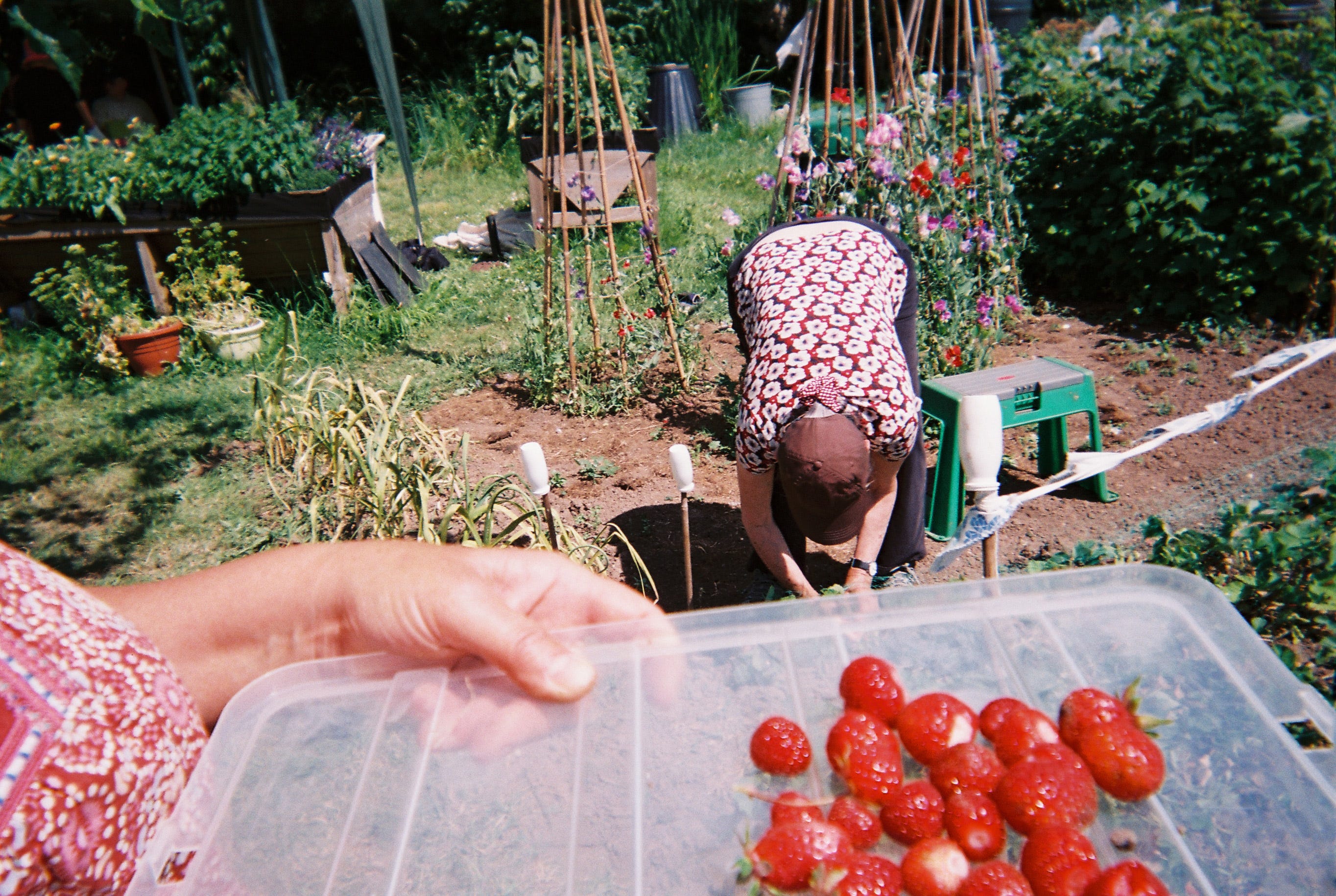
In 2015, illustrator and community artist Ellie Robinson-Carter was volunteering on a dementia-friendly walking group run by Sensory Trust at the Eden Project in Cornwall when she noticed something striking. ‘There were all these lovely conversations happening, these incredible observations from people living with dementia and their carers,’ she recalls. ‘But no one was taking photographs.’
One participant had his own camera, but for most, capturing the moment simply wasn’t part of the day. At the time, smartphones weren’t as ubiquitous as now. Ellie brought along a few disposable cameras, invited participants to have a go, and later had the film developed.
‘When I saw the first three sets of prints, the images were beautiful,’ she says. ‘As an illustration student at the time, I started trying to draw and paint them but I quickly realised the photographs were the illustrations. They had an honesty and insight you couldn’t recreate. That was the moment I knew there was something in this.’
The project evolved into The Photobook Project, now a Community Interest Company. Participants – people living with dementia – are given a single-use camera and invited to document a theme of their choosing. These themes range from seasonal change to treasured objects, with creative activities such as writing poems or making cyanotypes often running alongside.
For Ellie, single-use cameras are central to the project’s success. ‘They’re accessible – easy to hold, easy to pass around – and they let people do it themselves. You don’t have to think of yourself as ‘an artist’. Photography can be a way to gently trick people into being creative without that pressure.’
Once developed, the photographs are designed into professionally produced photobooks. ‘They’re held in a proper framework,’ says Ellie. ‘When participants see their work in print, they realise their voice and self-expression matter – that people want to see what they have to say.’
The reaction can be profound. She recalls Ronald, diagnosed with dementia at 56 and from the Black African community, who became a co-producer on the project and later an Ambassador. ‘Ronald says The Photobook Project planted the seeds for him to start his own creative projects in the community. That’s what we want – to build people’s confidence so they can carry it forward.’ Ellie has seen this in many forms: ‘People describe the project as a stepping stone – an example of what’s possible when living with dementia.’
Local roots, global reach
While the photobooks remain in the communities where they’re made – housed in bespoke boxes at care homes or community centres – the concept has travelled far.
In 2017, Ellie took the project to Humanitas an intergenerational care home in Holland, where students live alongside older residents. Supported by Arts Council funding, she spent a month there, photographing every day with the residents and students for 21 days on themes chosen by the group. ‘It worked in a completely different context,’ she says. ‘Photography is a universal language – there’s no text, so it’s inclusive for everyone.’
Soon after, she adapted the model for the Run Tomo project in Japan, working with care homes and schools. The contrasts were fascinating: ‘In Holland, these initiatives were embedded and connected to the local community. In Japan, there was huge enthusiasm, but fewer existing projects – they were hungry for more.’
Back in the UK, nature has emerged as a recurring theme, often linked to intergenerational work. Ellie’s team has paired memory cafés with schools for multi-session projects, culminating in exhibitions. ‘We’ve all been siloed into age categories,’ she says. ‘When you bring people together across generations, you create new bridges – and more power to respond to things like climate change on a community level.’
Challenging stereotypes
Whether in Cornwall, Kyoto or Rotterdam, Ellie’s aim is to challenge narrow perceptions of dementia. ‘It’s not always someone in a wing-back chair in a care home,’ she stresses. ‘People are out there practising, doing things, creating.’ The project’s imagery – sometimes quiet and intimate, sometimes unexpectedly bold – often undermines stereotypes.
She recalls being struck by photographs taken by participants who could no longer speak. ‘They might not be able to tell you they’ve noticed something, but the photograph shows you. It’s such a beautiful thing – the atmosphere they capture, the details they see.’
Next steps
The Photobook Project has now run 26 projects, generating hundreds of books. Ellie is keen to connect with more international partners, such as Portugal’s Lata 65 project who use street art to empower older people or Vienna’s Vollpension initiative, and to develop a digital archive so the collections can be explored beyond their home communities.
Funding, she admits, is a constant challenge. ‘Even small costs – insurance, website hosting – chip away at what we have. Support from individuals can make a huge difference, whether through donations, buying books and prints from our online shop, or helping us take the work to festivals and public spaces would support future delivery.’
She’s excited about the idea of exhibiting the photobooks en masse – colourful boxes lined up, their contents revealing a rich diversity of perspectives. ‘It’s a beautiful thing to see them all together, to experience how the different projects sit alongside each other.’
Ellie sums up the mental health impact of The Photobook Project simply: ‘It’s about self-expression, connection, and showing that living with dementia doesn’t mean your voice is gone. Your perspective matters – and photography makes that visible.’
To help and donate visit: the-photobook-project.com/Donation-page
After losing her brother to suicide, photographer Jo Ritchie found herself unable to pick up a camera. But through Projecting Grief, a portrait series capturing the healing power of creativity, she has built a community that turns loss into light, resilience and unexpected hope.
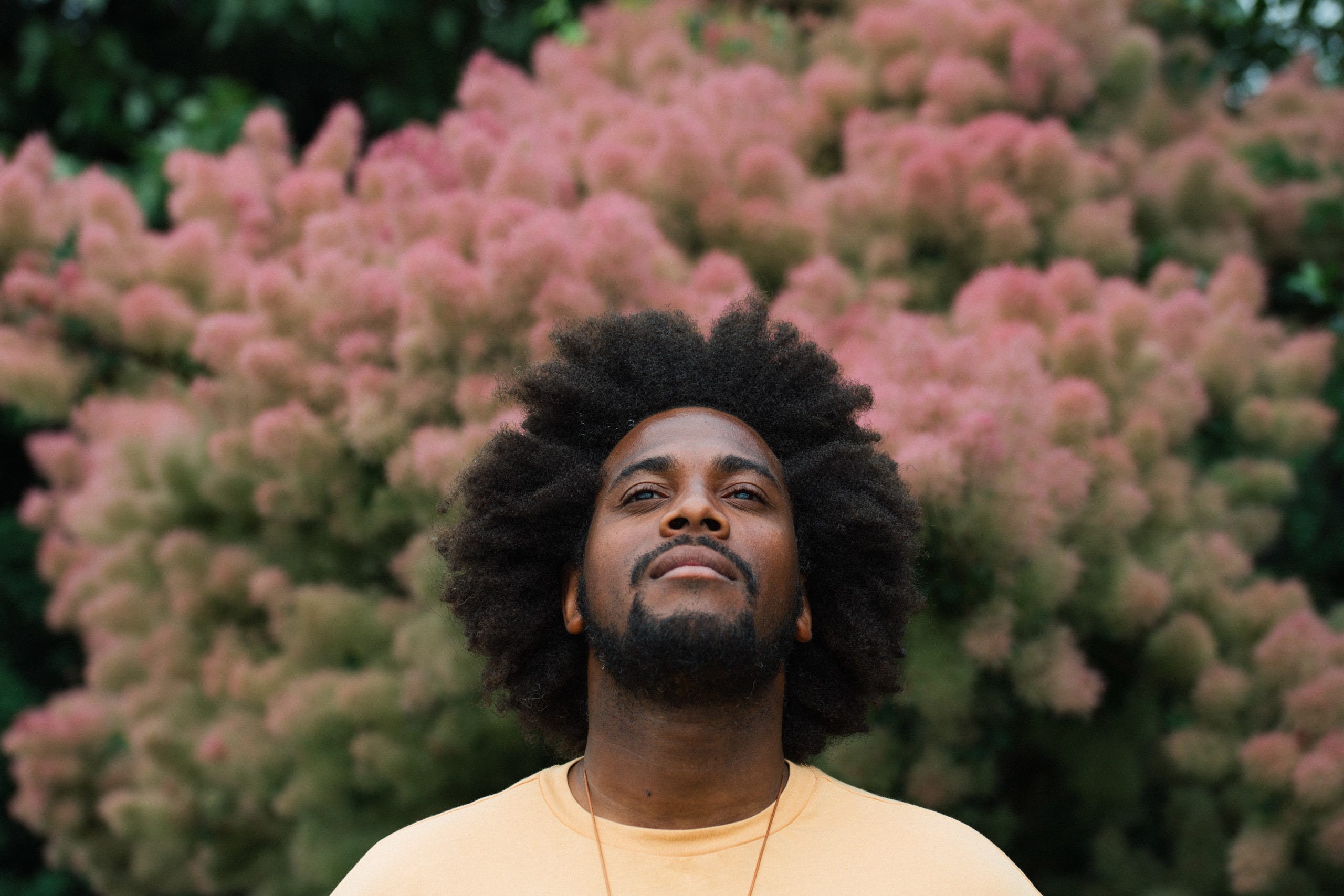
When portrait photographer Jo Ritchie’s brother Jack died by suicide in 2017, the idea of ever picking up a camera again seemed impossible. ‘I felt so far from my creative practice,’ she recalls. ‘I couldn’t imagine having the small talk needed to put a sitter at ease when I could barely function myself.’
But as she began to meet others who had also lost loved ones, Jo noticed a common thread, many had turned to creativity as a lifeline. Far from deepening despair, painting, music, writing, and photography were helping people find distraction, relief, and even joy in the wake of tragedy.
That realisation was the spark for Projecting Grief, a collaborative portrait and storytelling project Jo founded in 2019. Through it, she set out to document people using creativity to process loss, pairing portraits with personal testimonies.
First portraits
The early sitters were close to home. Elly, a photographer who had lost her mother to suicide, had photographed Jo’s wedding shortly before Jack’s death. Millie, whose younger brother Ethan had died suddenly a year later, was already part of Jo’s circle. ‘We bonded over both losing our little brothers,’ Jo explains. ‘Elly and Millie were both such creative people, and they talked about how important their practice was in surviving grief.’
Encouraged by their openness, Jo began photographing them. Elly was captured with her mums violin, while Millie was photographed wearing a striking handmade headdress. Both portraits carried a sense of strength as well as vulnerability. Around the same time, Jo was inspired by comedian Luisa Omielan’s Edinburgh show Politics for Bitches, in which she explored her mother’s death with humour. ‘I was blown away by how you could turn something so tragic into something funny and brilliant, says Jo. She contacted Omielan, who agreed to be photographed and interviewed, adding another early pillar to the project. ‘These three gave me the confidence that there really was something here,’ says Jo. ‘From then, I started actively seeking people out.’
Growing the project
At first Jo reached out through podcasts, local networks, and friends of friends. In 2019 she was joined by writer Faye Dawson, who interviewed sitters and wrote up their stories. When Dawson stepped back in 2022, writer Laura McDonagh, herself grieving the sudden loss of her mother, took over. ‘Laura has been the perfect collaborator,’ says Jo. ‘We’re constantly sending each other articles, podcasts, and ideas for new people to contact.’
Together, Jo and Laura have built Projecting Grief into a growing community. The project now includes dozens of portraits and stories, with sitters ranging from musicians and painters to actors, writers and gardeners, all united by a shared experience of loss and the healing power of creativity.
Rooted in empathy
Though visually consistent, Jo’s portraits are never formulaic. ‘I’d say there’s a recognisable style, but every shoot is shaped by the person in front of me,’ she says. Sessions begin with conversation, sometimes long, sometimes short but always honest. ‘It’s important that I’m vulnerable too, because sitters are giving so much of themselves. Often we talk about the person they’ve lost before I even pick up the camera.’
The photographs are usually made in sitters’ own creative spaces, studios, homes, or gardens, surrounded by the tools of their practice. Technically, Jo keeps things simple: a single light, sometimes bounced or reflected, and always without assistants. ‘It has to feel intimate and low-key,’ she explains.
More than photographs
For sitters, the experience of being photographed often goes beyond the images. ‘We’ve built this lovely little community,’ says Jo. ‘People who’ve taken part will welcome new contributors, sending messages like, “Your story is so beautiful, welcome to the family.’”
That sense of belonging was palpable during Projecting Grief’s exhibition at the Leeds International Festival of Ideas in 2023. Many sitters attended, some meeting in person for the first time. ‘There was no small talk, only big talk,’ Jo recalls. ‘Everyone’s barriers were down. The energy in the room was incredible.’
The project’s visibility has since grown, with exhibitions in museums and shopping centres, often in prominent spaces emblazoned with the word grief. ‘We worried people might shy away, but actually it drew them in,’ Jo says. ‘Those who were grieving, or working in related fields, were intrigued and came to see. It opened doors.’
Creativity as therapy
For Jo, the process has been transformative. Where once she couldn’t imagine returning to portraiture, now she finds each shoot a form of therapy. ‘I get something out of every single portrait I make,’ she says. ‘Laura gets something from every interview she does. Talking about grief all the time is demanding, but it’s also healing.’
The project has also shaped how she uses photography in her own life. Inspired by Elly, the photographer she first portrayed, Jo now takes her camera on walks as a way of noticing small details and easing anxiety. ‘It’s such a simple act, but it helps you take in your surroundings in a new way,’ she says.
Looking forward
Approaching a decade since Jack’s death, Jo’s vision for Projecting Grief remains both ambitious and grounded. ‘We want to keep bringing it into real spaces, where people can encounter it unexpectedly,’ she explains. Talks are underway for an exhibition at London’s Highgate Cemetery, and she dreams of one day producing a book.
Funding, however, is a constant challenge. The project is run entirely on donations, which mainly cover travel. ‘Even small contributions make a huge difference,’ Jo says. ‘But just as valuable is sharing the work—because you never know who might see it and connect with it.’
Ultimately, Projecting Grief is about hope as much as loss. ‘The idea is that it should be positive,’ Jo stresses. ‘Yes, the stories are sad, but they also show that there is light. For someone in the early days of grief, reading them might help them believe things can get better. And they can.’
To find out more visit projectinggrief.com
No posts
Comments
Nothing yet. Say the first thing.
Sign in to join the conversation.